If you ask me, marinara sauce and mozzarella sticks are a match made in heaven.
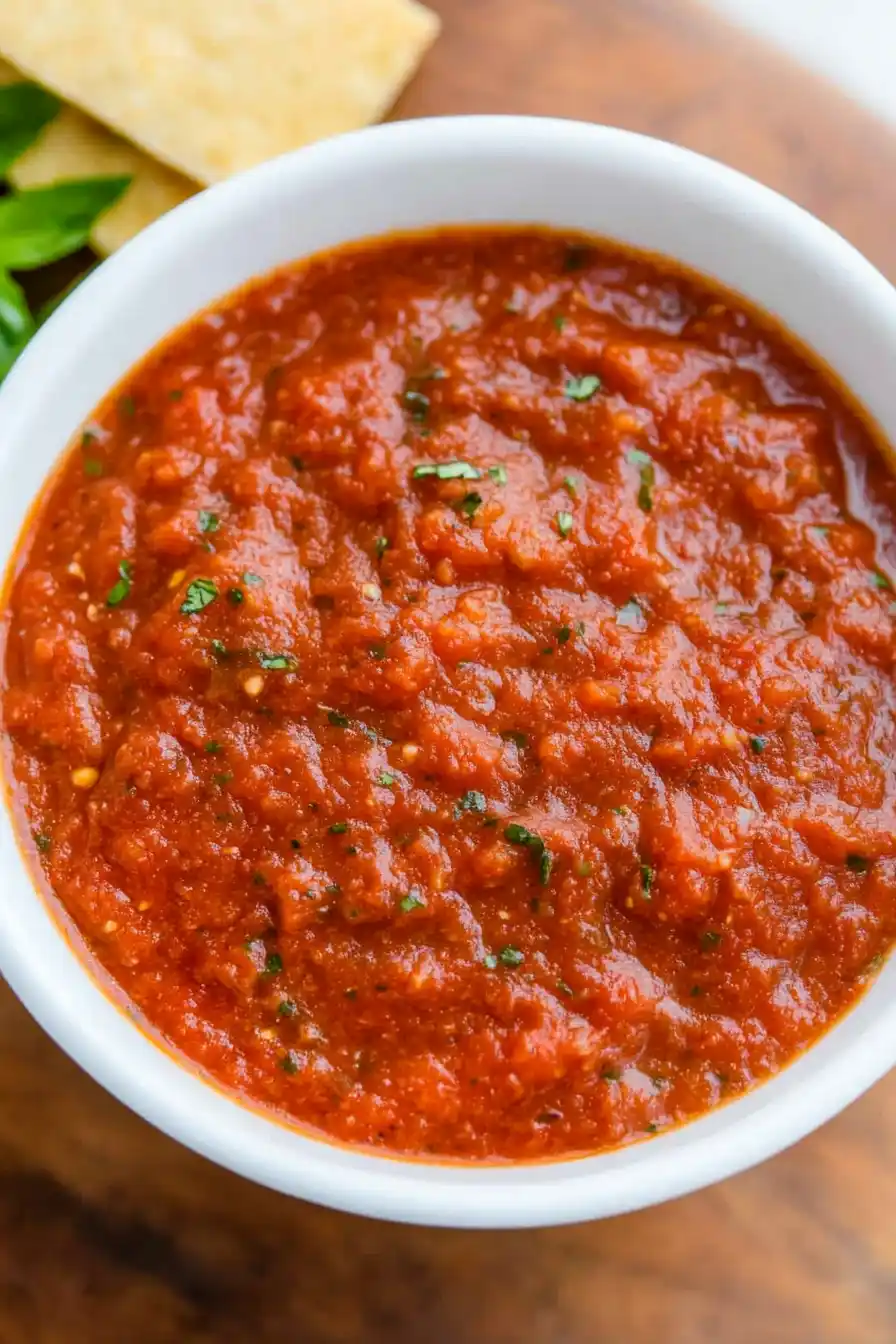
This quick homemade dipping sauce takes your favorite crispy appetizer from good to great. Fresh tomatoes and herbs create a sauce that’s rich and smooth, with just the right amount of flavor.
It’s simmered slowly with garlic and onions until it reaches that perfect consistency – not too thick, not too thin. A pinch of red pepper flakes adds a gentle warmth that perfectly complements the melty cheese inside those golden-brown sticks.
It’s a foolproof sauce that’ll make you forget about the store-bought stuff, perfect for game days or casual get-togethers.
Why You’ll Love This Marinara Sauce
- Made from scratch – Skip the store-bought stuff – this homemade marinara uses simple pantry ingredients to create a sauce that tastes way better than anything from a jar.
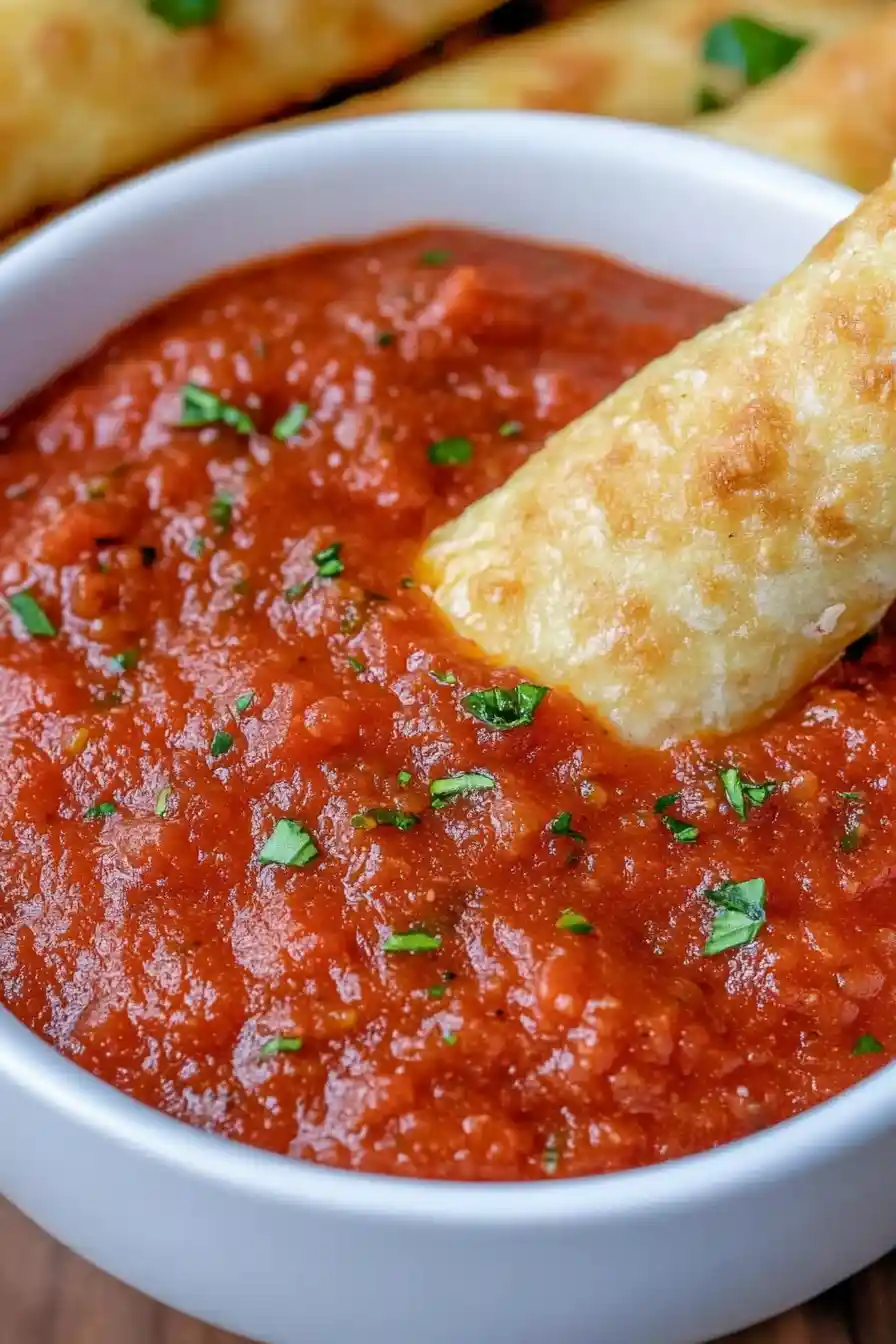
- Perfect dipping consistency – The sauce has just the right thickness to cling to your mozzarella sticks without being too runny or too thick.
- Make-ahead friendly – You can make this sauce a few days in advance and store it in the fridge, making it super convenient for parties or busy weeknights.
- Customizable heat level – Add red pepper flakes to make it as mild or spicy as you like – it’s totally up to you!
What Kind of Crushed Tomatoes Should I Use?
For marinara sauce, the type of crushed tomatoes you choose really sets the foundation for your whole sauce. San Marzano tomatoes are often considered the gold standard – they’re naturally sweeter and less acidic than regular crushed tomatoes, but regular Italian plum tomatoes work great too. If you’re grabbing canned crushed tomatoes from the store, look for ones without added seasonings or herbs, since you’ll be adding your own flavors to the sauce. Just check the label to make sure the only ingredients are tomatoes, tomato juice, and maybe a touch of salt. And here’s a little tip: if you can only find whole canned tomatoes, you can easily crush them yourself using your hands or pulse them briefly in a blender.
Options for Substitutions
This marinara sauce recipe is pretty forgiving and you can make several swaps if needed:
- Olive oil: While olive oil gives the best flavor, you can use vegetable oil or canola oil if that’s what you have in your pantry.
- Crushed tomatoes: If you don’t have crushed tomatoes, you can use whole peeled tomatoes and crush them yourself, or use diced tomatoes blended until smooth. In a pinch, tomato sauce works too, but reduce the tomato concentrate by half.
- Dried herbs: Fresh herbs work great here – use 1½ tablespoons each of fresh basil and oregano instead of dried. You can also try Italian seasoning as a substitute for both herbs.
- Parmesan cheese: Romano cheese makes a good substitute, or you can leave it out if you want to keep the sauce dairy-free.
- Red pepper flakes: A dash of cayenne pepper or a small amount of black pepper can add that touch of heat instead. Or try a splash of hot sauce to taste.
- Tomato concentrate: Tomato paste works exactly the same way, or you can cook the sauce a bit longer to reduce and thicken it naturally if you don’t have either.
Watch Out for These Mistakes While Cooking
The biggest mistake when making marinara sauce is cooking it at too high a temperature – a gentle simmer is all you need, as high heat can cause the sauce to become bitter and lose its fresh tomato flavor. Another common error is not properly sautéing the garlic and onion at the beginning – take your time with this step (about 5-7 minutes) to build a proper flavor foundation, but watch carefully as burnt garlic will ruin your entire sauce. If you’re tempted to skip the tomato paste, don’t – it adds crucial depth and thickness to the sauce, while helping it stick better to your mozzarella sticks. For the best texture, avoid over-blending or crushing the sauce too much during cooking; a slightly chunky consistency will give you that authentic Italian restaurant feel, and remember to remove the onion halves before serving.
What to Serve With Marinara Sauce?
This marinara sauce is perfect for so much more than just mozzarella sticks! Try it as a dipping sauce for garlic knots, breadsticks, or even crispy zucchini fries if you want to sneak in some veggies. It’s also great spooned over classic Italian-American appetizers like arancini (those amazing little rice balls) or crispy calamari. If you’re hosting a party, set up a fun appetizer station with a bowl of warm marinara in the center, surrounded by various fried goodies – people love having options for dipping! Just remember to serve the sauce warm, as it brings out all those nice garlic and herb flavors.
Storage Instructions
Keep: This marinara sauce keeps really well in the fridge. Just pour it into an airtight container or mason jar and it’ll stay fresh for up to 5 days. The flavors actually get even better after a day or two as everything melds together!
Freeze: I love making big batches of this sauce to freeze! Let it cool completely, then pour into freezer-safe containers or zip-top bags. It’ll keep well in the freezer for up to 3 months. Pro tip: freeze in smaller portions so you can thaw just what you need.
Use Later: When you’re ready to use your frozen sauce, thaw it overnight in the fridge. To warm it up, just pour it into a saucepan and heat over medium-low heat, stirring occasionally. If it seems a bit thick, you can thin it out with a splash of water or chicken broth.
| Preparation Time | 10-15 minutes |
| Cooking Time | 30-35 minutes |
| Total Time | 40-50 minutes |
| Level of Difficulty | Easy |
Estimated Nutrition
Estimated nutrition for the whole recipe (without optional ingredients):
- Calories: 500-600
- Protein: 15-20 g
- Fat: 35-45 g
- Carbohydrates: 45-55 g
Ingredients
- 3 tbsp grated Parmesan cheese
- 2 tbsp tomato paste (adds depth of flavor)
- 4 garlic cloves (minced)
- salt
- 1 pinch red pepper flakes (optional, for a subtle kick)
- 1 1/2 tsp dried oregano
- pepper
- 3 tbsp olive oil
- 1 onion (finely diced)
- 1 1/2 tsp dried basil
- 1 can crushed tomatoes (I use Cento San Marzano crushed tomatoes for best flavor)
Step 1: Sauté the Aromatics
Begin by heating some olive oil in a saucepan over medium heat.
Add the minced garlic and halved onion to the pan.
Sauté these ingredients until the onion becomes soft and translucent, which should take about 5-7 minutes.
This will form a flavorful base for your sauce.
Step 2: Incorporate the Tomato Paste
Stir in the tomato paste with the sautéed garlic and onion, cooking for an additional 1-2 minutes.
Allow the tomato paste to caramelize slightly, enhancing the depth of flavor in your sauce.
Step 3: Add Tomatoes and Seasonings
Pour in the can of crushed tomatoes, stirring well to combine with the other ingredients.
Add the dried oregano, basil, salt, pepper, and optional red pepper flakes.
This seasoning will give your sauce a rich and aromatic taste.
Step 4: Simmer the Sauce
Bring the sauce to a gentle simmer, then reduce the heat to low.
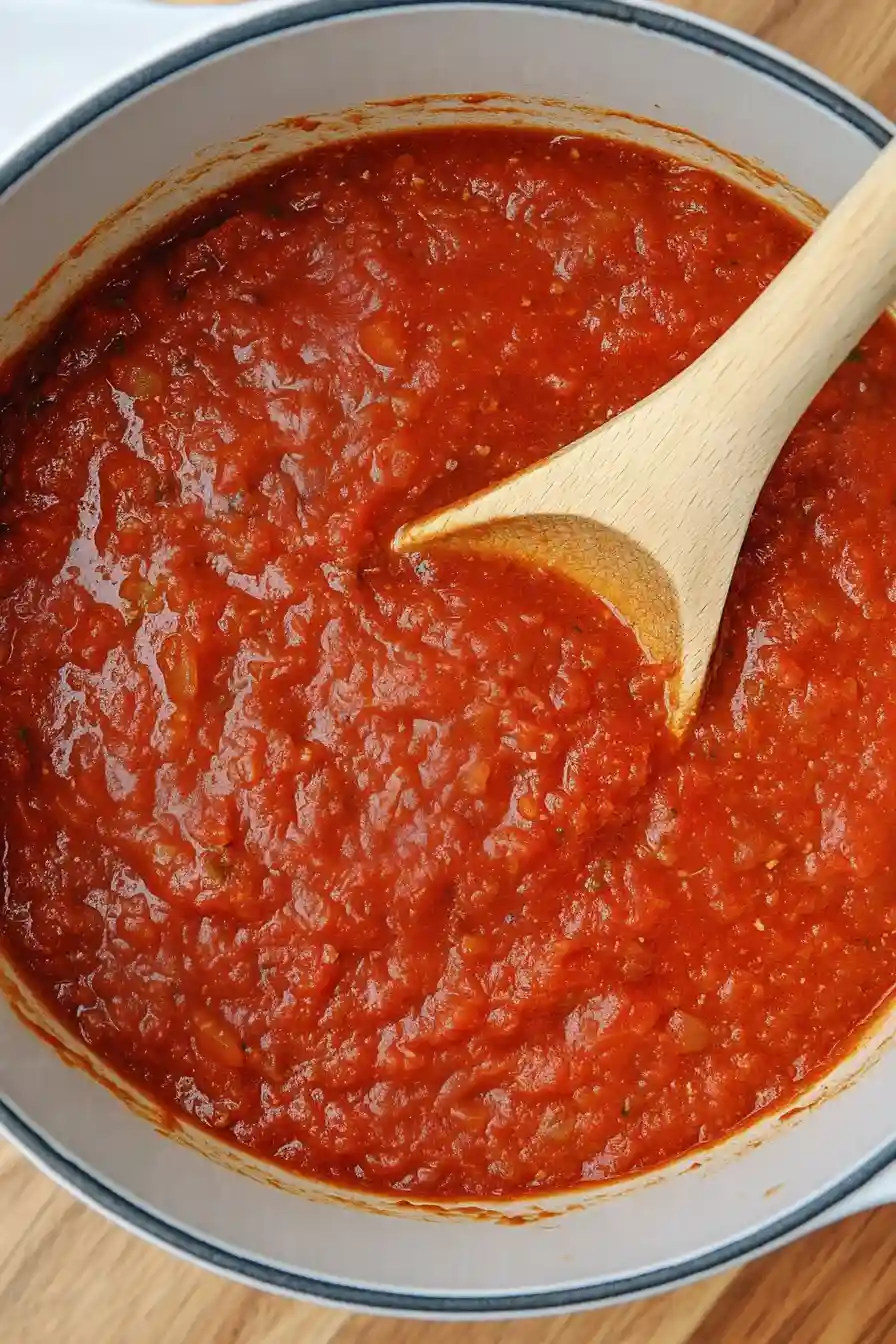
Let the sauce simmer gently for about 20-25 minutes, stirring occasionally.
This slow simmering process will help the sauce thicken to your desired consistency and develop deeper flavors.
Taste the sauce periodically and adjust the seasoning if needed.
Step 5: Finalize and Serve
Once the sauce has thickened and you’re satisfied with the taste, remove it from the heat and let it cool slightly.
Remove the onion halves and discard them as they’ve already imparted their flavors to the sauce.
Stir in the grated Parmigiano Reggiano until fully incorporated, adding a creamy and rich finish to your tomato sauce.