Choosing the right shrubs for Missouri gardens can make a big difference in your landscape’s appearance and health. Missouri’s climate, with its hot summers and cold winters, calls for plants that can handle diverse conditions. The best shrubs for this region are typically hardy, adaptable to different soil types, and able to withstand both drought and occasional flooding.
When picking shrubs for Missouri, it’s crucial to think about factors like size at maturity, growth speed, care needs, and how well they fit the local environment. Some shrubs might need regular trimming to keep their shape, while others naturally suit Missouri gardens.
This article lists 10 of the best shrubs for Missouri, each picked for its ability to thrive in the state’s conditions while adding beauty and function to your yard.
Viburnum
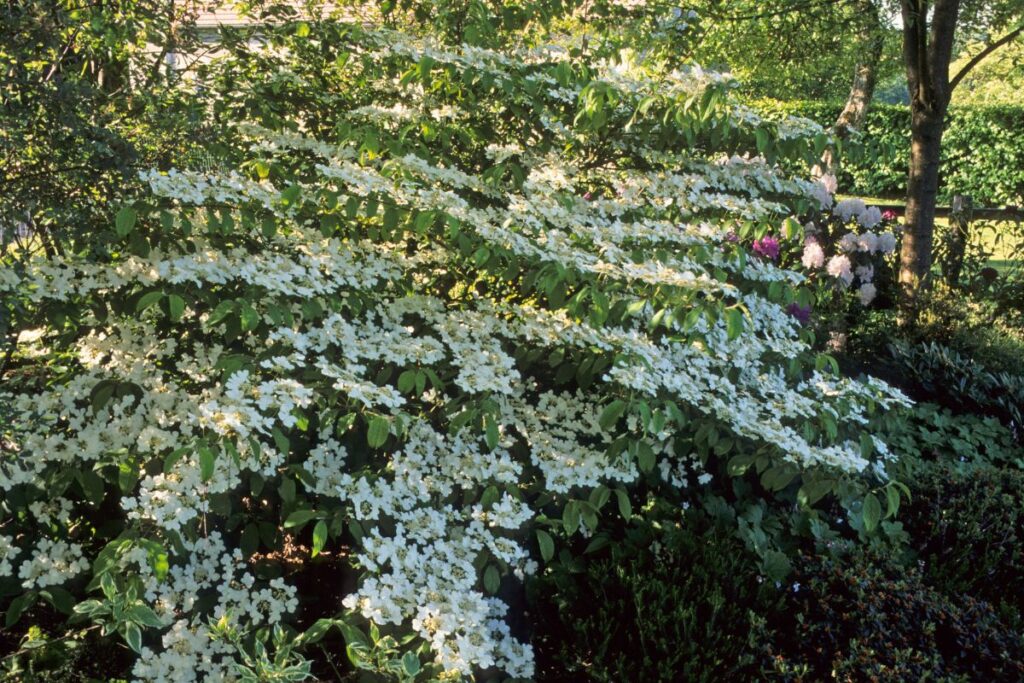
Viburnum’s diverse seasonal changes give gardens an interesting touch. In the spring and summer, several varieties have vibrant green foliage that change to shades of crimson, orange, or purple in the fall. Prominent cultivars comprise ‘Blue Muffin,’ renowned for its small stature and blue-black berries, and ‘Korean Spice,’ valued for its aromatic pinkish-white blossoms. Because viburnum is tolerant of US Hardiness Zones 2 through 9, it can flourish in a variety of climates.
Serviceberry

Many gardeners find serviceberry trees to be a wonderful option because of their low maintenance requirements. These trees display striking seasonal color variations, with white blossoms in the spring, green leaves in the summer, and reddish-orange hues in the fall. Well-liked cultivars such as “Autumn Brilliance” are renowned for their robust resistance to disease, making them a dependable choice for individuals managing typical tree illnesses. They are easy to care for and beautiful in a variety of settings.
Spirea
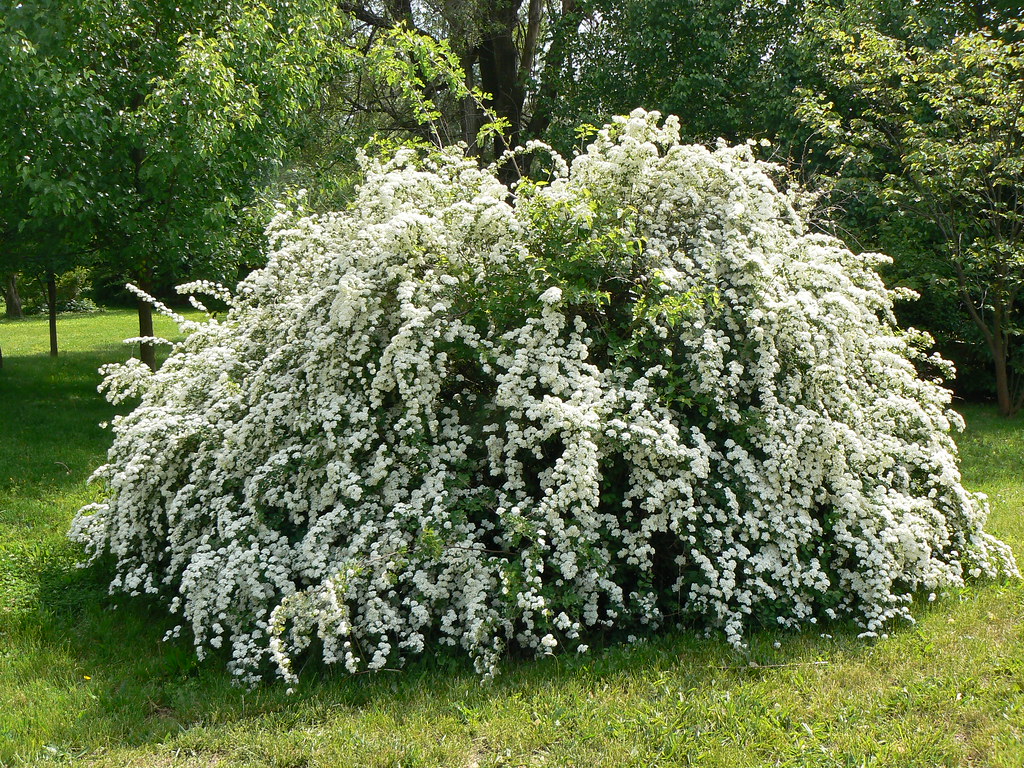
Spirea grows well in full sun to moderate shade and is a versatile plant that may be planted in the spring or the fall. It grows at a modest pace, reaching maturity in a few years as a compact, rounded shrub. ‘Goldflame,’ with its gold-colored leaves that turn orange in the fall, and ‘Little Princess,’ with its petite form and pink blooms, are popular kinds that are perfect for tiny gardens.
Forsythia
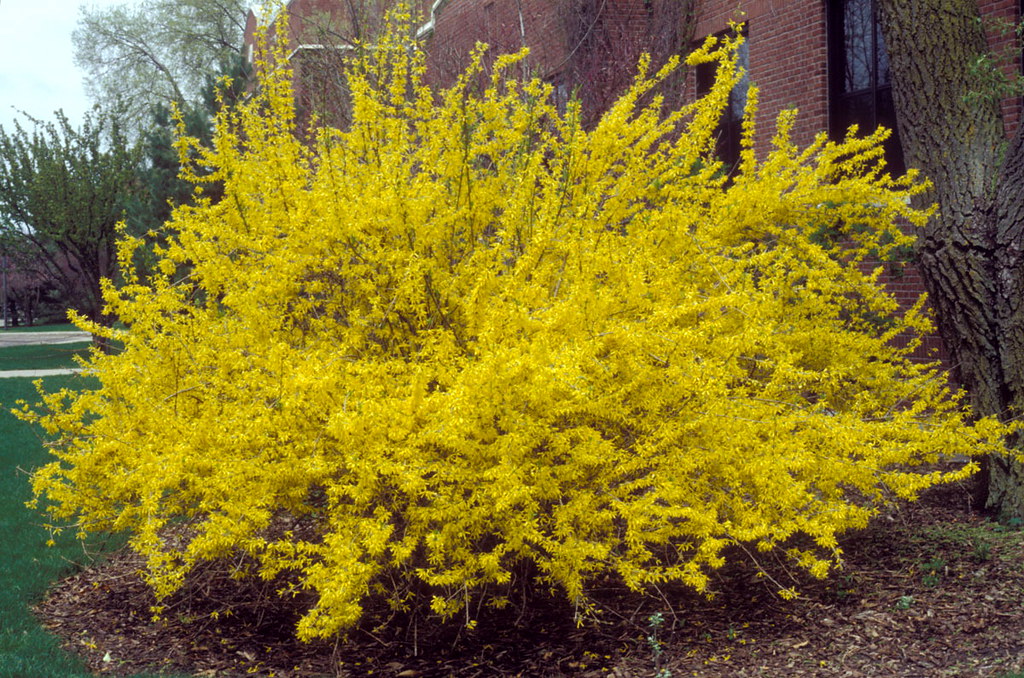
Bright yellow blooms that blossom in early spring and add a pop of color to gardens before most other plants bloom are the hallmark of forsythia, a plant valued for its quick growth rate. Given that it grows well in US Hardiness Zones 4 through 9, it is adaptable enough to grow throughout a wide geographic range. Its impressive resilience to disease renders the plant a dependable option for gardeners who want to enjoy its early blossoms without having to deal with ongoing health problems or extensive upkeep.
Holly
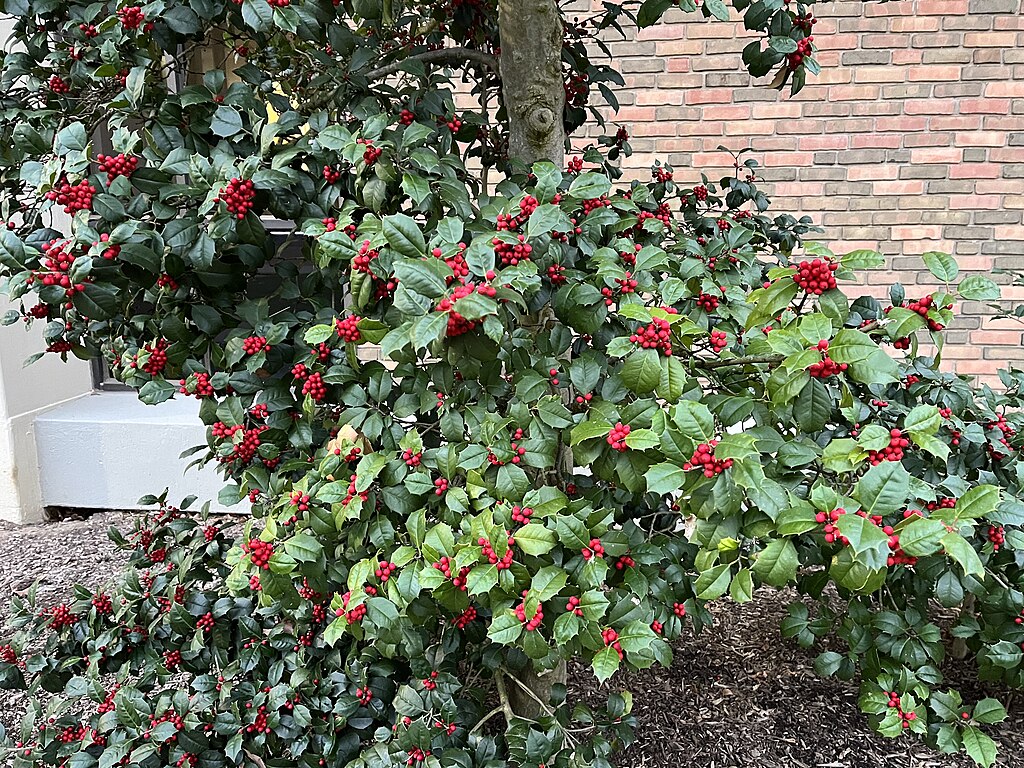
Holly is commonly identified by its glossy green leaves and striking red berries that appear during the winter. Because of its moderate growth rate, it will reach a manageable height and spread for gardens at homes. Well-liked cultivars include ‘China Girl,’ which has a tidy, bushy form, and ‘Blue Princess,’ which is renowned for its needleless leaves. Holly’s strong root system allows it to adapt to a range of soil types, providing stability and resilience against harsh weather conditions.
Hydrangea
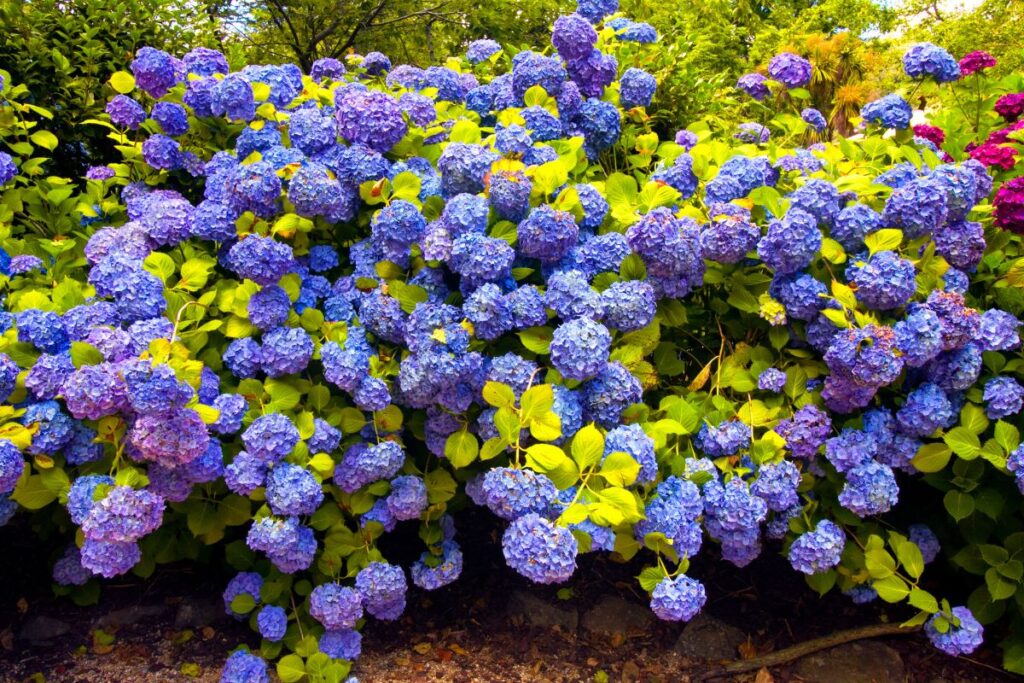
Hydrangeas exhibit notable seasonal variations, bearing pink, blue, or white blooms throughout the warmer months. The color of the blossoms is frequently influenced by the pH level of the soil. Their ability to survive in a variety of climatic situations is demonstrated by the fact that they usually flourish in US Hardiness Zones 3 through 9. ‘Annabelle,’ a well-known variety with big white blossoms, and ‘Endless Summer,’ a cultivator that can yield flowers on both old and young wood, ensuring a longer flowering time throughout the growing season, are two popular kinds.
Boxwood
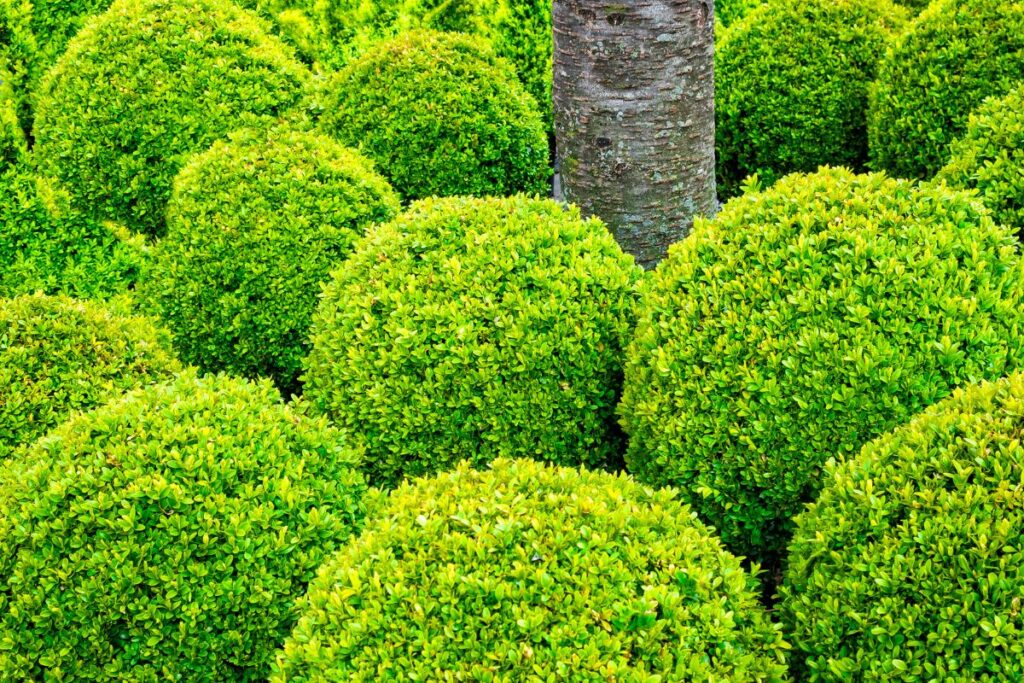
Popular evergreen boxwood is prized for its modest growth rate, which keeps it in a tidy, compact shape ideal for topiaries and hedges. This shrub’s capacity to adapt to different temperatures makes it a top choice for landscapes in US Hardiness Zones 5 through 9. Although boxwood is generally resistant to disease, it can occasionally experience problems like leaf miner and boxwood blight, which need to be carefully monitored and maintained to avoid major damage.
Witch Hazel
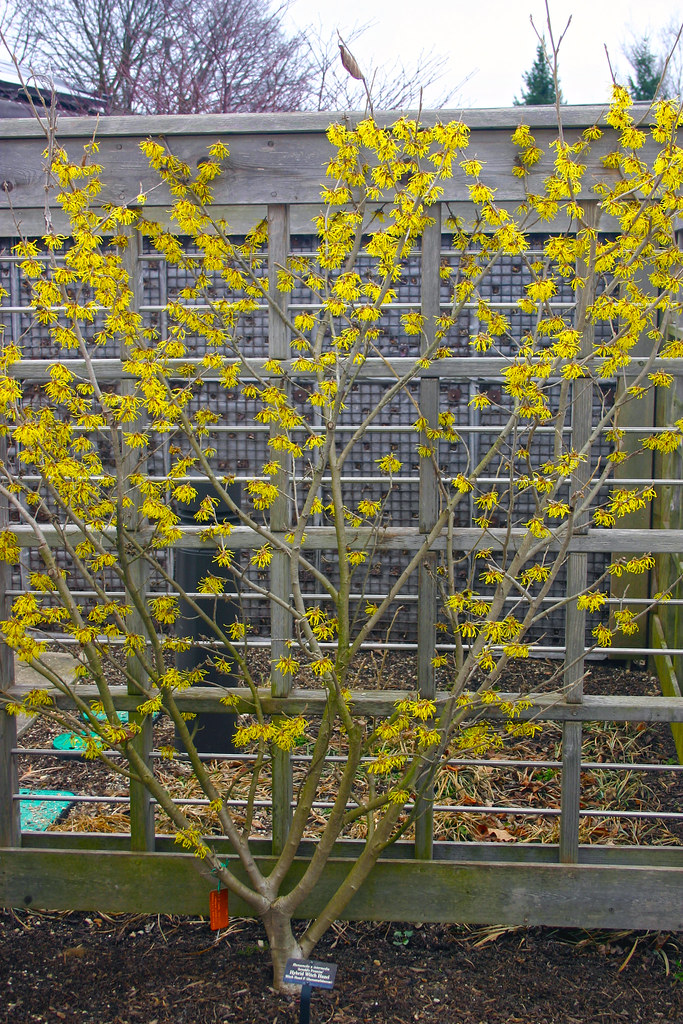
Witch hazel grows well in US Hardiness Zones 3 through 8, where it can withstand a variety of climate conditions. It is typically planted in the fall or spring. With a growth rate that is modest and a normal height of 10 to 20 feet, it may be grown in a variety of garden locations. Notably resistant to disease, witch hazel is typically undisturbed by large pests, which adds to its allure as a low-maintenance option for gardeners looking for dependable and hardy plants.
Azalea
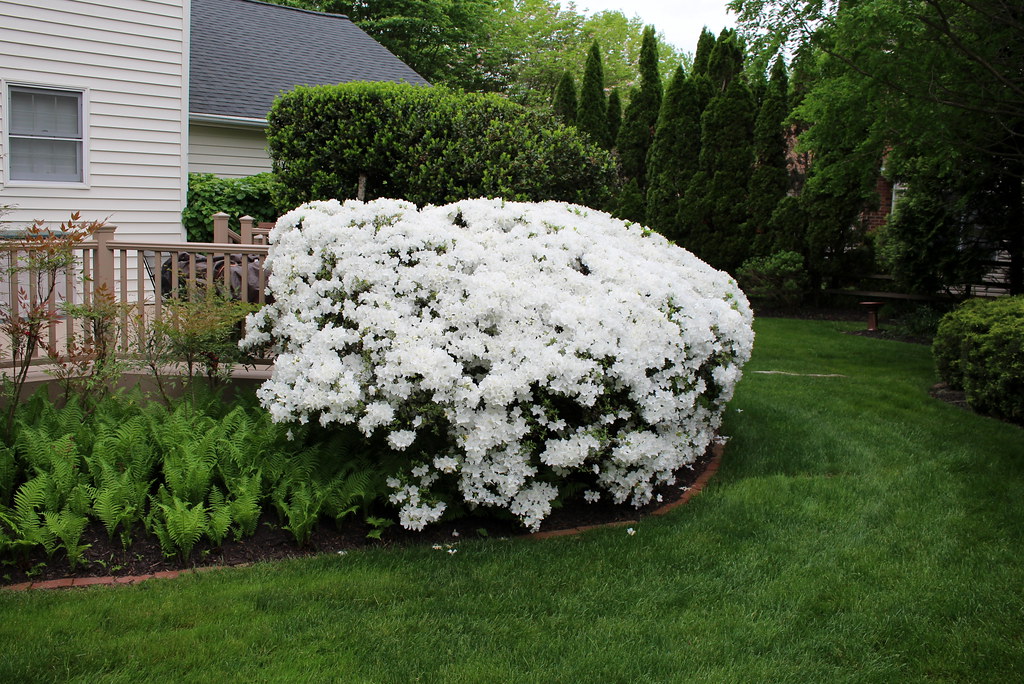
Azaleas are typically planted in the spring or early fall so that their roots can take hold before harsh weather conditions. Their growth rate is typically moderate, making it manageable for gardeners to maintain and shape them as desired. ‘Delaware Valley White’, with its pure white flowers, and ‘Girard’s Fuchsia,’ with its pinkish-purple blooms, are two popular kinds. Both varieties are valued for their distinct flowering traits and flexibility in various garden settings; however, for the best growth, they need to have their soil pH balanced.
Red-Osier Dogwood

The deciduous Red-Osier Dogwood shrub has distinct seasonal variations, including white blossoms in the spring and clusters of white berries in the late summer. Against a snowy backdrop, especially in the winter, its vivid crimson stems are striking. This shrub can withstand a variety of cold temperatures because it grows best in U.S. Hardiness Zones 2 through 7. While some of its variations have colored stems, they all continue to grow in the same way.