If you’ve killed more succulents than you care to admit, you’re not alone. Most of us assume these popular plants need to stay indoors, but here’s the thing—some varieties actually do better outside. They can handle temperature swings, summer storms, and even a little winter frost without throwing a fit.
The trick is knowing which ones won’t bail on you when the weather gets weird. We’ve rounded up fourteen hardy succulents that’ll stick around in most US climates, whether you’re dealing with heat waves or chilly nights.
1.) Sempervivum (Hens and Chicks)
Sempervivum gets its nickname from the way baby plants cluster around the mother plant like chicks around a hen. These low-growing rosettes spread to form dense mats that look good year-round. They’re hardy in zones 3-8, which covers most of the country.
Plant them in full sun and well-draining soil—they’ll rot if they sit in water. Once established, they need almost no maintenance. The rosettes slowly change color with the seasons, and they’ll produce tall flower spikes in summer before that particular rosette dies back.
2.) Sedum spurium (Dragon’s Blood)
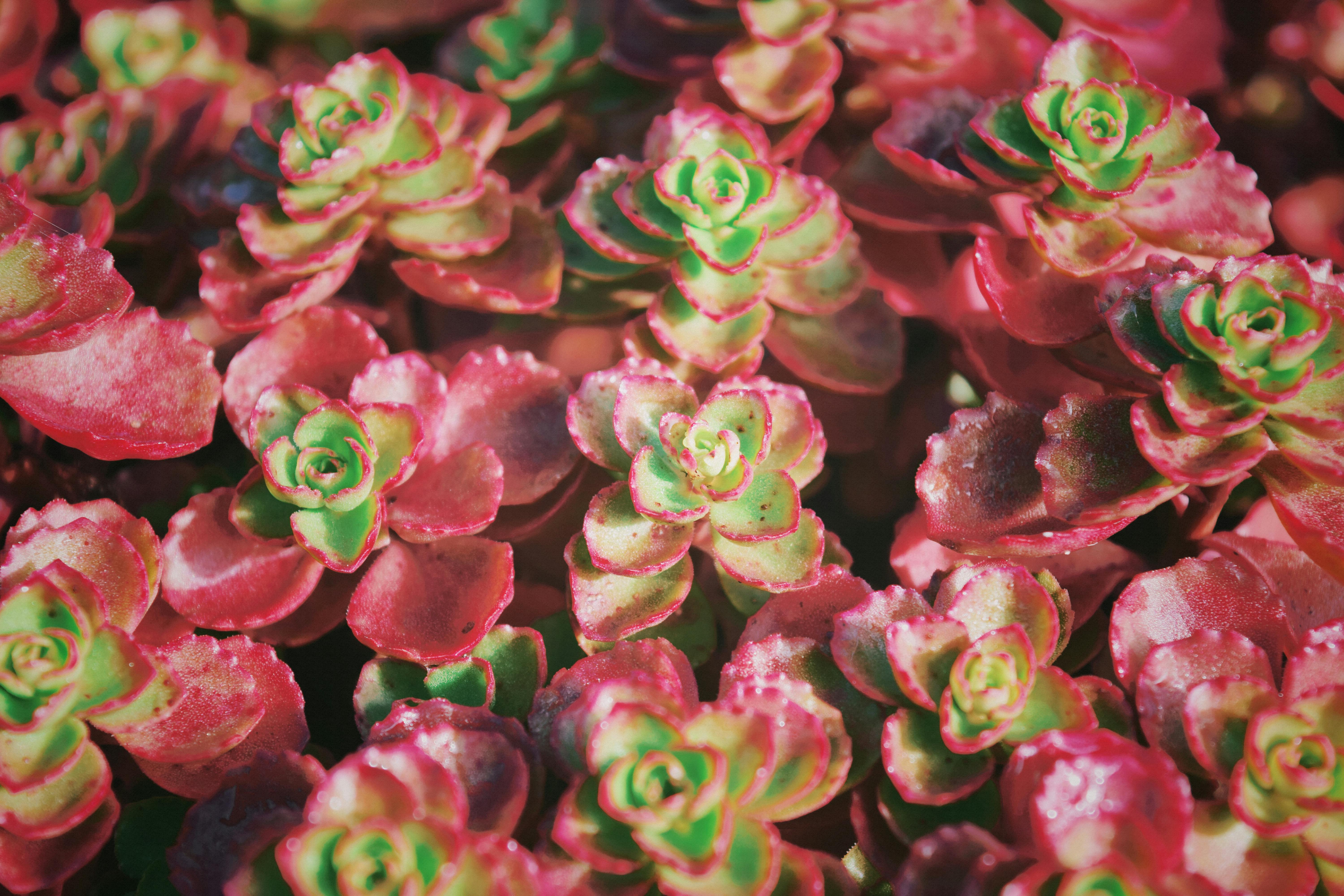
Dragon’s Blood sedum gets its name from the deep red color its leaves turn in cool weather. It’s a low-growing groundcover that spreads easily, making it perfect for filling in bare spots or tucking between stepping stones. You’ll see small pink flowers pop up in summer.
Hardy in zones 3-9, this sedum handles heat, cold, and drought without much fuss. Plant it in full sun for the best color, though it tolerates some shade. It needs well-draining soil and rarely requires watering once established.
3.) Sedum kamtschaticum

Russian stonecrop brings cheerful yellow flowers to your garden from late spring through summer. Growing just 4-6 inches tall, it spreads nicely as a ground cover without taking over your whole yard. You can grow it in zones 3-8, making it tough enough for cold winters.
Plant it in full sun to partial shade with well-draining soil. Once established, it handles drought pretty well, so you won’t need to water constantly. The thick, scalloped leaves stay green through most of the season and turn orange-red in fall.
4.) Opuntia (Prickly Pear Cactus)
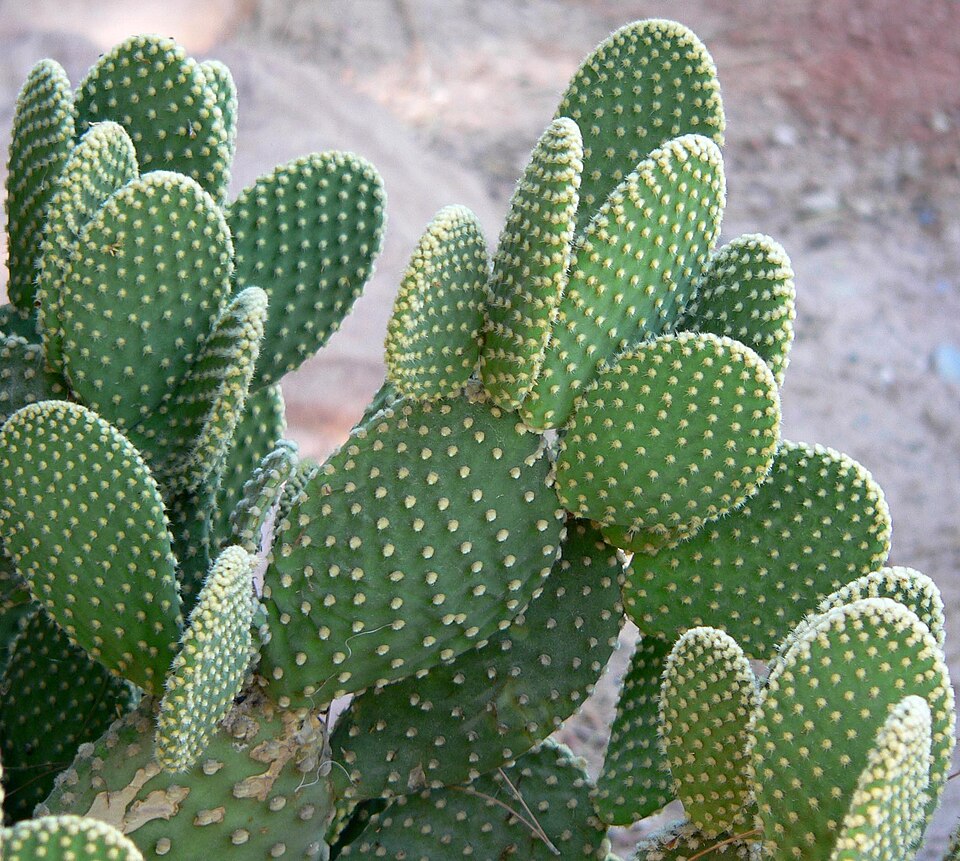
The prickly pear cactus brings a touch of the Southwest to gardens across the country. It handles cold surprisingly well, with many varieties surviving down to Zone 4. Those flat, paddle-shaped pads make it easy to recognize, and you’ll get bonus yellow, orange, or pink flowers in summer.
Plant it in full sun and sandy, well-draining soil. Once established, it needs almost no water and can handle summer heat without breaking a sweat. Just watch out for those spines when working around it.
5.) Yucca filamentosa
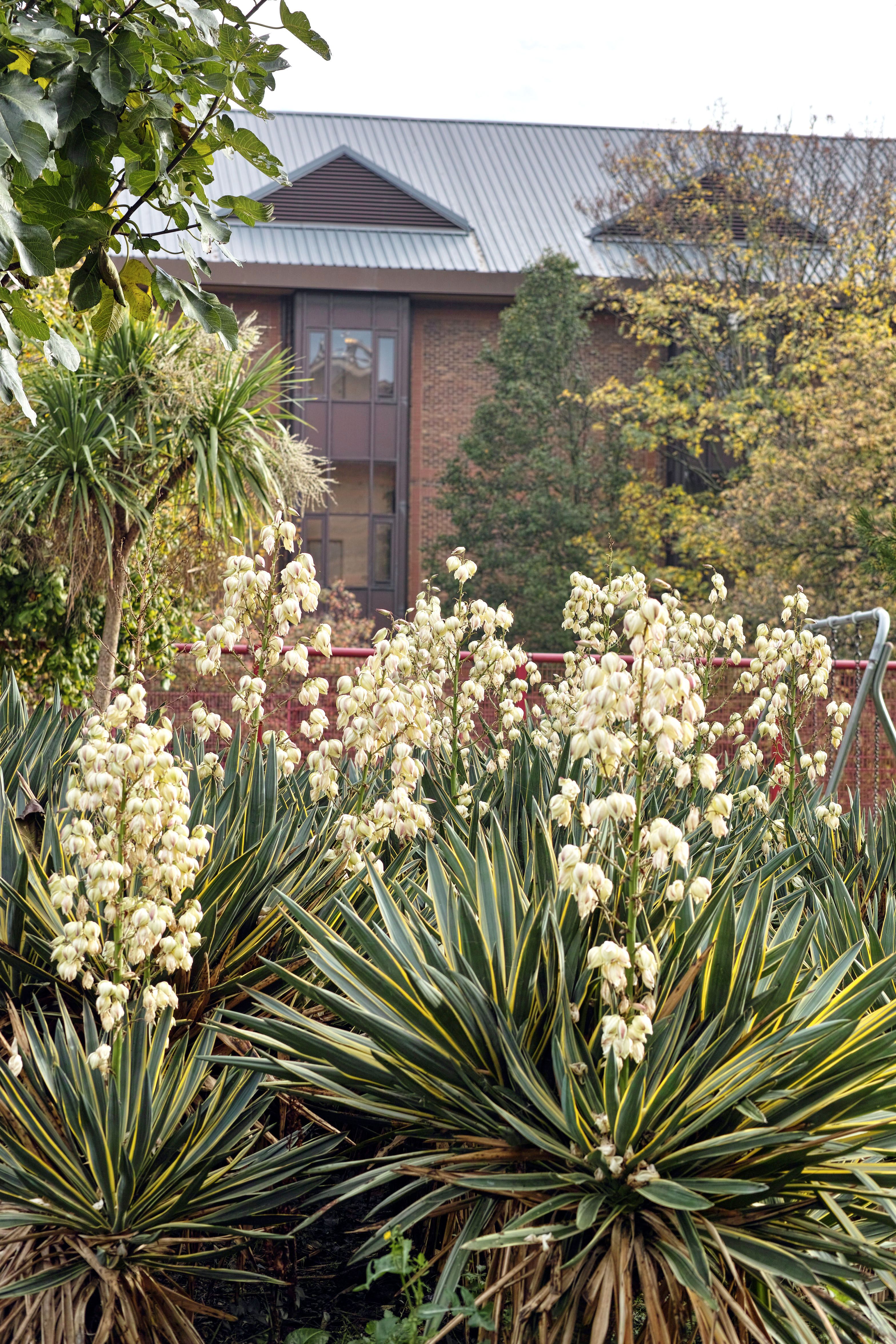
Adam’s Needle brings a southwestern look to cold-climate gardens with its sword-shaped leaves and tall flower spikes. The plant gets its name from the curly white threads that peel from the leaf edges, giving it a shaggy appearance.
Hardy in zones 4-10, it handles temperatures down to -30°F without protection. Plant it in full sun and well-draining soil, then basically forget about it. The creamy white flowers appear in summer on stalks that can reach 6 feet tall.
Water only during extreme drought once established.
6.) Delosperma cooperi (Hardy Ice Plant)
Hardy Ice Plant brings bright magenta flowers to your garden from late spring through fall. The low-growing succulent spreads nicely as a ground cover, reaching only 3-6 inches tall but spreading up to 2 feet wide. It works well in rock gardens or spilling over walls.
This South African native thrives in USDA zones 5-9 and handles cold winters better than most succulents. Plant it in full sun with well-draining soil, and you’ll barely need to water once established. It’s also deer-resistant, which is a nice bonus.
7.) Agave parryi

Parry’s agave brings a sculptural look to your garden with its compact rosette of blue-gray leaves tipped with dark spines. Hardy down to -20°F, it handles zones 5-10 with ease, making it one of the toughest agaves around.
Give it full sun and well-draining soil, then basically forget about it. Water sparingly during summer and not at all in winter. The plant grows slowly to about 18 inches wide and tall.
After 10-15 years, it sends up a tall flower stalk before dying, but it leaves behind plenty of baby plants to continue the show.
8.) Sedum acre (Goldmoss Stonecrop)

Goldmoss Stonecrop forms a thick mat of tiny yellow flowers in late spring, making it perfect for rock gardens and path edges. The plant stays low to the ground, usually just 2-3 inches tall, and spreads to fill in bare spots naturally.
Hardy in zones 3-8, this succulent handles cold winters and hot summers without much fuss. Plant it in full sun with well-draining soil, and you’re pretty much done. It needs almost no water once established and tolerates poor soil better than most plants.
9.) Jovibarba heuffelii

Jovibarba heuffelii forms tight rosettes that slowly multiply into dense clusters, making it a reliable choice for rock gardens and containers. Unlike its cousin the hen-and-chicks, this succulent splits rather than producing offsets on runners.
Hardy in zones 4-9, it handles both freezing winters and hot summers without fuss. Plant it in well-draining soil and full sun for best results.
The rosettes come in shades ranging from green to burgundy, and they’ll stay compact even in less-than-perfect conditions. Water sparingly once established.
10.) Sempervivum arachnoideum (Cobweb Houseleek)

Cobweb Houseleek gets its name from the white, thread-like hairs that stretch across its rosettes, creating a spider web effect. These small succulents form tight clusters and work well in rock gardens or containers. They’re hardy in zones 4-9, which covers most of the country.
These plants prefer full sun and well-draining soil. They handle drought well once established and don’t need much attention. The rosettes stay compact, usually reaching just 3-4 inches across, and they’ll spread slowly to fill in gaps between rocks or pavers.
11.) Sedum album (White Stonecrop)

White Stonecrop forms a low-growing mat of tiny green leaves that turn reddish in full sun. Small white flowers appear in summer, attracting bees and butterflies to your garden. It typically reaches 4-6 inches tall and spreads quickly to fill spaces.
Hardy in zones 3-9, this sedum tolerates extreme cold and heat with ease. Plant it in full sun to partial shade with well-draining soil. Once established, it needs almost no water and handles poor soil without complaint.
Great for rock gardens, between stepping stones, or as a ground cover on slopes.
12.) Opuntia humifusa (Eastern Prickly Pear)

The Eastern Prickly Pear is a cold-hardy cactus that can handle winters down to Zone 4, making it one of the toughest succulents for northern gardeners. It produces yellow flowers in early summer, followed by edible red fruits that attract wildlife.
Plant it in full sun and sandy, well-draining soil. Once established, it needs almost no water and spreads slowly through paddle-shaped pads. Just give it space and watch out for those spines when handling.
13.) Sedum reflexum (Blue Spruce Stonecrop)

Blue Spruce Stonecrop earns its name from the blue-green needles that look like miniature spruce branches. The creeping stems spread to form a thick groundcover, and yellow star-shaped flowers appear in summer. It’s hardy in zones 3-9, making it reliable across most of the country.
Plant it in full sun and well-draining soil—it handles poor, rocky soil just fine. This sedum tolerates drought once established and needs minimal watering. Use it between stepping stones, in rock gardens, or let it cascade over walls and containers.
14.) Agave havardiana

Havard’s agave brings a sculptural look to your garden with its thick, gray-green leaves that form a tight rosette. Native to West Texas and New Mexico, it handles cold better than most agaves, surviving down to Zone 5 with good drainage.
Plant it in full sun and sandy or rocky soil that drains quickly. Water sparingly once established—this one thrives on neglect. The blue-gray leaves have dark spines along the edges, so give it space away from walkways.
It grows slowly to about 2 feet tall and wide, making it perfect for rock gardens or containers.