Non-native organisms have quietly infiltrated ecosystems across the United States, causing widespread environmental and economic damage. These invasive species outcompete native wildlife, disrupt natural habitats, and impose substantial costs on agriculture, forestry, and infrastructure. Between 1960 and 2020, invasive species cost the United States at least $1.22 trillion in damages, resource losses, and management costs.
Invasive species are responsible for the decline of nearly 42% of threatened and endangered species in the United States. From insects that devastate forests to aquatic creatures that clog waterways, these organisms alter ecosystems in ways that reduce biodiversity and threaten the balance of nature. Some were introduced intentionally while others arrived by accident, but their impact remains significant regardless of how they entered the country.
This examination covers 31 of the most destructive invasive species currently affecting American lands and waters. You’ll discover how these organisms spread, the specific threats they pose to native species and habitats, and why their presence continues to challenge conservation efforts nationwide.
1) Brown Tree Snake (Boiga irregularis)
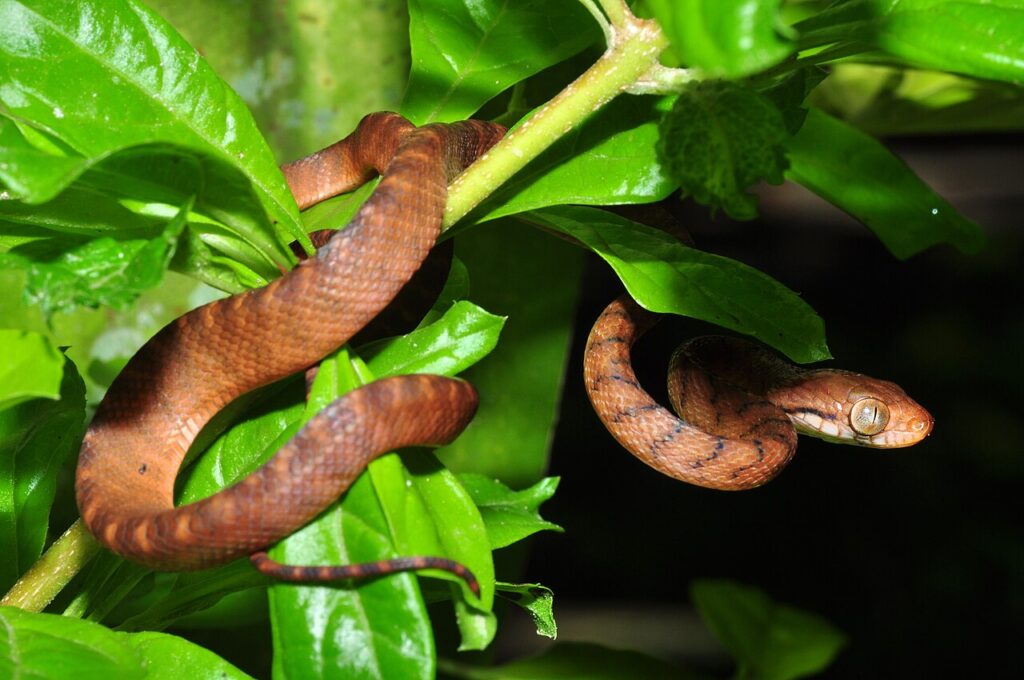
The brown tree snake poses a significant threat to U.S. territories, particularly Guam. This mildly venomous, rear-fanged snake arrived accidentally in the late 1940s or early 1950s, likely through military transports.
Since its introduction, the species has decimated Guam’s native wildlife. Over half of the island’s native bird and lizard species have suffered local extinction. Two of three native bat species have also disappeared.
The snake causes frequent power outages by climbing electrical infrastructure. You’ll find these nocturnal predators growing up to three meters long, though most reach one to two meters.
2) Asian Carp
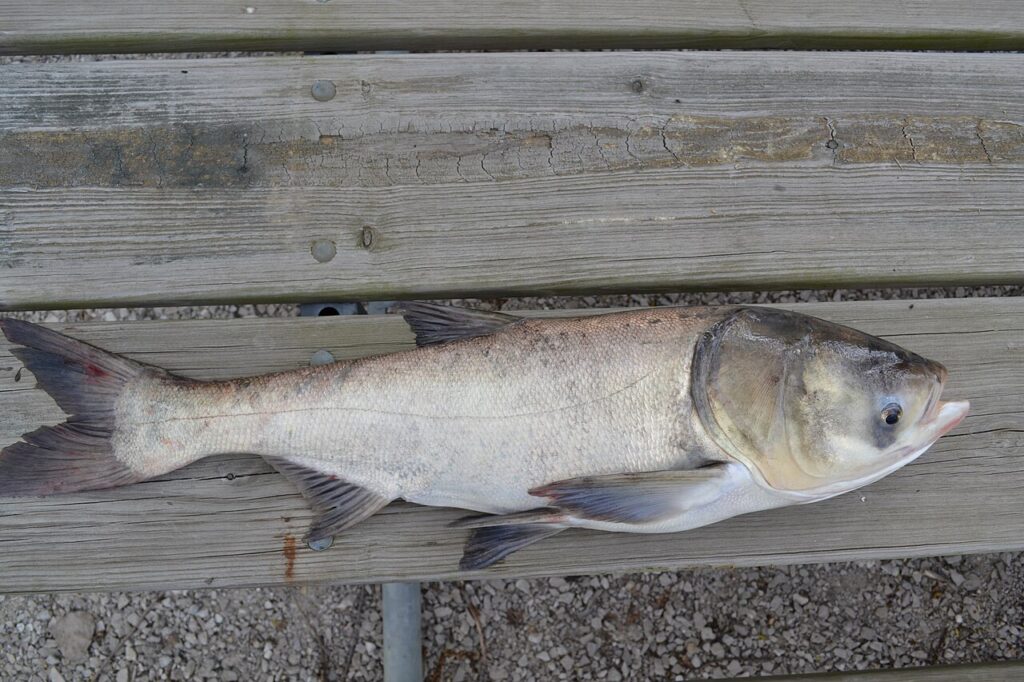
Asian carp threaten freshwater ecosystems across the Mississippi River basin and approach the Great Lakes. These fish include four species: bighead, silver, grass, and black carp. Originally imported in the 1970s for aquaculture pond management, they escaped into waterways and spread rapidly.
You’ll find them dominating rivers in Illinois, Indiana, Kentucky, and surrounding states. They outcompete native fish for food and resources. Silver carp jump from the water when boats pass, creating safety hazards for recreational users and altering the character of affected waterways.
3) Emerald Ash Borer
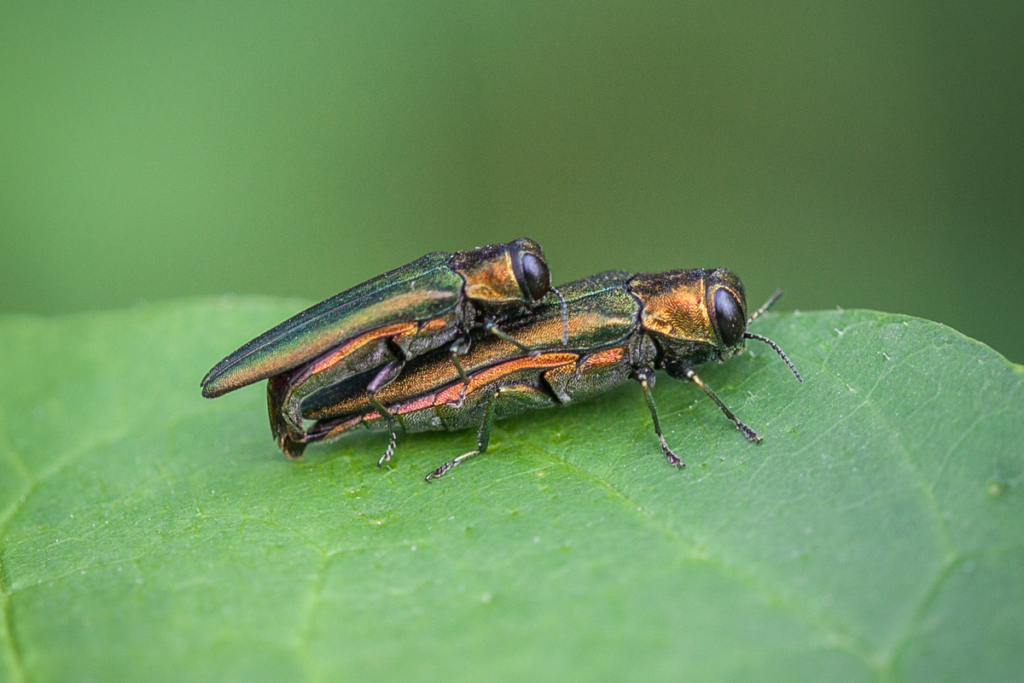
The emerald ash borer is a destructive invasive beetle from Asia that has killed tens of millions of ash trees since its 2002 discovery in Michigan. This species is now present in 37 states and the District of Columbia.
The beetle lays eggs in ash tree bark, and when larvae hatch, they burrow inside to feed. This feeding damages the tree’s ability to transport water and nutrients, ultimately killing it.
You’ll find this pest throughout the eastern United States. It’s considered the most destructive forest insect to ever invade North America.
4) Zebra Mussel
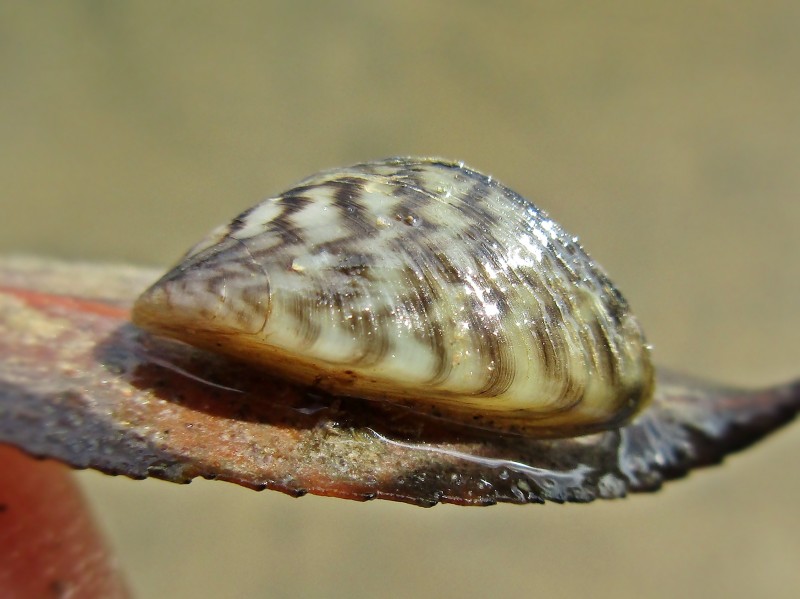
Zebra mussels are small, fingernail-sized mollusks native to the Caspian Sea region of Asia. They’ve spread to 31 states across the U.S., causing severe ecological and economic damage. These invasive mussels clog water intake pipes, render beaches unusable, and damage your boats.
They consume massive amounts of algae and plankton that native fish larvae and mussels need to survive. Power plants spend an estimated $145 million annually controlling zebra mussel infestations in their systems. Once established in a water body, removal becomes nearly impossible.
5) European Starling
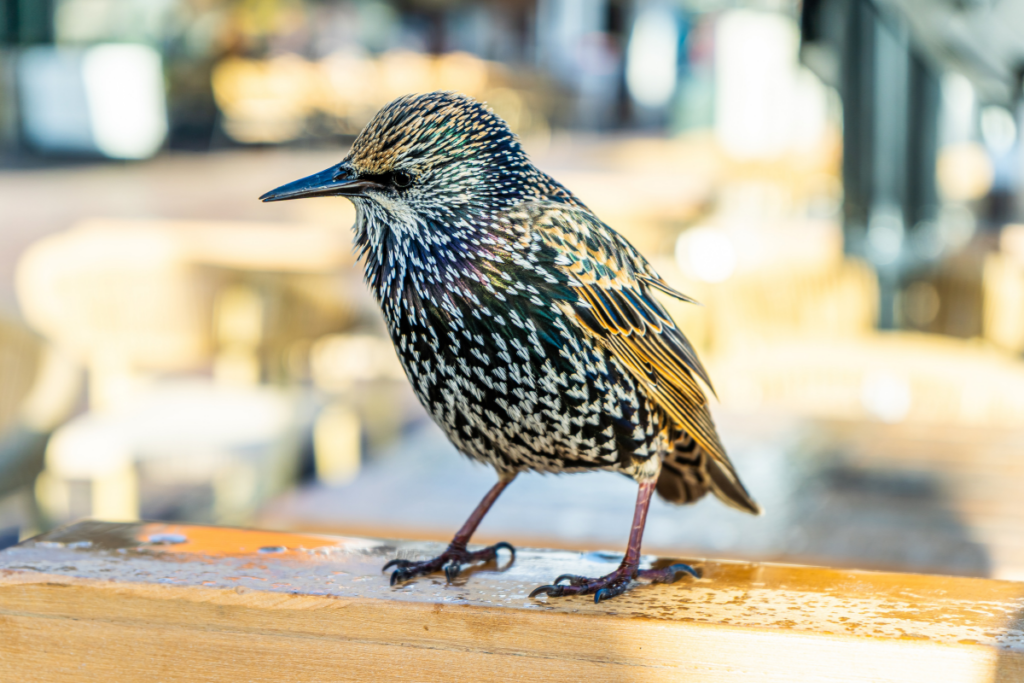
European Starlings were introduced to New York in 1890 when 80 birds were released in Central Park. The population exploded to an estimated 200 million breeding adults across the United States.
These birds compete aggressively with native species for nesting cavities. You’ll find them causing widespread crop damage in agricultural areas throughout the country, particularly affecting livestock operations.
Starlings transmit bacterial, fungal, parasitical, and viral pathogens to livestock through their fecal matter and physical contact. They’re established in all lower 48 states, making them one of North America’s most successful invasive species.
6) Cane Toad
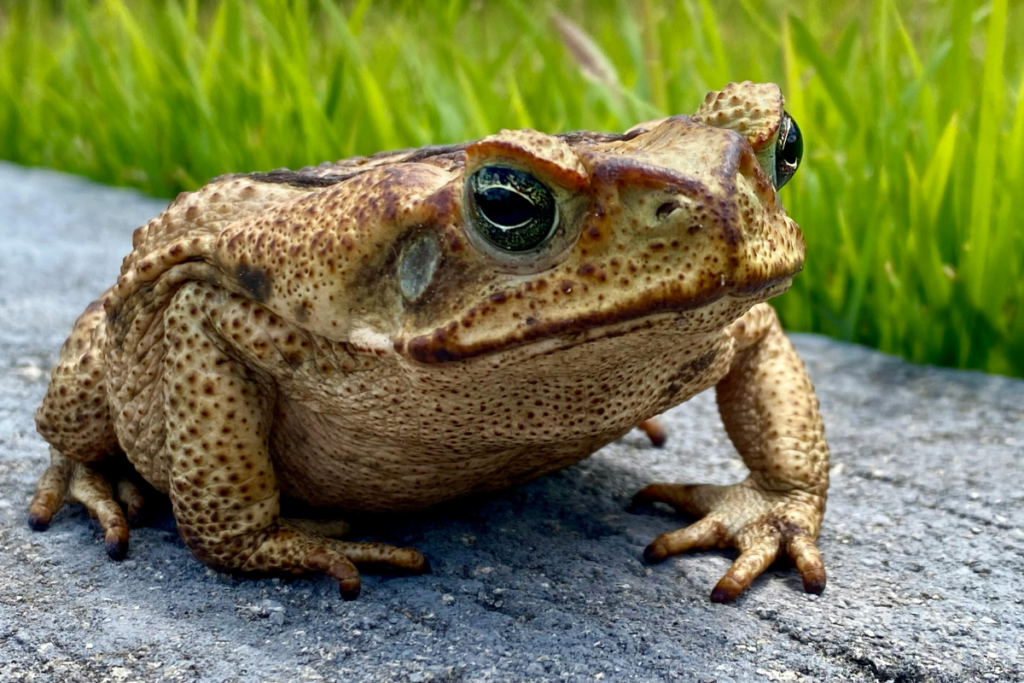
The cane toad is a large, toxic amphibian native to Central and South America. You’ll find this invasive species established in Florida, where it poses serious threats to native wildlife and pets.
This toad secretes potent toxins from its skin that can poison any animal attempting to bite or eat it. Native predators haven’t evolved defenses against these toxins, leading to declines in local reptile, bird, and small mammal populations.
Cane toads breed year-round and consume a wide range of native animals, including frogs, reptiles, and small mammals.
7) Gypsy Moth
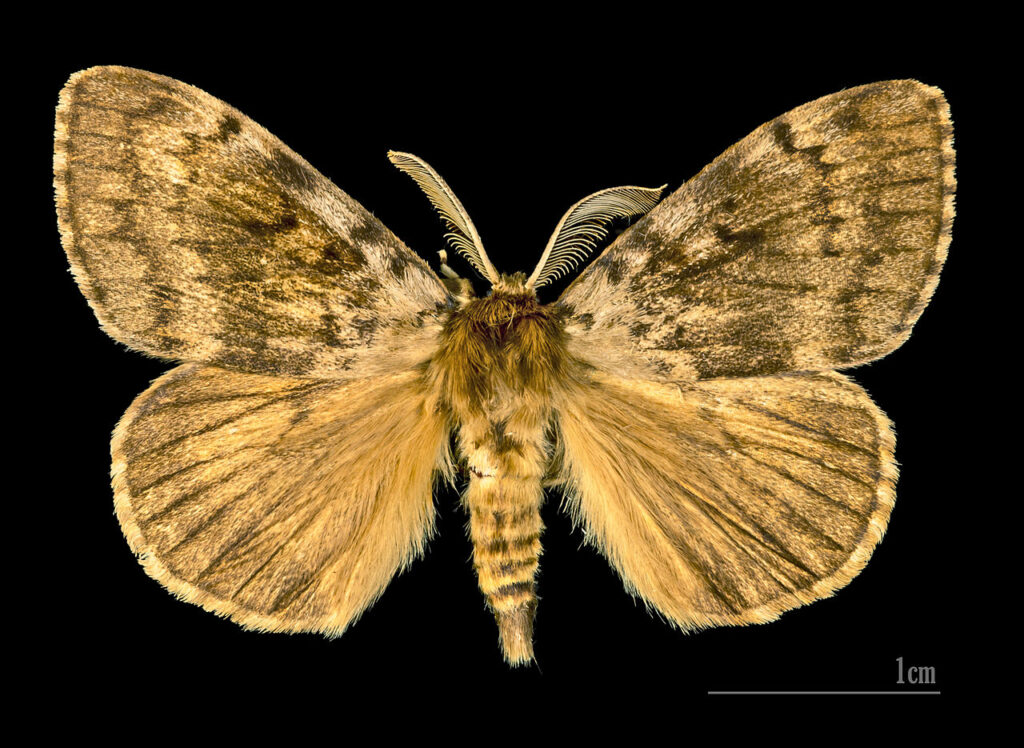
The gypsy moth, now officially called the spongy moth, was introduced to Massachusetts in 1868 by a French scientist. This invasive species has spread across the northeastern United States, including states like Wisconsin, threatening deciduous forests.
The caterpillars feed on over 300 tree and shrub species, with oaks being their preferred target. A single season of infestation can defoliate entire forests in your area. This weakens trees and makes them vulnerable to disease and other pests.
The moth currently occupies only one-third of its potential range in the U.S., meaning further expansion threatens more forested regions.
8) Northern Snakehead
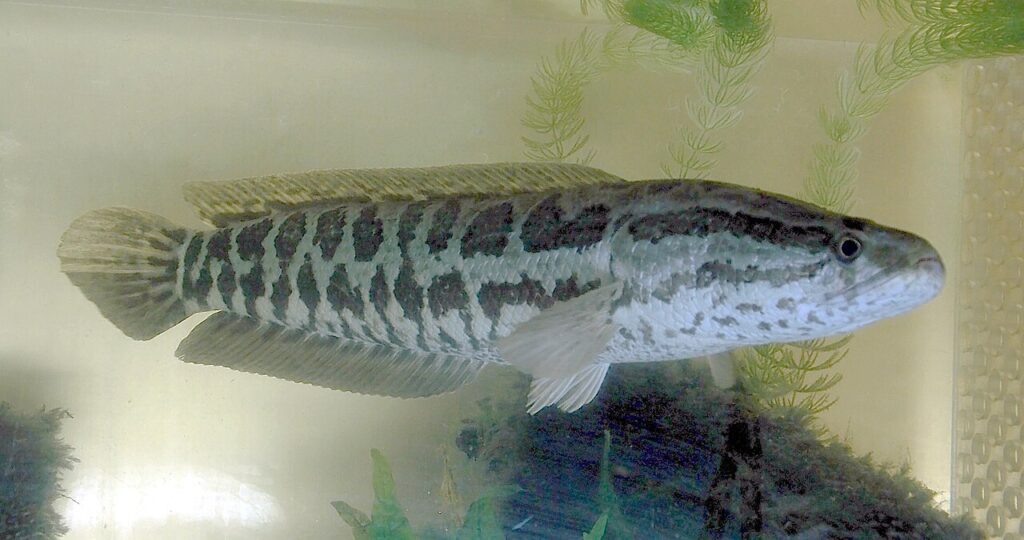
The Northern Snakehead (Channa argus) threatens aquatic ecosystems across the Mid-Atlantic United States, particularly in Maryland’s Chesapeake Bay watershed. This invasive fish from Asia can breathe air and survive on land temporarily.
Northern Snakeheads compete with native species for food and habitat throughout their life stages. They act as voracious predators that could displace established fish populations. Maryland authorities actively work to control their spread, though managing their numbers remains difficult due to their resilience and adaptability in American waters.
9) Lionfish
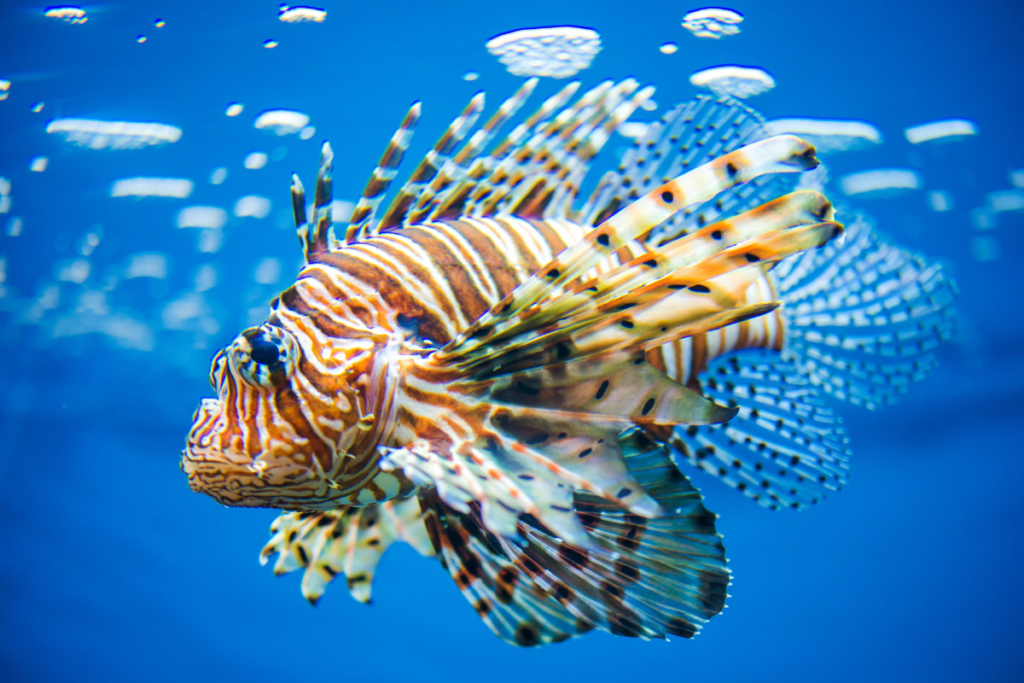
Lionfish have invaded waters along the entire East Coast from Rhode Island to Florida, throughout the Gulf of Mexico including Texas and Louisiana, and across the Caribbean. These venomous fish originally come from the Indo-Pacific Ocean but now threaten your Atlantic coral reefs and marine ecosystems.
The species has no natural predators in Atlantic waters, allowing them to outcompete native fish populations. They occupy the same ecological position as economically valuable species like snapper and grouper, potentially disrupting commercial fishing industries and hampering conservation efforts in affected states.
10) Rusty Crayfish
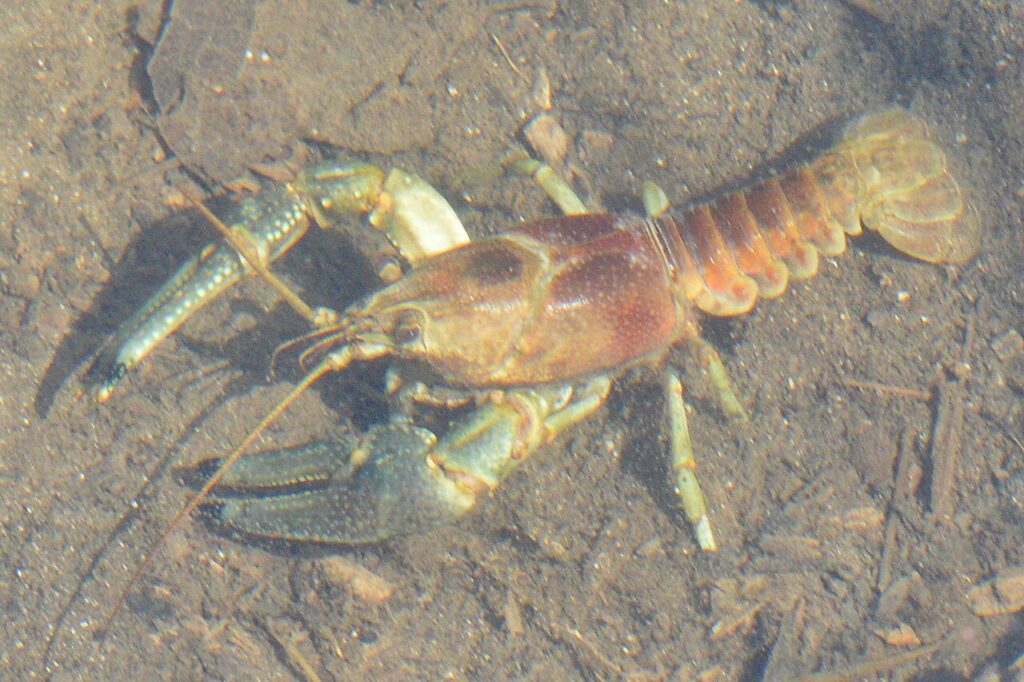
Rusty crayfish are native to the Ohio River Basin but have invaded at least 20 states, including Minnesota, Wisconsin, Colorado, Oregon, Wyoming, and New York. These 3-5 inch crustaceans get their name from rust-red patches on their carapace, though these markings aren’t always visible.
They outcompete native crayfish through their larger size and aggressive behavior. You’ll find them consuming aquatic invertebrates, fish eggs, and plants in your local waterways. Their appetite destroys aquatic vegetation and disrupts ecosystems that native species depend on for survival.
11) Hydrilla
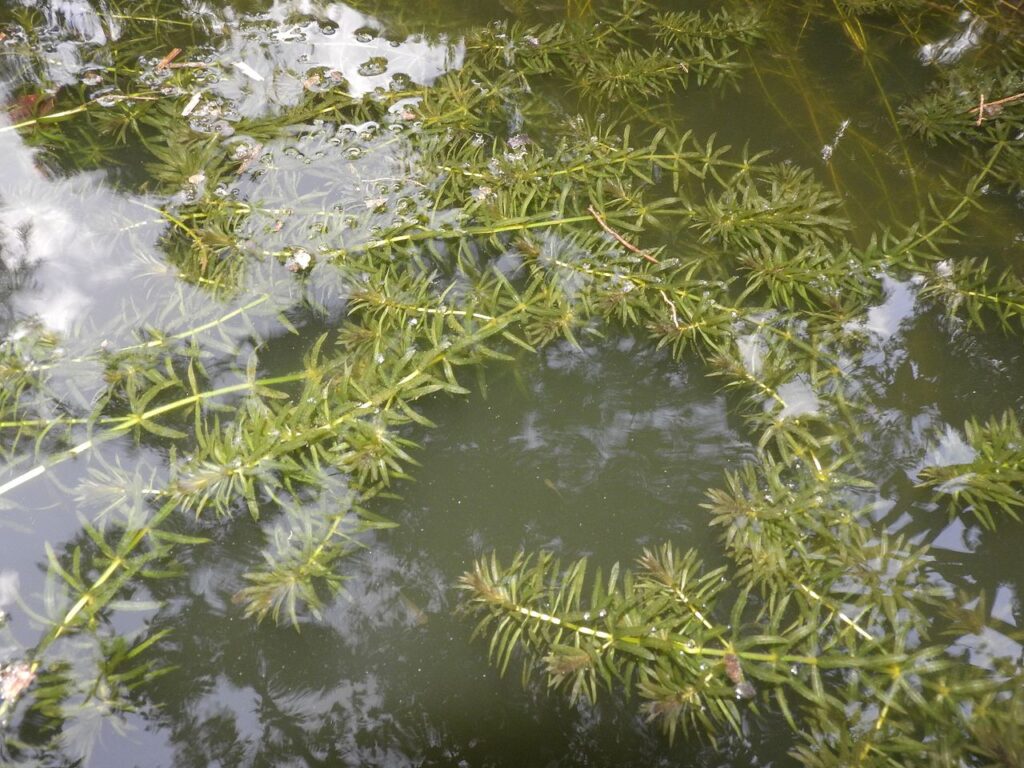
Hydrilla verticillata ranks among North America’s most aggressive aquatic invaders. This plant forms dense underwater mats that choke waterways and disrupt fish habitats. Originally from Southeast Asia, it first appeared in Florida’s Crystal River and has since spread across southern states.
You’ll find hydrilla thriving in Florida, Texas, and increasingly in northeastern waters. It costs millions annually to control and impacts water quality, hydropower operations, and recreation. The U.S. Army Corps of Engineers treats infestations under federal authority, but the plant’s rapid growth makes management challenging.
12) Hemlock Woolly Adelgid
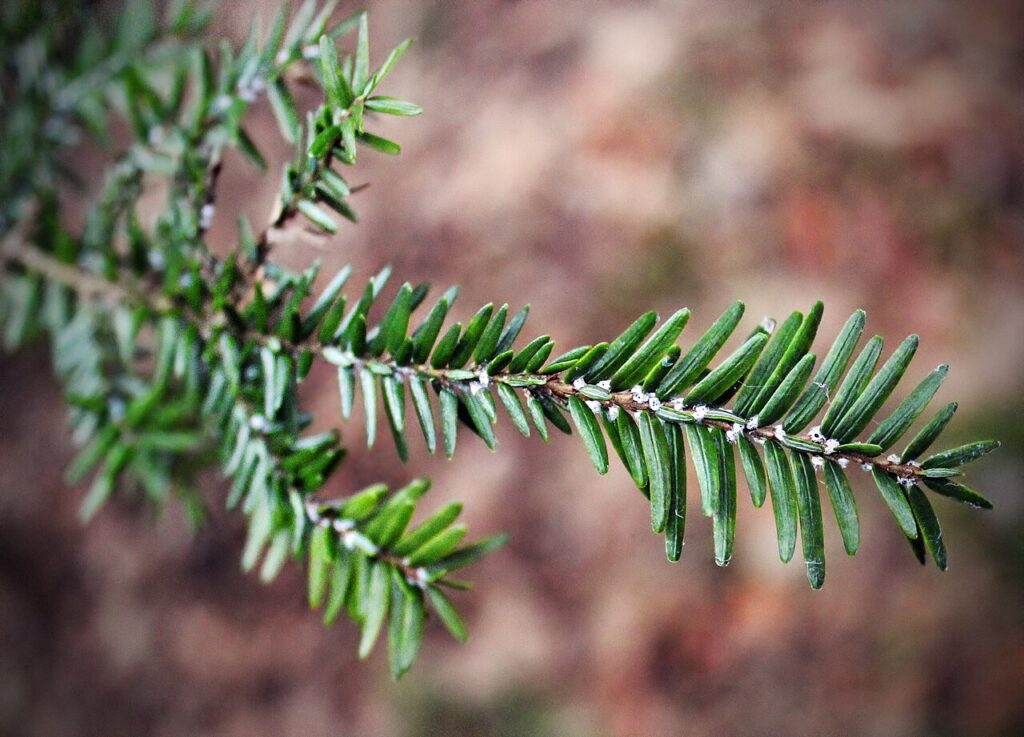
This tiny aphid-like insect threatens hemlock forests across the eastern United States. First detected in Virginia in 1951, the hemlock woolly adelgid feeds on tree sap and appears as small cotton-like masses on needles.
The pest has spread throughout states from Massachusetts to Tennessee, decimating Carolina and eastern hemlock populations. When you spot these insects on hemlock trees, the damage is often already significant. Climate change now allows the adelgid to expand northward, putting previously safe forests at risk.
The loss of hemlocks disrupts entire forest ecosystems across Appalachian states.
13) Japanese Knotweed
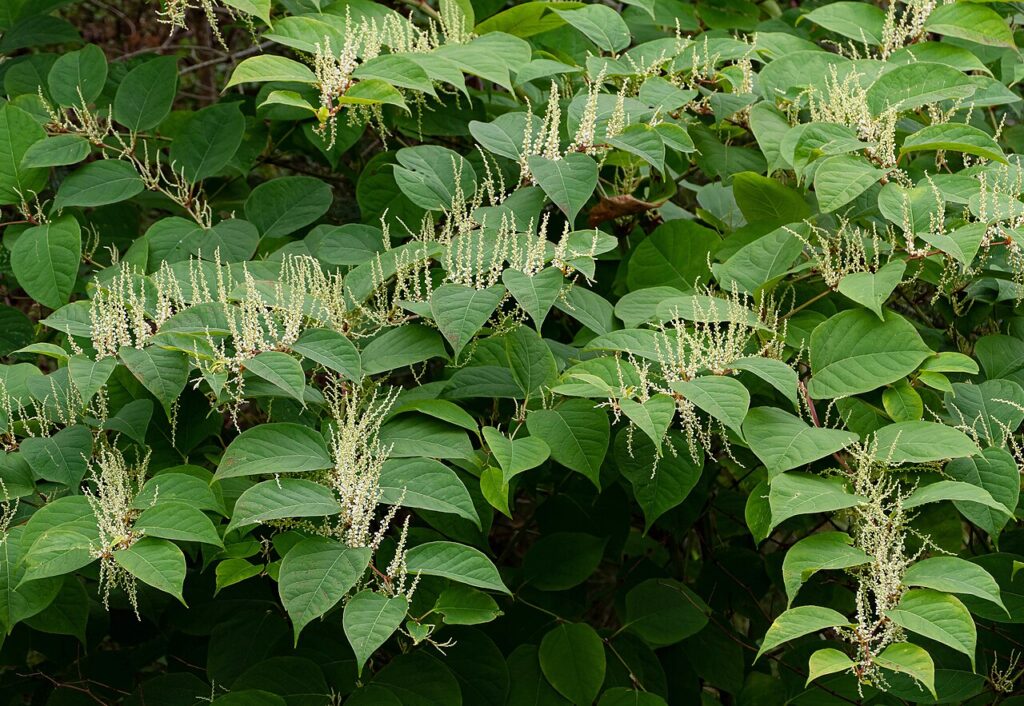
Japanese knotweed arrived in North America during the late 1800s as an ornamental plant from East Asia. This aggressive species now threatens ecosystems across the Pacific Northwest and northeastern states including Michigan and New York.
The plant forms dense thickets that smother native vegetation and provide minimal value to wildlife. A fragment weighing just 0.02 ounces can regrow into a new plant, making control extremely difficult.
You’ll find it breaking through pavement and cracking concrete with its powerful root system. It emerges early each spring and rapidly colonizes riparian areas, surviving severe floods while displacing native species.
14) Spotted Lanternfly
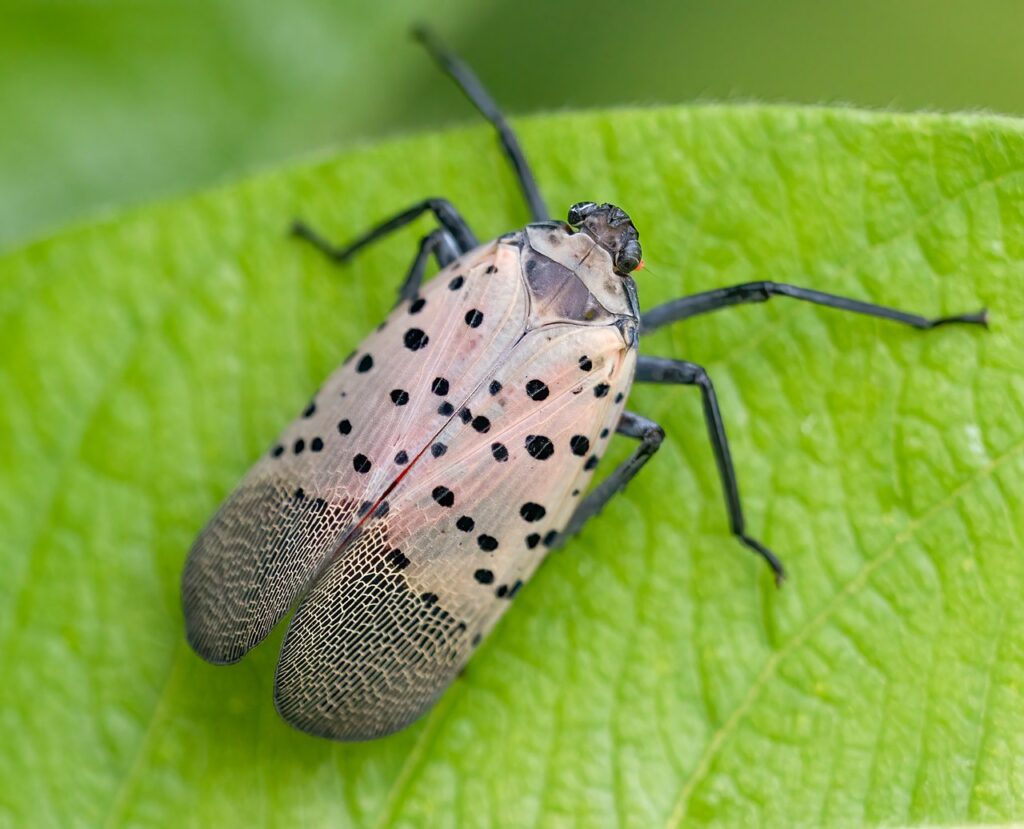
The spotted lanternfly threatens over 70 types of plants across the United States. This invasive pest feeds on fruit trees, woody trees, and crops, causing significant agricultural damage.
The insect has spread to 17 states, including Pennsylvania, New Jersey, New York, Delaware, Maryland, Virginia, West Virginia, Ohio, Indiana, Connecticut, Massachusetts, North Carolina, Rhode Island, Michigan, Kentucky, Illinois, and Washington, DC. It likely arrived from Asia around 2014.
You can help control this species by looking for egg masses on outdoor surfaces during winter and early spring. Authorities encourage you to destroy any spotted lanternflies you find.
15) Africanized Honey Bee

Africanized honey bees arrived in the United States through Texas in 1990 after spreading northward from Brazil, where they were accidentally released in 1957. These hybrids between African and European bee subspecies are now established in 13 southern states, including Texas, Arizona, California, and Florida.
They display more aggressive defensive behavior than European honeybees, which poses risks to people, livestock, and pets. Their presence has negatively impacted the honey production industry due to their temperament and management challenges.
The bees cannot survive in colder climates, which limits their northward expansion.
16) Purple Loosestrife
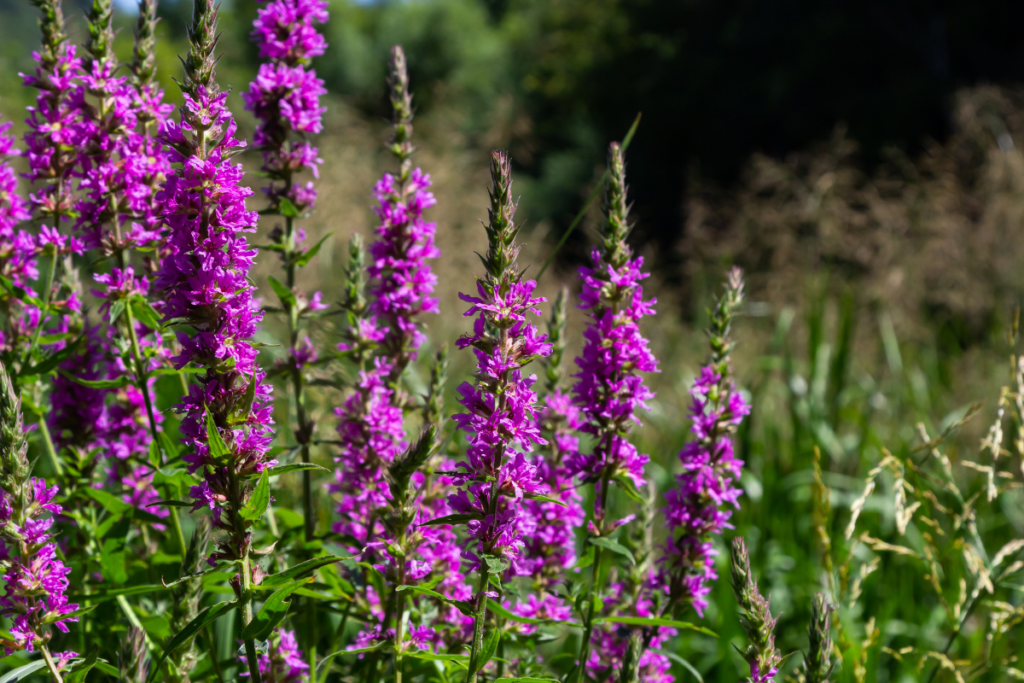
Purple loosestrife arrived in North America from Europe around 1820, likely through ship ballast or as an ornamental plant. You’ll find this wetland invader across nearly every U.S. state, with the highest concentrations in northeastern states and increasingly along western irrigation systems.
The plant forms dense purple stands that crowd out native cattails, sedges, and wildflowers. Its aggressive root system dominates wetland seed banks and clogs waterways. Within a few growing seasons, you’ll witness diverse wetlands transform into single-species zones, eliminating wildlife habitat and reducing biodiversity.
17) Nutria
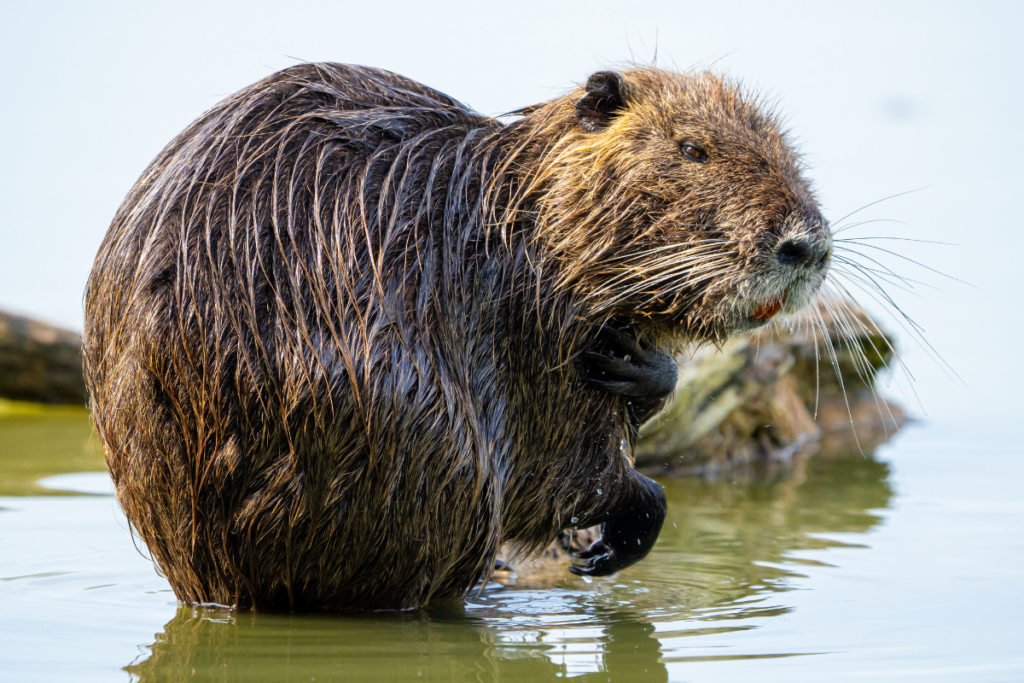
Nutria are large, semi-aquatic rodents native to South America with distinctive orange teeth. They were introduced to the United States in the late 1800s for fur farming. These invasive rodents are now established in at least 17 states, including California, Maryland, and Louisiana.
Nutria destroy native aquatic vegetation and crops through their voracious feeding habits. They consume and eliminate critical wetland plants that support rare and endangered species. Their burrowing damages wetland areas, agricultural lands, and structural foundations like dikes and roads.
These rodents also carry diseases including tuberculosis and septicemia that threaten humans, livestock, and pets.
18) Brazilian Pepper Tree
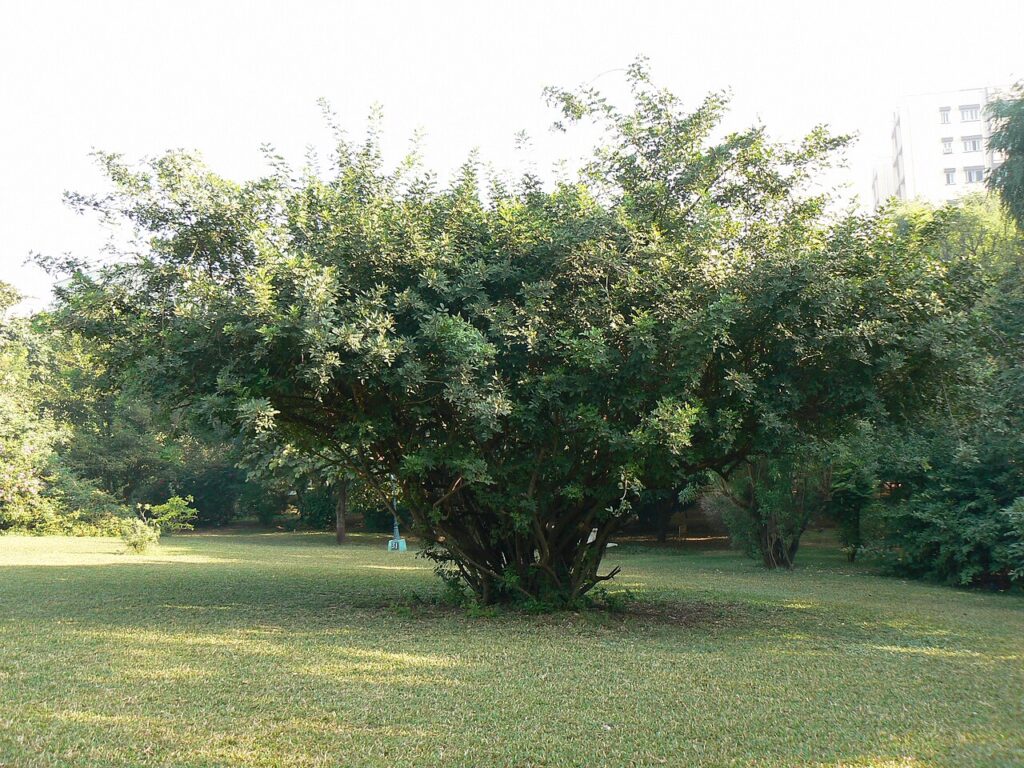
Brazilian pepper tree arrived in Florida during the 1840s as an ornamental plant, prized for its red berries and green foliage. It now infests over 700,000 acres across the state, making it Florida’s most widespread invasive species.
The tree forms dense thickets that shade out native plants beneath its canopy. It also releases chemicals into the soil that prevent other vegetation from growing nearby.
You’ll find this invasive species in Florida, Alabama, Georgia, California, Hawaii, Texas, and Louisiana. It displaces rare and endangered plants while degrading habitat for native wildlife, including the threatened gopher tortoise.
19) Wild Boar
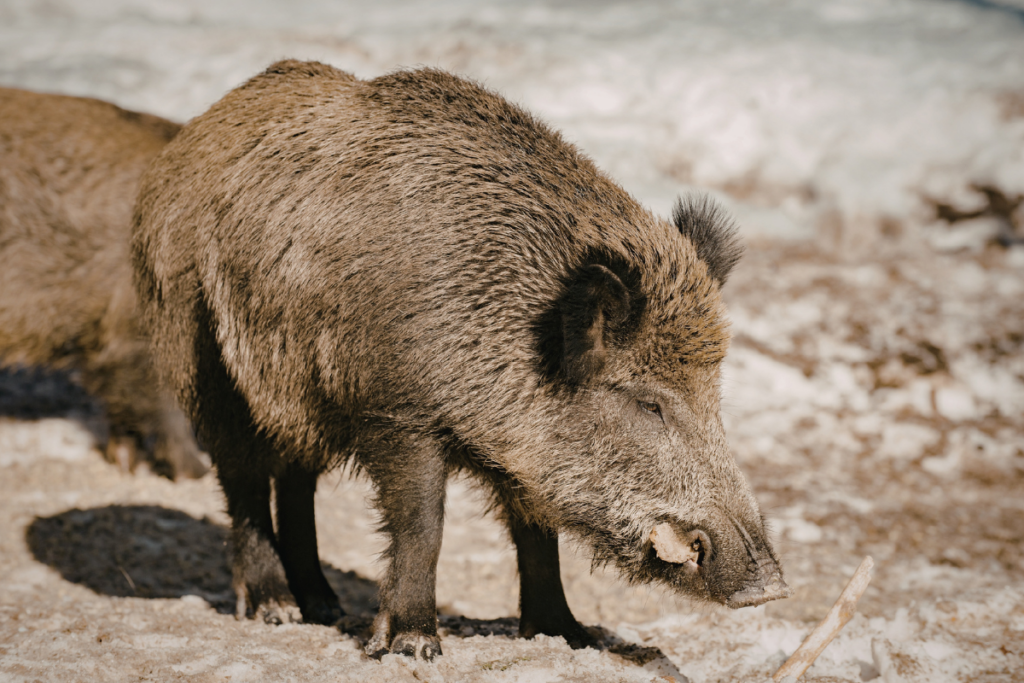
Wild boars pose a serious threat across numerous states, including Texas, California, Florida, and North Carolina. These invasive pigs cause approximately $1.5 billion in annual damage throughout the United States.
You’ll find them destroying agricultural crops and disrupting native ecosystems through their rooting behavior. They reproduce rapidly, with females producing up to 12 piglets twice yearly.
Their feeding habits damage wetlands and threaten endangered species by destroying critical habitats. Originally brought to North America in the 1500s as food, their populations expanded significantly when wealthy hunters imported Eurasian wild boars during the mid-19th century.
20) Asian Longhorned Beetle
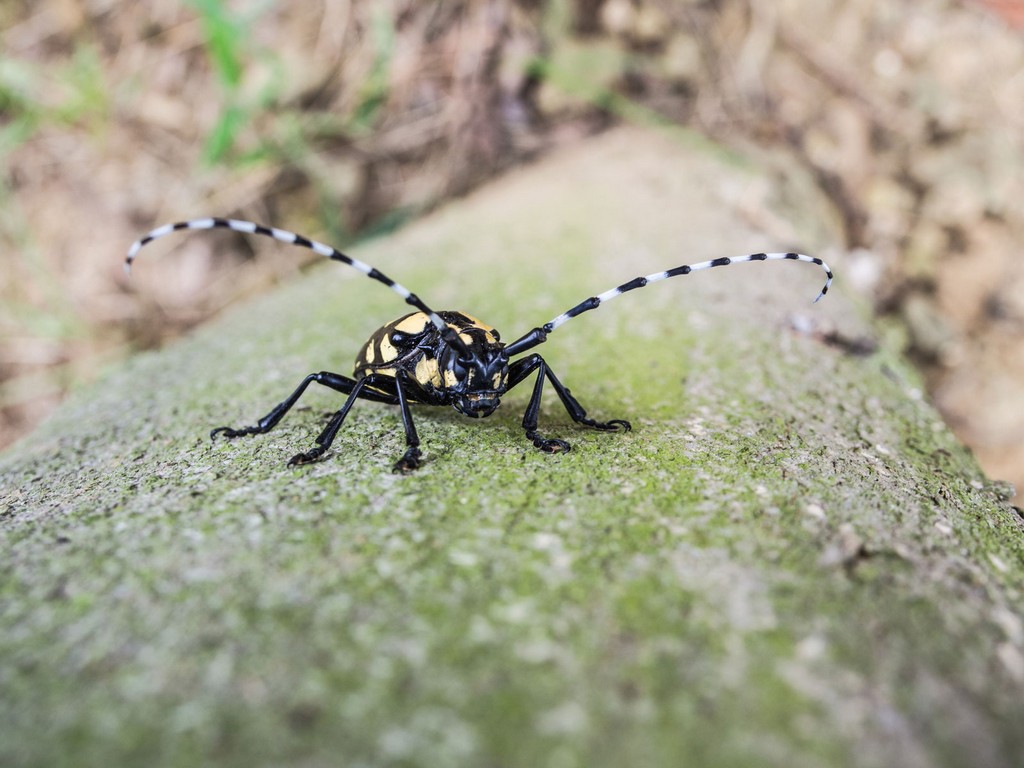
The Asian longhorned beetle threatens hardwood trees across multiple U.S. states, including New York, Massachusetts, and Ohio. This wood-boring insect from China and Korea arrived in Brooklyn in 1996, likely through wooden shipping materials.
The beetle feeds on living tissues inside trees, causing damage that cannot heal. Infested trees become safety hazards as weakened branches drop and trunks can fall during storms.
Your maple, birch, and elm trees are at risk. The beetle’s tunneling activity eventually kills host trees, threatening lumber industries, maple syrup production, and fall foliage tourism throughout affected regions.
21) New Zealand Mudsnail
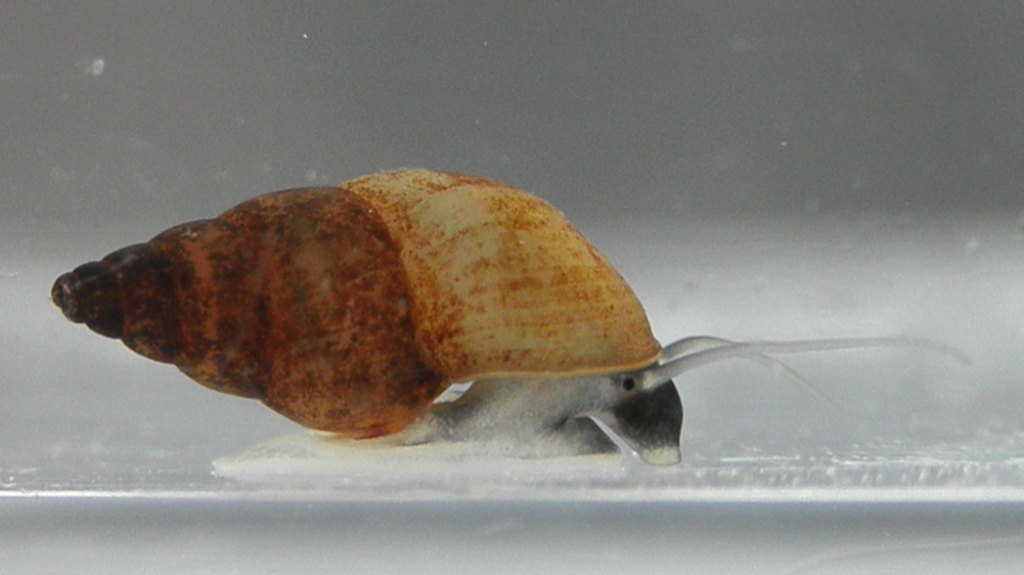
The New Zealand mudsnail poses a serious threat to freshwater ecosystems across the western United States. First detected in Idaho’s Snake River in 1987, these tiny invaders now infest rivers and streams in Montana, Oregon, California, Minnesota, and Wisconsin.
These snails measure only 4-6 millimeters long but reach densities of thousands per square foot in infested waters. They reproduce asexually and consume up to half the food available to native mollusks and insects. This allows them to outcompete native species rapidly, disrupting the ecological balance you depend on for healthy waterways.
22) Chytrid Fungus
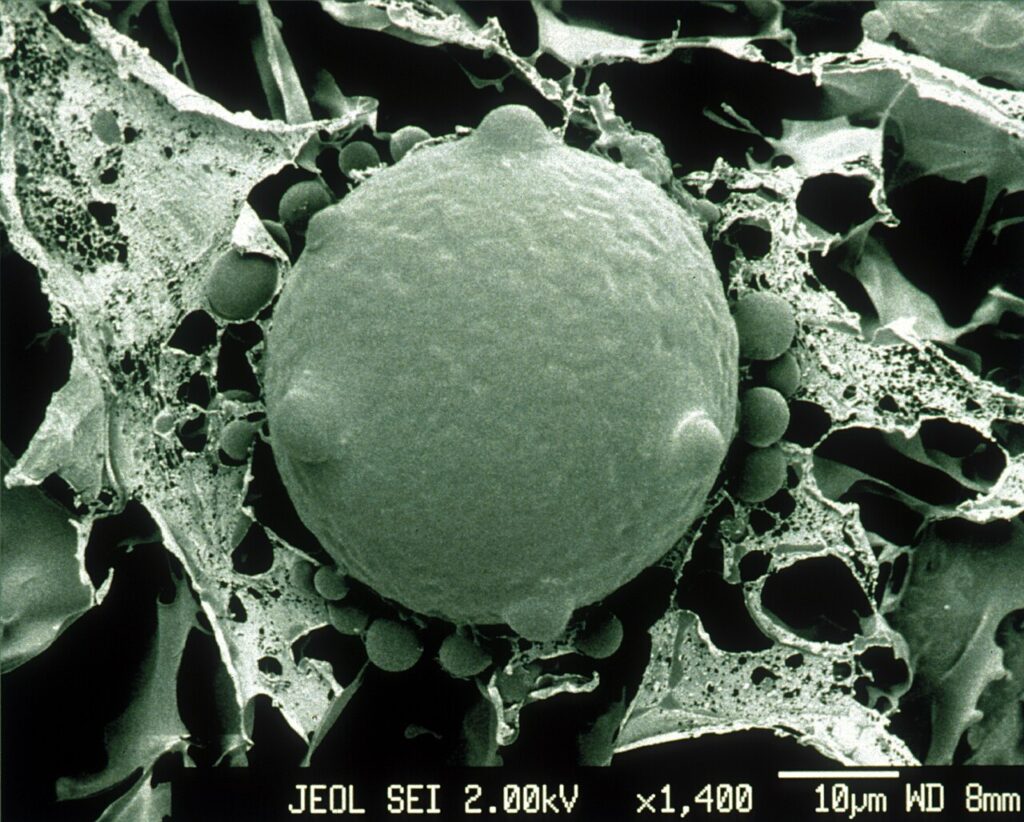
Chytrid fungus, specifically Batrachochytrium dendrobatidis, threatens amphibian populations across the United States. This pathogenic fungus causes chytridiomycosis, an infectious disease that disrupts amphibians’ skin function and often proves fatal.
The fungus has been detected in multiple states including California, Colorado, and Arizona, where it impacts native frog and salamander populations. Over 50% of amphibian species have declined globally due to this pathogen.
While not native to the U.S., chytrid fungus spreads through international wildlife trade and movement of infected amphibians. Federal agencies now restrict salamander imports to prevent introducing additional deadly strains into American ecosystems.
23) Feral Hogs

Feral hogs cause $1.5 to $2.5 billion in annual damage across at least 35 states. They destroy crops by feeding on vegetation down to the roots, damaging soil structure in the process.
These invasive animals weigh hundreds of pounds and use their snouts to uproot fields, tear up roads, and damage infrastructure. They carry diseases that threaten the domestic pig industry and other wildlife. Their populations can double in just four months.
You’ll find them destroying native vegetation in wetlands, grasslands, and riversides throughout states including Texas, Florida, and South Carolina.
24) European Green Crab
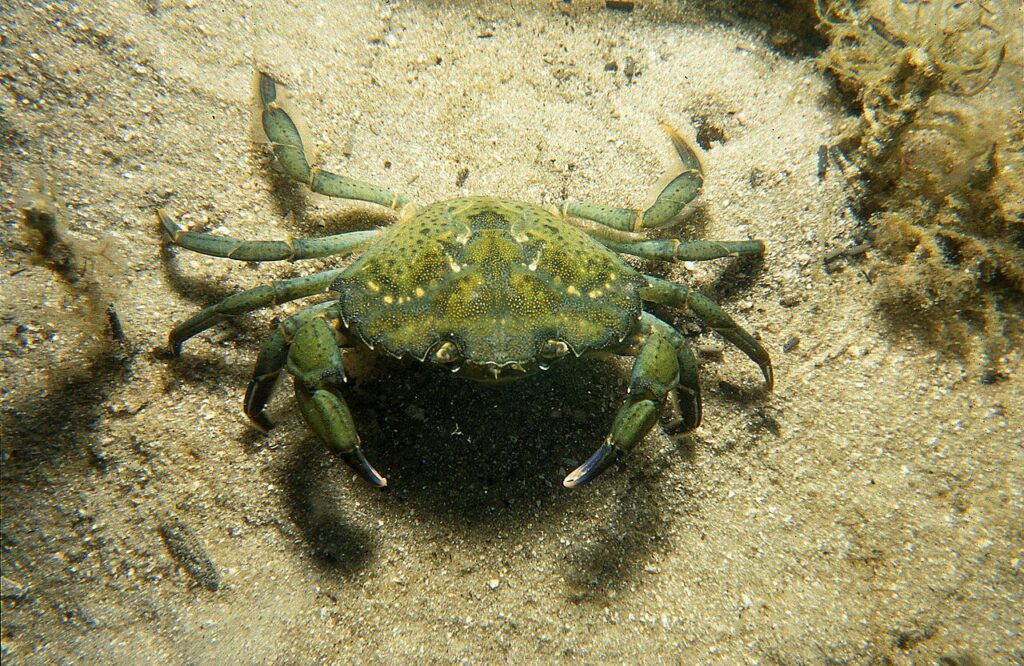
The European green crab threatens coastal ecosystems in Washington, California, Maryland, and states up to Newfoundland. This invasive species destroys eelgrass habitat that salmon and other fish depend on for survival.
You’ll find these crabs outcompeting native shellfish for food and space. They aggressively prey on clams, mussels, and oysters, damaging commercial fisheries along both coasts.
Green crabs also consume juvenile Dungeness crab and young salmon. Their destructive feeding habits and lack of natural predators allow populations to expand rapidly in affected areas.
25) Oriental Bittersweet
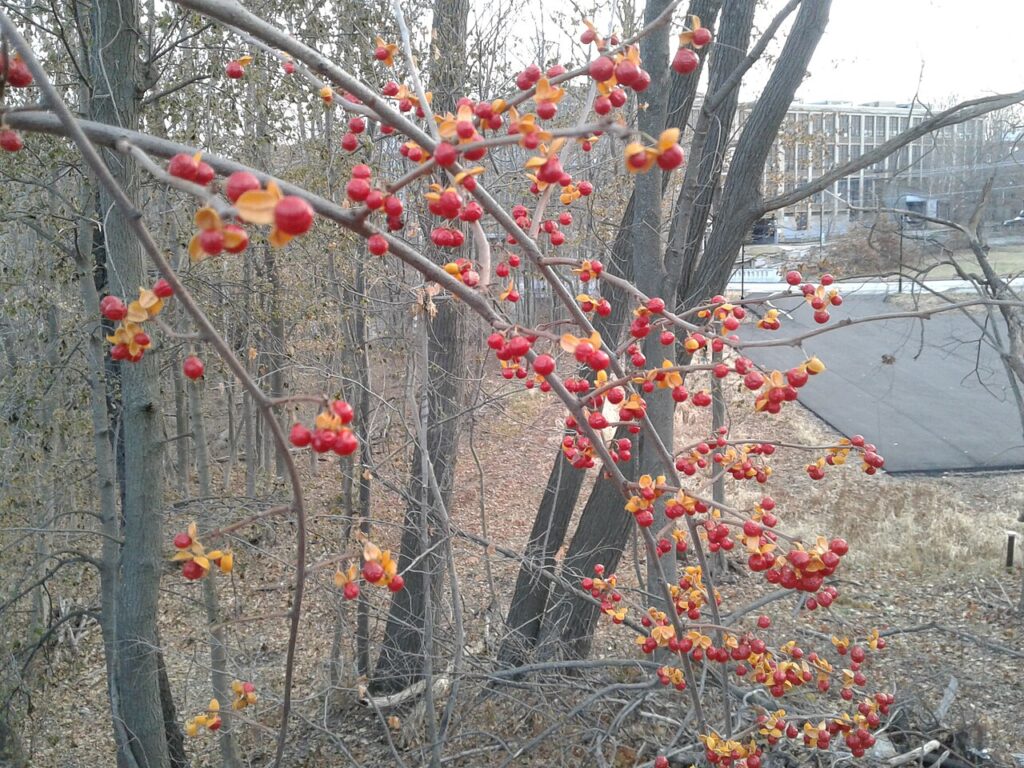
Oriental bittersweet arrived in the United States around 1860 as an ornamental plant from China, Japan, and Korea. This woody vine now infests the eastern half of the country, from Maine to Georgia and west to Iowa.
The vine climbs trees and shrubs, girdling their trunks and smothering native vegetation with dense foliage. Its weight breaks branches and damages tree canopies in forests across 21 states.
Birds eat the abundant berries and spread seeds through their droppings. You’ll find this invasive species particularly established in Indiana, Michigan, Massachusetts, and throughout the Northeast.
26) Sea Lamprey
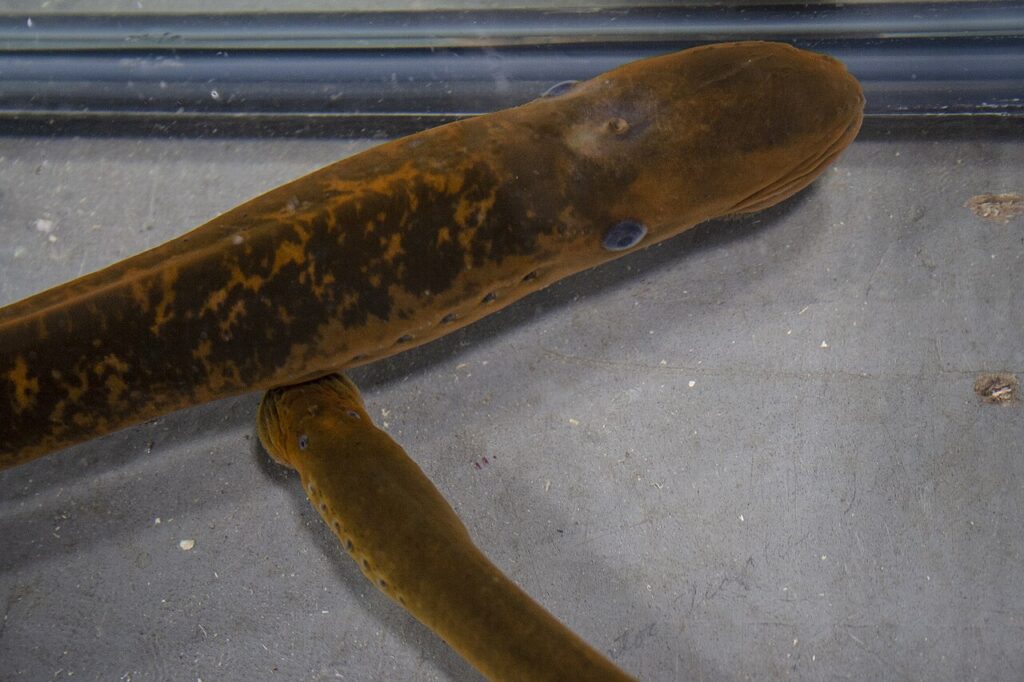
The sea lamprey invaded the Great Lakes through shipping canals in the early 1900s, spreading across Michigan, Wisconsin, Minnesota, Illinois, Indiana, Ohio, Pennsylvania, and New York. This parasitic fish attaches to native species with its suction-cup mouth and drains their blood and bodily fluids.
Each adult sea lamprey kills up to 40 pounds of fish annually. The invasion devastated the Great Lakes fishing industry, which now relies on ongoing control measures to protect the $7 billion fishery.
Native to the Atlantic Ocean, sea lampreys face no natural predators in the Great Lakes, allowing their populations to thrive unchecked without intervention.
27) European Buckthorn
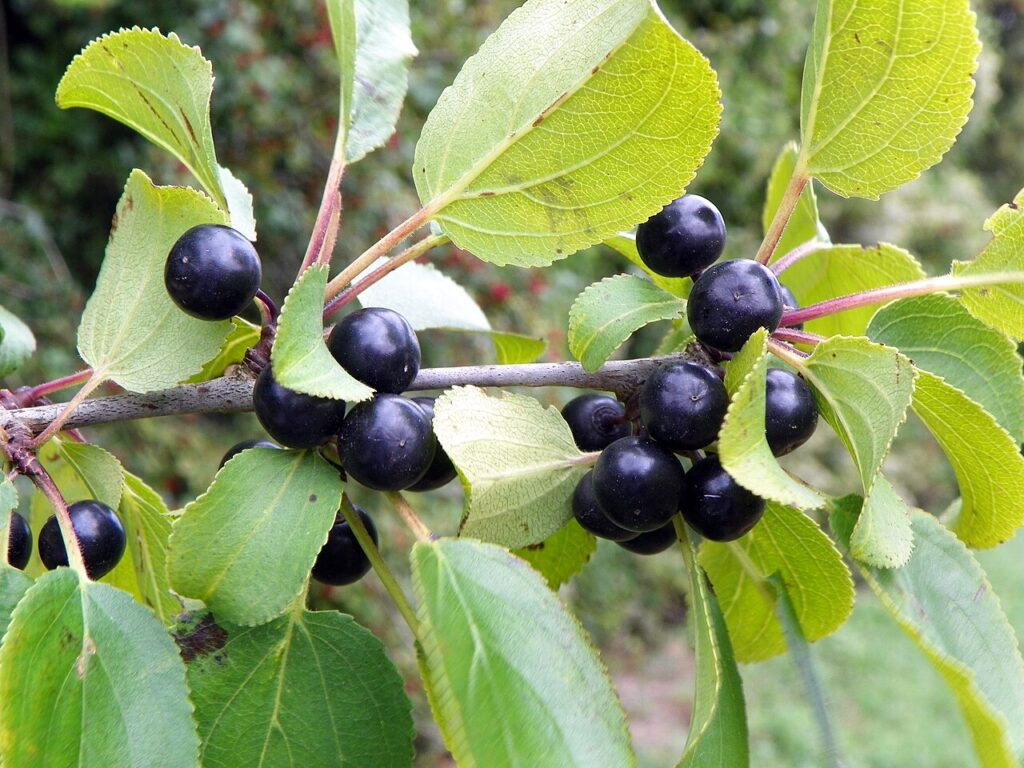
European buckthorn (Rhamnus cathartica) threatens forests across the Midwest and Eastern United States. This invasive shrub arrived from Europe in the 1800s as ornamental hedging material.
You’ll find it forming dense thickets in states like Wisconsin, Minnesota, Illinois, and Michigan. It crowds out native plants by creating monocultures in forests, prairies, and savannas.
The species regenerates aggressively after cutting or burning, making removal difficult. It degrades wildlife habitat by outcompeting the native vegetation your local ecosystems depend on.
28) Garlic Mustard
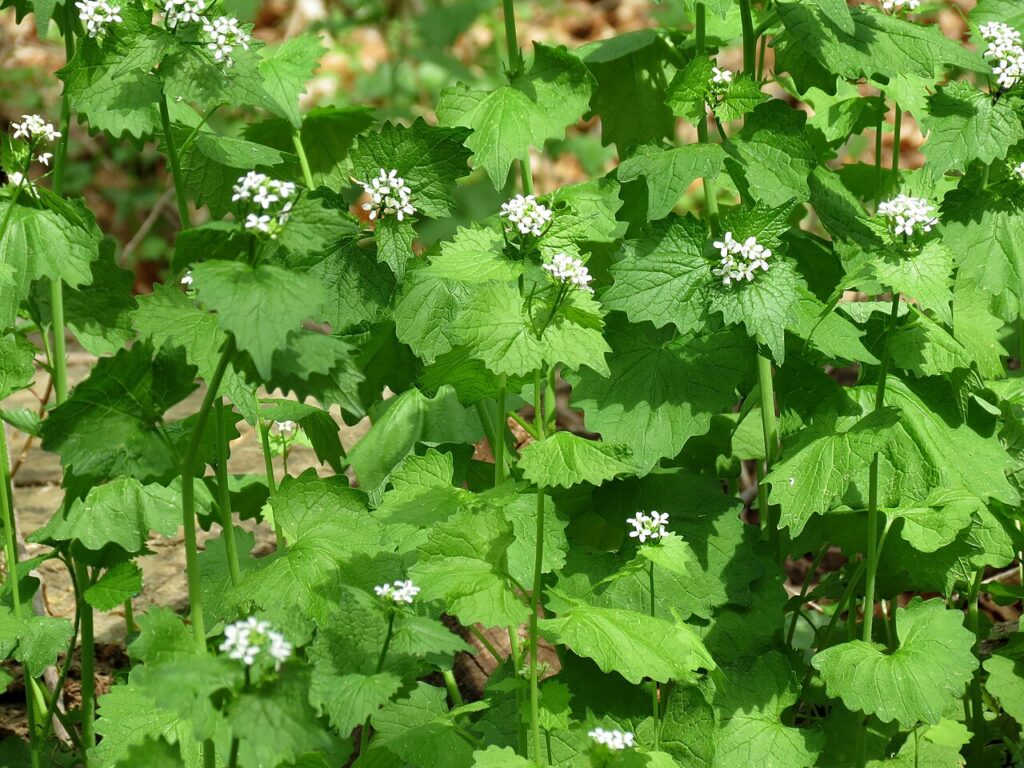
Garlic mustard threatens forests across the Eastern United States and parts of Canada. This European plant arrived in the 1860s as a culinary herb but now dominates forest floors from the Midwest to the Northeast.
The plant releases sinigrin into soil, which destroys fungal networks that native plants depend on for survival. This chemical warfare makes it nearly impossible for native species to compete. Garlic mustard forms dense stands that block light and nutrients from reaching wildflowers and other native vegetation.
You’ll find this invasive species along trails and roadsides where its seeds spread easily on shoes and equipment.
29) Asian Shore Crab
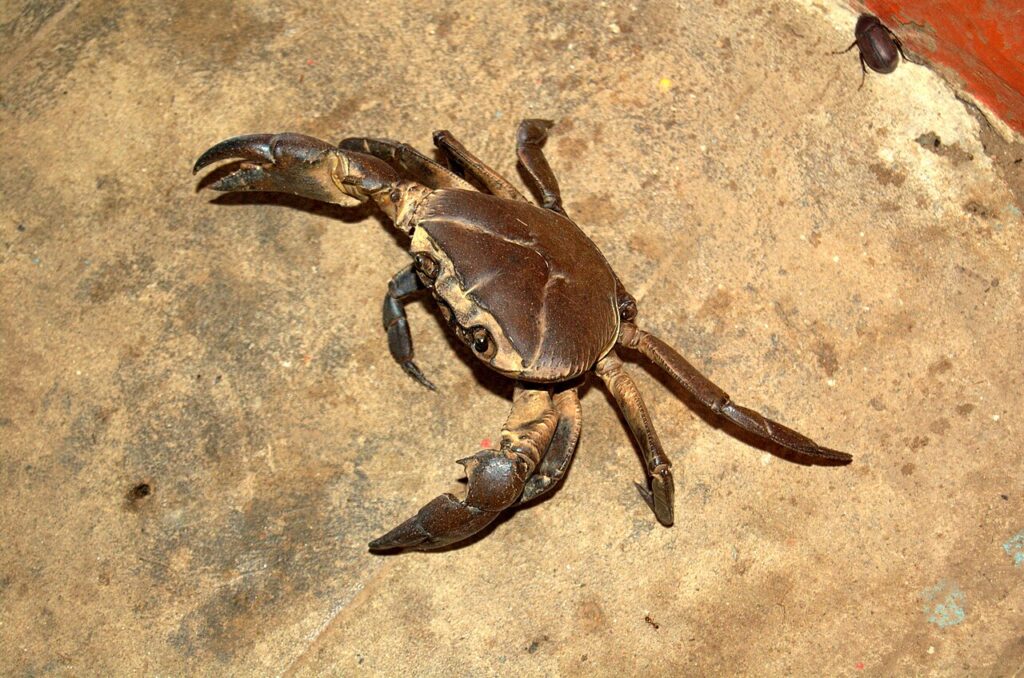
The Asian shore crab invaded the Atlantic coast after arriving from the western Pacific Ocean. You’ll find this invasive species from Maine to North Carolina, with established populations in New York, New Jersey, and Connecticut waters.
These crabs breed from May to September, giving them twice the reproductive window of native species. They compete directly with blue crabs, rock crabs, and lobsters for food and habitat.
The Asian shore crab displaces native mud crabs from rocky intertidal zones. They tolerate varying temperatures and salinities, allowing rapid population growth along your coastline.
30) Japanese Beetle
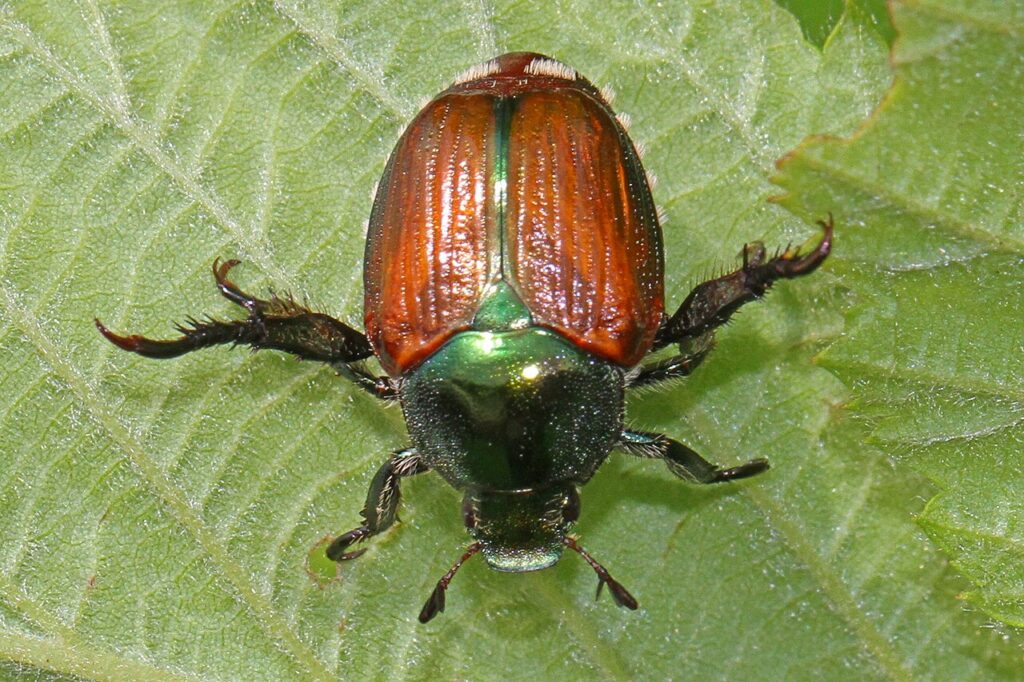
The Japanese beetle first arrived in New Jersey in 1916 and has since spread throughout most states east of the Mississippi River. It now threatens over 300 plant species in your gardens, farms, and natural areas.
These beetles lack natural predators in the United States, allowing their populations to grow unchecked. Adults devour leaves, flowers, and fruits while their larvae damage grass roots and turf. You’ll find established populations across the Eastern and Central United States, with detections in states like Kansas, Nebraska, and North Dakota.
The beetle continues expanding westward despite control efforts.
31) West Nile Virus
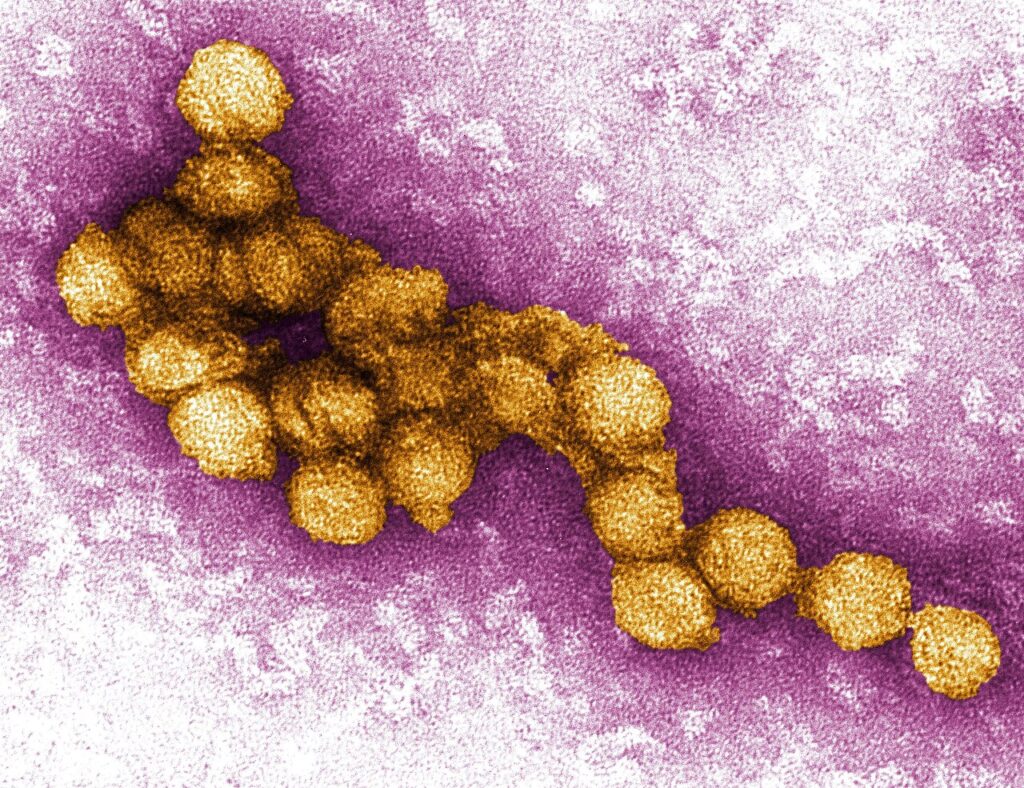
West Nile virus arrived in the United States in 1999, first appearing in New York City before spreading nationwide. Mosquitoes transmit this invasive pathogen primarily among birds, occasionally infecting humans through bites.
You’ll find it active across the contiguous United States, with California reporting cases since 2003. It’s now the most common mosquito-borne disease in the country. Most infected people show no symptoms, but one in five develops West Nile fever, and some cases result in serious neurological complications.