You know what’s funny? Half the stuff we throw away in the kitchen could actually help our tomato plants grow better. I used to toss out coffee grounds, banana peels, and other scraps without thinking twice, but then I learned these things are basically free fertilizer sitting in my trash can.
Instead of spending money on store-bought plant food, you might already have everything you need right in your kitchen. Let’s talk about nine scraps that your tomato plants will absolutely love.
1.) Coffee Grounds

Coffee grounds are a solid choice for feeding your tomato plants. They add nitrogen to the soil, which helps plants grow strong leaves and stems. Just sprinkle used grounds around the base of your plants and work them into the top inch of soil.
Apply coffee grounds every few weeks during the growing season, but don’t overdo it. Too much can make your soil acidic, which tomatoes don’t love. Mix grounds with other compost materials for better results, and your plants will thank you with steady growth.
2.) Eggshells

Crushed eggshells are like a slow-release calcium supplement for your tomato plants. Just rinse them out, let them dry, and crush them into small pieces before mixing them into the soil around your plants. The calcium helps prevent blossom end rot, that annoying black spot that can ruin perfectly good tomatoes.
You can add eggshells any time during the growing season, but they work best when mixed into the soil at planting time. It takes a few weeks for them to break down, so don’t expect instant results.
3.) Banana Peels
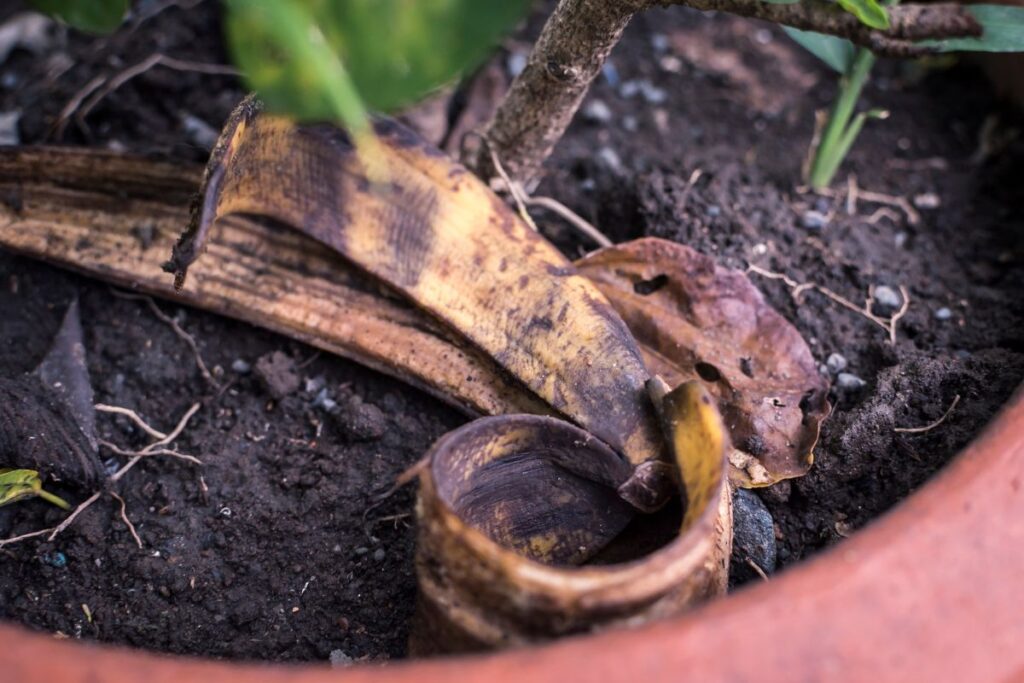
Banana peels pack a serious punch of potassium, which tomatoes need for strong fruit development. Instead of tossing them in the trash, chop them into small pieces and bury them a few inches deep near your tomato plants. They’ll break down over a few weeks and release nutrients into the soil.
You can also soak peels in water for a couple days to make a liquid fertilizer. Apply this “banana tea” every two weeks during the growing season, especially when your plants start flowering and setting fruit.
4.) Fish Scraps

Fish scraps are packed with nitrogen and phosphorus, two nutrients that tomatoes need to grow strong and produce plenty of fruit. Bury small pieces of raw fish or fish parts about 6-8 inches deep near your tomato plants when you first transplant them in spring.
As the fish breaks down over several weeks, it slowly releases nutrients into the soil. Just make sure to bury it deep enough so animals won’t dig it up.
You can also use fish heads, tails, or guts left over from cleaning your catch.
5.) Epsom Salt
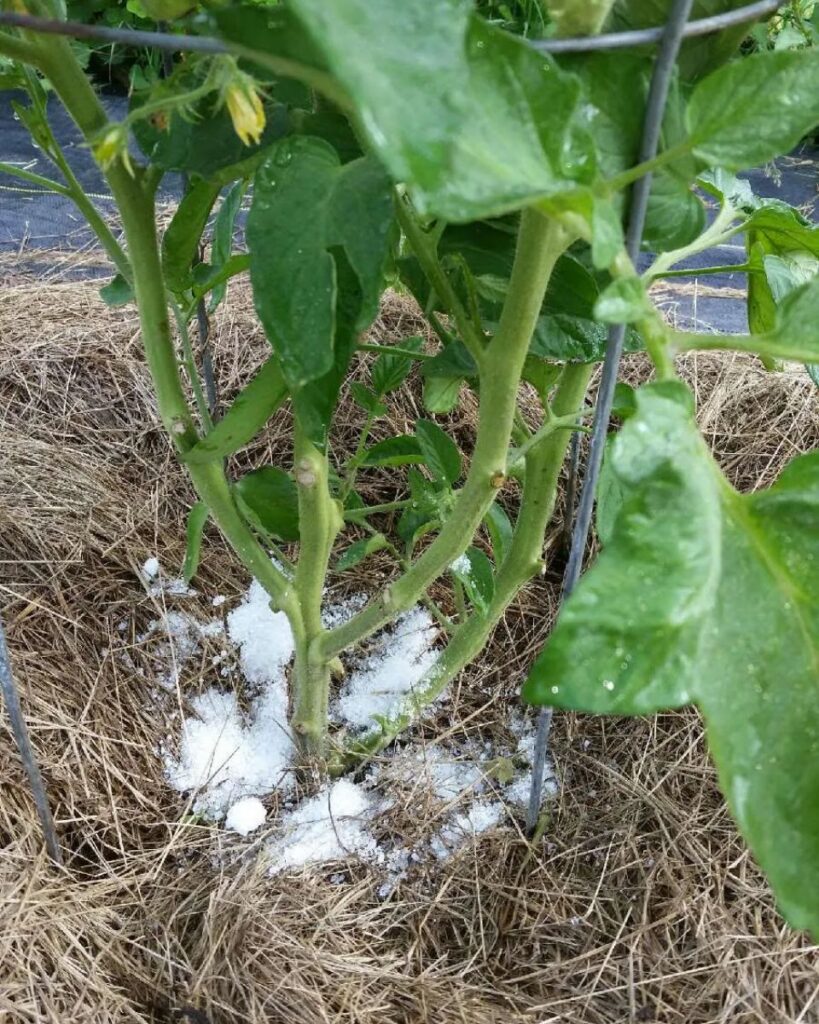
Okay, so Epsom salt isn’t technically a kitchen scrap, but it’s probably sitting in your bathroom cabinet right now. It’s packed with magnesium and sulfur, two nutrients that tomatoes need for healthy growth and fruit production.
Mix a tablespoon of Epsom salt into a gallon of water and give your plants a drink every two weeks. You can also work it directly into the soil at planting time—about a tablespoon per hole works well.
This trick helps prevent yellowing leaves and encourages better tomato production throughout the growing season.
6.) Wood Ash

Wood ash from your fireplace makes a solid addition to your tomato garden if your soil tends to be acidic. It contains potassium and calcium, which help tomatoes develop strong cell walls and prevent blossom end rot.
Sprinkle a thin layer around your plants in early spring, but don’t overdo it. Too much ash can make your soil too alkaline. A light dusting once per season is plenty.
Skip this one if your soil is already neutral or alkaline, since tomatoes prefer a pH between 6.0 and 6.8.
7.) Grass Clippings

Okay, grass clippings aren’t technically from your kitchen, but they’re too good not to mention. Fresh clippings work as a nitrogen-rich mulch around your tomato plants. Just scatter a thin layer around the base, keeping it away from the stem to prevent rot.
Let the clippings dry out for a day or two before applying them. This prevents them from matting down and getting slimy. As they break down through the growing season, they’ll feed your soil and help keep weeds at bay.
8.) Vegetable Scraps

Got leftover veggies from dinner prep? Toss those carrot peels, celery ends, and lettuce scraps around your tomato plants instead of in the trash. As they break down, they add helpful nutrients back into the soil and help keep moisture around the roots.
Chop the scraps into smaller pieces so they decompose faster. Bury them lightly in the soil or use them as mulch during the growing season.
Just avoid adding diseased vegetables or anything covered in oils and salts, which can harm your plants.
9.) Molasses

Molasses isn’t technically a kitchen scrap, but it’s a sweet addition to your tomato feeding routine. Mix one tablespoon of unsulfured molasses per gallon of water and apply it to your plants every two weeks during the growing season.
The natural sugars feed beneficial soil bacteria, which helps your tomatoes absorb nutrients better. It also provides trace minerals like iron and magnesium that tomatoes need.
Stick with unsulfured molasses—the sulfured kind can harm helpful microbes in your soil. Apply it in the morning so plants can use it throughout the day.