Love raspberries?
No garden? No problem!
You can grow raspberries in a pot. It’s easier than you think. Here are 9 simple tactics to get you started.
Ready to grow your own juicy berries?
Let’s dig in!
Choose the Right Pot

When growing raspberries in a pot, size matters! Go for a pot that’s at least 18 inches wide and deep.
This will give your plant enough space to spread its roots and grow healthy. Make sure the pot has drainage holes to prevent waterlogging, which can damage the roots.
And don’t forget, a pot with a saucer underneath can help catch excess water and keep your patio clean.
Pick the Right Variety
Not all raspberries are created equal, especially when it comes to pot growing. Look for dwarf or compact varieties like ‘Heritage’ or ‘Raspberry Shortcake.’ These types are bred to thrive in containers and won’t take over your entire backyard.
Plus, they still produce that delicious fruit you’re craving!
Use Quality Soil
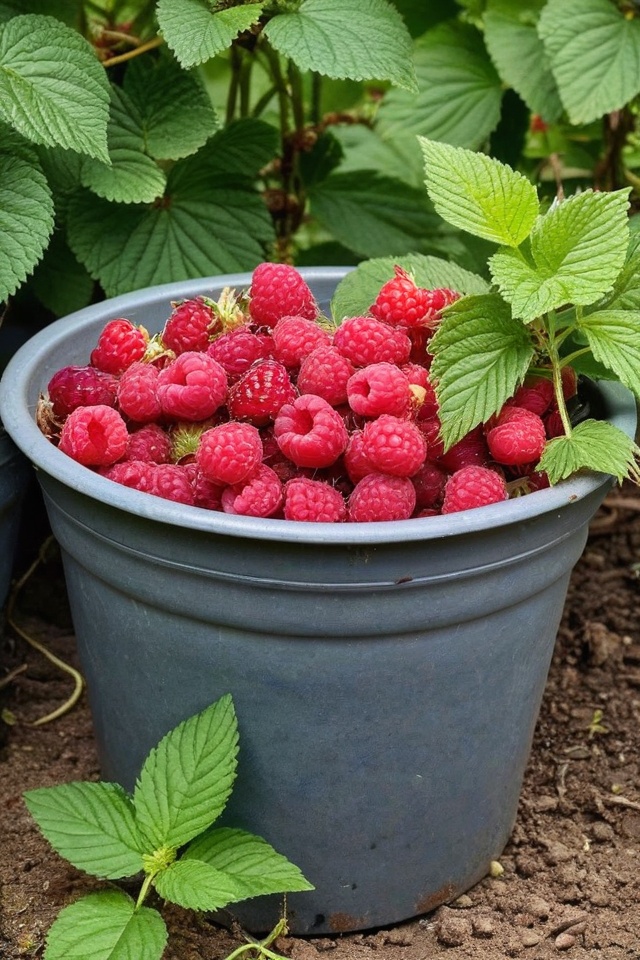
Don’t skimp on the soil! Use a high-quality potting mix that’s rich in organic matter.
This will provide your raspberries with the nutrients they need to grow strong and healthy. Avoid using garden soil, as it can be too dense and might not drain well in a pot.
You can even mix in some compost to give it an extra nutrient boost.
Water Regularly
Raspberries in a pot tend to dry out quicker than those in the ground. Make sure you water them regularly, keeping the soil moist but not soggy.
During hot summer months, you might need to water them daily. A good rule of thumb is to check the top inch of soil—if it’s dry, it’s time to water.
Provide Support

Even in a pot, your raspberry plants will need some support as they grow. Use a small trellis or bamboo stakes to help them stand tall.
This will prevent the canes from flopping over and make it easier for you to pick the fruit when it’s ripe. Plus, a supported plant just looks neat and tidy!
Feed Your Plants
Nutrients in potting mix can get depleted over time, so you’ll need to feed your raspberries to keep them happy. Use a balanced, slow-release fertilizer in the spring.
Follow up with a liquid fertilizer every couple of weeks during the growing season. Be careful not to over-fertilize, as this can harm the plant!
Prune Regularly

Pruning is key to a healthy raspberry plant. Cut back old canes in late winter or early spring before new growth starts.
Remove any weak or damaged canes to allow more airflow and light to reach the remaining ones. Regular pruning helps to keep the plant in check and boosts fruit production.
Protect from Pests and Diseases
Keep an eye out for pests like aphids and spider mites. If you spot them, a gentle spray of neem oil or insecticidal soap can help.
Also, watch for common diseases like powdery mildew. Healthy soil and good air circulation can prevent most problems.
If you catch any issues early, you can usually handle them without much fuss.
Harvest Time
The best part of growing raspberries? Eating them, of course!
Raspberries are ready to pick when they come off the plant easily and are a deep, vibrant color. They don’t ripen after being picked, so make sure you wait until they’re just right.
Enjoy them fresh, throw them into a smoothie, or bake them into a pie—yum!