Making a traditional corned beef and cabbage dinner might seem intimidating if you’ve never done it before, especially when you’re wondering whether you need special equipment or hours of hands-on cooking time. And let’s be honest, the idea of cooking a big hunk of meat on the stovetop can feel a bit overwhelming when you’re used to simpler weeknight meals.
The good news is that this stovetop corned beef and cabbage is actually one of the easiest one-pot dinners you can make. With just a few simple steps and some patience while everything simmers away, you’ll have a hearty, comforting meal that’s perfect for St. Patrick’s Day or any time you’re craving something warm and satisfying.
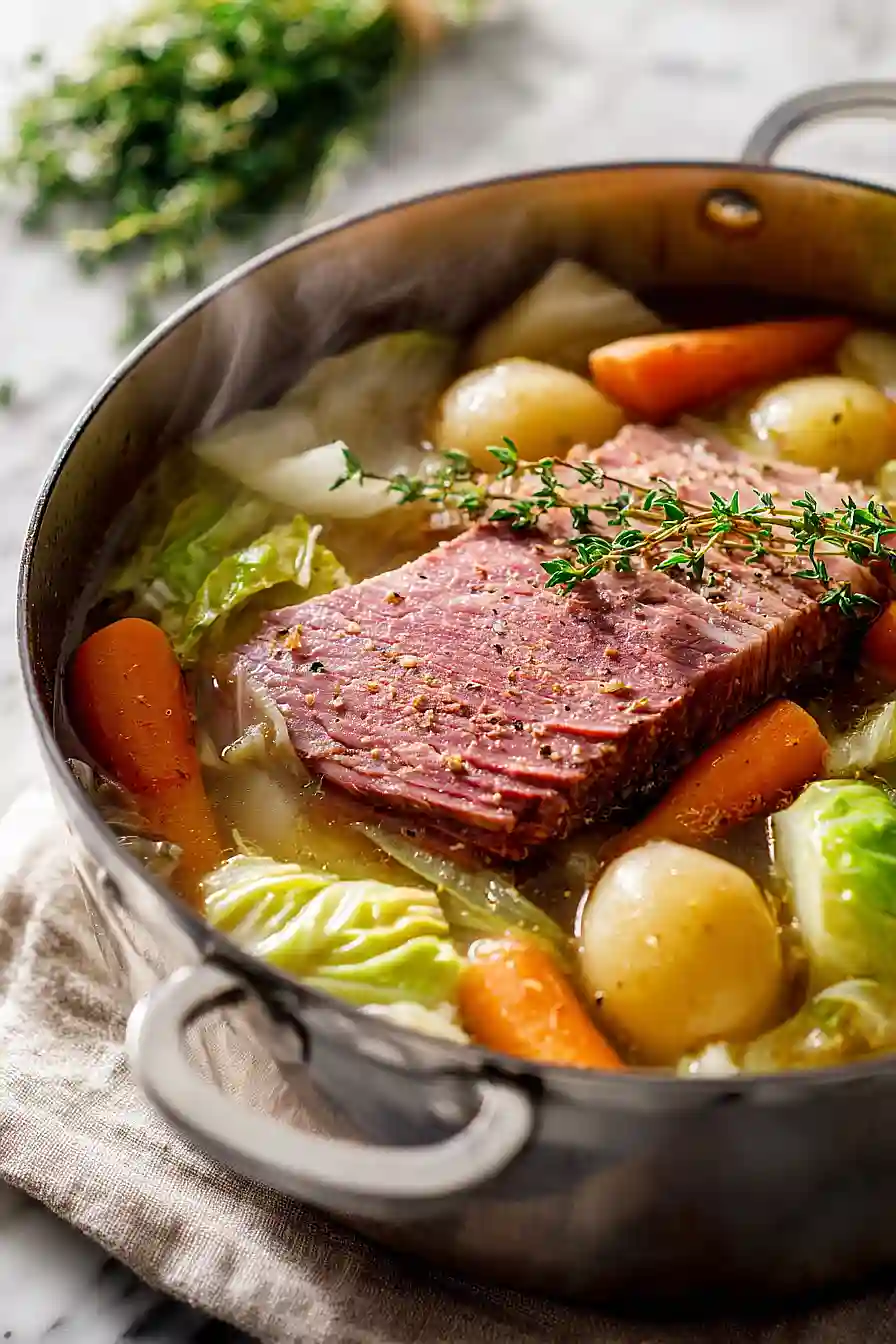
Why You’ll Love This Corned Beef and Cabbage
- Classic comfort food – This traditional dish brings all the hearty, satisfying flavors you crave, perfect for St. Patrick’s Day or any time you want a cozy meal.
- One-pot meal – Everything cooks together in one pot on the stovetop, which means less cleanup and all the flavors blend together beautifully.
- Simple ingredients – You’ll need just a few basic vegetables and pantry staples alongside the corned beef, making this an easy recipe to shop for.
- Feeds a crowd – This recipe makes plenty of food, so it’s great for family dinners or when you have guests over, and the leftovers are just as good the next day.
What Kind of Corned Beef Should I Use?
You’ll find two main cuts of corned beef at the store: the flat cut and the point cut. The flat cut is leaner and slices more evenly, which makes it great for presentation, while the point cut has more marbling and fat, giving you a juicier, more flavorful result. Either cut will work perfectly fine for this stovetop recipe, so go with whichever looks better at your store or fits your budget. Most corned beef comes with a spice packet included, but since this recipe has its own pickling spices, you can save that packet for another use or toss it in the pot for extra flavor.
Options for Substitutions
This classic dish is pretty straightforward, but here are some swaps you can make if needed:
- Corned beef brisket: The corned beef is really the star here and shouldn’t be substituted – it’s already been cured with special spices that give this dish its signature flavor. If you can’t find it, you’ll be making a different dish entirely.
- Lager: Any light beer works great here, or you can skip the beer altogether and use an extra 12 oz of water plus a tablespoon of brown sugar for a similar depth.
- Savoy cabbage: Regular green cabbage is totally fine if you can’t find savoy. You can also use napa cabbage, though it cooks faster so add it later in the process.
- Yukon gold potatoes: Red potatoes or baby potatoes work just as well. Russets can get a bit mushy, so if that’s all you have, cut them into larger chunks.
- Apple cider vinegar: White vinegar or white wine vinegar can step in here without any issues – you just need that acidic element to balance the richness.
- Pickling spices: Most corned beef briskets come with a spice packet, so use that if available. If not, pickling spices are essential for authentic flavor and shouldn’t be skipped.
Watch Out for These Mistakes While Cooking
The biggest mistake when making corned beef is skipping the rinse before cooking, which leaves your dish way too salty since the brisket is cured in a heavy brine – always rinse it under cold water for at least a minute to wash away excess salt.
Another common error is cooking the beef at a rolling boil instead of a gentle simmer, which makes the meat tough and stringy rather than tender, so keep the heat low enough that you only see occasional bubbles breaking the surface.
Don’t add your vegetables at the same time as the meat or they’ll turn to mush – the beef needs those 2+ hours alone to become fork-tender before you add the potatoes and carrots, followed by the cabbage at the very end.
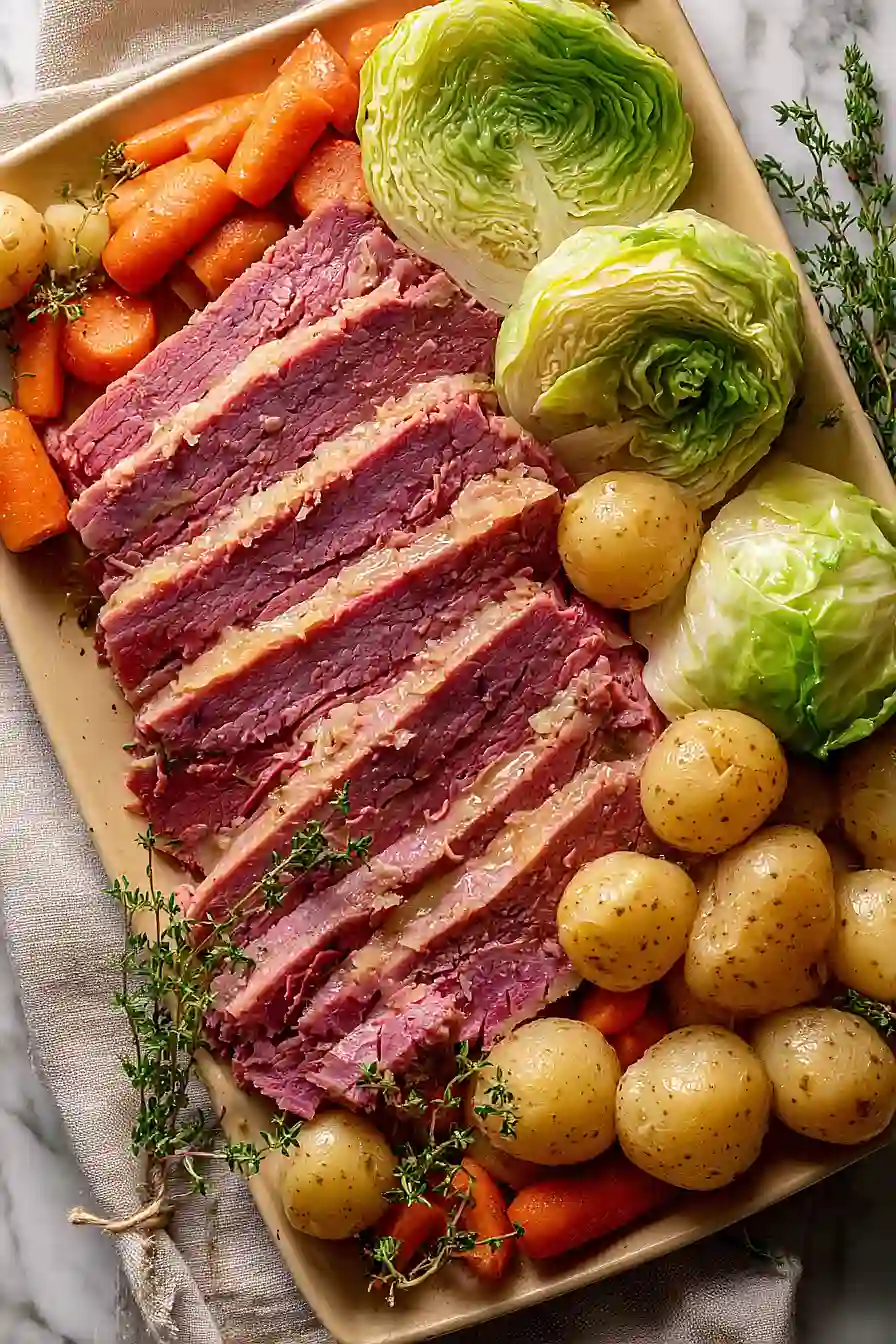
Finally, let the corned beef rest for 10-15 minutes after removing it from the pot, and always slice against the grain (perpendicular to the visible lines in the meat) to get the most tender pieces possible.
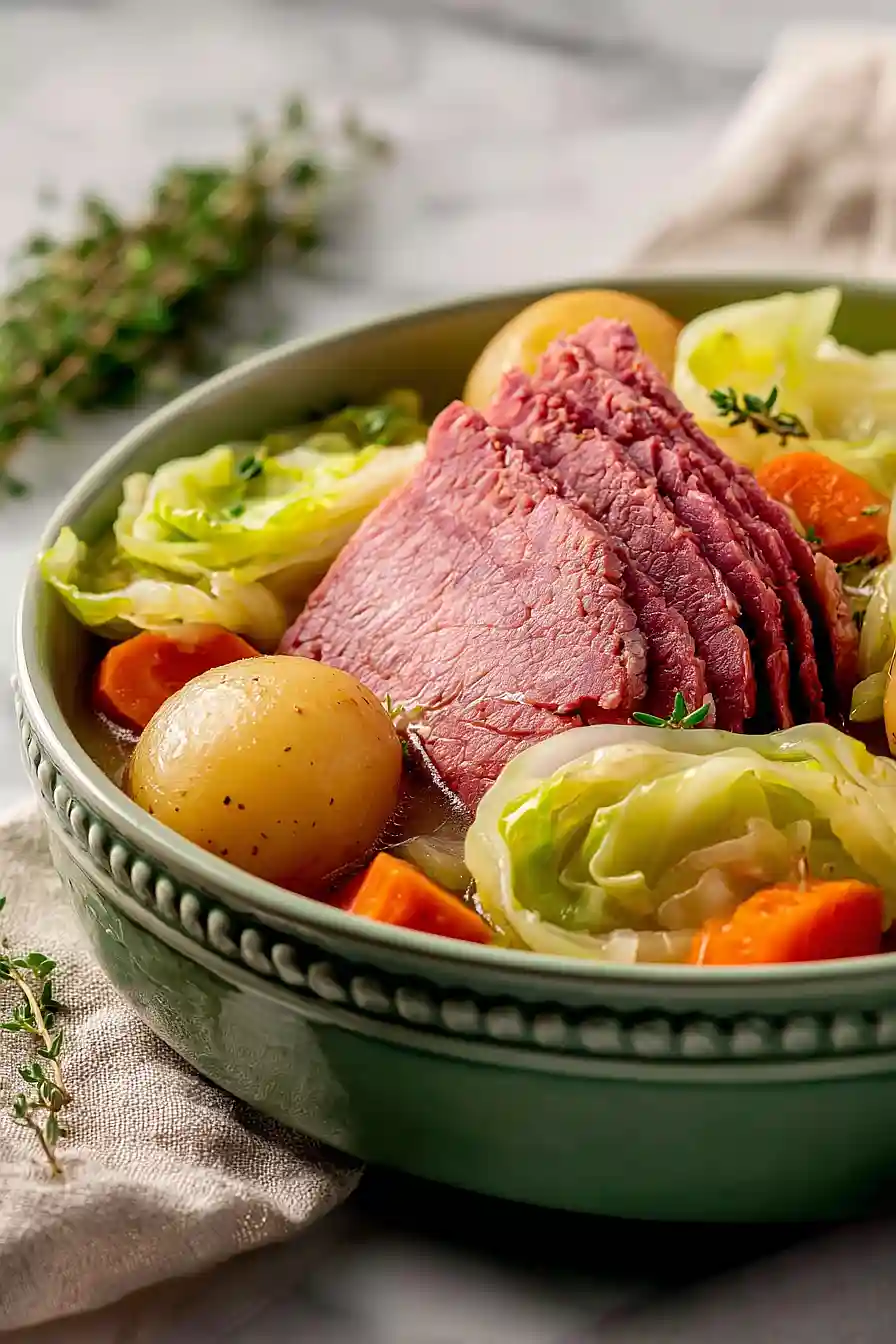
What to Serve With Corned Beef and Cabbage?
Corned beef and cabbage is pretty much a complete meal on its own, but a few simple sides can round things out nicely. I love serving it with some crusty rye bread or Irish soda bread on the side – perfect for soaking up all those flavorful juices from the pot. A dollop of whole grain mustard or horseradish sauce on the table is a must for me, since that little kick really complements the richness of the corned beef. If you want to add something extra, a simple cucumber salad or some pickled vegetables work great to cut through the hearty flavors.
Storage Instructions
Store: Keep your leftover corned beef and cabbage in an airtight container in the fridge for up to 4 days. I like to store the meat and vegetables separately if I can, since they reheat better that way and the flavors stay fresher.
Freeze: The corned beef freezes really well on its own for up to 3 months, but I don’t recommend freezing the potatoes and cabbage since they get mushy. Slice or shred the meat before freezing so it’s ready to go for sandwiches or hash later.
Reheat: Warm everything up gently in a pot on the stove with a splash of the cooking liquid or broth to keep it moist. You can also microwave individual portions, but add a little liquid and cover it so the meat doesn’t dry out.
| Preparation Time | 15-25 minutes |
| Cooking Time | 165-190 minutes |
| Total Time | 180-215 minutes |
| Level of Difficulty | Medium |
| Servings | 7 servings |
Estimated Nutrition
Estimated nutrition for the whole recipe (without optional ingredients):
- Calories: 3200-3500
- Protein: 180-210 g
- Fat: 180-200 g
- Carbohydrates: 180-200 g
Ingredients
For the beef and broth:
- 1 large yellow onion (peeled and cut into 1-inch thick wedges)
- 3.5 lb corned beef brisket
- 12 oz lager (I prefer Samuel Adams Boston Lager for the malt profile)
- 8 cups water
- 1.5 tbsp apple cider vinegar (I use Bragg for the most consistent acidity)
- 1 tbsp pickling spices
- 2.5 tsp sugar
- 2 bay leaves
For the vegetables:
- 1 lb carrots (peeled and cut into 2-inch pieces)
- 1 lb savoy cabbage (cut into 8 large wedges through the core)
- 1.5 lb yukon gold potatoes (cubed into 1.5-inch pieces to prevent overcooking)
Step 1: Prepare Mise en Place and Start the Corned Beef
- 1 large yellow onion, cut into 1-inch thick wedges
- 3.5 lb corned beef brisket
- 12 oz lager
- 8 cups water
- 1.5 tbsp apple cider vinegar
- 1 tbsp pickling spices
- 2.5 tsp sugar
- 2 bay leaves
Peel and cut the onion into 1-inch thick wedges, setting aside.
Rinse the corned beef brisket under cold water to remove excess salt from the curing process—this is crucial for preventing the dish from becoming too salty.
Place the beef fat-side up in a large pot (at least 6-quart capacity).
Add the onion wedges, lager, water, apple cider vinegar, pickling spices, sugar, and bay leaves directly to the pot with the beef.
Bring to a boil over high heat, then reduce to a gentle simmer, cover with a lid, and let cook for 2 hours 15 minutes to 2 hours 45 minutes.
The beef should be fork-tender when done.
Step 2: Prep the Vegetables While Beef Simmers
- 1 lb carrots, peeled
- 1 lb savoy cabbage
- 1.5 lb yukon gold potatoes
While the beef is simmering, prepare your vegetables: peel and cut the carrots into 2-inch pieces, cut the savoy cabbage into 8 large wedges through the core (this keeps them intact during cooking), and cube the potatoes into 1.5-inch pieces.
I like to cut the potatoes larger than you might think—this prevents them from becoming mushy and falling apart in the broth.
Keep the vegetables separate until they’re ready to be added.
Step 3: Remove Beef and Add Root Vegetables
- corned beef from Step 1
- broth from Step 1
Once the beef is tender (after 2 hours 15 minutes to 2 hours 45 minutes), carefully remove it from the pot and place it on a cutting board.
Cover it loosely with foil to keep it warm and allow the meat to rest.
Strain out the onion and bay leaves from the broth if you prefer a cleaner presentation, though I like leaving them in for extra flavor.
Add the potatoes and carrots to the simmering broth and cook for 15 minutes until they begin to soften.
Step 4: Finish with Cabbage and Final Cooking
- cabbage wedges from Step 2
- vegetables and broth from Step 3
Add the cabbage wedges to the pot with the potatoes and carrots, nestling them gently into the broth.
Simmer for 12 to 15 minutes more until the cabbage is tender but still holds its shape—overcooked cabbage becomes mushy and loses its appeal.
The vegetables should all be fork-tender at this point.
I find that cabbage cooks faster than you’d expect, so check it at the 12-minute mark rather than waiting the full 15 minutes.
Step 5: Slice Beef and Serve
- corned beef from Step 3
- vegetables from Step 4
Slice the rested corned beef against the grain into ¼-inch thick slices—slicing against the grain ensures each bite is tender rather than stringy.
Arrange the beef slices on a serving platter or individual plates, then surround with the cooked vegetables from the pot.
Ladle some of the cooking broth over everything to keep it moist and flavorful.
Serve immediately while hot.
Traditional Corned Beef and Cabbage Stovetop
Ingredients
For the beef and broth::
- 1 large yellow onion (peeled and cut into 1-inch thick wedges)
- 3.5 lb corned beef brisket
- 12 oz lager (I prefer Samuel Adams Boston Lager for the malt profile)
- 8 cups water
- 1.5 tbsp apple cider vinegar (I use Bragg for the most consistent acidity)
- 1 tbsp pickling spices
- 2.5 tsp sugar
- 2 bay leaves
For the vegetables::
- 1 lb carrots (peeled and cut into 2-inch pieces)
- 1 lb savoy cabbage (cut into 8 large wedges through the core)
- 1.5 lb yukon gold potatoes (cubed into 1.5-inch pieces to prevent overcooking)
Instructions
- Peel and cut the onion into 1-inch thick wedges, setting aside. Rinse the corned beef brisket under cold water to remove excess salt from the curing process—this is crucial for preventing the dish from becoming too salty. Place the beef fat-side up in a large pot (at least 6-quart capacity). Add the onion wedges, lager, water, apple cider vinegar, pickling spices, sugar, and bay leaves directly to the pot with the beef. Bring to a boil over high heat, then reduce to a gentle simmer, cover with a lid, and let cook for 2 hours 15 minutes to 2 hours 45 minutes. The beef should be fork-tender when done.
- While the beef is simmering, prepare your vegetables: peel and cut the carrots into 2-inch pieces, cut the savoy cabbage into 8 large wedges through the core (this keeps them intact during cooking), and cube the potatoes into 1.5-inch pieces. I like to cut the potatoes larger than you might think—this prevents them from becoming mushy and falling apart in the broth. Keep the vegetables separate until they're ready to be added.
- Once the beef is tender (after 2 hours 15 minutes to 2 hours 45 minutes), carefully remove it from the pot and place it on a cutting board. Cover it loosely with foil to keep it warm and allow the meat to rest. Strain out the onion and bay leaves from the broth if you prefer a cleaner presentation, though I like leaving them in for extra flavor. Add the potatoes and carrots to the simmering broth and cook for 15 minutes until they begin to soften.
- Add the cabbage wedges to the pot with the potatoes and carrots, nestling them gently into the broth. Simmer for 12 to 15 minutes more until the cabbage is tender but still holds its shape—overcooked cabbage becomes mushy and loses its appeal. The vegetables should all be fork-tender at this point. I find that cabbage cooks faster than you'd expect, so check it at the 12-minute mark rather than waiting the full 15 minutes.
- Slice the rested corned beef against the grain into ¼-inch thick slices—slicing against the grain ensures each bite is tender rather than stringy. Arrange the beef slices on a serving platter or individual plates, then surround with the cooked vegetables from the pot. Ladle some of the cooking broth over everything to keep it moist and flavorful. Serve immediately while hot.