Finding a weeknight dinner that’s both flavorful and easy enough to make after a long day can feel impossible. Between juggling work schedules, family activities, and everyone’s different food preferences, you need something that delivers on taste without requiring you to be a professional chef or spend hours in the kitchen.
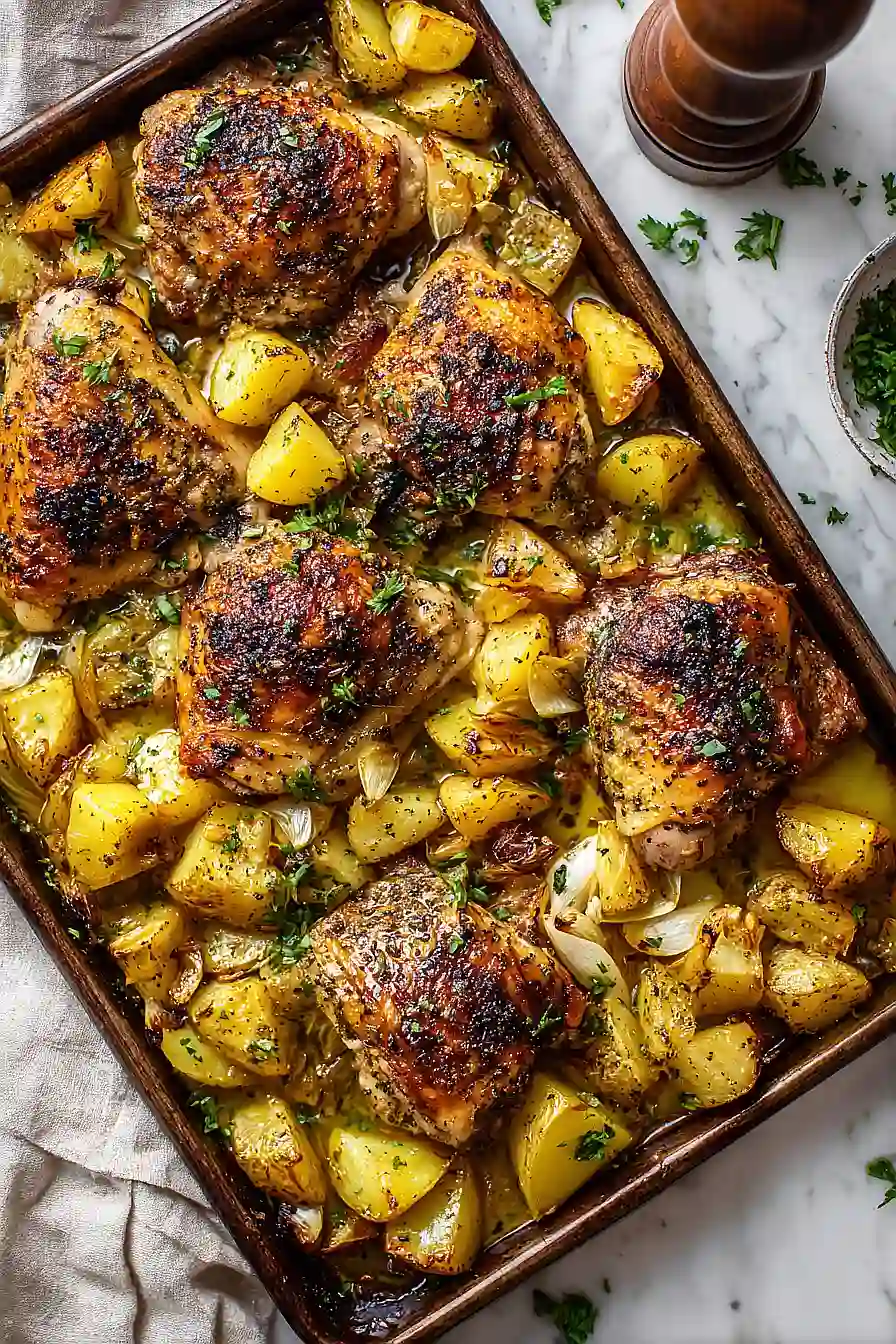
That’s exactly why this Greek chicken with potatoes has become one of my most-requested recipes. The cottage cheese marinade keeps the chicken incredibly juicy, the potatoes soak up all those lemony, garlicky flavors while they roast, and best of all, everything cooks together in one pan. It’s the kind of meal that makes your house smell amazing and has everyone asking for seconds.
Why You’ll Love This Greek Chicken with Potatoes
- One-pan meal – Everything cooks together in one dish, so you get juicy chicken and crispy potatoes without juggling multiple pans or making a mess in the kitchen.
- Bold Mediterranean flavors – The combination of fresh lemon, garlic, and oregano gives this dish that authentic Greek taste that’ll transport you straight to the islands.
- Simple ingredients – You probably have most of these pantry staples on hand already, making this an easy go-to recipe for any night of the week.
- Great for meal prep – This recipe makes plenty of servings and tastes even better the next day, so you can enjoy leftovers for lunch or dinner throughout the week.
- Crowd-pleaser – The tender chicken thighs and lemony potatoes appeal to both kids and adults, making it perfect for family dinners or when you have guests over.
What Kind of Chicken Thighs Should I Use?
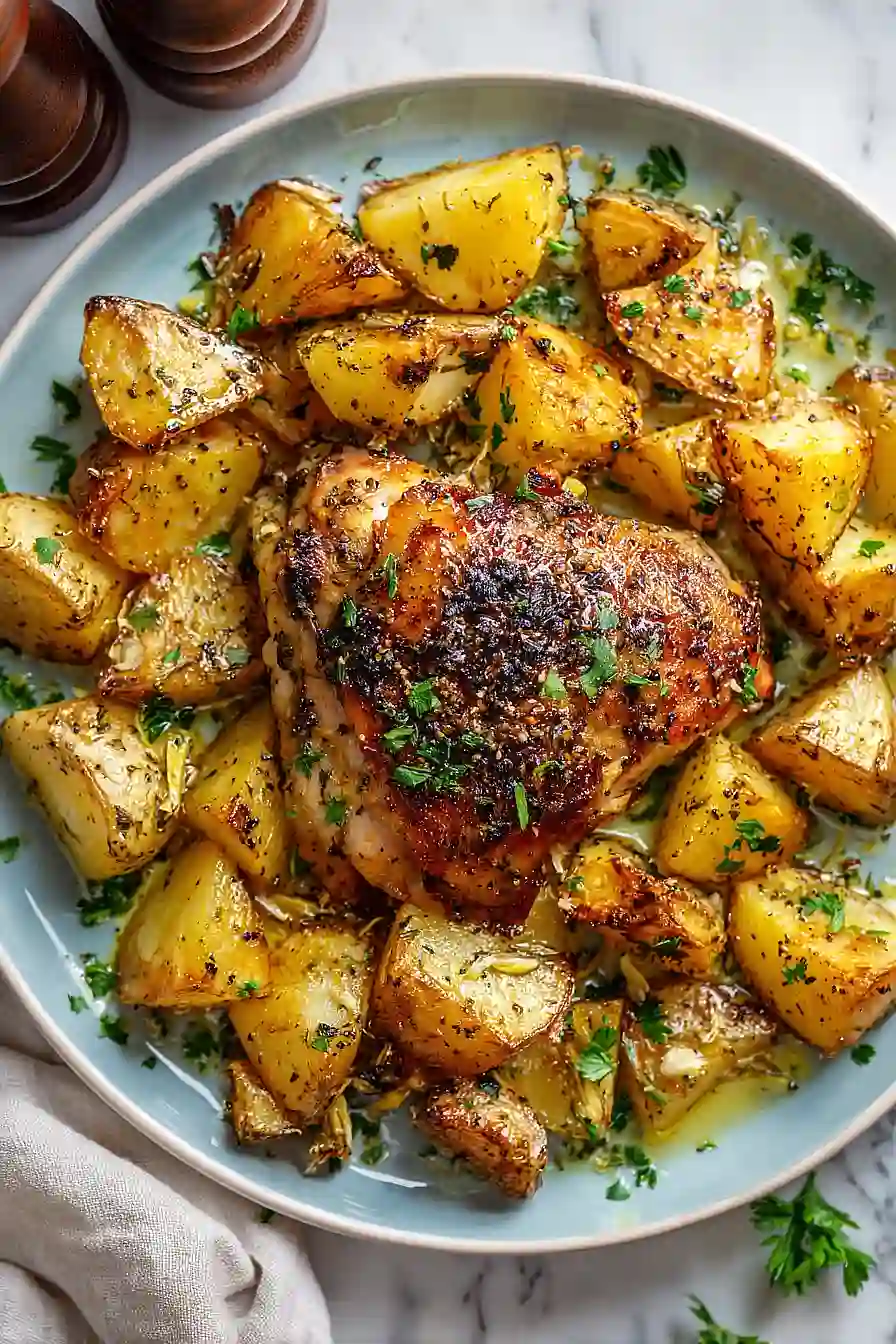
For this Greek chicken recipe, you can use either bone-in or boneless chicken thighs, though bone-in thighs tend to stay juicier during the longer roasting time with the potatoes. Skin-on thighs are your best bet here because the skin gets wonderfully crispy and golden as it roasts in the olive oil and lemon juice. If you only have boneless, skinless thighs on hand, they’ll still work great – just keep an eye on them toward the end of cooking to make sure they don’t dry out. Whether you buy them fresh or frozen, just make sure frozen thighs are fully thawed before you start marinating them so the flavors can really soak in.
Options for Substitutions
This Greek chicken recipe is pretty forgiving when it comes to swaps:
- Chicken thighs: You can use chicken drumsticks or even bone-in chicken breasts instead. Just keep in mind that breasts might dry out a bit more, so check them earlier for doneness.
- Potatoes: Any potato works here – russets, red potatoes, or Yukon golds are all good choices. Cut them into similar-sized wedges so they cook evenly.
- Lemon juice: Fresh lemon juice really makes a difference in this dish, but if you’re in a bind, bottled lemon juice can work. You might need to add a bit more to get that bright, tangy flavor.
- Yellow mustard: Dijon mustard is a great substitute and actually adds a nice depth. Use the same amount.
- Cottage cheese: For the sauce, Greek yogurt or sour cream can replace cottage cheese. If using Greek yogurt, go for full-fat to keep it creamy.
- Fresh garlic: While fresh garlic gives the best flavor, you can use jarred minced garlic if needed. Use about 1 teaspoon per clove called for in the recipe.
- Oregano: Dried oregano is best for this Greek dish, but if you only have fresh, use three times the amount and add it toward the end of cooking.
Watch Out for These Mistakes While Cooking
The biggest mistake people make with Greek chicken and potatoes is crowding the pan, which causes everything to steam instead of getting those crispy, golden edges – make sure your potatoes are in a single layer with some space between pieces.
Don’t skip cutting your potatoes into uniform sizes, because uneven chunks mean some will be mushy while others stay hard, and aim for wedges about 1 to 1.5 inches thick.
Another common error is not checking if your chicken has reached 165°F with an instant-read thermometer inserted into the thickest part of the thigh, since relying only on time can lead to undercooked or dried-out meat.
If your potatoes aren’t browning enough, try flipping them halfway through cooking and brushing them with some of the pan juices, which adds flavor and helps them crisp up nicely.
What to Serve With Greek Chicken?
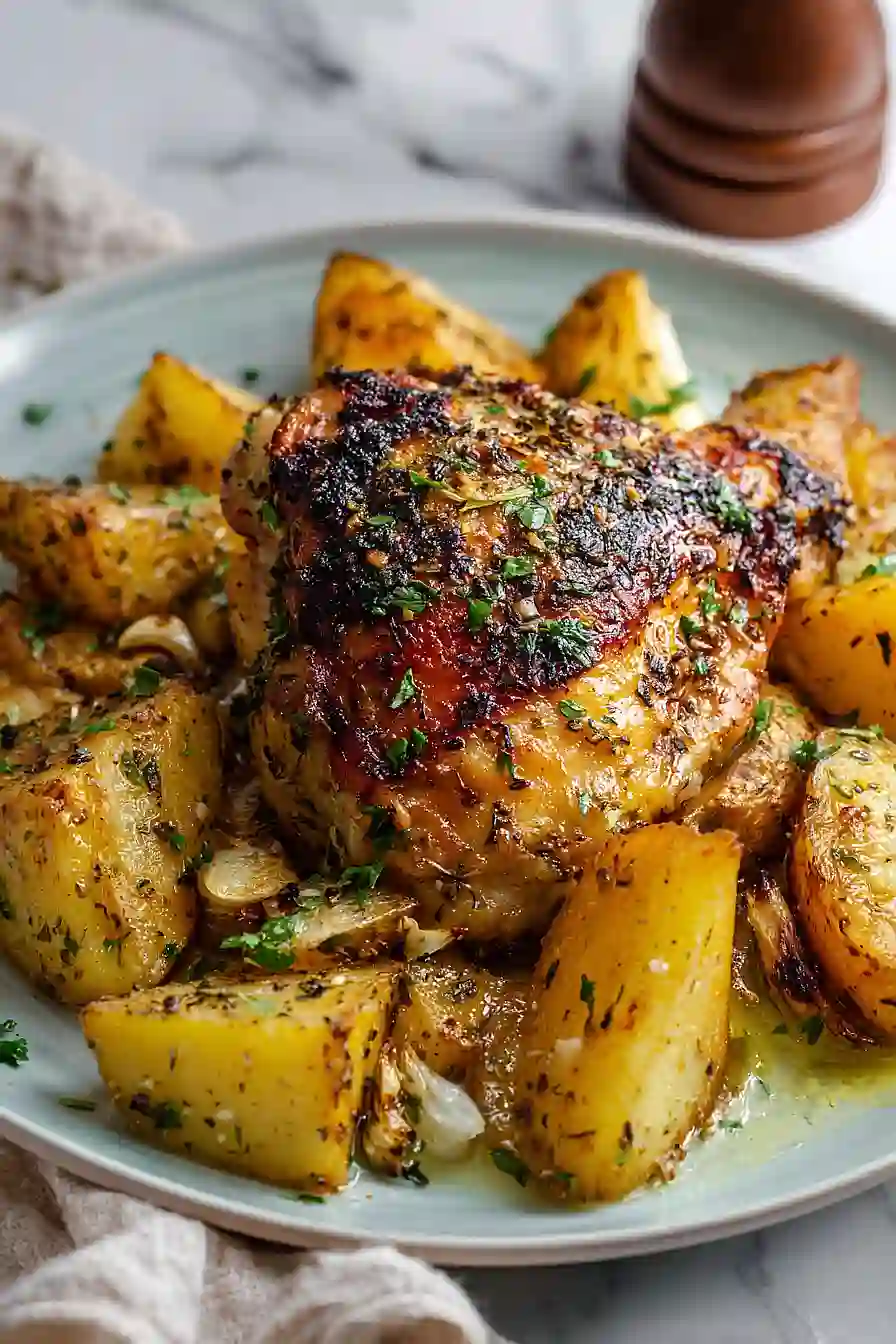
This Greek chicken with potatoes is already a pretty complete meal since you’ve got your protein and carbs covered, but a fresh Greek salad on the side really rounds things out. Toss together some chopped cucumbers, tomatoes, red onion, and feta cheese with a simple olive oil and lemon dressing to complement all those Mediterranean flavors. Warm pita bread is another great addition for soaking up the lemony pan juices, and you can even use it to make little wraps with pieces of chicken. If you want something green, try some roasted or grilled asparagus, or keep it simple with a side of sautéed green beans tossed with a bit of garlic and olive oil.
Storage Instructions
Store: Keep your leftover Greek chicken and potatoes in an airtight container in the fridge for up to 4 days. The flavors actually get even better the next day as everything marinates together. I like to store the chicken and potatoes together so they soak up all those lemony, garlicky juices.
Freeze: This dish freezes really well for up to 3 months. Let everything cool completely, then portion it out into freezer-safe containers or bags. I recommend freezing individual servings so you can grab just what you need for a quick dinner later.
Reheat: Warm it up in the oven at 350°F for about 15-20 minutes until heated through, or microwave individual portions for 2-3 minutes. The oven method works best because it keeps the chicken skin crispy and the potatoes from getting mushy.
| Preparation Time | 75-80 minutes |
| Cooking Time | 80-90 minutes |
| Total Time | 155-170 minutes |
| Level of Difficulty | Medium |
| Servings | 6 servings |
Estimated Nutrition
Estimated nutrition for the whole recipe (without optional ingredients):
- Calories: 3400-3700
- Protein: 170-190 g
- Fat: 195-220 g
- Carbohydrates: 220-250 g
Ingredients
For the marinated chicken:
- 6 chicken thighs (skin-on and bone-in for maximum juiciness)
- 1/2 cup cottage cheese (I use Good Culture for a thicker marinade)
- 3 tbsp lemon juice
- 1 lemon zest
- 1 tsp salt
- 1/2 tsp pepper
- 6 garlic cloves (freshly minced for best flavor)
- 2 tbsp oregano
- 1/2 tsp smoked paprika
For the potatoes and roasting:
- 5 large potatoes (peeled and cut into 1.5-inch wedges)
- 4 lemons juice
- 1/2 cup water
- 1/2 cup olive oil (I prefer Bertolli Extra Virgin for roasting)
- 12 garlic cloves (peeled and left whole to caramelize)
- 2 tbsp yellow mustard
- 2 tsp salt
- 1 tsp pepper
- 2 tbsp oregano
- 3 tsp garlic powder
- 1/2 tsp dried rosemary
- °F oven temperature
Step 1: Prepare the Cottage Cheese Marinade
- 1/2 cup cottage cheese
- 3 tbsp lemon juice
- 1 lemon zest
- 1 tsp salt
- 1/2 tsp pepper
- 6 garlic cloves, minced
- 2 tbsp oregano
- 1/2 tsp smoked paprika
Combine the cottage cheese, 3 tablespoons lemon juice, lemon zest, 1 teaspoon salt, 1/2 teaspoon pepper, 6 minced garlic cloves, 2 tablespoons oregano, and smoked paprika in a blender.
Blend until smooth and creamy—this creates an emulsified marinade that clings beautifully to the chicken.
The cottage cheese acts as a tenderizer while adding richness to the final dish.
Step 2: Marinate the Chicken
- 6 chicken thighs
- cottage cheese marinade from Step 1
Pat the 6 chicken thighs dry with paper towels, then coat them thoroughly with the cottage cheese marinade from Step 1, making sure to get the mixture under the skin and into all crevices.
Transfer to a bowl or zip-top bag and refrigerate for at least 1 hour, or up to overnight if time allows.
This marinating time allows the flavors to penetrate the meat and the acidity to begin tenderizing the chicken.
Step 3: Prepare the Potato and Lemon Base
- 5 large potatoes, peeled and cut into wedges
- 4 lemons juice
- 1/2 cup water
- 1/2 cup olive oil
- 12 garlic cloves, whole
- 2 tbsp yellow mustard
- 2 tsp salt
- 1 tsp pepper
- 2 tbsp oregano
- 3 tsp garlic powder
- 1/2 tsp dried rosemary
While the chicken marinates, peel and cut the 5 large potatoes into 1.5-inch wedges.
In a large roasting pan (about 9×13 inches), combine the potato wedges, 4 lemons’ worth of juice, 1/2 cup water, 1/2 cup olive oil, 12 whole peeled garlic cloves, 2 tablespoons yellow mustard, 2 teaspoons salt, 1 teaspoon pepper, 2 tablespoons oregano, 3 teaspoons garlic powder, and 1/2 teaspoon dried rosemary.
Toss everything together so the potatoes are evenly coated—this creates a flavorful base that will braise as it roasts.
Step 4: Assemble and Begin Roasting
- marinated chicken thighs from Step 2
- potato mixture from Step 3
Preheat your oven to 400°F with the rack positioned in the top third.
Arrange the marinated chicken thighs skin-side up over the potato mixture in the roasting pan, nestling them among the potatoes and garlic.
I like to position the chicken so the skin is exposed to direct heat for maximum crispiness.
Roast at 400°F for 15 minutes to get the skin started and help it render its fat.
Step 5: Finish Roasting at Lower Temperature
- chicken and potatoes from previous steps
After 15 minutes at 400°F, reduce the oven temperature to 375°F and continue roasting for 1 hour and 5 minutes (approximately 1 hour 20 minutes total cooking time).
The chicken is done when the thighs reach an internal temperature of 165°F at the thickest part, and the potatoes are fork-tender and golden.
The skin should be golden-brown and crispy, while the lower heat ensures the potatoes cook through without burning.
Step 6: Rest and Serve
- finished chicken and potato dish from Step 5
Remove the roasting pan from the oven and let it rest for 5 minutes before serving—this allows the chicken to reabsorb its juices and stay incredibly juicy when you cut into it.
Transfer the chicken and potatoes to a serving platter, spooning the pan juices over top.
Garnish generously with fresh mint and dill if desired, and serve with lemon wedges on the side for brightness.
Juicy Greek Chicken with Potatoes
Ingredients
For the marinated chicken::
- 6 chicken thighs (skin-on and bone-in for maximum juiciness)
- 1/2 cup cottage cheese (I use Good Culture for a thicker marinade)
- 3 tbsp lemon juice
- 1 lemon zest
- 1 tsp salt
- 1/2 tsp pepper
- 6 garlic cloves (freshly minced for best flavor)
- 2 tbsp oregano
- 1/2 tsp smoked paprika
For the potatoes and roasting::
- 5 large potatoes (peeled and cut into 1.5-inch wedges)
- 4 lemons juice
- 1/2 cup water
- 1/2 cup olive oil (I prefer Bertolli Extra Virgin for roasting)
- 12 garlic cloves (peeled and left whole to caramelize)
- 2 tbsp yellow mustard
- 2 tsp salt
- 1 tsp pepper
- 2 tbsp oregano
- 3 tsp garlic powder
- 1/2 tsp dried rosemary
- °F oven temperature
Instructions
- Combine the cottage cheese, 3 tablespoons lemon juice, lemon zest, 1 teaspoon salt, 1/2 teaspoon pepper, 6 minced garlic cloves, 2 tablespoons oregano, and smoked paprika in a blender. Blend until smooth and creamy—this creates an emulsified marinade that clings beautifully to the chicken. The cottage cheese acts as a tenderizer while adding richness to the final dish.
- Pat the 6 chicken thighs dry with paper towels, then coat them thoroughly with the cottage cheese marinade from Step 1, making sure to get the mixture under the skin and into all crevices. Transfer to a bowl or zip-top bag and refrigerate for at least 1 hour, or up to overnight if time allows. This marinating time allows the flavors to penetrate the meat and the acidity to begin tenderizing the chicken.
- While the chicken marinates, peel and cut the 5 large potatoes into 1.5-inch wedges. In a large roasting pan (about 9x13 inches), combine the potato wedges, 4 lemons' worth of juice, 1/2 cup water, 1/2 cup olive oil, 12 whole peeled garlic cloves, 2 tablespoons yellow mustard, 2 teaspoons salt, 1 teaspoon pepper, 2 tablespoons oregano, 3 teaspoons garlic powder, and 1/2 teaspoon dried rosemary. Toss everything together so the potatoes are evenly coated—this creates a flavorful base that will braise as it roasts.
- Preheat your oven to 400°F with the rack positioned in the top third. Arrange the marinated chicken thighs skin-side up over the potato mixture in the roasting pan, nestling them among the potatoes and garlic. I like to position the chicken so the skin is exposed to direct heat for maximum crispiness. Roast at 400°F for 15 minutes to get the skin started and help it render its fat.
- After 15 minutes at 400°F, reduce the oven temperature to 375°F and continue roasting for 1 hour and 5 minutes (approximately 1 hour 20 minutes total cooking time). The chicken is done when the thighs reach an internal temperature of 165°F at the thickest part, and the potatoes are fork-tender and golden. The skin should be golden-brown and crispy, while the lower heat ensures the potatoes cook through without burning.
- Remove the roasting pan from the oven and let it rest for 5 minutes before serving—this allows the chicken to reabsorb its juices and stay incredibly juicy when you cut into it. Transfer the chicken and potatoes to a serving platter, spooning the pan juices over top. Garnish generously with fresh mint and dill if desired, and serve with lemon wedges on the side for brightness.