Finding a way to use up fresh rhubarb from the garden or farmers market can sometimes feel overwhelming, especially when you’ve already made your third rhubarb pie of the season. Sure, rhubarb is great in desserts, but sometimes you want something a little different that still satisfies your sweet tooth without being overly complicated.
That’s where this rhubarb bread comes in handy. It’s moist and flavorful with a crunchy pecan streusel topping, easy enough to whip up on a weekend morning, and perfect for sharing with neighbors or enjoying throughout the week with your morning coffee.
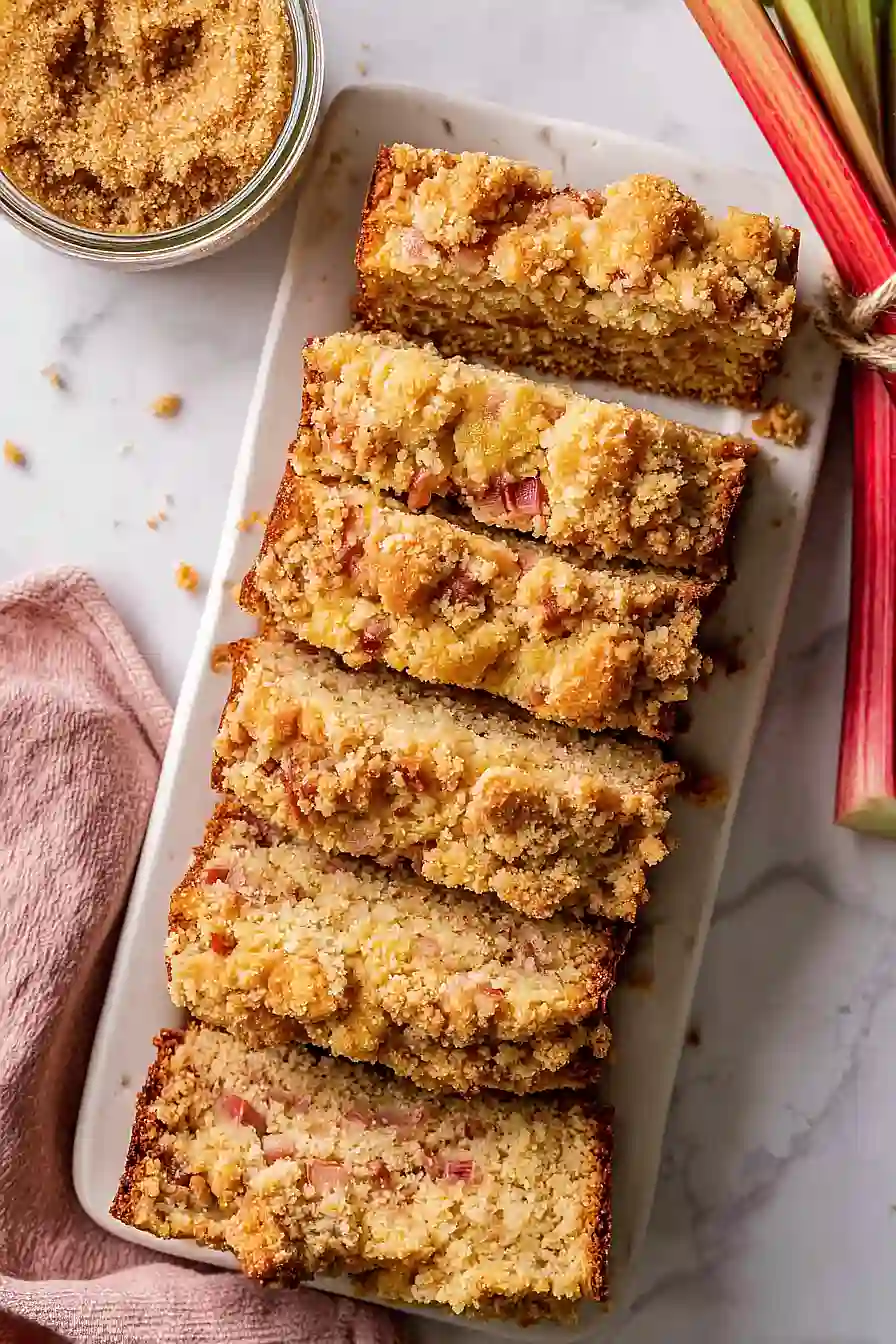
Why You’ll Love This Rhubarb Bread
- Perfect use for garden rhubarb – If you’ve got rhubarb growing in your yard or find it at the farmer’s market, this bread is a delicious way to use it up beyond the usual pies.
- Sweet and tangy flavor – The brown sugar balances out the tartness of the rhubarb, creating a flavor that’s interesting without being too sour.
- Crunchy pecan topping – The streusel topping with pecans adds a nice texture contrast to the soft, moist bread underneath.
- Simple ingredients – You probably have most of these pantry staples on hand already, making this an easy recipe to whip up on a weekend morning.
- Great for breakfast or dessert – This bread works just as well with your morning coffee as it does for an after-dinner treat.
What Kind of Rhubarb Should I Use?
Fresh rhubarb is always your best bet for this bread, and you’ll want to look for stalks that are firm and crisp, not limp or bendy. The color doesn’t really matter – both red and green rhubarb work equally well, and the red doesn’t necessarily mean it’s sweeter or more flavorful. Before using your rhubarb, make sure to trim off any leaves (they’re actually toxic!) and give the stalks a good wash, then chop them into small pieces about half an inch in size so they distribute evenly throughout the bread. If fresh rhubarb isn’t available, frozen rhubarb can work in a pinch, just be sure to thaw it completely and drain off any excess liquid before adding it to your batter.

Options for Substitutions
This recipe is pretty forgiving when it comes to swaps, so here are some options if you need them:
- Buttermilk: Don’t have buttermilk? Mix 1 cup of regular milk with 1 tablespoon of lemon juice or white vinegar. Let it sit for 5 minutes before using – it’ll give you that same tangy flavor.
- Canola oil: You can swap this with vegetable oil, melted coconut oil, or even melted butter if that’s what you have on hand. They’ll all work just fine.
- Rhubarb: This is the star of the show, so I wouldn’t substitute it. Fresh rhubarb is best, but frozen works too – just thaw and drain it well before using to avoid extra moisture.
- Pecans: Walnuts or chopped almonds make great substitutes. Or leave them out completely if you’re not a nut person or have allergies.
- Brown sugar: In a pinch, you can use white sugar instead, though you’ll lose some of that rich molasses flavor. For the topping, white sugar works fine too.
- Cold butter: For the topping, the butter needs to stay cold to create that crumbly texture, so don’t substitute this one – it’s key to getting the right consistency.
Watch Out for These Mistakes While Baking
The biggest mistake when making rhubarb bread is cutting your rhubarb pieces too large, which can create pockets of moisture and prevent the bread from baking evenly – aim for 1/2-inch pieces that distribute throughout the batter.
Overmixing the batter after adding the flour is another common error that leads to tough, dense bread, so stir just until the dry ingredients are incorporated and you still see a few small lumps.
Since rhubarb releases moisture as it bakes, make sure to check for doneness by inserting a toothpick into the center rather than relying solely on the timer – it should come out with just a few moist crumbs, not wet batter.
For the crumb topping, keep your butter cold and work it in with your fingers or a fork until the mixture resembles coarse crumbs, which creates that perfect crunchy texture on top instead of melting into the batter.

What to Serve With Rhubarb Bread?
Rhubarb bread is perfect for breakfast or an afternoon snack with a hot cup of coffee or tea. I love slicing it thick and spreading on some softened butter or cream cheese, which balances out the tartness of the rhubarb really nicely. It also makes a great dessert when you warm up a slice and serve it with a scoop of vanilla ice cream on top. If you’re having people over for brunch, set out the rhubarb bread alongside some fresh fruit, yogurt, and scrambled eggs for a complete spread.
Storage Instructions
Store: Keep your rhubarb bread wrapped tightly in plastic wrap or in an airtight container at room temperature for up to 3 days. If you want it to last longer, store it in the fridge for up to a week – just let it come to room temperature before serving or warm it up slightly for the best flavor.
Freeze: This bread freezes really well, which is great since rhubarb season is so short! Wrap individual slices or the whole loaf tightly in plastic wrap, then again in foil, and freeze for up to 3 months. I like to slice it before freezing so I can grab just what I need.
Thaw: Let frozen slices sit at room temperature for about 30 minutes, or thaw the whole loaf overnight in the fridge. If you’re in a hurry, you can microwave individual slices for about 20-30 seconds on low power until they’re soft and ready to enjoy.
| Preparation Time | 20-30 minutes |
| Cooking Time | 40-45 minutes |
| Total Time | 60-75 minutes |
| Level of Difficulty | Medium |
| Servings | 16 slices |
Estimated Nutrition
Estimated nutrition for the whole recipe (without optional ingredients):
- Calories: 3700-3900
- Protein: 40-48 g
- Fat: 170-185 g
- Carbohydrates: 520-550 g
Ingredients
For the bread:
- 1 large egg
- 1 3/4 cups brown sugar (I prefer Domino light brown for better moisture)
- 2/3 cup canola oil (or any other neutral oil like grapeseed)
- 1 cup buttermilk
- 1 1/2 tsp vanilla extract
- 2 3/4 cups all-purpose flour (I always use King Arthur all-purpose flour)
- 1 tsp salt
- 1 1/4 tsp baking soda
- 1 1/2 cups rhubarb (diced into 1/2-inch pieces)
- 1 cup pecans (coarsely chopped for a better crunch)
For the topping:
- 1/2 cup all-purpose flour
- 1/2 cup brown sugar
- 1/4 tsp ground cinnamon
- 1/4 tsp salt
- 1/4 cup cold unsalted butter (I like Kerrygold unsalted butter for this)
Step 1: Prepare the Pans and Make the Streusel Topping
- 1/2 cup all-purpose flour
- 1/2 cup brown sugar
- 1/4 tsp ground cinnamon
- 1/4 tsp salt
- 1/4 cup cold unsalted butter
Preheat your oven to 350°F and grease two loaf pans (or one 9×13 inch baking dish) with butter or cooking spray.
While the oven preheats, prepare the streusel topping by combining the flour, brown sugar, cinnamon, and salt in a small bowl.
Cut the cold butter into small cubes and work it into the dry mixture using your fingertips until the texture resembles coarse breadcrumbs.
Set this topping aside—having it ready means you can assemble the bread quickly once the batter is mixed.
Step 2: Whisk Together the Wet Ingredients
- 1 large egg
- 2/3 cup canola oil
- 1 cup buttermilk
- 1 1/2 tsp vanilla extract
In a large bowl, whisk together the egg, canola oil, buttermilk, and vanilla extract until well combined and smooth.
This creates an emulsion that will help distribute moisture evenly throughout the bread.
The whisking also incorporates a bit of air, which contributes to a tender crumb.
Step 3: Combine Dry Ingredients and Mix the Batter
- 1 3/4 cups brown sugar
- 2 3/4 cups all-purpose flour
- 1 tsp salt
- 1 1/4 tsp baking soda
- wet ingredient mixture from Step 2
In another bowl, whisk together the brown sugar, flour, salt, and baking soda until evenly distributed.
Pour the wet ingredient mixture from Step 2 into the dry ingredients and stir gently until just combined—don’t overmix, as this keeps the bread tender.
I like to use a rubber spatula and fold the mixture rather than stir vigorously, which helps maintain a delicate crumb structure.
Step 4: Fold in the Rhubarb and Pecans
- 1 1/2 cups rhubarb
- 1 cup pecans
Gently fold the diced rhubarb and coarsely chopped pecans into the batter from Step 3 using a rubber spatula, mixing just until evenly distributed.
The rhubarb’s tartness pairs beautifully with the brown sugar’s depth, and the pecans add a satisfying crunch.
Be gentle to avoid crushing the rhubarb pieces, which will help them stay distinct in the finished bread.
Step 5: Assemble and Bake
- batter from Step 4
- streusel topping from Step 1
Divide the batter evenly between the prepared pans (or pour into the single baking dish), smoothing the tops gently.
Sprinkle the streusel topping from Step 1 evenly over the batter, pressing it down very slightly so it adheres.
Bake at 350°F for 40–45 minutes, until a toothpick inserted in the center comes out clean or with just a few moist crumbs.
The top should be golden brown.
Step 6: Cool and Serve
Let the bread cool in the pans for 10 minutes—this resting time allows the structure to set so it won’t fall apart when you remove it.
Turn the loaves out onto wire racks to cool completely.
The rhubarb bread is wonderful served slightly warm with a cup of coffee or tea, and it keeps well wrapped at room temperature for several days.
Buttermilk Rhubarb Bread
Ingredients
For the bread::
- 1 large egg
- 1 3/4 cups brown sugar (I prefer Domino light brown for better moisture)
- 2/3 cup canola oil (or any other neutral oil like grapeseed)
- 1 cup buttermilk
- 1 1/2 tsp vanilla extract
- 2 3/4 cups all-purpose flour (I always use King Arthur all-purpose flour)
- 1 tsp salt
- 1 1/4 tsp baking soda
- 1 1/2 cups rhubarb (diced into 1/2-inch pieces)
- 1 cup pecans (coarsely chopped for a better crunch)
For the topping::
- 1/2 cup all-purpose flour
- 1/2 cup brown sugar
- 1/4 tsp ground cinnamon
- 1/4 tsp salt
- 1/4 cup cold unsalted butter (I like Kerrygold unsalted butter for this)
Instructions
- Preheat your oven to 350°F and grease two loaf pans (or one 9x13 inch baking dish) with butter or cooking spray. While the oven preheats, prepare the streusel topping by combining the flour, brown sugar, cinnamon, and salt in a small bowl. Cut the cold butter into small cubes and work it into the dry mixture using your fingertips until the texture resembles coarse breadcrumbs. Set this topping aside—having it ready means you can assemble the bread quickly once the batter is mixed.
- In a large bowl, whisk together the egg, canola oil, buttermilk, and vanilla extract until well combined and smooth. This creates an emulsion that will help distribute moisture evenly throughout the bread. The whisking also incorporates a bit of air, which contributes to a tender crumb.
- In another bowl, whisk together the brown sugar, flour, salt, and baking soda until evenly distributed. Pour the wet ingredient mixture from Step 2 into the dry ingredients and stir gently until just combined—don't overmix, as this keeps the bread tender. I like to use a rubber spatula and fold the mixture rather than stir vigorously, which helps maintain a delicate crumb structure.
- Gently fold the diced rhubarb and coarsely chopped pecans into the batter from Step 3 using a rubber spatula, mixing just until evenly distributed. The rhubarb's tartness pairs beautifully with the brown sugar's depth, and the pecans add a satisfying crunch. Be gentle to avoid crushing the rhubarb pieces, which will help them stay distinct in the finished bread.
- Divide the batter evenly between the prepared pans (or pour into the single baking dish), smoothing the tops gently. Sprinkle the streusel topping from Step 1 evenly over the batter, pressing it down very slightly so it adheres. Bake at 350°F for 40–45 minutes, until a toothpick inserted in the center comes out clean or with just a few moist crumbs. The top should be golden brown.
- Let the bread cool in the pans for 10 minutes—this resting time allows the structure to set so it won't fall apart when you remove it. Turn the loaves out onto wire racks to cool completely. The rhubarb bread is wonderful served slightly warm with a cup of coffee or tea, and it keeps well wrapped at room temperature for several days.