Your front door is the first thing people see when they pull up to your house, so why not make it look really good with some thoughtful planting? A few well-placed flowers, shrubs, or potted plants can go a long way.
The good news is that you don’t need a huge budget or a ton of gardening experience to pull it off. We’ve rounded up 28 front door landscaping ideas that are totally worth trying this spring!
1.) Frame with Symmetrical Boxwoods

Few things make a front door feel more put-together than a pair of matching boxwoods flanking each side. The symmetry is simple, classic, and always looks intentional.
Boxwoods grow best in full sun to partial shade and prefer well-drained soil. They’re hardy in zones 5–9 and stay green year-round, which means you get great curb appeal even in winter.
Trim them once or twice a year to keep their shape clean and tidy. They’re low-maintenance once established.
2.) Add Colorful Container Planters
:strip_icc()/front-porch-container-plants-0LfmUy1RaSYBBPy4kdKzrh-d5e564a69431456590fbb79cbb5c10fe.jpg)
Container planters near your front door are an easy way to add a pop of color without a lot of commitment. You can swap out plants with the seasons, so your entryway always looks fresh and welcoming.
For spring, try pansies, petunias, or geraniums — they’re low-maintenance and do well in partial to full sun. Make sure your containers have drainage holes and water regularly, since pots dry out faster than garden beds.
Most of these flowering plants thrive in zones 3–9, depending on the variety.
3.) Install Pathway Lighting

Pathway lighting is one of those simple additions that pulls your whole front yard together. Solar-powered stake lights are easy to install — no wiring needed — and they charge during the day and turn on automatically at night.
Line them along a walkway or garden border to guide guests to your front door after dark. Look for weather-resistant fixtures rated for outdoor use year-round. Spacing them about 6 to 8 feet apart gives a clean, even look without going overboard.
4.) Create Layered Flower Beds
Layered flower beds are a simple way to add depth and color to your front yard. The idea is to plant tall flowers or shrubs at the back, medium-height plants in the middle, and low-growing ground covers up front.
Try pairing coneflowers or ornamental grasses in the back with salvia in the middle and creeping phlox along the edges. Most of these plants do well in full sun and are hardy in zones 3–9.
Water deeply but not too often, and deadhead spent blooms to keep things looking fresh all season.
5.) Use Climbing Vines on Arbors

A climbing vine on an arbor near your front door creates a natural frame that feels welcoming without a lot of effort. Wisteria, climbing roses, or clematis are all solid choices that grow well in full sun with regular watering.
Most climbing vines thrive in hardiness zones 4–9, depending on the variety. Prune them back in late winter to keep growth tidy and encourage fresh blooms each spring. Add a sturdy arbor and let the plant do the rest.
6.) Add a Welcoming Bench
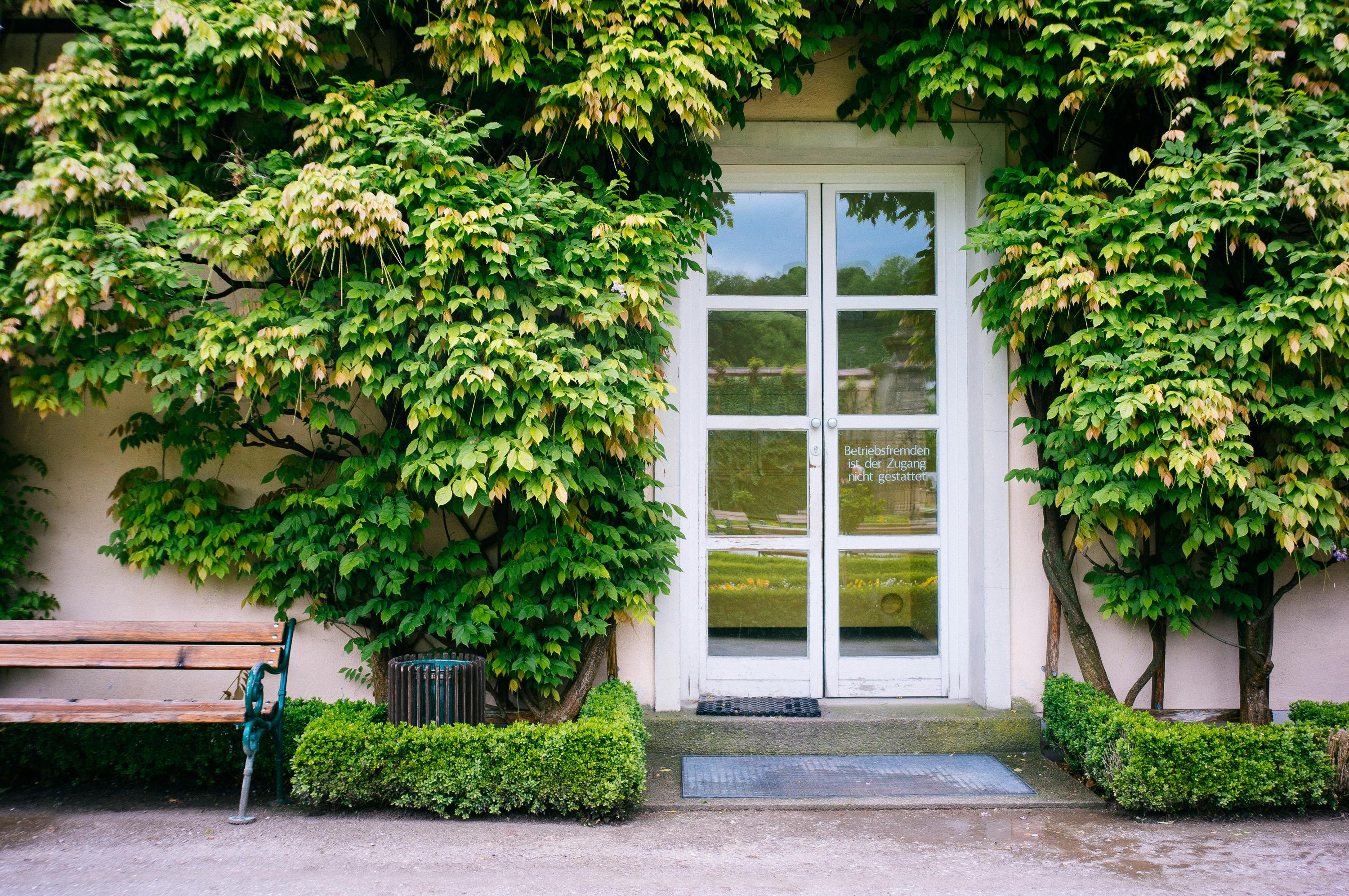
A simple bench near your front door does more than give you a place to sit — it makes visitors feel right at home before they even knock. Choose a style that matches your home’s exterior, whether that’s classic wood, painted metal, or weather-resistant teak.
For a lived-in, welcoming look, pair it with a potted plant or two on either side. Cedar and teak hold up well in most climates without much fuss, while painted wood may need a fresh coat each spring.
7.) Plant Low-Maintenance Evergreens

Evergreens are a smart pick for front door landscaping because they look good year-round without a lot of fuss. Varieties like boxwood, dwarf Alberta spruce, or holly hold their shape and color through every season, giving your entryway a neat, finished look even in winter.
Most evergreens do well in zones 4–8 and prefer well-drained soil with full to partial sun. Once established, they need very little water or pruning — just a light trim once a year to keep things tidy.
8.) Design a Curved Walkway

A curved walkway leading to your front door instantly makes your yard feel more welcoming and put-together. Unlike a straight path, a gentle curve draws the eye and slows visitors down just enough to take in your landscaping on either side.
When planning your walkway, choose materials like flagstone, brick, or pavers that hold up well through freeze-thaw cycles. Adding low-growing plants or ground cover along the edges softens the look and keeps the path feeling natural rather than rigid.
9.) Incorporate Seasonal Annuals

Seasonal annuals are an easy way to add a burst of color to your front door area without a long-term commitment. Swap them out each season to keep things looking fresh and interesting all year round.
Most annuals like petunias, marigolds, and impatiens do well in containers or garden beds with full to partial sun and regular watering. They thrive in warmer months and work best in zones 3–9. Deadhead spent blooms to encourage new flowers throughout the season.
10.) Add Decorative Window Boxes

Window boxes are one of the easiest ways to add some personality to your front door area. You can fill them with colorful annuals like petunias or impatiens in warmer months, or switch to trailing ivy and evergreens for a year-round look.
Most window boxes work well in USDA zones 4–9, depending on what you plant. Water regularly since they dry out fast, and make sure your box has good drainage holes. A little slow-release fertilizer in spring goes a long way.
11.) Create Height with Urns

Tall urns placed on either side of your front door are an easy way to add some height and structure to your entryway. Choose urns in stone, concrete, or resin — they hold up better through rain and temperature swings than terracotta.
Fill them with a mix of upright plants like dwarf conifers or ornamental grasses, plus some trailing ivy or sweet potato vine to soften the edges. Swap out seasonal flowers to keep things looking fresh from spring through fall.
12.) Install a Charming Arbor
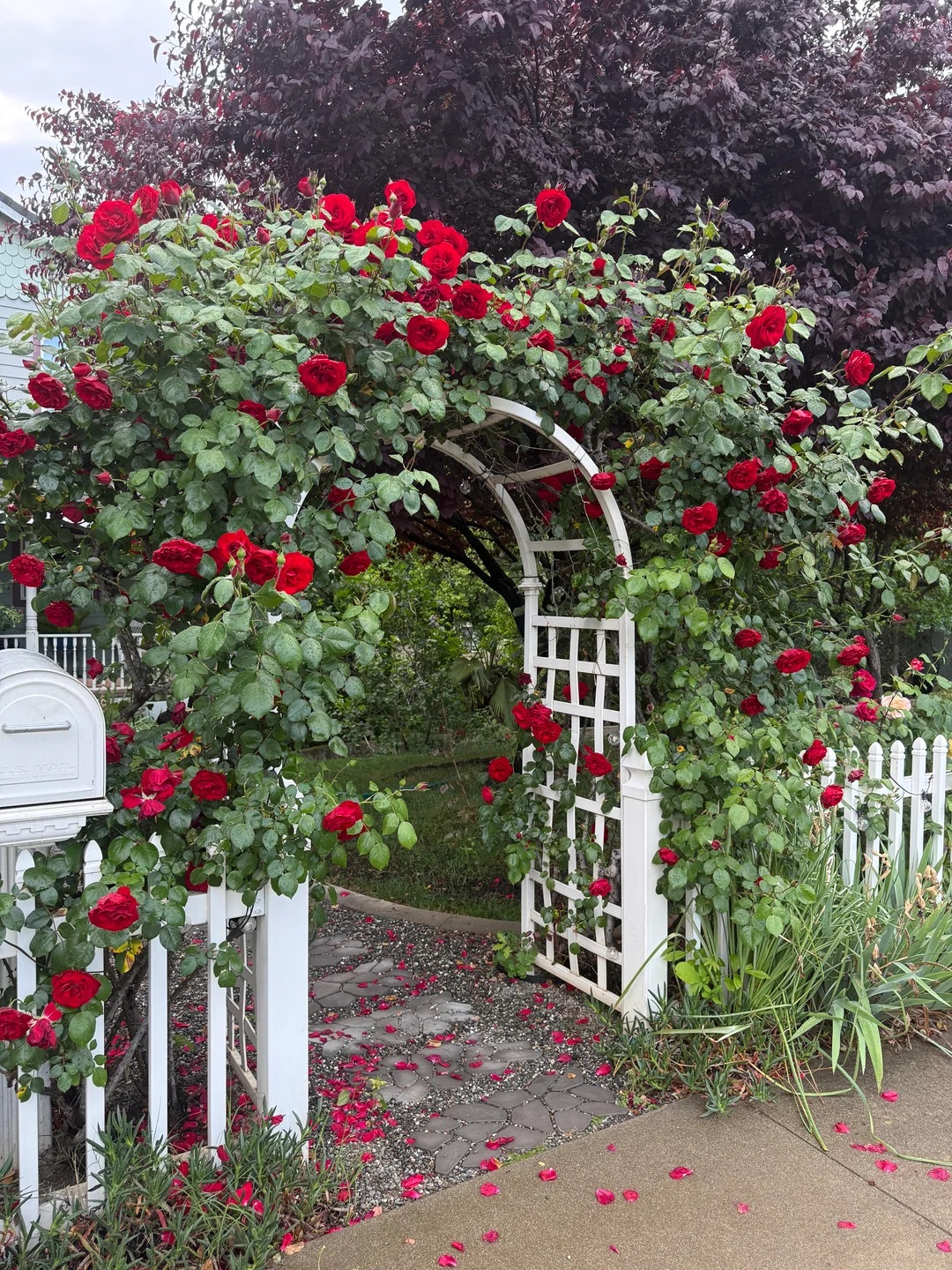
A wooden or metal arbor framing your front door instantly gives your entryway a sense of character and structure. It’s one of those additions that looks like it took a lot of effort but is actually pretty straightforward to install on a weekend.
Train a climbing rose, clematis, or wisteria over it for a natural, layered look. Most climbing plants do well in full sun and need annual pruning to stay tidy. Zones 4–9 work great for the most popular climbing varieties.
13.) Edge Beds with Stone

Stone edging is one of the easiest ways to give your front yard beds a clean, polished look. You can use flat fieldstones, stacked pavers, or simple river rocks — whatever fits your style and budget.
The best part? There’s almost no maintenance involved. Stones don’t rot, fade, or need replacing every season. Just set them in place, and they’ll hold their shape for years.
They work well in any climate and look great year-round, even when your plants aren’t in bloom.
14.) Add a Focal Point Statue

A garden statue near your front door gives visitors’ eyes somewhere to land. It doesn’t need to be big or fancy — even a simple bird, frog, or abstract shape works well to anchor the space and make it feel more put-together.
Choose a material that handles your climate. Resin and fiberglass hold up in freeze-thaw zones, while stone and concrete suit milder areas. Set it among low-growing plants or ground cover to keep it from looking like it’s just sitting on bare soil.
15.) Use Mulch for Clean Lines
A thick layer of mulch around your front door plantings does two things really well — it keeps weeds down and gives your beds a neat, finished look. Fresh mulch in spring can make even a simple planting feel put-together.
Aim for about 2–3 inches deep, keeping it pulled a few inches away from plant stems to prevent rot. Bark mulch, shredded wood, or pine straw all work great. Reapply once a year, typically in early spring, to keep things looking tidy.
16.) Plant Cascading Ground Covers

Cascading ground covers like creeping phlox or sweet woodruff are a simple way to soften the edges along your front walkway or garden beds. They spread low to the ground and spill naturally over borders, giving your entryway a relaxed, put-together look.
Most varieties do well in full sun to partial shade and are pretty low-maintenance once established. They’re generally hardy in zones 3–9. Just trim them back after blooming to keep things tidy and encourage fresh new growth.
17.) Frame with Matching Topiaries

A simple frame paired with matching topiaries on either side of your front door gives your entryway a clean, put-together look without a lot of fuss. It’s a classic combo that works with almost any home style.
Topiaries do best in full sun to partial shade and need regular trimming to keep their shape. Most evergreen varieties are hardy in zones 6–9. Water consistently during dry spells, and you’ll have a tidy, welcoming entrance all season long.
18.) Add a Pop of Color
Nothing says “welcome home” quite like a front door flanked by bold, cheerful blooms. Flowers like petunias, marigolds, or salvias are easy to grow in containers or flower beds and thrive in full sun with regular watering. Deadhead spent blooms to keep them looking fresh all season long.
Most of these annuals do best from spring through fall, making them perfect for a seasonal refresh. Pair warm tones like red and orange near a neutral-colored door for a look that really pops.
19.) Create Symmetrical Balance

Symmetrical balance is one of those design tricks that makes a front entrance feel pulled together without a lot of effort. Simply mirror your plantings on both sides of the door — matching topiaries, identical planters, or a pair of flowering shrubs work really well.
For a low-maintenance option, try boxwood shrubs (hardy in zones 5–9) or dwarf Alberta spruce. Both handle pruning well and stay neat through the seasons with minimal fuss.
20.) Install Uplighting for Drama
A few well-placed uplights can completely change how your front door looks after dark. Point them toward a tree, a textured wall, or tall shrubs, and suddenly your entryway has real presence at night.
Go for low-voltage LED fixtures — they’re energy-efficient, easy to install yourself, and hold up through rain and cold. Solar options work well in sunny spots.
Uplighting works year-round in any zone, so it’s one of those small upgrades that pays off in every season.
21.) Use Ornamental Grasses
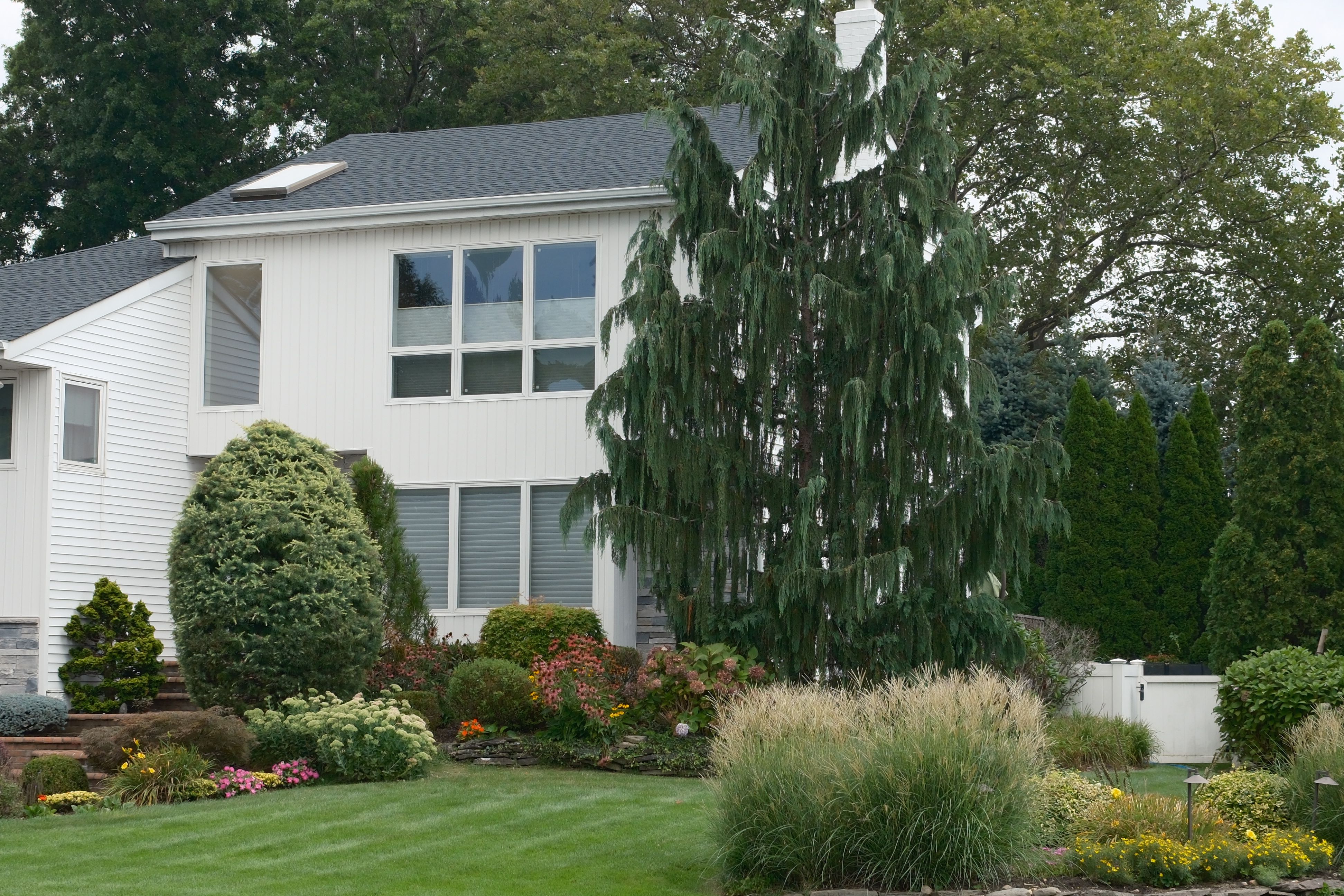
Ornamental grasses are a great way to add movement and texture along your front walkway or around your door. They sway in the breeze and look good from early spring all the way through winter.
Most varieties do well in full sun and aren’t too picky about soil. They’re also pretty drought-tolerant once established, which makes them easy to maintain.
Look for varieties like Karl Foerster or Blue Oat Grass, which work well in zones 4–9.
22.) Add a Water Feature

A small fountain or birdbath near your front door adds movement and sound that makes your entry feel more welcoming. Even a simple solar-powered fountain requires very little maintenance and no electrical wiring.
Keep it clean by scrubbing away algae every few weeks and changing the water regularly to prevent mosquitoes. In colder climates (zones 1–5), bring portable features indoors before the first freeze to avoid cracking.
A water feature works well year-round in warmer zones and looks great paired with surrounding plants.
23.) Design Tiered Planters
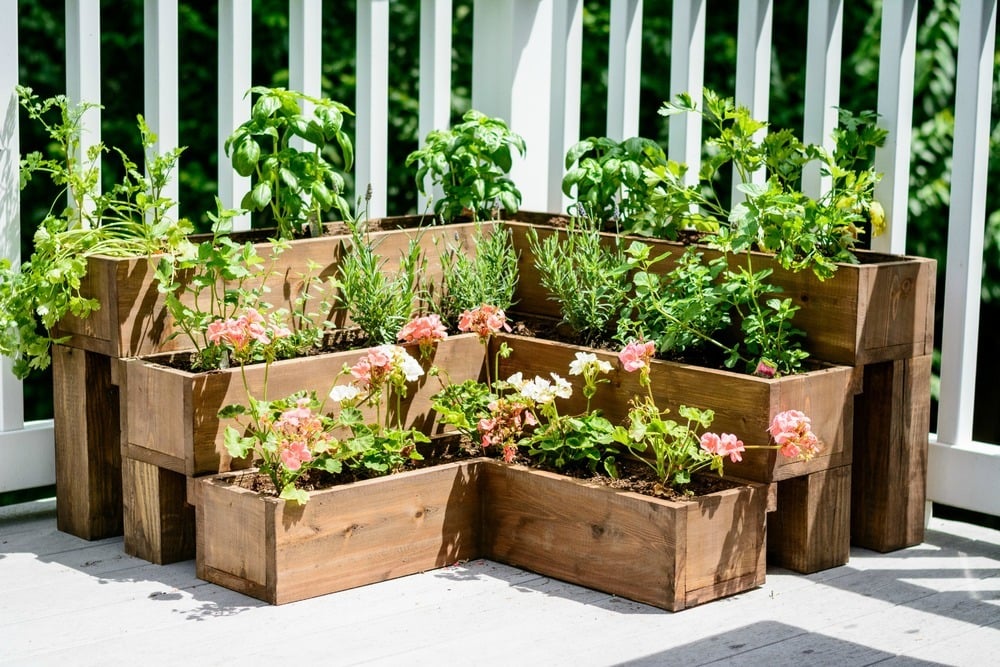
Tiered planters are a great way to add some depth and structure to your front door without taking up a lot of space. You can stack flowers, herbs, or trailing greenery at different heights for a layered, put-together look.
Fill the top tier with sun-loving annuals like petunias or marigolds, and save the lower levels for shade-tolerant plants like ferns or impatiens. Water regularly since tiered planters dry out faster than in-ground beds, especially in warmer months.
24.) Incorporate Native Plants
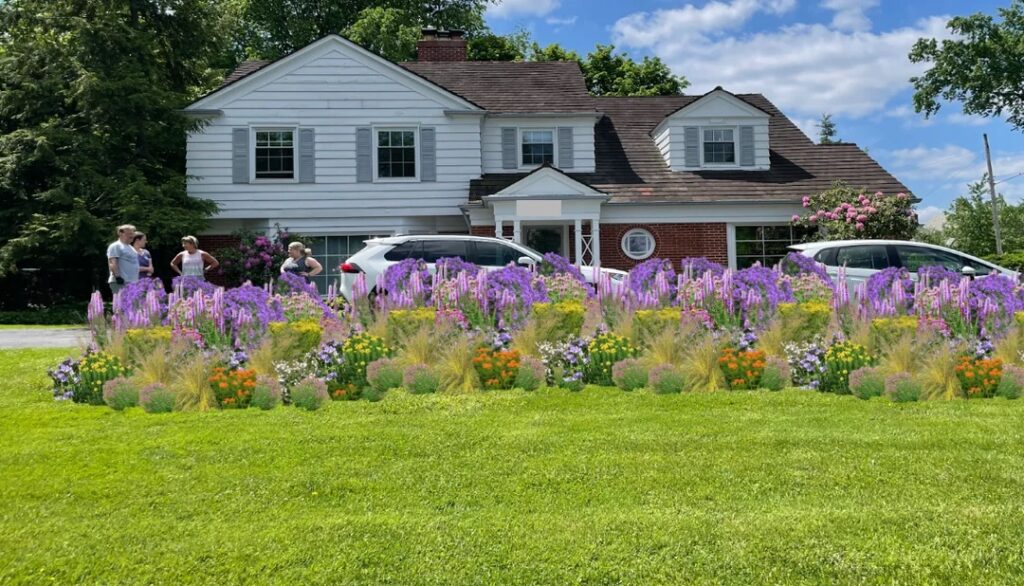
Native plants are a smart choice for front door landscaping because they’re already adapted to your local climate and soil. That means less watering, fewer fertilizers, and way less fussing overall.
Look up which plants are native to your region and pick ones that suit your sun and moisture levels. Most natives thrive with minimal care once established, making them great for busy homeowners.
They also bring in pollinators like bees and butterflies, giving your entryway some natural life and movement.
25.) Edge with Low Hedges

Low hedges are a classic way to frame your front walkway or garden beds without a lot of fuss. Plants like boxwood, dwarf barberry, or spirea work well for this look and stay pretty manageable with just a light trim a couple of times a year.
Most of these shrubs are happy in full sun to partial shade and thrive in zones 4–8. They’re tough, low-maintenance, and give your front yard a clean, pulled-together feel all season long.
26.) Add a Seasonal Wreath Hook
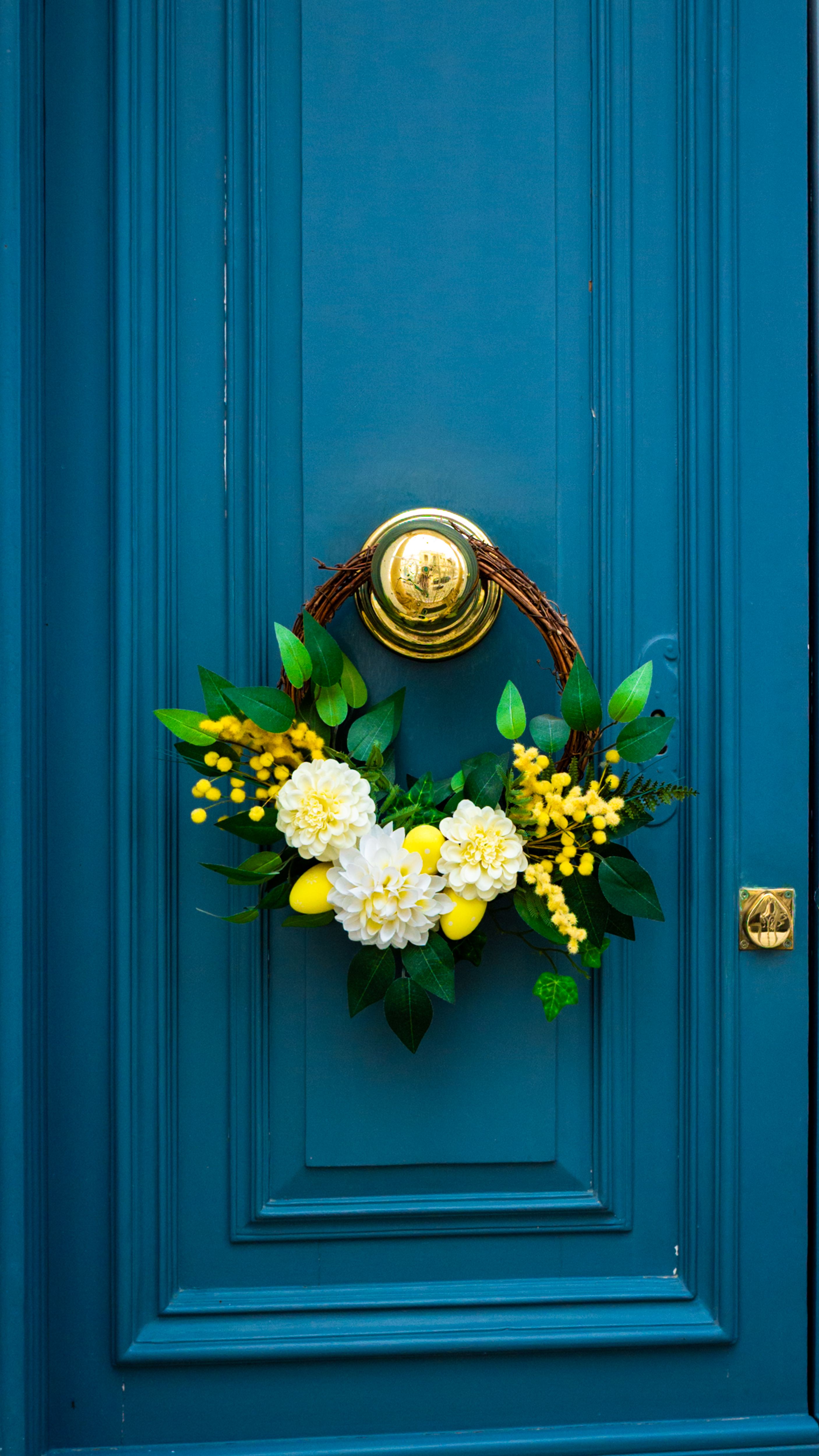
A seasonal wreath hook is one of the easiest ways to switch up your front door’s look without any major effort. You just swap out the wreath as the seasons change, and suddenly your entryway feels fresh and new again.
Look for a hook that fits over your door without scratching the paint or frame. Over-the-door styles are great because they require zero tools or hardware. Aim for one that holds at least five pounds to handle fuller, heavier wreaths comfortably.
27.) Use Contrasting Foliage Textures
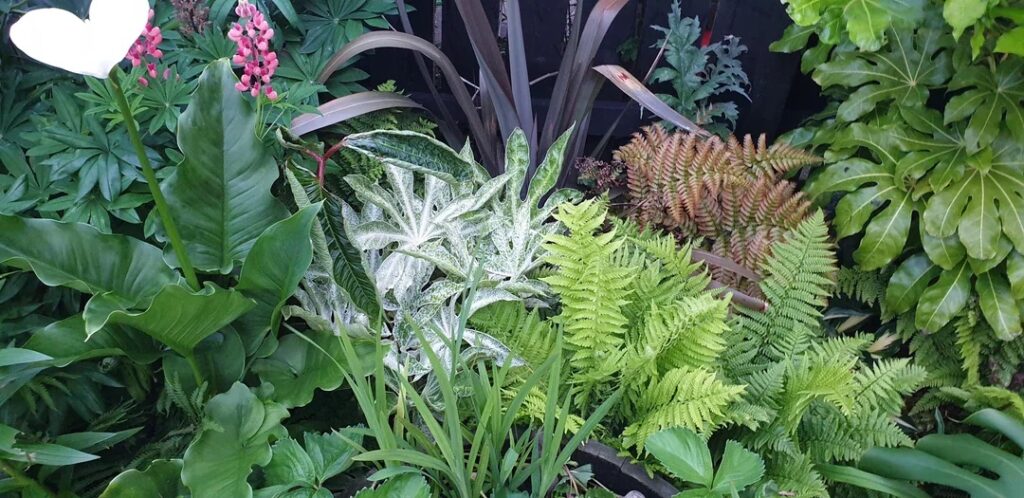
Mixing plants with different leaf textures is one of the easiest ways to make your front door area look more interesting. Think soft, feathery ferns planted next to bold, wide-leafed hostas, or spiky ornamental grasses beside smooth boxwood.
The good news is that this approach works in almost any zone. Hostas thrive in zones 3–9 with light shade, while ornamental grasses handle full sun in zones 5–9. Most just need occasional watering and a light trim to stay tidy.
28.) Create a Fragrant Welcome
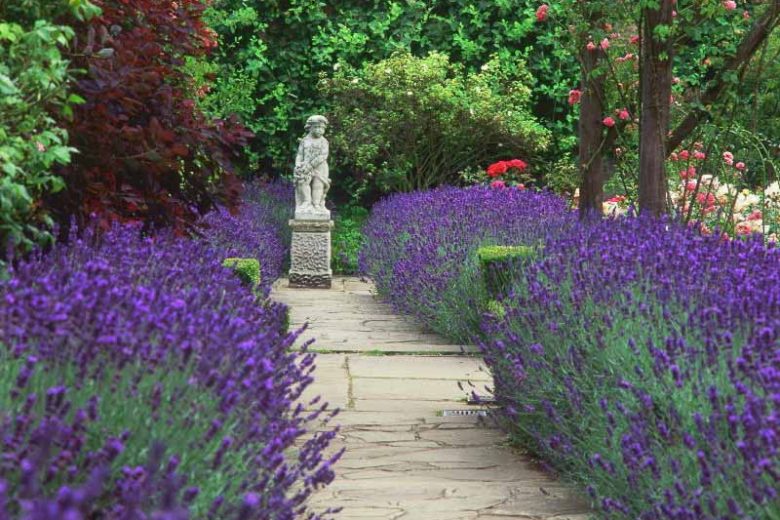
Want your guests to smile before they even knock? Plant something fragrant near your front door — think lavender, gardenias, or sweet alyssum — and let the scent do the welcoming for you.
Lavender thrives in full sun and well-drained soil, doing best in zones 5–8. Gardenias prefer warmer climates (zones 8–11) and need consistent moisture. Sweet alyssum is an easy annual that works almost anywhere in spring and fall.
A little planning goes a long way when your entryway smells this good.