Lavender is one of those plants that looks so easy to care for — until it isn’t. If yours is looking sad, droopy, or just plain giving up, don’t toss it just yet!
There are actually some really simple tricks that can bring it back to life, and most of them don’t require any special skills or fancy tools. Keep reading, because one of these might be exactly what your plant needs!
1.) Check for Proper Drainage
Lavender hates wet feet. If the roots sit in soggy soil for too long, the plant will start to rot from the bottom up, and no amount of sunlight will save it at that point.
Check that your pot has drainage holes and that water flows out freely when you water. If you’re growing in the ground, make sure the spot doesn’t collect puddles after rain.
Sandy or gritty soil works best here — it drains fast and keeps roots happy.
2.) Adjust Watering Schedule Immediately

One of the biggest reasons lavender struggles is too much water. Lavender is native to the Mediterranean, so it actually prefers dry, well-drained soil. If you’ve been watering it like a typical garden plant, that’s likely the problem.
Cut back to watering only once every one to two weeks during the growing season, and even less in winter. Stick your finger about an inch into the soil — if it still feels damp, hold off a little longer.
3.) Prune Dead or Damaged Growth

Dead or damaged branches pull energy away from the healthy parts of your lavender, making it harder for the plant to bounce back. Grab a pair of clean, sharp pruning shears and cut away any brown, woody, or dried-out stems right at the base.
Try to do this in early spring before new growth kicks in. Avoid cutting into the woody base too aggressively, since lavender doesn’t always recover well from heavy cuts. Light, careful trimming goes a long way.
4.) Improve Soil pH Levels

Lavender loves alkaline soil, so if your plant is struggling, the pH might be off. Aim for a soil pH between 6.5 and 7.5. You can test this with an inexpensive kit from any garden center.
If your soil is too acidic, mix in some garden lime to bring it up. Sandy or well-draining soil naturally tends to work better for lavender, so avoid heavy clay if you can.
Getting the pH right can make a big difference in how well your plant bounces back.
5.) Relocate to Sunnier Spot

Lavender loves the sun — and we mean *loves* it. It needs at least 6 to 8 hours of direct sunlight daily to stay healthy. If your plant is sitting in a shady corner, that could easily be the reason it’s struggling.
If it’s in a pot, move it closer to a south-facing window or outside on a sunny patio. For in-ground plants, consider transplanting in early spring. More sunlight usually means better growth and fewer problems overall.
6.) Reduce Fertilizer Application

Lavender is a light feeder, meaning it doesn’t need much fertilizer to thrive. In fact, too much can actually hurt it — you’ll get lots of leafy growth but very few flowers, which is the opposite of what you want.
If your plant looks like it’s struggling, cut back on feeding and let it adjust. Once or twice a year in spring is plenty. Stick to a low-nitrogen option if you do fertilize, and always follow the label instructions.
7.) Repot with Fresh Soil
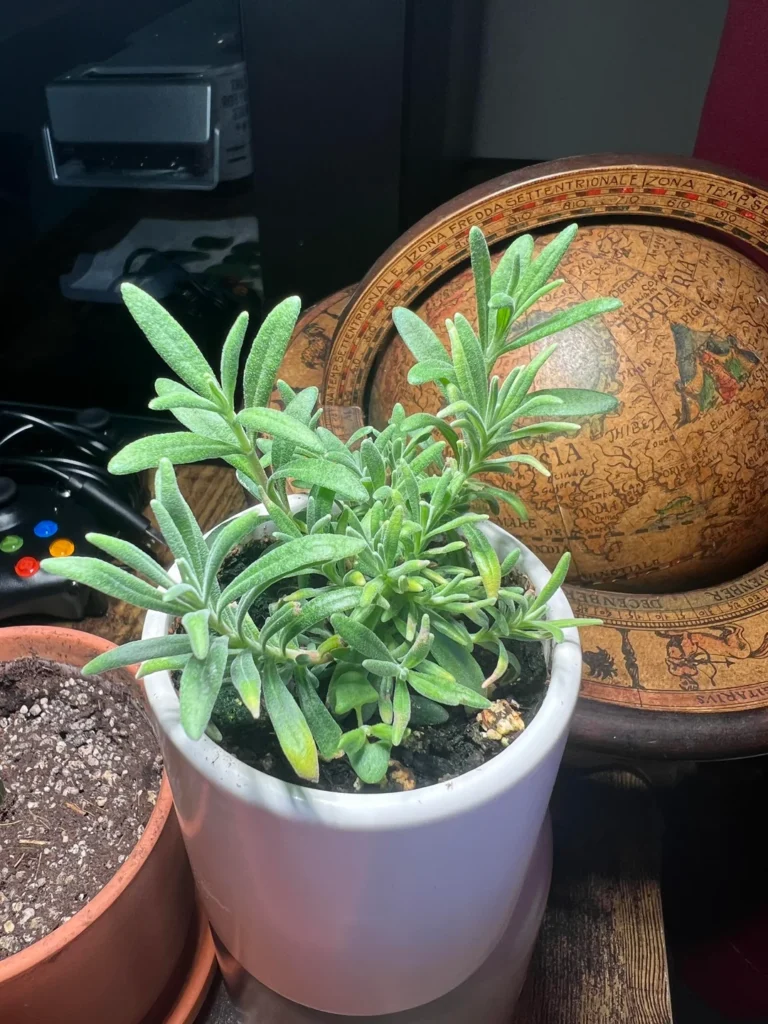
Sometimes the soil itself is the problem. Over time, it gets compacted and stops draining properly, which lavender absolutely hates. If your plant has been sitting in the same pot for a couple of years, the soil could be doing more harm than good.
Repot using a mix of regular potting soil and coarse sand or perlite to improve drainage. Go up just one pot size, and make sure there are drainage holes. Fresh soil gives the roots room to breathe again.
8.) Increase Air Circulation

Lavender really struggles when air can’t move around it freely. It’s a Mediterranean plant that loves open, breezy conditions, so stagnant, humid air is basically its worst enemy. If your plant is sitting in a tight corner or crowded by other plants, that’s likely part of the problem.
Try spacing it away from nearby plants or moving it somewhere with better airflow. If it’s indoors, a small fan running nearby for a few hours a day can make a real difference.
9.) Remove Competing Weeds

Weeds aren’t just an eyesore — they compete directly with your lavender for water, nutrients, and space in the soil. If your plant is already struggling, nearby weeds can make things a whole lot worse.
Pull them out by the roots, especially fast-growing types like clover or grass. Do this when the soil is slightly moist so the roots come out clean. Adding a thin layer of gravel mulch around the base can help keep new weeds from coming back.
10.) Cut Back on Mulch

Too much mulch around your lavender can actually suffocate it. Lavender needs really good drainage and plenty of airflow at the base, so piling on thick layers of mulch traps moisture and causes root rot — which is often the main reason plants start to decline.
If you’re using mulch, keep it light and pull it a few inches away from the base of the plant. Gravel or grit works better than organic mulch since it keeps things dry and lets the roots breathe.
11.) Treat Root Rot Promptly

Root rot is one of the sneakiest killers of lavender. It usually happens when the soil stays too wet for too long, causing the roots to break down. You’ll notice drooping stems and yellowing leaves even when the soil still feels damp.
To treat it, dig up the plant, trim off any brown or mushy roots, and replant in fresh, well-draining soil. Adding some sand or gravel to the mix helps a lot. Don’t water again until the top inch of soil feels dry.
12.) Avoid Overwatering in Winter
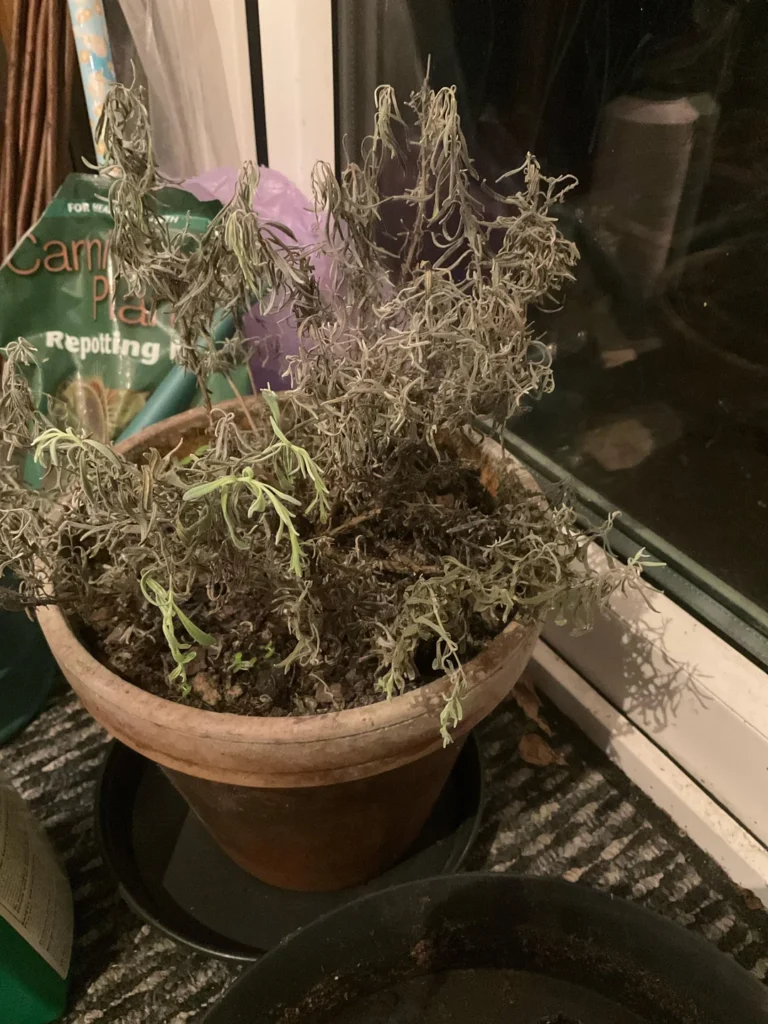
One of the biggest mistakes people make with lavender in winter is watering it too much. Lavender is drought-tolerant, and during the colder months, it barely needs any water at all since growth slows way down.
A good rule of thumb: if the soil still feels even slightly damp, hold off. In winter, watering once or twice a month is usually plenty. Too much moisture sitting around the roots can cause rot, which is often what’s slowly killing your plant.
13.) Transplant to Better Location

Sometimes the spot you originally chose just isn’t working out — and that’s okay. Lavender needs full sun (at least 6-8 hours a day) and soil that drains well. If your plant is sitting in a shady corner or soggy ground, it’s probably struggling because of where it lives, not how you’re caring for it.
Pick a new spot with good airflow and sandy or gritty soil. Early spring or fall is the best time to move it, so the roots have time to settle in without too much stress.
14.) Add Perlite for Drainage
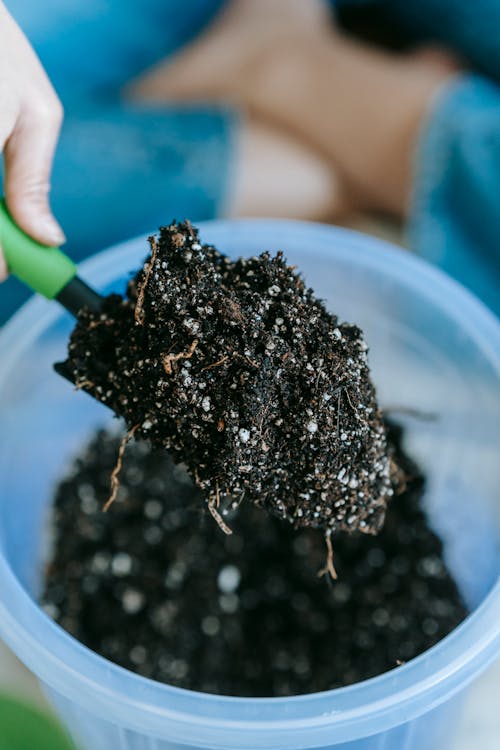
If your lavender is sitting in soggy soil, that’s probably what’s killing it. Lavender needs really good drainage to survive, and adding perlite to your potting mix is one of the easiest fixes you can make.
Mix about 30% perlite into your soil before repotting. It creates tiny air pockets that keep water from pooling around the roots. This is especially helpful if you’re growing lavender in a container, where water tends to collect at the bottom.