So you finally planted petunias, and instead of that full, bushy look you were going for, they’ve stretched out into long, sad little stems. Trust me, you’re not alone — this happens to so many gardeners, and it’s actually pretty easy to fix once you know what’s causing it.
The good news? There are some really specific reasons why petunias get leggy, and each one has a straightforward solution. Let’s get into them!
1.) Insufficient Sunlight Exposure

Petunias love the sun — they need at least six hours of direct light each day to grow full and bushy. When they don’t get enough, they start stretching toward any light source they can find, which leads to those long, bare stems you’re probably dealing with right now.
If your petunias are in a shady spot, try moving them to a south or west-facing area. Even shifting a container a few feet can make a noticeable difference over time.
2.) Inconsistent Watering Practices

Watering your petunias too much one day and then forgetting about them for a week is a fast track to leggy, stretched-out stems. Plants that go through cycles of drought and flooding put their energy into surviving rather than staying full and bushy.
Try to water deeply but consistently — usually every few days during warm weather, or when the top inch of soil feels dry. A regular schedule helps petunias focus on growing outward instead of just reaching upward.
3.) Over-Fertilizing with Nitrogen

Too much nitrogen sounds like a good thing — more food, more growth, right? But with petunias, it actually pushes the plant to produce lots of leafy stems instead of flowers. You end up with long, sprawling growth and barely any blooms.
Ease up on high-nitrogen fertilizers and switch to a balanced formula like 10-10-10, or one with a bit more phosphorus. Feed every two weeks during the growing season and you should start seeing more flowers pretty quickly.
4.) Skipping Regular Deadheading

Deadheading — removing spent blooms — is one of the easiest ways to keep petunias full and bushy. When you skip it, the plant puts energy into making seeds instead of new flowers and growth, which leads to those long, bare stems you’re probably seeing.
Make it a weekly habit through spring and summer. Just pinch or snip off faded flowers right at the base of the bloom. It only takes a few minutes and makes a noticeable difference in how the plant fills out.
5.) Overcrowding in Containers

When you cram too many petunias into one pot, they end up fighting for the same nutrients, water, and light. That kind of competition pushes them to grow tall and spindly instead of full and bushy.
A good rule of thumb is one petunia per 6 inches of container width. If your pot is already packed, don’t be afraid to remove a few plants. It feels wasteful, but the ones that stay will actually grow much better.
6.) Lack of Pruning
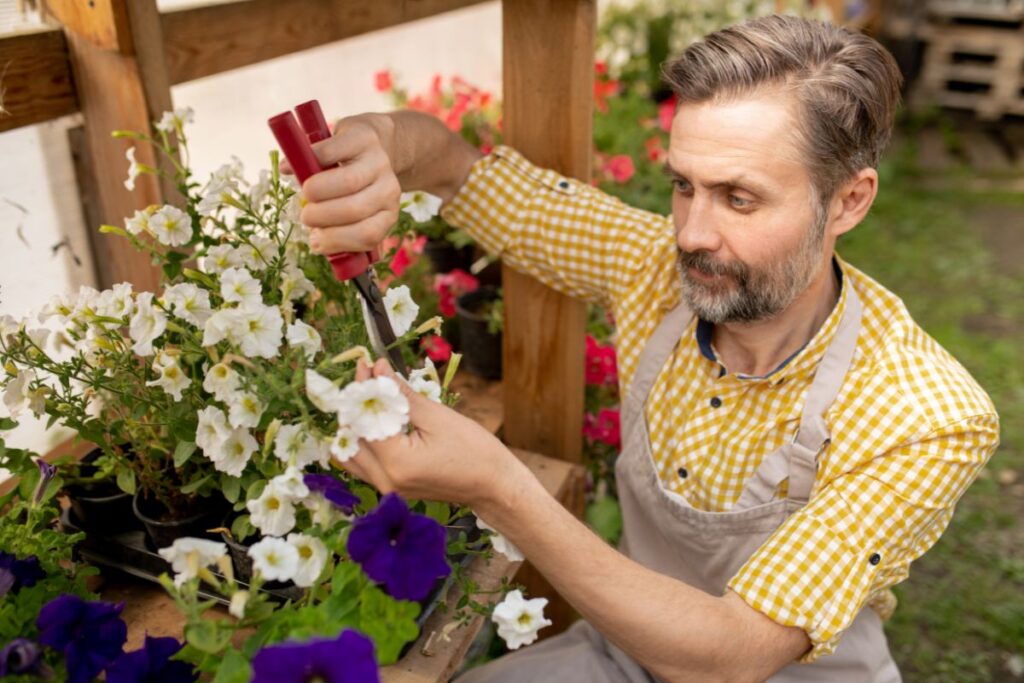
If you never trim your petunias, they’ll put all their energy into growing long, stretched-out stems instead of bushy, full growth. It’s one of the most common reasons plants end up looking scraggly by midsummer.
The fix is simple — pinch or cut back the stems by about a third every few weeks. Focus on any stems that look especially long or bare. Within a week or two, you should start seeing new growth branching out closer to the base.
7.) Poor Air Circulation
Poor air circulation is something a lot of gardeners overlook, but it can seriously affect how your petunias grow. When plants are packed too tightly together, they end up competing for light and stretching upward instead of filling out nicely.
Try spacing your petunias at least 12 inches apart. If they’re in containers, make sure you’re not overcrowding the pot. Good airflow also helps prevent fungal issues, which is a bonus on top of keeping your plants fuller and more compact.
8.) Wrong Petunia Variety Choice
Not all petunias are built the same, and picking the wrong type can set you up for a leggy mess before the season even gets going. Spreading varieties like Wave petunias tend to stay low and full, while upright types need more attention to keep them from getting straggly.
If you want compact, bushy growth, look for varieties labeled “mounding” at the nursery. These hold their shape better and don’t require as much pinching to stay looking decent throughout summer.
9.) Inadequate Pinching Back

If you never pinch back your petunias, don’t be surprised when they turn into long, bare stems with a few flowers at the very tips. Pinching encourages the plant to branch out instead of just stretching upward.
To do it, simply snap or cut off the top inch or two of each stem, ideally in spring or early summer. Do this every few weeks throughout the growing season and your petunias will stay fuller and produce way more blooms.

