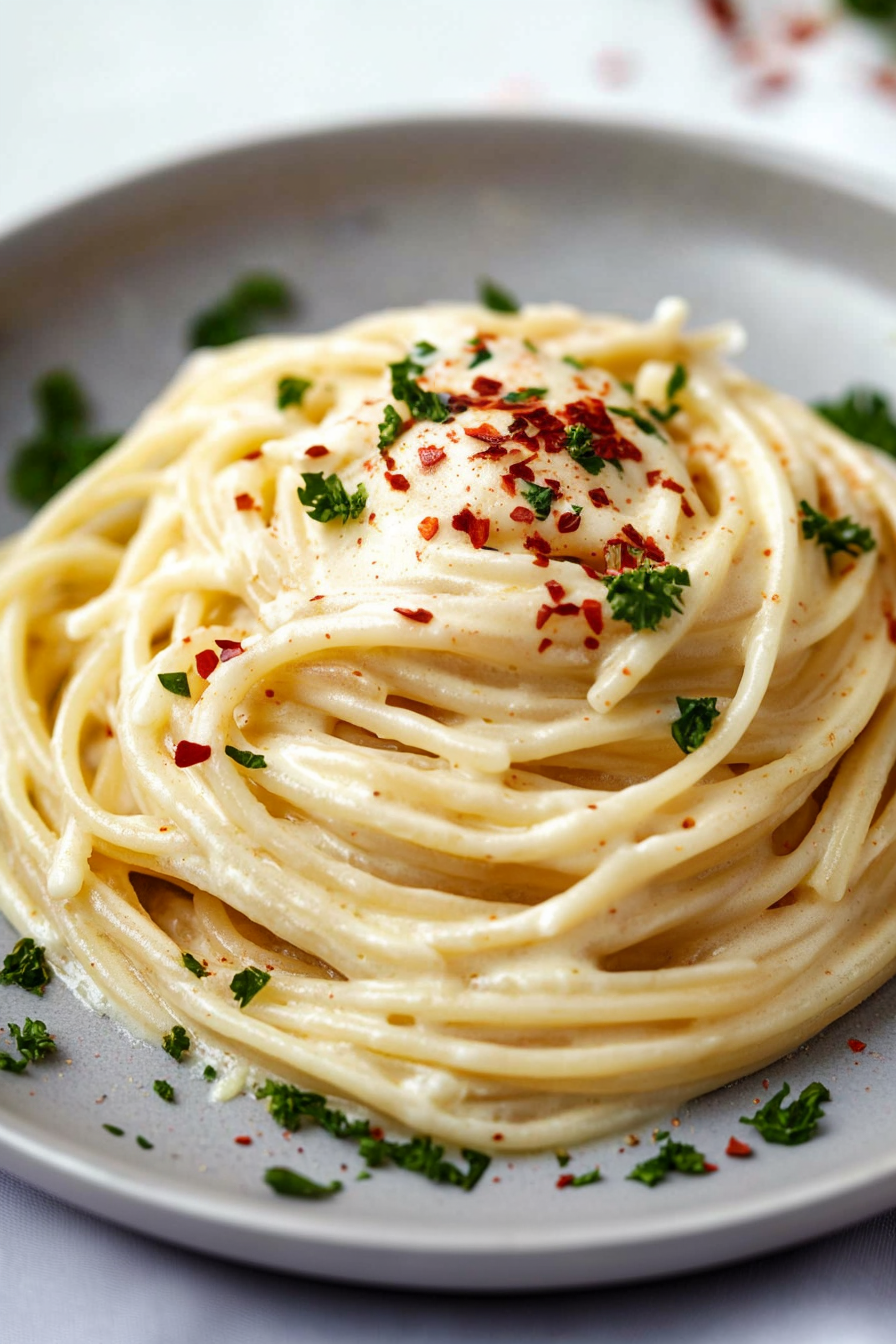
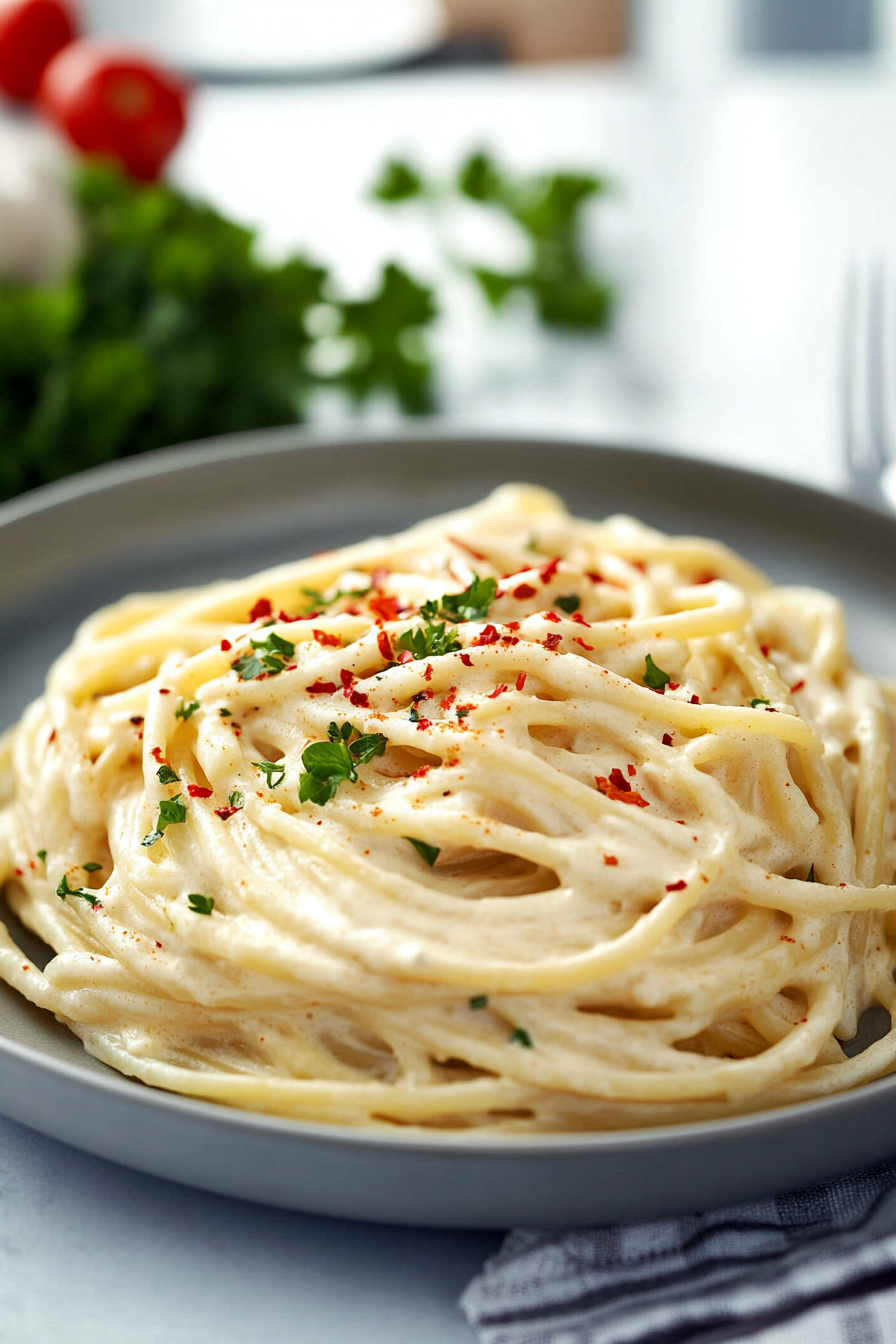
Growing up in a meat-loving family, I never thought I’d be the one making alfredo sauce with tofu. But here I am, years later, sharing my go-to recipe that even my cheese-obsessed sister can’t get enough of. The first time I tried it, I was pretty skeptical – tofu in pasta sauce seemed weird, to say the least.
But after many failed attempts at making dairy-free alfredo (including one disaster with cauliflower that we don’t talk about), I finally cracked the code with tofu. It’s creamy, rich, and honestly tastes so close to the real thing that I’ve served it to dinner guests without telling them what’s in it. Trust me, if my picky family approves, yours probably will too.
Possible Ingredient Alternatives
Extra firm silken tofu can be replaced with cashews for a nut-based alternative. Soak 1 cup of raw cashews in hot water for 30 minutes, then drain and blend until smooth. This substitution provides a creamy texture and adds healthy fats. For the pasta, use zucchini noodles or spaghetti squash to create a low-carb, gluten-free option. Adjust cooking times accordingly. Nutritional yeast can be substituted with grated Parmesan cheese for a non-vegan version, using a 1:1 ratio. This change adds a traditional cheesy flavor but removes the vegan aspect of the dish. When using Parmesan, reduce the salt slightly as the cheese contains sodium.
| Preparation Time | 10-15 minutes |
| Cooking Time | 15-20 minutes |
| Total Time | 25-35 minutes |
| Level of Difficulty | Easy |
Estimated Nutrition
Estimated nutrition for the whole recipe (without optional ingredients):
- Calories: 800-900
- Protein: 30-40 g
- Fat: 40-50 g
- Carbohydrates: 80-90 g
Ingredients
For the pasta:
- 1 cup reserved cooking water
- 8 oz pasta (such as fettuccine or linguine)
For the alfredo sauce:
- 1/4 tsp onion powder
- 1/4 tsp garlic powder
- 1/4 cup lemon juice (freshly squeezed for best flavor)
- 3 tbsp olive oil
- 1 block extra firm silken tofu (12.3 oz, for a creamy texture)
- 1/4 cup nutritional yeast (I use Bragg brand)
- 1/4 tsp black pepper (freshly ground preferred)
- 1/4 tsp salt
Step 1: Cook and Prepare the Pasta
Begin by cooking pasta according to the package directions, aiming for 1-2 minutes less than the time specified for al dente.
This will keep the pasta firm, as it will finish cooking in the sauce.
Don’t forget to add salt to the water for flavor.
As the pasta cooks, remove 1 cup of pasta water and set it aside for later use.
Step 2: Blend the Sauce Ingredients
In a blender, add all sauce ingredients along with ½ cup of reserved pasta water.
Blend until the mixture is smooth, making sure to scrape down the sides of the blender jar intermittently to ensure all ingredients are fully incorporated.
Step 3: Combine Pasta and Sauce
Once the pasta is cooked, strain it without rinsing to preserve the starch on its surface which helps the sauce adhere better.
Return the pasta to the pot and pour the blended sauce over it.
Stir until the pasta is thoroughly coated with the sauce.
Step 4: Adjust Sauce Consistency
If the sauce appears too thick, gradually add more reserved pasta water until the desired consistency is reached.
Conversely, if the sauce is too thin, place the pot over medium heat and stir until the sauce thickens to your liking.
Step 5: Serve and Store
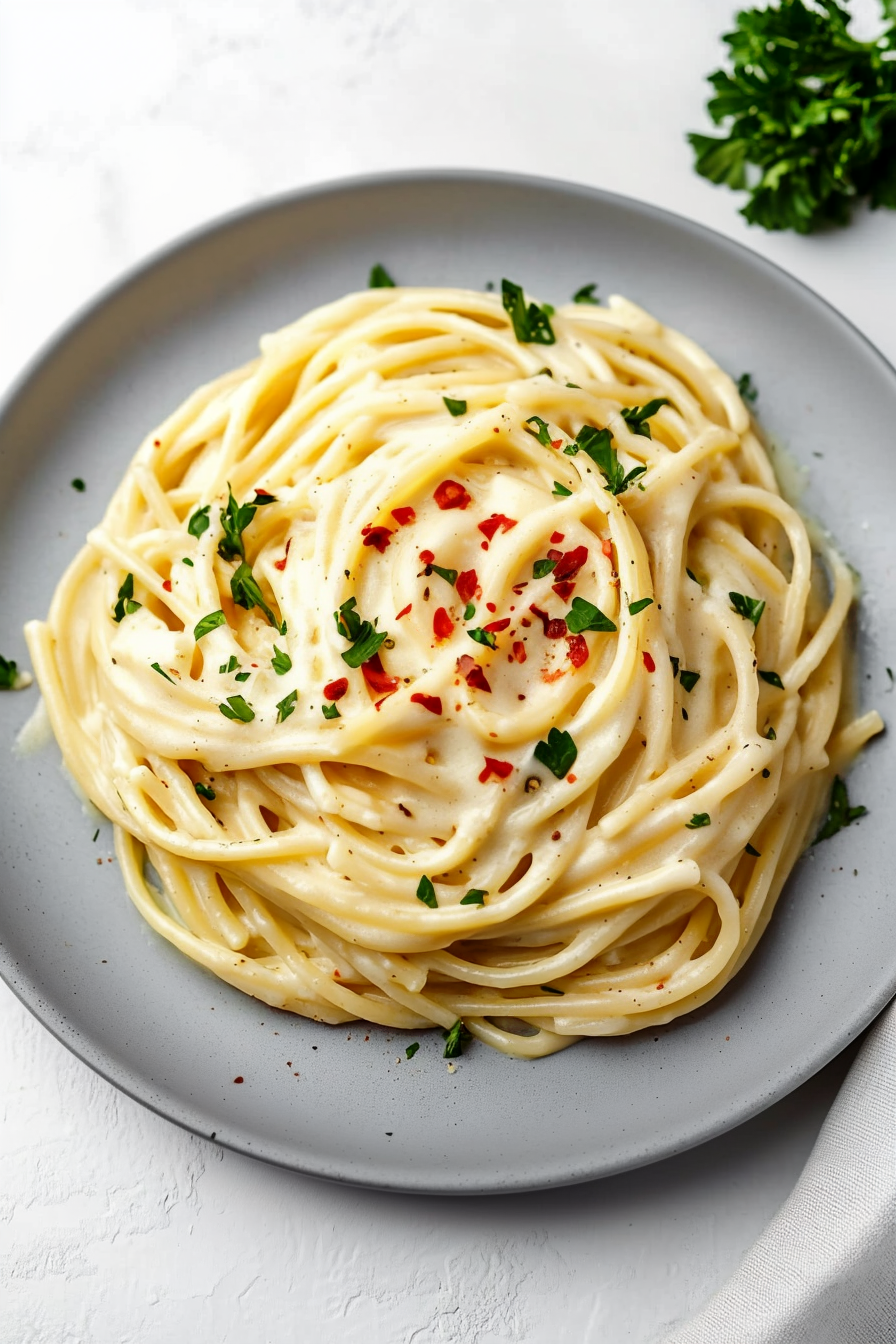
Divide the pasta into four servings.
Optionally, add garnishes of your choice, such as fresh herbs or grated cheese, and serve immediately.
For leftovers, store the pasta in the refrigerator for 4-5 days or freeze for up to 3 months.