When the weather starts getting chilly, nothing makes me happier than a steaming bowl of Korean spicy pork stew. There’s something so comforting about the way the rich broth and tender meat warm you up from the inside out. I first tried making this stew after a cold, rainy day here in Portland when takeout wasn’t an option and I had some pork in the fridge.
What I love most about this stew is how simple it is to put together, even though the flavors make it taste like you’ve been cooking all day. I usually start it right after the kids get home from school, and by dinner time, the whole house smells amazing. The best part? It’s one of those dishes that actually tastes better the next day, so I always make extra for leftovers.
If you’re new to Korean cooking, don’t worry – this recipe is a great place to start. The ingredients are easy to find at most grocery stores these days, and once you have the basic Korean pantry staples, you’ll want to use them in everything.
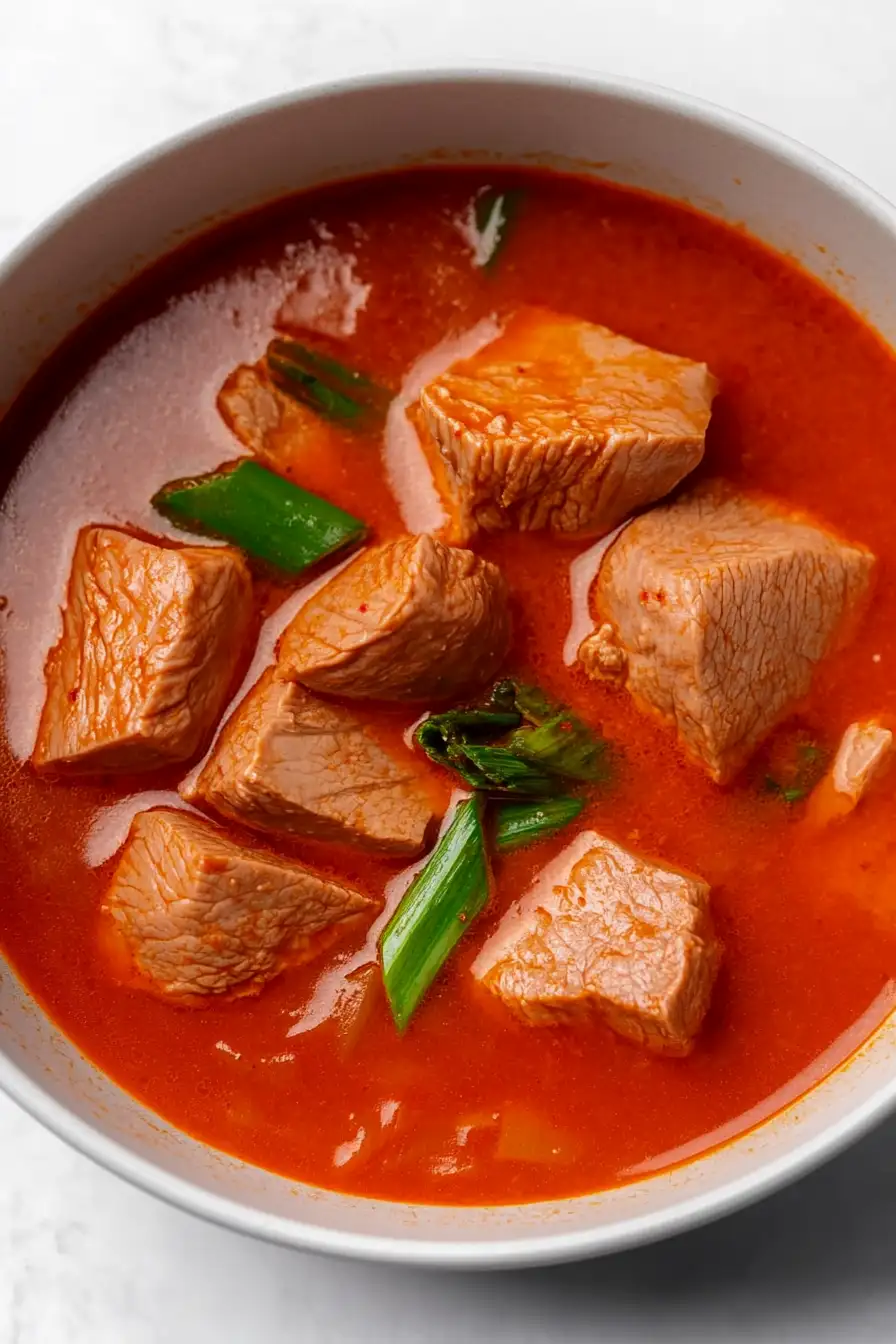
Why You’ll Love This Korean Pork Stew
- Bold Korean flavors – The combination of gochujang, gochugaru, and fresh aromatics creates that authentic Korean taste you crave, with just the right balance of heat and depth.
- One-pot meal – Everything cooks together in a single pot, which means less cleanup and more time to enjoy your meal.
- Protein-packed – With both pork belly and tofu, this stew gives you plenty of satisfying protein to keep you full and happy.
- Ready in about an hour – This warming stew comes together in less time than you might think, making it doable for a weeknight dinner when you’re craving something special.
- Customizable heat level – You can easily adjust the amount of gochugaru and gochujang to make it as mild or spicy as you like.
Which Kind of Pork Belly Should I Use?
For Korean spicy pork stew, you’ll want to look for fresh, uncured pork belly with a good ratio of meat to fat layers. The best cuts will have distinct white fat layers alternating with pinkish-red meat – this marbling is what gives the stew its rich flavor. You can find pork belly either skin-on or skinless, but for this stew, skinless is preferred since it allows the meat to soak up more of the flavorful sauce. If your local grocery store doesn’t carry it, try asking at an Asian market where it’s often pre-sliced to the perfect thickness. Just make sure the meat is fresh and hasn’t started to turn gray or develop any off smells.
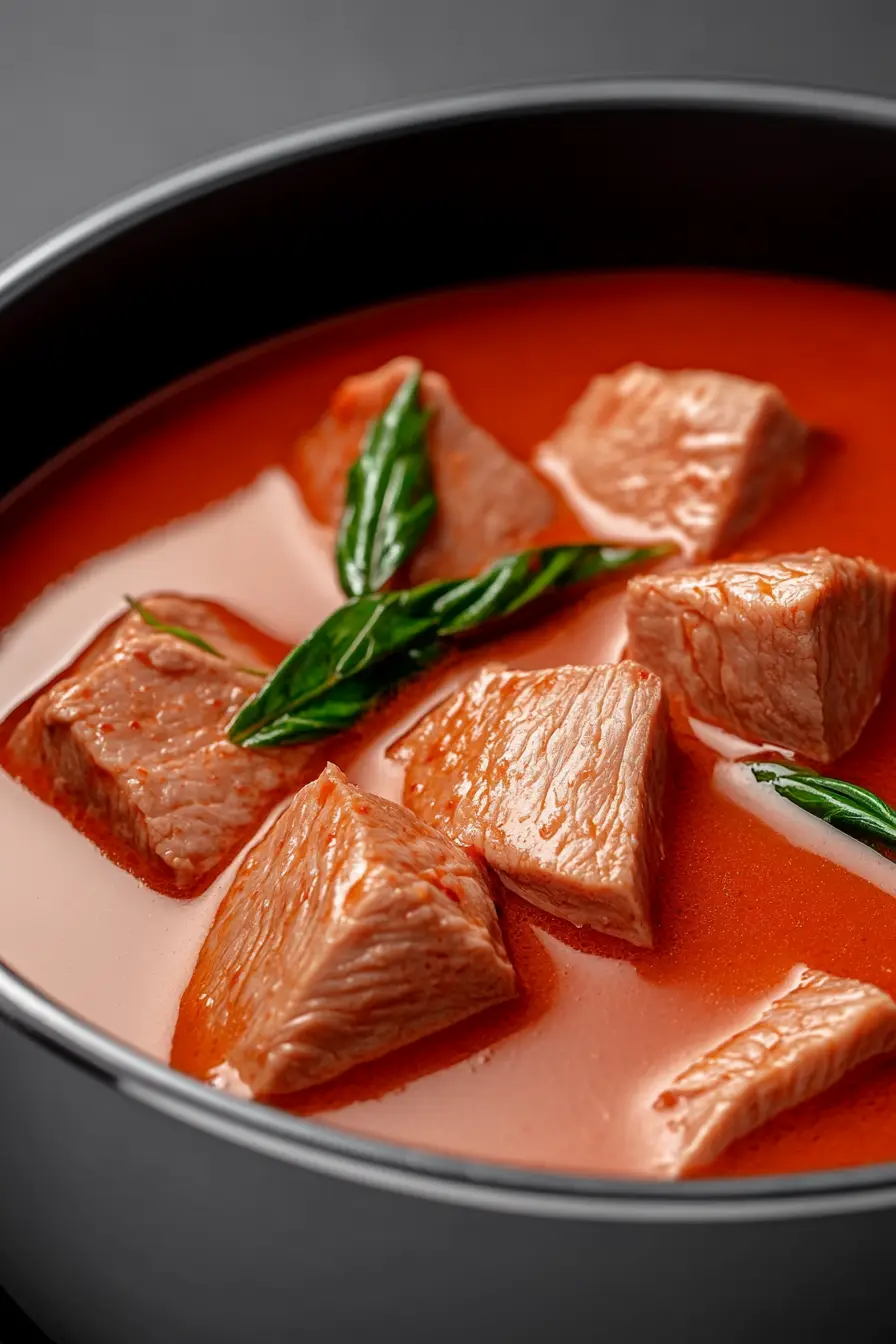
Options for Substitutions
While some ingredients are key to keeping this stew authentic, there are several substitutions you can try:
- Gochujang and Gochugaru: These Korean chili ingredients give the stew its signature flavor and heat – they’re pretty important! But if you’re in a pinch, you can mix sriracha sauce with miso paste for gochujang, and red pepper flakes for gochugaru. Just note that the taste won’t be exactly the same.
- Pork belly: You can swap pork belly with pork shoulder or boston butt cut into similar-sized pieces. If you want a leaner option, try pork loin, but know that the stew might be less rich.
- Fish sauce: If you don’t have fish sauce, try using soy sauce mixed with a tiny pinch of anchovy paste. Or just use regular soy sauce – it’ll work too!
- Tofu: Any firmness of tofu works here – from silken to extra firm. You can even leave it out if you’re not a tofu fan.
- Green chili: Feel free to use jalapeño, serrano, or even bell peppers if you want less heat. You can also skip it altogether.
- Potato: Any potato variety works well here – russet, yellow, or red potatoes are all good choices. You could even use sweet potato for a slightly different twist.
Watch Out for These Mistakes While Cooking
The biggest mistake when making Korean spicy pork stew is rushing the cooking process – giving the pork belly enough time to become tender (at least 45 minutes of simmering) makes all the difference between tough and melt-in-your-mouth meat. Adding the gochujang (Korean chili paste) too late in the cooking process can leave you with a raw, bitter taste, so make sure to sauté it with the garlic and ginger at the beginning to help develop its deep, rich flavors. Another common error is adding the tofu too early – it’s best to add it during the last 5-7 minutes of cooking to prevent it from breaking apart completely. For the most balanced flavor, remember to taste and adjust the seasoning near the end of cooking, as the fish sauce and gochujang can reduce and intensify during simmering.

What to Serve With Korean Spicy Pork Stew?
Like any good Korean meal, this hearty stew calls for a bowl of steamed white rice to soak up all that flavorful broth. A few simple Korean side dishes (banchan) like kimchi, pickled radish, or seasoned spinach make the meal feel complete and authentic. If you want to cool things down a bit (since this stew packs some heat!), serve it with fresh lettuce leaves that can be used to wrap up bites of the pork, or add a light cucumber salad on the side. You can also pair it with a bowl of clear soup like miyeok guk (seaweed soup) if you’re going for a traditional Korean table setting.
Storage Instructions
Keep Fresh: This spicy pork stew tastes even better the next day when all the flavors have had time to mingle! Pop it in an airtight container and keep it in the fridge for up to 4 days. The tofu might break down a bit over time, but the taste will still be fantastic.
Freeze: If you want to save some for later, this stew freezes really well. Just pour it into a freezer-safe container, leaving a bit of space at the top for expansion, and it’ll keep for up to 3 months. Though keep in mind that the texture of the tofu might change slightly after freezing.
Reheat: When you’re ready to enjoy your stew again, warm it up slowly on the stovetop over medium-low heat, stirring occasionally. If it seems a bit thick, you can add a splash of water. For smaller portions, the microwave works too – just heat in 1-minute intervals, stirring between each one.
| Preparation Time | 10-30 minutes |
| Cooking Time | 30-40 minutes |
| Total Time | 40-70 minutes |
| Level of Difficulty | Medium |
Estimated Nutrition
Estimated nutrition for the whole recipe (without optional ingredients):
- Calories: 1200-1400
- Protein: 70-80 g
- Fat: 90-100 g
- Carbohydrates: 40-50 g
Ingredients
For the seasoning paste:
- 1/2 tsp ground black pepper
- 1 tbsp gochugaru (Korean chili flakes)
- 1/4 cup gochujang (Korean chili paste)
- 1 tsp minced peeled ginger (finely minced for best flavor)
- 7 cloves minced garlic
- 2 tsp toasted sesame oil
For the stew:
- 8 oz onion (cut into large chunks)
- 1 lb pork belly (cut into 1/4-inch thick slices)
- 1 tbsp fish sauce
- 3 1/2 cups water
- 1 medium potato, peeled (cut into 1-inch chunks)
- 1 tsp coarse salt
For the final additions:
- 1 green chili, sliced (for a fresh kick)
- 3 green onions, chopped
- 8 oz tofu (cubed into 1/2-inch pieces)
Step 1: Prepare the Seasoning Paste
In a bowl, combine minced garlic, minced ginger, hot pepper paste (gochujang), hot pepper flakes (gochugaru), toasted sesame oil, and ground black pepper.
Mix the ingredients well until they form a smooth paste.
Once combined, set the seasoning paste aside for later use.
Step 2: Marinate the Pork with Seasoning
In a medium-sized pot, place the onion, potato, and pork together.
Add the prepared seasoning paste to the ingredients and mix by hand, ensuring the pork is thoroughly coated with the paste.
Allow the mixture to marinate by letting it sit for 10 to 30 minutes, which enhances the flavor.
Step 3: Cook the Stew Base
After marinating, add water, fish sauce, and salt to the pot.
Stir the ingredients well with a spoon to combine all the flavors, then cover the pot.
Cook the stew over medium-high heat for about 25 minutes, until the pork is fully cooked and the broth becomes flavorful and aromatic.
Step 4: Add Tofu and Vegetables
Once the pork is cooked, stir the stew a few times to ensure even cooking.
Then, add tofu, green onion, and green chili pepper to the pot.
Cover the pot again and continue cooking for an additional 5 to 10 minutes.
This step allows the tofu to absorb the flavors and the vegetables to soften slightly.
Step 5: Serve the Stew
After cooking, remove the pot from heat.
Carefully ladle the stew into individual bowls, ensuring each serving has a good mix of pork, vegetables, and broth.
Serve the stew hot alongside a bowl of rice for a complete and satisfying meal.