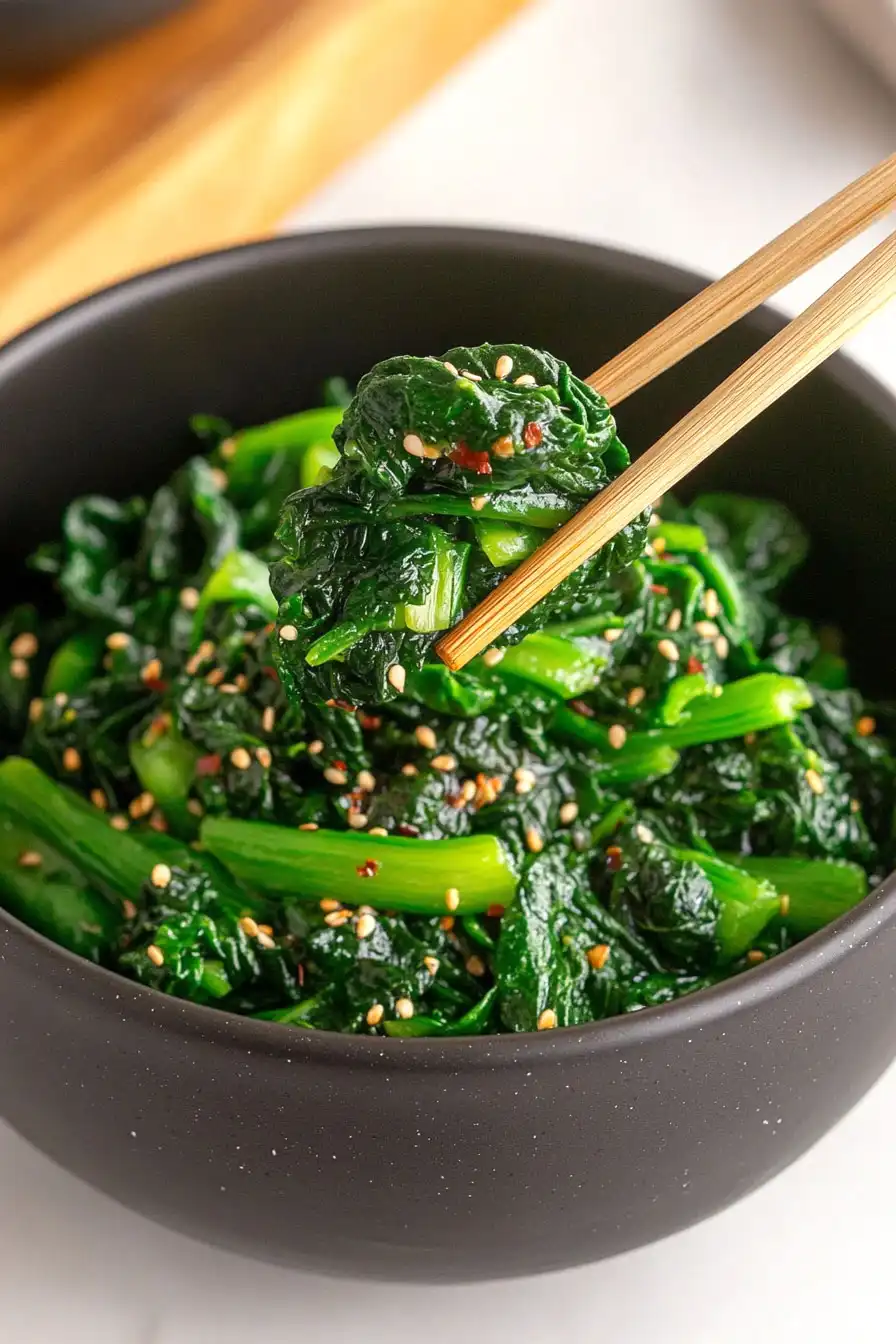
Here’s my go-to Korean spinach side dish recipe, with a quick blanching method, a simple sesame-soy dressing, and just the right amount of garlic that makes this dish a perfect addition to any Korean meal.
This spinach dish (or sigeumchi-namul as it’s called in Korean) shows up on my dinner table at least once a week. I always make extra because my family loves to snack on it straight from the fridge, and it tastes just as good the next day with a bowl of rice.
Why You’ll Love This Korean Spinach Side Dish
- Quick preparation – Ready in just 10-20 minutes, this side dish is perfect for busy weeknights when you need something healthy and tasty in a hurry.
- Simple ingredients – With just a handful of basic Asian pantry staples and fresh spinach, you can create this flavorful side dish anytime.
- Healthy and nutritious – This light, veggie-based dish is packed with iron and vitamins, making it a perfect addition to any balanced meal.
- Meal prep friendly – You can make this ahead and enjoy it throughout the week – it’s great served cold or at room temperature as a banchan (Korean side dish).
What Kind of Spinach Should I Use?
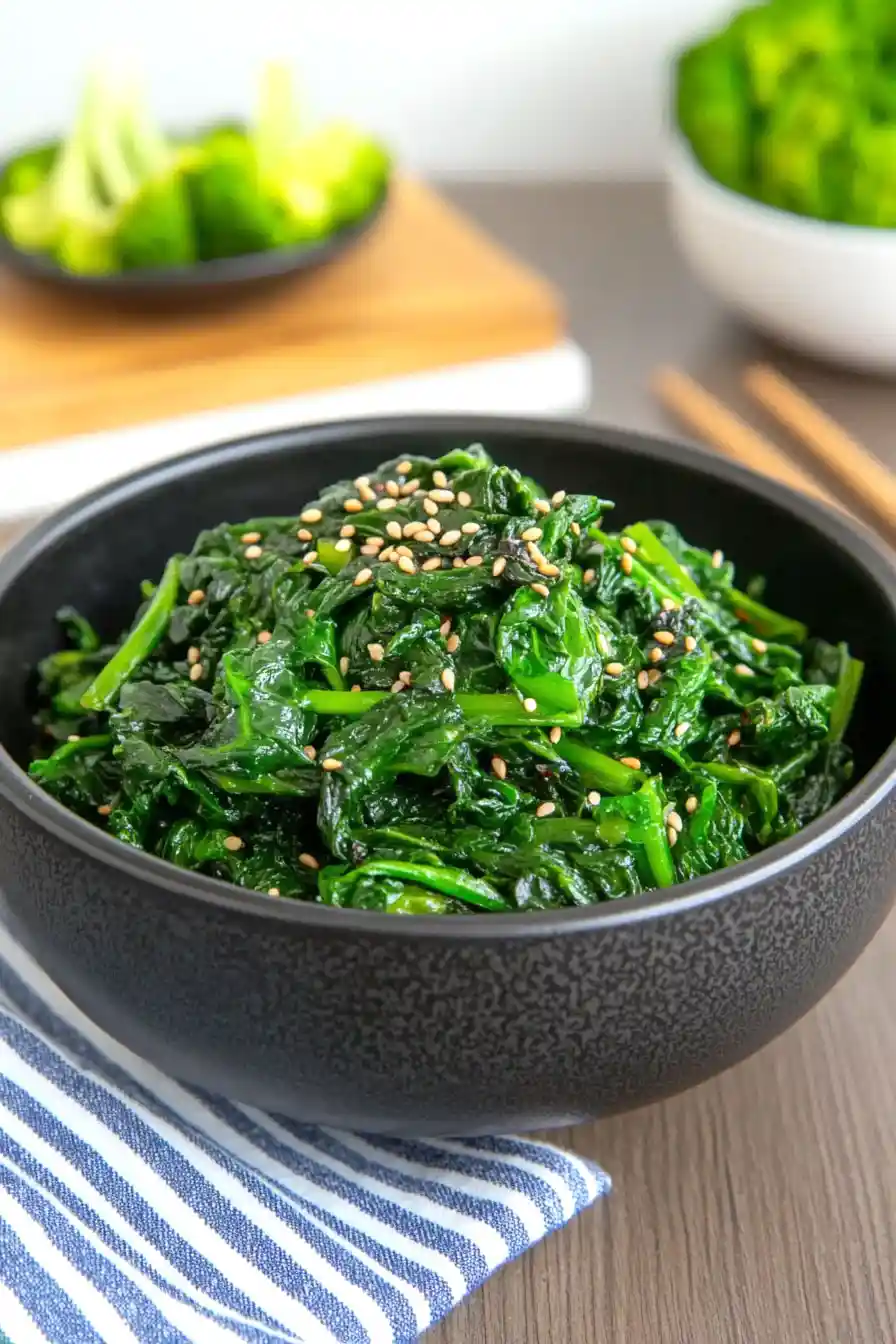
You’ve got two great options for this Korean side dish – English spinach or baby spinach will both give you fantastic results. English spinach (also called regular spinach) has larger, slightly tougher leaves and a more robust flavor, which holds up really well to the quick blanching process in this recipe. Baby spinach, on the other hand, is more tender and mild-tasting, making it a great choice if you prefer a softer texture. If you’re using regular spinach, just make sure to trim off any tough stems, while baby spinach usually comes ready to use. Just avoid using frozen spinach here – the texture won’t be quite right for this traditional Korean preparation.
Options for Substitutions
This Korean side dish is pretty simple, but here are some helpful substitutions if you need them:
- English/baby spinach: Regular mature spinach works fine here, or you can try other leafy greens like Swiss chard or watercress. Just remember that cooking times might need to be adjusted – mature spinach needs a bit longer to cook, while watercress cooks faster.
- Green onion: If you’re out of green onions, you can use finely chopped regular onion or chives. Use about half the amount if using regular onion since it’s stronger.
- Sesame oil: This is a key Korean ingredient that gives the dish its signature taste – try not to skip it! But if you absolutely must, you can use a neutral oil like vegetable oil, though the flavor won’t be the same.
- Sesame seeds: While these add nice texture and flavor, you can leave them out if needed. Black sesame seeds work just as well if you have those instead.
- Garlic: If fresh garlic isn’t available, you can use ⅛ teaspoon of garlic powder instead. In a pinch, you can skip it, but the dish won’t be as flavorful.
Watch Out for These Mistakes While Cooking
The biggest mistake when preparing Korean spinach is overcooking the greens – they only need a quick 30-second blanch in boiling water to maintain their nutrients and bright color, then immediately plunge them into ice water to stop the cooking process.
Another common error is not squeezing enough water out of the spinach after blanching – take your time to really squeeze out all the excess moisture, as this helps the seasoning stick better and prevents a watery final dish.
The order of adding seasonings matters too – mix the minced garlic and green onions with the squeezed spinach first, then add the sesame oil last, as adding it too early can prevent the other flavors from properly absorbing into the vegetables.
For the best texture and flavor, make sure your sesame seeds are properly toasted until golden brown and fragrant, but watch them carefully as they can burn quickly.
What to Serve With Korean Spinach Side Dish?
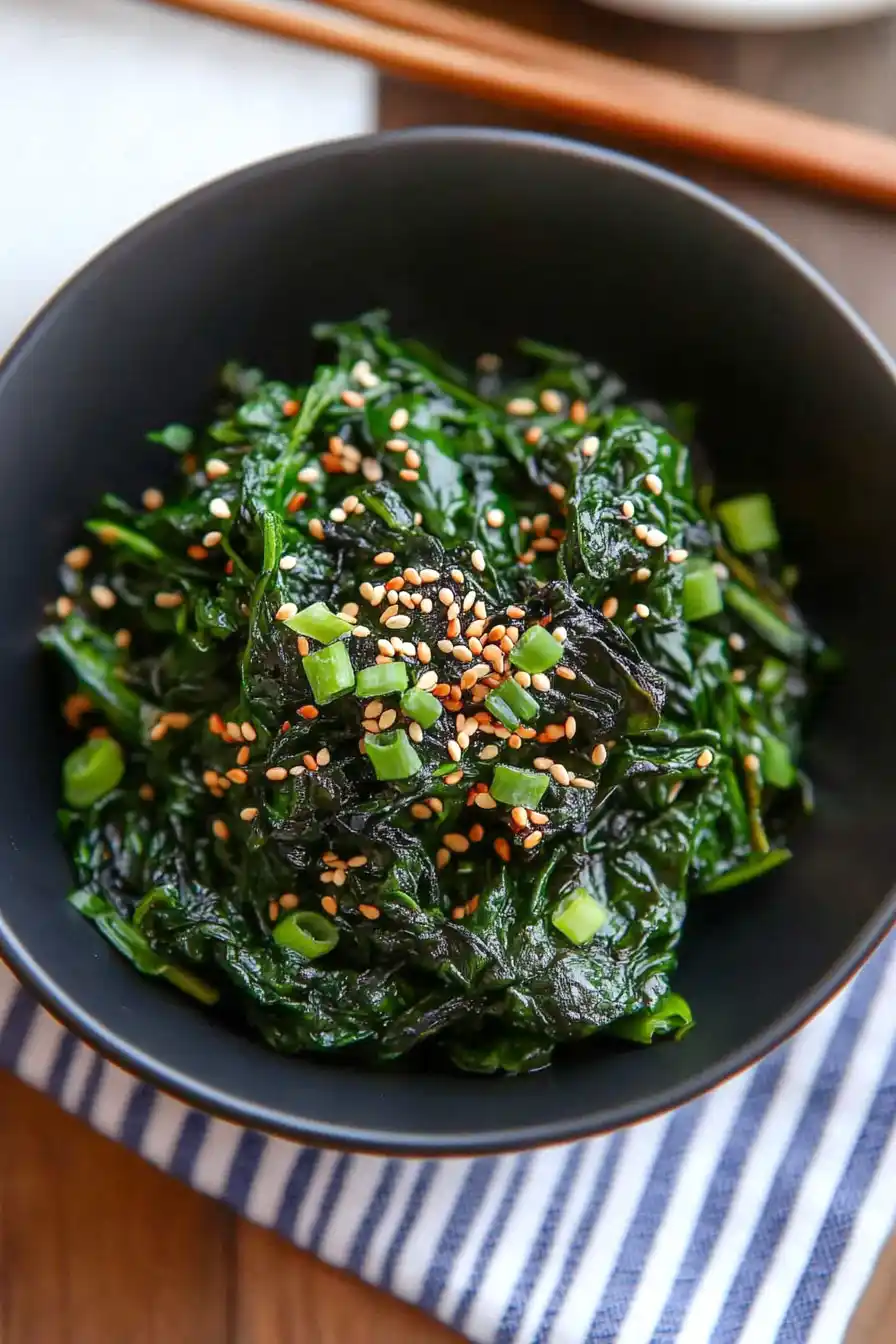
This simple Korean spinach side dish (also known as sigeumchi namul) is perfect as part of a traditional Korean meal spread. Serve it alongside steamed white rice and your favorite Korean main dishes like bulgogi, grilled chicken, or Korean BBQ. I love pairing it with other banchan (Korean side dishes) such as kimchi, bean sprouts, or seasoned cucumber for a complete Korean dining experience. For a quick weeknight dinner, you can also serve it with a bowl of bibimbap or as a side for any grilled meat or fish – the nutty sesame flavor goes well with pretty much everything!
Storage Instructions
Keep Fresh: This Korean spinach side dish (sigeumchi-namul) stays good in the fridge for about 3-4 days. Just pop it in an airtight container, and you’re all set! It’s actually pretty nice to make this ahead since the flavors get even better after a day in the fridge.
Prep Ahead: You can blanch the spinach a day ahead and keep it in the fridge, then just toss it with the seasonings when you’re ready to serve. This is super handy when you’re planning a Korean feast or just want to save some time during busy weekdays.
Serve: This dish can be enjoyed both cold or at room temperature – it’s totally up to you! If you’re taking it out of the fridge, let it sit on the counter for about 10-15 minutes before serving to let the sesame oil loosen up a bit and the flavors come alive.
| Preparation Time | 5-10 minutes |
| Cooking Time | 5-10 minutes |
| Total Time | 10-20 minutes |
| Level of Difficulty | Easy |
Estimated Nutrition
Estimated nutrition for the whole recipe (without optional ingredients):
- Calories: 200-250
- Protein: 5-7 g
- Fat: 18-22 g
- Carbohydrates: 8-10 g
Ingredients
For the spinach preparation:
- 1 tsp sea salt
- 6 cups water
- 250g spinach
For the seasoning:
- 1 tbsp sesame oil (kadoya brand recommended)
- 1 tsp toasted sesame seeds
- 1/4 tsp sea salt
- 1/2 tsp minced garlic (freshly minced for best flavor)
- 1 tsp minced green onion
Step 1: Prepare the Spinach
Begin by trimming any roots from the spinach.
Wash the spinach thoroughly in cold water to remove any dirt or debris.
Make sure the spinach is clean and ready for boiling.
Step 2: Boil and Blanch the Spinach
Bring a pot or saucepan of water to a rolling boil, which should take around 5 to 7 minutes.
Add 1 teaspoon of salt to the boiling water.
Once the water is boiling, quickly plunge the spinach into the pot and leave it submerged for 30 seconds to blanch.
Step 3: Cool and Drain the Spinach
After boiling, immediately drain the hot water from the spinach.
Run cold water over the spinach for 1-2 minutes to stop the cooking process and cool it down.
This helps maintain its vibrant green color.
Step 4: Remove Excess Water and Cut
Squeeze the spinach gently to remove any excess water.
If you’re not using baby spinach, cut the spinach into 2-3 pieces using a knife.
This will make it easier to mix and serve.
You can skip this cutting step for baby spinach.
Step 5: Season and Serve
Add the seasoning sauce of your choice to the spinach.
Mix well with your hands to ensure even distribution of the flavors.
Once mixed, serve the spinach on a plate and enjoy your healthy, flavorful dish.