I’ve always been a big fan of quick weeknight dinners, especially ones that pack a ton of flavor without much fuss. Growing up, stir fry was our go-to meal when time was tight, but it wasn’t until I discovered homemade peanut sauce that everything changed. Now, when my kids ask what’s for dinner, they get excited when they smell that nutty aroma filling the kitchen.
This vegetable stir fry with peanut sauce has become our Monday night tradition. I usually prep the veggies on Sunday while I’m putting away groceries, and the sauce takes just minutes to whisk together. It’s the kind of meal that makes you feel good about feeding your family something healthy, but more importantly, something they’ll actually eat. Trust me, even my picky eater goes back for seconds when peanut sauce is involved.
If you’ve been relying on takeout for your Asian food fix, give this recipe a try. It’s simpler than you might think, and you probably have most of the ingredients in your pantry right now.
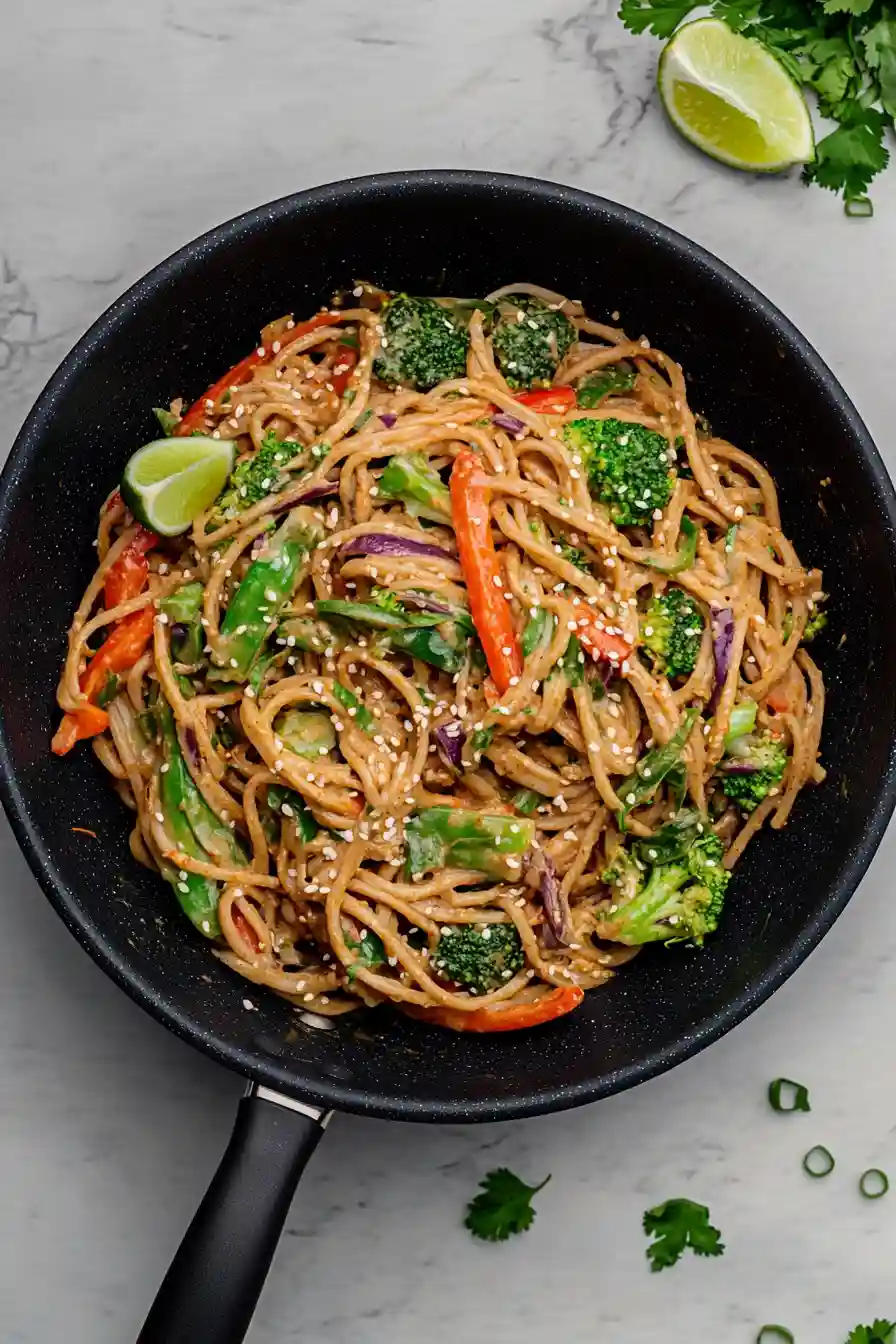
Why You’ll Love This Vegetable Stir Fry
- Quick preparation – Ready in just 30 minutes, this stir fry is perfect for busy weeknights when you want something tasty but don’t have hours to spend in the kitchen.
- Nutrient-packed ingredients – Loaded with colorful vegetables like broccoli, bell peppers, and spinach, each serving gives you a generous portion of your daily vegetables.
- Customizable recipe – You can easily swap vegetables based on what you have in your fridge, and adjust the sauce’s spiciness to your liking with optional sriracha.
- Creamy peanut sauce – The homemade peanut sauce is the star of this dish – it’s rich, smooth, and brings all the vegetables together with its perfect balance of sweet, tangy, and savory flavors.
- Diet-friendly – This recipe is naturally vegan and can be made gluten-free by using tamari instead of soy sauce and your choice of gluten-free noodles.
What Kind of Peanut Butter Should I Use?
For this stir fry sauce, you’ll want to stick with creamy, unsweetened peanut butter – the natural kind that’s made with just peanuts and maybe a touch of salt. Skip the commercial brands with added sugars and oils since they can make your sauce too sweet or throw off the balance of flavors. If your natural peanut butter has separated (you know, with that layer of oil on top), just give it a good stir before measuring. A quick tip: if your peanut butter is straight from the fridge, let it come to room temperature first – it’ll be much easier to whisk into a smooth sauce that way.

Options for Substitutions
This stir fry recipe is super adaptable – here’s how you can switch things up:
- Peanut butter: If you have a peanut allergy or just want to try something different, almond butter or sunflower seed butter work great. Just make sure to use unsweetened versions.
- Maple syrup: You can swap this with honey, agave nectar, or brown sugar dissolved in a tiny bit of hot water.
- Noodles: Any noodles work here – try rice noodles, udon, soba, or even regular spaghetti. For a low-carb option, use zucchini noodles or shirataki noodles.
- Vegetables: The great thing about stir fries is that you can use whatever veggies you have on hand. Snow peas, snap peas, bok choy, cauliflower, or green beans all work well. Just keep the total amount of veggies about the same.
- Sesame oil: While sesame oil adds nice flavor, you can use any neutral oil like vegetable or canola oil. Just add a tablespoon of toasted sesame seeds at the end for that nutty taste.
- Rice vinegar: Apple cider vinegar or white wine vinegar can step in here – use the same amount.
Watch Out for These Mistakes While Cooking
The biggest mistake when making stir-fry is overcrowding the pan – cook your vegetables in batches if needed, as cramming too many ingredients at once creates steam and leads to soggy rather than crispy veggies. Another common error is adding the vegetables in the wrong order – start with the ones that take longest to cook (like carrots and broccoli) and add quick-cooking items (like spinach) last to prevent some vegetables from becoming mushy while others remain raw. When it comes to the peanut sauce, avoid the temptation to add all the water at once – start with a small amount and gradually thin it out, as it’s much easier to add more liquid than to fix a sauce that’s too runny. For the best texture and flavor, make sure your pan is really hot before adding any ingredients, and keep the vegetables moving constantly to prevent burning while achieving that perfect crisp-tender result.
What to Serve With Vegetable Stir Fry?
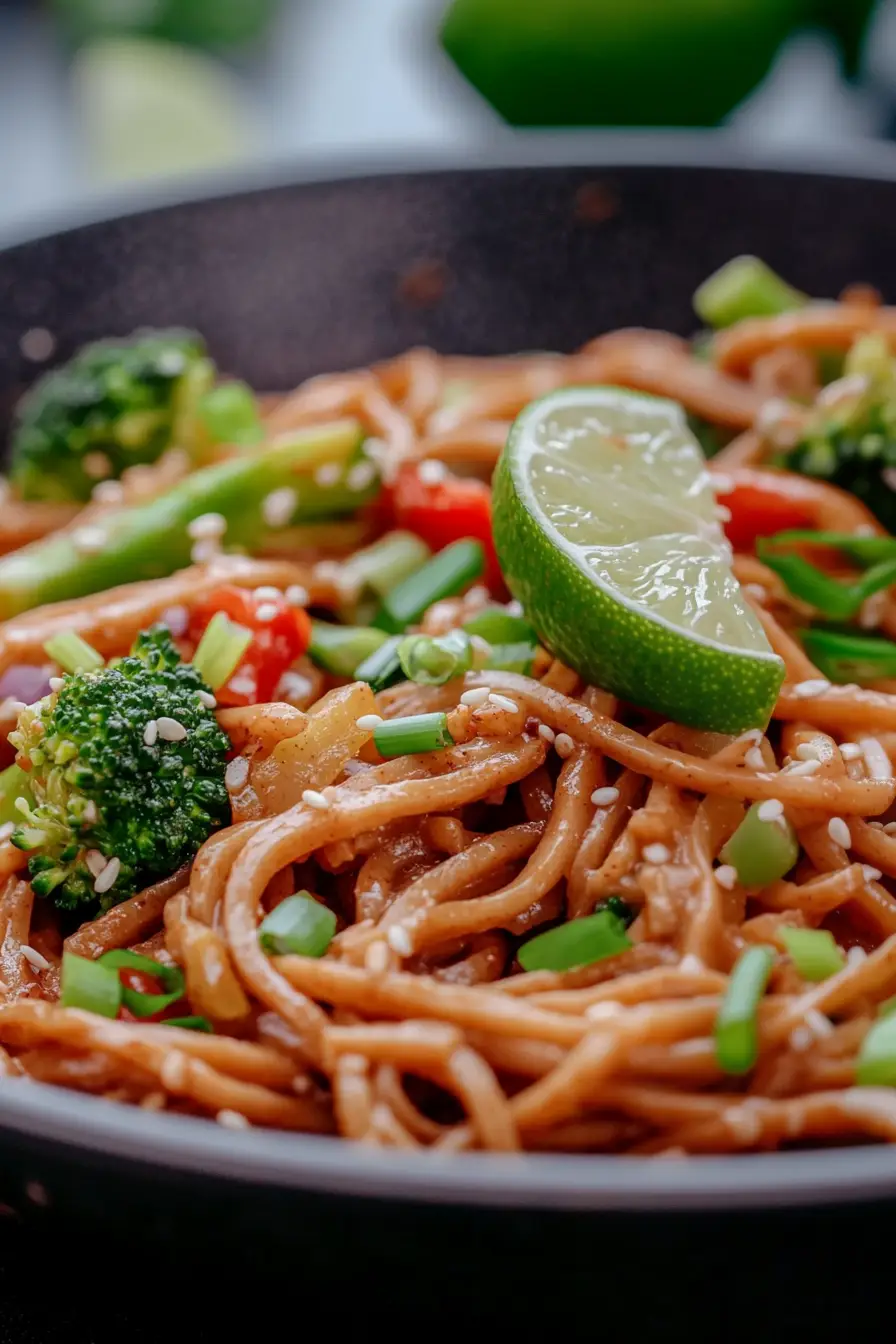
This peanut sauce stir fry is pretty filling on its own, but there are some great sides that can round out your meal nicely. A simple bowl of steamed jasmine or brown rice soaks up all that tasty peanut sauce perfectly, while some crispy spring rolls or dumplings make excellent appetizers. If you want to add more protein, you could serve some grilled tofu or chicken on the side – just drizzle them with extra peanut sauce! For a refreshing contrast, try adding a small cucumber salad with rice vinegar dressing to your spread.
Storage Instructions
Keep Fresh: Pop your leftover stir fry in an airtight container and keep it in the fridge for up to 4 days. I like to store the peanut sauce separately from the veggies and noodles – this helps keep everything fresh and prevents the noodles from soaking up all the sauce.
Make Ahead: The peanut sauce is perfect for meal prep! You can make it up to 5 days ahead and store it in a jar in the fridge. Just give it a good shake or stir before using, and thin it out with a splash of warm water if it’s thickened up too much.
Warm Up: To enjoy your leftovers, just heat them in a pan over medium heat for a few minutes until warmed through. Add a splash of water if needed to loosen things up. The microwave works too – just heat in 30-second intervals, stirring between each, until it’s hot enough for you.
| Preparation Time | 10-15 minutes |
| Cooking Time | 15-20 minutes |
| Total Time | 25-35 minutes |
| Level of Difficulty | Medium |
Estimated Nutrition
Estimated nutrition for the whole recipe (without optional ingredients):
- Calories: 800-900
- Protein: 25-30 g
- Fat: 50-55 g
- Carbohydrates: 70-80 g
Ingredients
For the peanut sauce:
- sriracha (optional, to taste for heat)
- 1/2 tsp ground ginger
- 2 tbsp maple syrup
- 3 tbsp low sodium soy sauce (Tamari if gluten-free)
- 1 tbsp sesame oil
- 1/4 cup to 1/3 cup water
- 1/2 cup creamy peanut butter (unsweetened, I use Jif)
- 1/4 tsp garlic powder
- 2 tbsp lime juice
- 1 tbsp rice vinegar
For the stir-fry:
- sliced green onions (for garnish)
- 4 oz sliced crimini mushrooms
- 1 medium carrot (julienned or thinly sliced)
- 2 tbsp sliced green onions
- 6 oz noodles (ramen or soba work well)
- 1 cup broccoli florets
- 3 garlic cloves (freshly minced for best flavor)
- 1/3 cup shredded red cabbage
- 1 tbsp fresh ginger (grated or minced)
- 2 handfuls fresh baby spinach
- chopped cilantro (for garnish)
- 1 medium red bell pepper (sliced thin)
- 1 large lime (for serving)
- 1 tbsp cooking oil (high smoke point, like avocado or grapeseed)
- toasted sesame seeds or chopped peanuts (for crunch)
Step 1: Prepare the Peanut Sauce
In a small pot over medium-low heat, add sesame oil, garlic, and ginger.
Cook these ingredients until fragrant, about 2 minutes.
Add the remaining ingredients for the peanut sauce and whisk until the mixture is uniform.
Allow it to come to a low simmer, then remove from the heat and set aside.
Step 2: Cook the Noodles
Prepare the noodles according to the package directions.
Once they are cooked, drain them and rinse them under cold water.
Return the noodles to the cooking pot and toss them with about 1 teaspoon of sesame oil to prevent them from sticking together.
Step 3: Sauté Aromatics
While the noodles are cooking, set a large wok over medium heat.
Add cooking oil along with garlic, green onions, and ginger.
Sauté these ingredients, stirring often, for about 3 minutes or until they become fragrant.
Step 4: Cook the Vegetables
Add cabbage, mushrooms, carrots, bell pepper, and broccoli to the wok.
Cook the vegetables for an additional 4 minutes, stirring occasionally to ensure even cooking.
Step 5: Combine and Heat the Dish
Once the vegetables are cooked, add spinach, the prepared peanut sauce, and the cooked noodles into the wok.
Mix everything until well combined and cook for another 1-2 minutes, or until everything is warmed through.
Step 6: Garnish and Serve
Serve your dish with a garnish of cilantro, green and toasted sesame seeds, and an extra wedge of lime on the side.
Enjoy your flavorful and nutritious meal!