For years, I thought ricotta frosting was something fancy Italian bakeries kept as a closely guarded secret. My mom always bought canned frosting, and when I tried making buttercream at home, it never had that light, cloud-like texture I was after.
Turns out, I was overthinking it. Ricotta frosting is actually one of the easiest frostings to make, and it only needs a few basic ingredients from your fridge. While traditional buttercream can be tricky to get right, this recipe is pretty much impossible to mess up – even if you’re new to baking.

Why You’ll Love This Ricotta Frosting
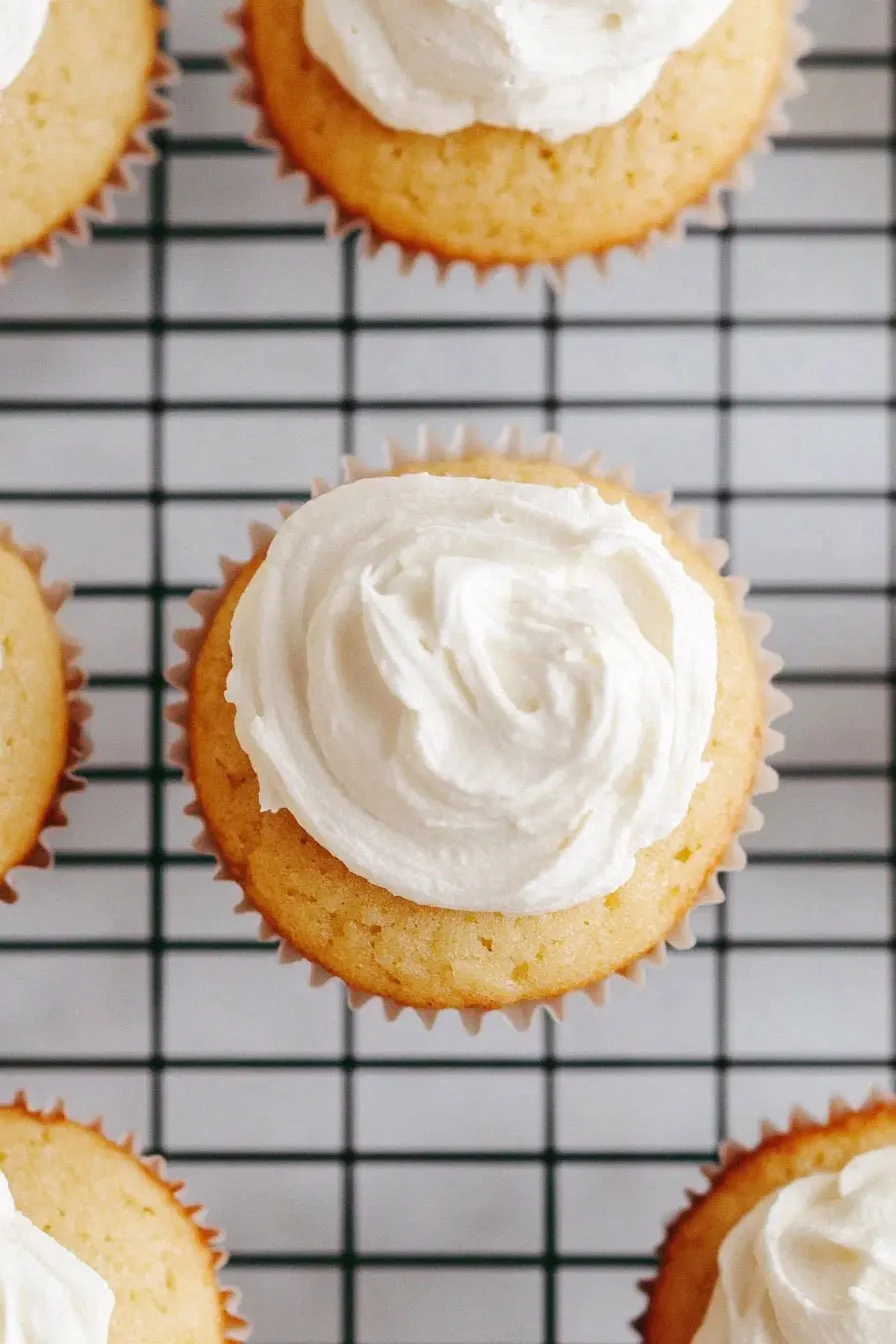
- Light and creamy texture – Unlike heavy buttercream, this ricotta-based frosting is airy and smooth, making it perfect for those who prefer a less sugary topping on their cakes and cupcakes.
- Diet-friendly option – You can easily make this frosting low-carb by using sugar alternatives, and it’s naturally higher in protein than traditional frostings thanks to the ricotta cheese.
- Quick preparation – With just 4 basic ingredients and no complicated steps, you can whip up this frosting in less than 10 minutes.
- Customizable consistency – You can easily adjust the thickness by varying the amount of whipping cream or Greek yogurt, making it perfect for both spreading and piping.
What Kind of Ricotta Should I Use?
For a smooth and creamy frosting, whole milk ricotta is your best bet – it’s richer and creamier than its lower-fat cousins. You’ll want to look for fresh ricotta that feels smooth rather than grainy when you give it a little taste test. Most supermarket brands will work fine, but if you spot fresh ricotta at an Italian deli or specialty store, it’s worth grabbing for an extra-special frosting. Before using your ricotta, drain off any excess liquid and give it a quick whirl in the food processor to smooth out any lumps – this extra step makes a big difference in getting that perfectly silky texture.
Options for Substitutions
Looking to switch things up with this frosting recipe? Here are some helpful swaps you can try:
- Ricotta cheese: This is the star ingredient, but if you’re in a pinch, you can use mascarpone cheese or a mix of cream cheese and sour cream (use equal parts of each). Just note that the texture will be slightly different.
- Powdered sugar: Regular powdered sugar can be swapped with monk fruit sweetener, erythritol, or other powdered sugar alternatives using a 1:1 ratio. If using granulated sweeteners, blend them first to get a powder-like consistency.
- Whipping cream: Greek yogurt works great as a 1:1 replacement for the whipping cream. If using yogurt, strain it first in a cheesecloth for 30 minutes to remove excess liquid.
- Vanilla essence: Feel free to experiment with other flavors like almond extract (use half the amount), lemon extract, or even orange zest for a different twist.
- Cream cheese: If you’re using the optional cream cheese for structure, you can replace it with mascarpone cheese or just skip it if your frosting is thick enough.
Watch Out for These Mistakes While Making
The biggest challenge when making ricotta frosting is dealing with excess moisture, which can make your frosting runny – to prevent this, drain your ricotta in a cheesecloth-lined strainer for at least 2 hours (or overnight in the fridge) before starting.
Temperature control is crucial too – working with cold ingredients straight from the fridge will give you the best texture and prevent the frosting from becoming loose or separating.
When adding the powdered sugar, resist the urge to dump it all in at once; instead, add it gradually while mixing to avoid lumps and achieve the perfect sweetness level.
For the smoothest possible texture, blend the ricotta alone first until completely smooth, then fold in the other ingredients gently – overbeating after adding the whipped cream or yogurt can make the frosting grainy or cause it to break down.

What to Serve With Ricotta Frosting?
This light and creamy ricotta frosting is perfect for so many different desserts! It pairs wonderfully with simple cakes like carrot cake, lemon cake, or vanilla sponge, where its subtle sweetness won’t overpower the cake’s flavor. For a quick breakfast treat, spread it on banana bread or zucchini bread – it’s less sweet than traditional frosting, so it works really well for morning bakes. You can also use it as a filling between layers of cookies, as a topping for fresh berries, or even as a dip for graham crackers when you’re looking for an easy dessert option.
Storage Instructions
Keep Cool: Since this ricotta frosting contains dairy, you’ll want to keep it in an airtight container in the refrigerator. It stays good for up to 5 days, though it’s best used within the first 3 days when the texture is at its peak. Give it a quick stir before using if you notice any separation.
Freeze: While you can freeze this frosting for up to 1 month, I recommend making it fresh when possible. If you do freeze it, thaw it overnight in the fridge and give it a good whip with an electric mixer to bring back its fluffy texture.
Make Ahead: Planning ahead for a special occasion? You can prepare this frosting up to 2 days before you need it. Just keep it covered in the fridge, and when you’re ready to use it, let it sit at room temperature for about 15 minutes, then give it a quick whip to make it spreadable again.
| Preparation Time | 15-30 minutes |
| Cooking Time | 5-10 minutes |
| Total Time | 20-40 minutes |
| Level of Difficulty | Easy |
Estimated Nutrition
Estimated nutrition for the whole recipe (without optional ingredients):
- Calories: 900-1100
- Protein: 20-25 g
- Fat: 60-70 g
- Carbohydrates: 80-90 g
Ingredients
- 1 to 1 1/2 cups whipping cream (cold, for best whipping results)
- 2 tbsp cream cheese (optional, adds tang and stability)
- 1 tub ricotta cheese (15 to 17 oz, whole milk preferred for richness)
- 2 tsp vanilla extract
- 1/2 cup powdered sugar (sifted to prevent lumps)
Step 1: Chill the Mixing Bowl
Start by placing a large mixing bowl in the refrigerator for at least 15 minutes before you begin.
This will help keep your ingredients cool during the mixing process, which is essential for the best texture in the final product.
Step 2: Prepare the Ricotta Mixture
In another mixing bowl, beat together the ricotta cheese and powdered sugar until well combined.
If you’re using optional cream cheese, add it now.
Continue beating the mixture for at least five minutes, allowing it to become light and fluffy.
Once the texture is achieved, gently stir in the vanilla extract to incorporate it evenly throughout the mixture.
Step 3: Whip the Cream
Remove the chilled mixing bowl from the refrigerator.
In this cold bowl, whip the whipping cream until it becomes fluffy and forms soft peaks.
The chilled bowl helps the cream whip faster and more efficiently, ensuring a stable texture.
Step 4: Combine Mixtures
Carefully fold the whipped cream into the ricotta mixture, taking care not to deflate the airiness of the whipped cream.
Use gentle, sweeping motions to combine the two mixtures until uniform.
Step 5: Add Any Additional Ingredients
If you desire extra flavors or textures, such as chopped nuts, gently stir them into the combined mixture with the ricotta cheese.
Mix just until evenly distributed, and then your creamy treat is ready to use or serve!