Making homemade pasta can seem like a daunting task, especially when you’re juggling work, family, and everything else life throws your way. Between measuring ingredients, kneading dough, and getting the filling just right, it’s no wonder many of us reach for the store-bought options instead.
But this butternut squash ravioli recipe breaks it all down into simple, manageable steps that anyone can follow. The end result is a cozy, satisfying dish that’s perfect for fall dinners, and trust me – the little extra effort of making it from scratch is totally worth it.
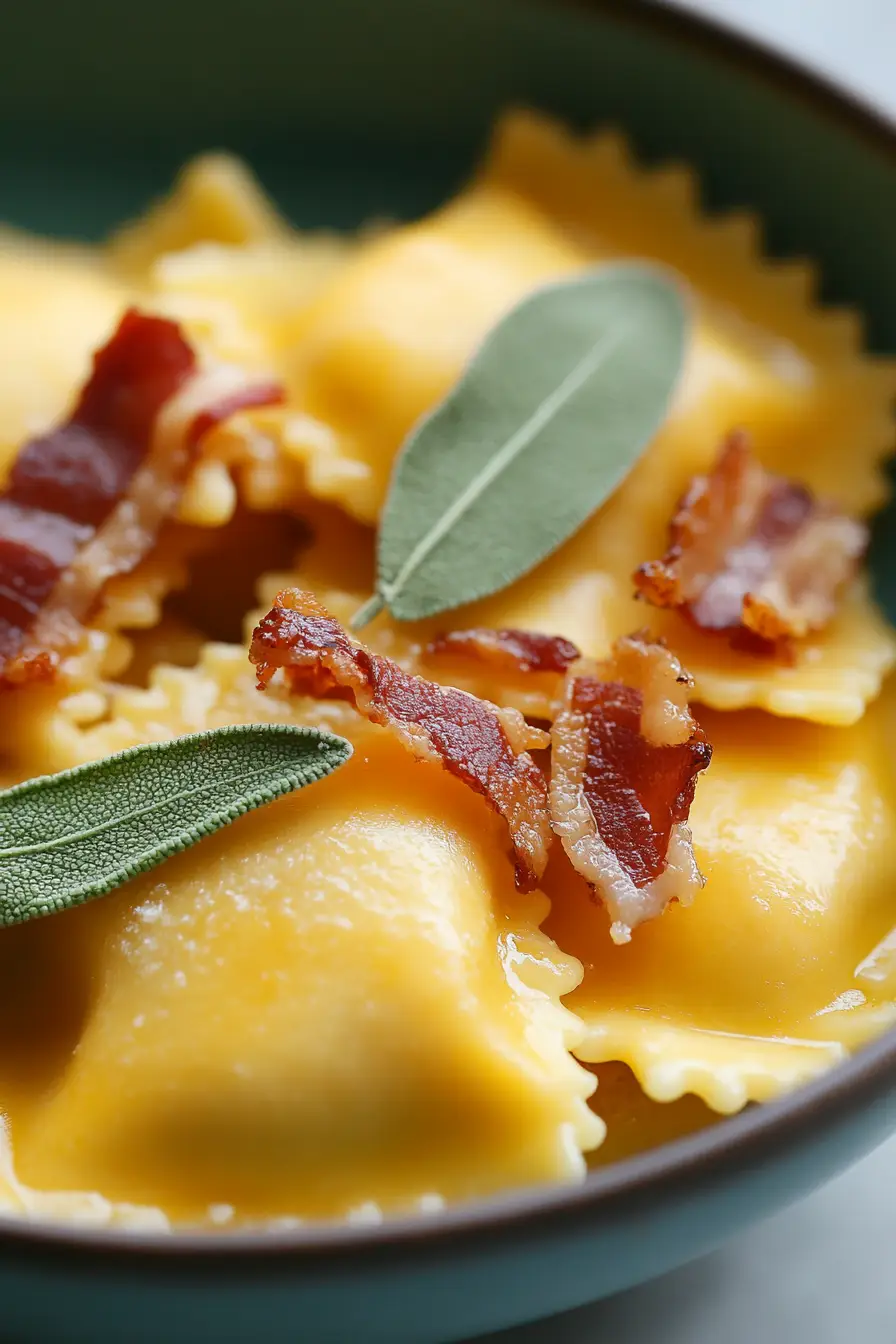
Why You’ll Love This Butternut Squash Ravioli
- Restaurant-quality pasta – Making ravioli from scratch gives you that authentic Italian taste you can’t get from store-bought versions. The fresh pasta dough has a tender bite that perfectly complements the creamy squash filling.
- Customizable filling – The butternut squash filling can be adjusted to your taste – add more nutmeg for warmth, or mix in some sage or parmesan for extra flavor. It’s your kitchen, your rules!
- Make-ahead friendly – While it takes time to prepare, you can make a big batch and freeze them for later. Just pull them out whenever you’re craving a special homemade meal.
- Perfect for special occasions – This recipe is ideal for those times when you want to impress guests or create a memorable dinner. The process might be lengthy, but the results are worth every minute.
What Kind of Butternut Squash Should I Use?
For homemade ravioli, you’ll want to pick a butternut squash that feels heavy for its size and has a solid, matte beige color without any green streaks or soft spots. The smaller squashes (about 2-3 pounds) are usually perfect since they tend to be less stringy and have a sweeter, more concentrated flavor than the larger ones. When shopping, look for a squash with a long neck and smaller bulb end – this gives you more solid flesh to work with and fewer seeds to remove. If you’re in a pinch, you can even use pre-cut butternut squash from the grocery store, though roasting a whole squash typically gives you better flavor and less moisture in your filling.
Options for Substitutions
While some ingredients in this ravioli recipe are essential, there’s still room for some smart swaps:
- Tipo 00 flour: This is important for the pasta’s texture, but if you can’t find it, all-purpose flour will work – though your pasta might be slightly less silky. Just note that you might need to adjust the amount of flour slightly.
- Eggs: The eggs are crucial for the pasta dough and can’t be substituted – they provide structure and richness that’s essential for proper pasta.
- Butternut squash: You can swap this with roasted pumpkin, kabocha squash, or even sweet potato. Just make sure to roast until very tender and drain off any excess moisture.
- Pancetta: Regular bacon works great here, or leave it out for a vegetarian version. You could also use crispy prosciutto or guanciale.
- Sage: Fresh thyme or rosemary can work instead, though sage pairs best with squash. If using dried sage, use just 1/2 teaspoon as it’s more concentrated.
- Tools: No pasta machine? While not ideal, you can roll the dough very thin with a rolling pin. No ravioli cutter? A sharp knife or even a pizza cutter will do the job – just press firmly to seal the edges.
Watch Out for These Mistakes While Making
The biggest challenge when making ravioli from scratch is rolling the pasta dough too thick, which results in chewy, heavy pasta – aim for a thickness where you can almost see your hand through the sheet (usually the second-to-last setting on your pasta machine).
Working with overly wet filling is another common mistake that can make your ravioli burst during cooking, so make sure to drain your roasted butternut squash well and let it cool completely before mixing with other filling ingredients.
When sealing your ravioli, be careful to press out all air bubbles around the filling as you go – trapped air pockets will expand during cooking and can cause the pasta to break open.
For perfect texture, avoid overcooking the ravioli – they’re done when they float to the surface and have been cooking for about 2-3 minutes, and remember to reserve some pasta water before draining to help create a silky sauce with the butter and sage.
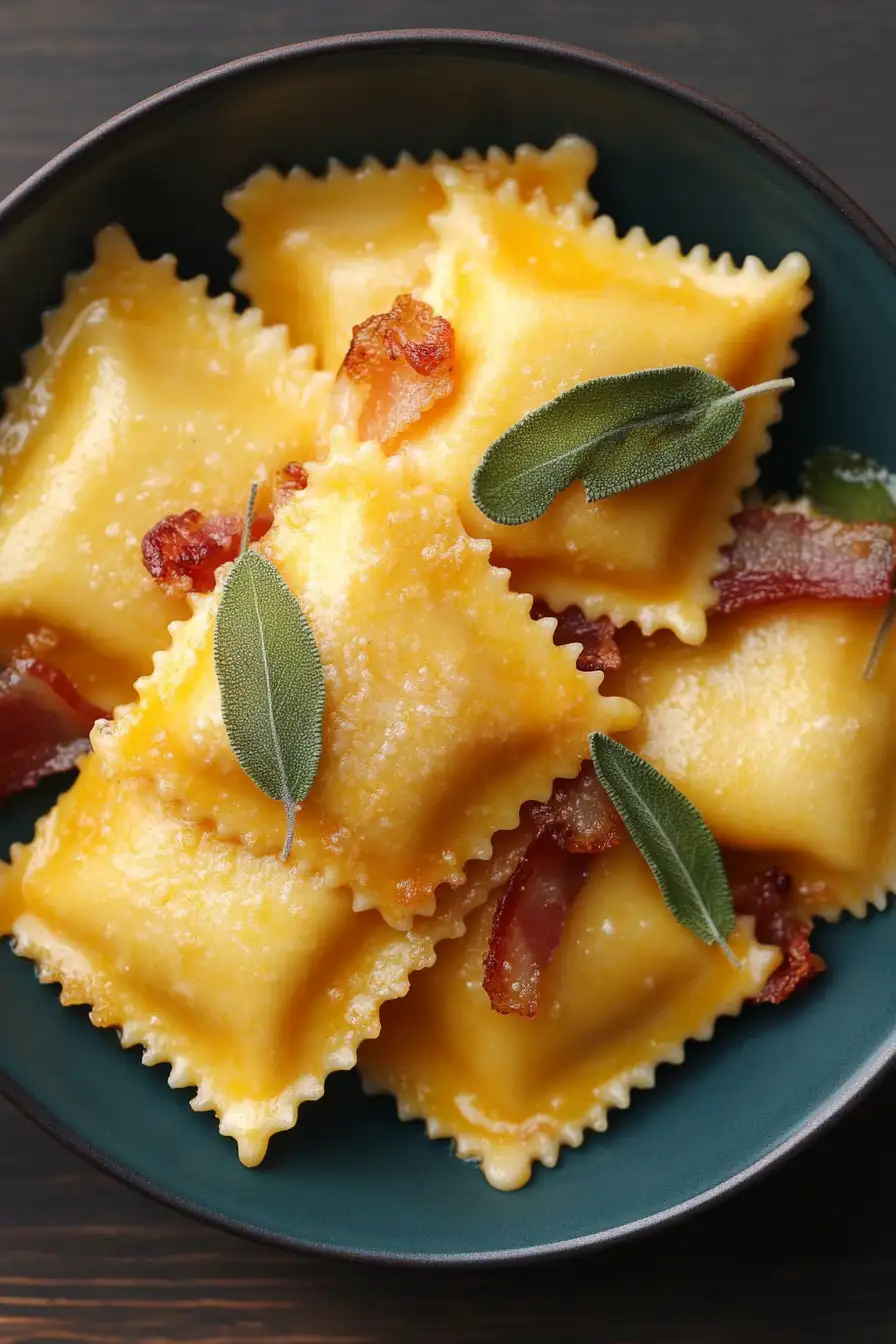
What to Serve With Butternut Squash Ravioli?
This rich and cozy pasta dish pairs perfectly with simple sides that won’t overshadow its delicate squash and sage flavors. A light arugula salad dressed with just olive oil and lemon juice makes an excellent starter or side dish, cutting through the richness of the butter sauce. For extra veggies, try some roasted Brussels sprouts or sautéed green beans with a touch of garlic – they’re simple enough to let the ravioli shine but still add nice color to your plate. If you’re serving this for a dinner party, start with some Italian antipasti like marinated olives or a small cheese plate to set the mood.
Storage Instructions
Fresh Storage: If you’re planning to cook your homemade butternut squash ravioli within a day, arrange them in a single layer on a parchment-lined baking sheet, dust with a little semolina flour, and keep them covered in the fridge. This works best when you want to serve them for dinner the same day you make them.
Freeze: These ravioli are perfect for freezing! Place them on a parchment-lined baking sheet, making sure they don’t touch each other, and pop them in the freezer until solid (about 2 hours). Then transfer them to a freezer bag or container and they’ll keep for up to 3 months. No need to thaw before cooking – just add them straight to boiling water and cook for an extra minute or two.
Cook: When you’re ready to enjoy your ravioli, drop them into gently boiling water and cook until they float to the top, usually about 3-4 minutes for fresh ravioli or 5-6 minutes if cooking from frozen. The pasta should be tender but still have a nice bite to it.
| Preparation Time | 90-120 minutes |
| Cooking Time | 60-90 minutes |
| Total Time | 150-210 minutes |
| Level of Difficulty | Medium |
Estimated Nutrition
Estimated nutrition for the whole recipe (without optional ingredients):
- Calories: 1800-2100
- Protein: 60-70 g
- Fat: 100-120 g
- Carbohydrates: 200-230 g
Ingredients
For the pasta dough:
- olive oil, as needed
- semolina flour, for dusting (helps prevent sticking)
- 1 large egg yolk
- 3 large eggs
- 300 g 00 flour (or all-purpose flour, for a slightly less refined texture)
For the butternut squash filling:
- 3 tbsp salted butter
- kosher salt, as needed
- 1 pinch nutmeg (freshly grated for best flavor)
- 1 butternut squash (about 2 lbs, peeled and seeded)
- 400 g roasted butternut squash
For the sauce:
- 8 fresh sage leaves
- 8 tbsp salted butter (I like Kerrygold for this sauce)
Other ingredients:
- 4 oz diced pancetta (or bacon, for a smoky flavor)
- Parmesan cheese (freshly grated for serving)
Step 1: Prepare the Butternut Squash
Place a whole, unpeeled butternut squash onto a parchment-lined sheet pan.
Bake at 400°F for about 1 hour or more, depending on its size.
The squash is ready when a sharp knife easily slips out.
Let it cool for around 20 minutes, then peel off the skin and scoop out the seeds.
Process the cooked squash in a blender or food processor until smooth.
Chill or freeze the puree until you’re ready to make the butternut squash filling.
Step 2: Make the Pasta Dough
In a food processor with the metal blade, add the flour, eggs, and olive oil (if using).
Process it to form dough, which should take about 15-20 seconds.
Remove the dough to your work surface and cover it with an overturned bowl for 5 minutes.
This resting makes the dough easier to knead.
Then, knead the dough into a ball for about 1-2 minutes.
Cover it again and let it rest for 30 minutes to 1 hour to allow the gluten to relax.
Use this resting time to prepare the butternut squash filling.
Step 3: Prepare the Butternut Squash Filling
Heat the roasted butternut squash, butter, and nutmeg together in a small pot over low heat.
Stir occasionally with a rubber spatula to prevent sticking.
Taste and season with salt if needed.
Transfer the mixture to a bowl and chill for 1 hour.
Ensure the filling is not hot when assembling the ravioli, as it will make the dough soggy.
Step 4: Set Up and Roll the Pasta Dough
Choose a large, clutter-free work surface.
Dust it with semolina flour to prevent sticking.
Line two sheet pans with parchment paper and cut four additional pieces to layer between pasta sheets.
Cut the pasta dough into four equal pieces.
Flatten one piece into a 5×8-inch disc.
Send the disc through the roller on the widest setting, “#1” if using a Kitchen Aid attachment, twice.
Proceed through settings #2-5, rolling twice at each setting.
Use semolina flour to dust if sticky.
The sheet should be 1 mm thick and slightly translucent.
Trim the edges and cut into 10-12 inch long sheets.
Place each sheet on a parchment-lined sheet pan and cover.
Repeat for the remaining dough pieces.
Step 5: Assemble and Cut the Ravioli
Grab a pasta sheet and place dollops of butternut squash filling in rounded teaspoons along the center, spaced two fingers apart.
Place a second sheet on top.
Smooth it out with your fingertips to remove air bubbles and press to seal the edges and sides.
Cut the ravioli into strips and trim into 2 1/2-3 inch squares.
Transfer to the remaining parchment-lined sheet pan dusted with semolina flour.
Cover with a towel or an inverted sheet pan.
Repeat for the remaining ravioli.
Step 6: Cook and Finish the Ravioli
Bring a pot of salted water to a boil.
Meanwhile, cook the pancetta until it’s slightly crisp, then drain on a paper towel.
Prepare the butter and sage sauce, allowing the butter to get toasty.
Work in batches to cook the ravioli.
Test with 1-2 ravioli for the correct cooking time, approximately 3-6 minutes or more, depending on thickness.
Transfer the cooked ravioli to a serving dish with a slotted spoon.
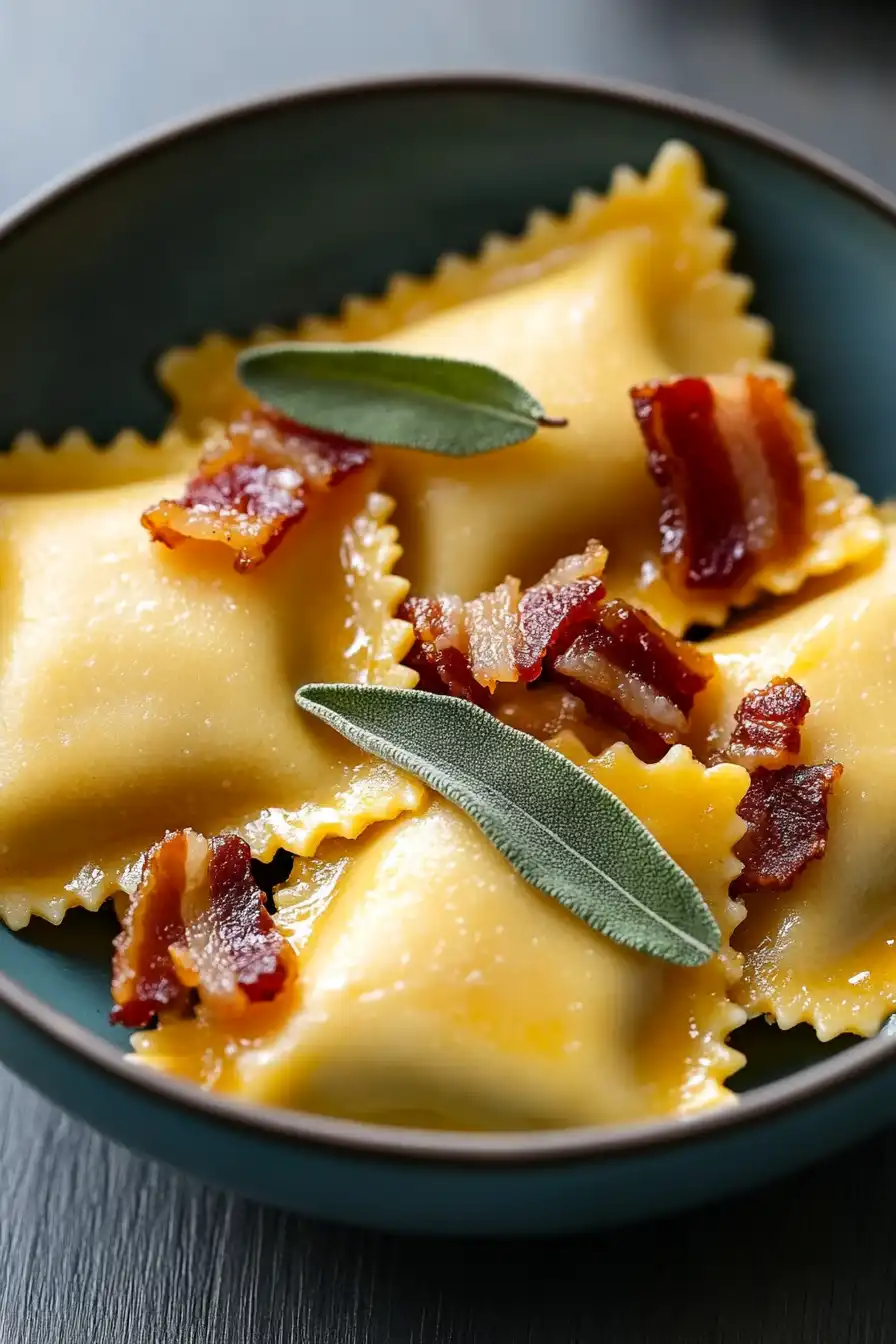
Spoon the butter and sage sauce over the ravioli, and decorate with crispy sage leaves and pancetta.
Enjoy your homemade ravioli!