If you ask me, spaghetti squash is one of the smartest pasta swaps around.
This low-carb take on classic Italian bolognese brings all the comfort of the traditional dish without weighing you down. Tender strands of roasted spaghetti squash pair perfectly with a rich, meaty sauce that’s been simmered with fresh herbs and tomatoes.
The sauce is made the old-fashioned way – slow-cooked with ground beef, carrots, and onions until everything melds together just right. A sprinkle of fresh Parmesan cheese on top ties the whole dish together.
It’s a cozy, filling meal that feels like pure comfort food but happens to be good for you too.
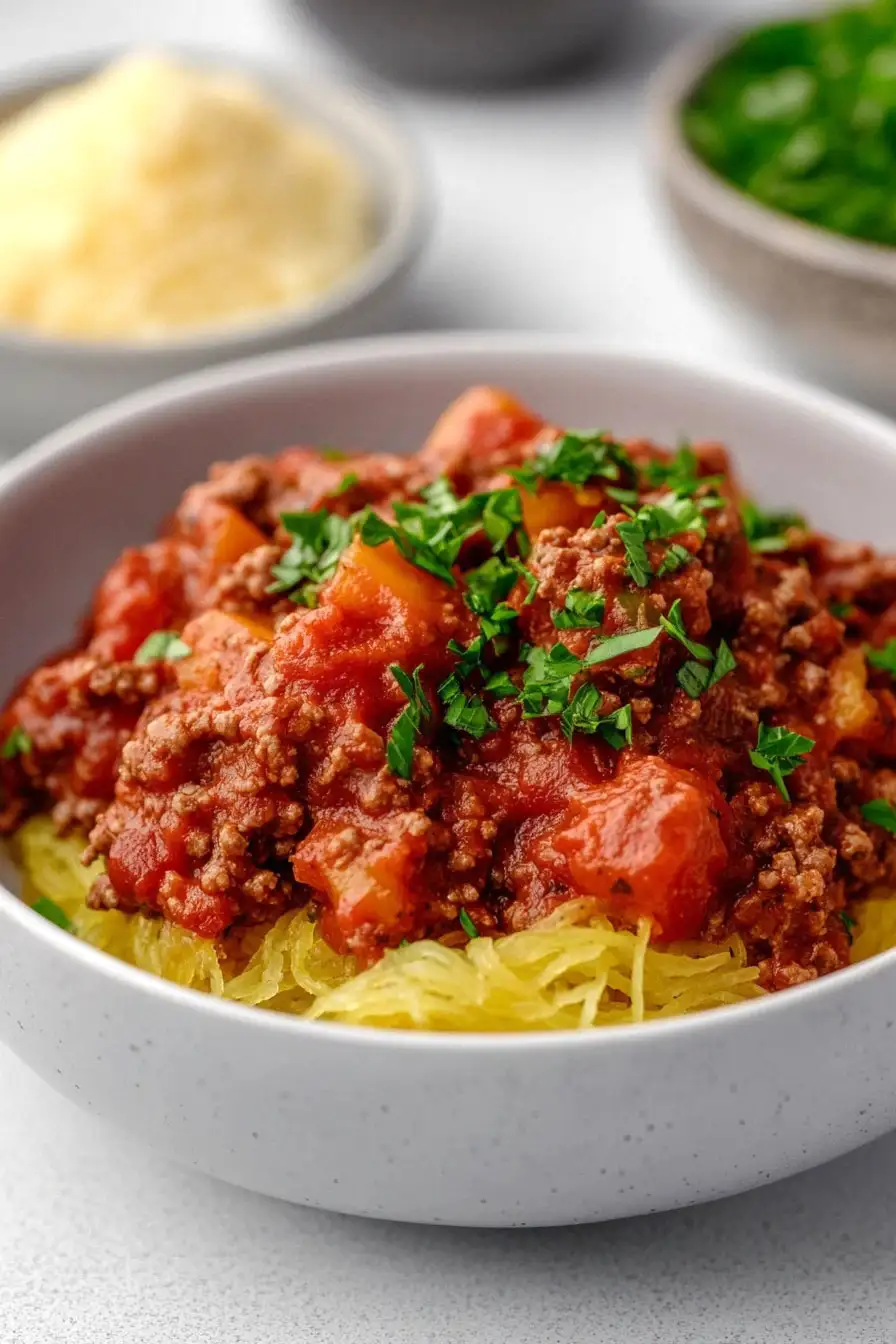
Why You’ll Love This Spaghetti Squash Bolognese
- Low-carb alternative – Using spaghetti squash instead of regular pasta makes this dish perfect for anyone following a low-carb, keto, or gluten-free diet without sacrificing the classic Italian flavors.
- Rich, hearty sauce – The combination of beef and pork creates a deep, meaty flavor, while the coconut milk adds a subtle creaminess that makes this sauce incredibly satisfying.
- Make-ahead friendly – This sauce actually tastes better the next day, making it perfect for meal prep or when you want to cook once and eat twice.
- Veggie-packed meal – Between the spaghetti squash base and the carrots, celery, and onions in the sauce, you’re getting plenty of vegetables in each serving.
What Kind of Ground Meat Should I Use?
The combination of ground beef and pork in this bolognese creates a rich, flavorful sauce that’s hard to beat. For the beef, look for an 80/20 lean-to-fat ratio – this gives you enough fat to keep the sauce juicy without making it greasy. When it comes to ground pork, regular ground pork (not sausage meat) works best since it won’t add any extra seasonings that might compete with the sauce’s flavors. If you can’t find ground pork, you can use all beef, though you’ll miss out on the subtle sweetness and extra depth that pork brings to the dish. Just make sure both meats are fresh and ideally from a butcher you trust.

Options for Substitutions
This recipe is pretty flexible and you can make several swaps while keeping the dish tasty:
- Minced meat: You can use all beef or all pork instead of the mix, or try ground turkey or chicken for a lighter version. Just keep in mind that leaner meats might make the sauce slightly less rich.
- Coconut milk: Not a fan of coconut milk? Regular heavy cream works perfectly here, or try half-and-half for a lighter option. For dairy-free alternatives, unsweetened cashew cream or plain almond cooking cream are good choices.
- Balsamic vinegar: Red wine vinegar makes a good substitute, or you can use red wine for a more traditional bolognese flavor. If using wine, increase the amount to 1/2 cup.
- Chicken stock: Beef or vegetable stock work just as well. You can even use water with an extra bouillon cube if you’re out of stock.
- Fresh vegetables: The carrot-celery-onion base (also known as mirepoix) is pretty standard, but you can skip celery if you’re not a fan, or add extra carrots. Some people like to add finely chopped mushrooms for extra texture.
- Dried herbs: Fresh herbs work great too – use 1 tablespoon fresh for each teaspoon of dried. You can also try basil or Italian seasoning blend instead of thyme and oregano.
Watch Out for These Mistakes While Cooking
The biggest challenge when making spaghetti squash bolognese is properly cooking the squash – cutting it crosswise instead of lengthwise will give you longer, more spaghetti-like strands that better mimic traditional pasta. A common mistake is overcooking the meat mixture, which can make it tough and dry – instead, brown it just until it loses its pink color, then let it finish cooking slowly in the sauce. To prevent a watery sauce, make sure to properly drain the meat after browning and avoid rushing the simmering process – giving your sauce at least 45 minutes to reduce will create a richer, more concentrated flavor. For the best texture, don’t forget to scrape the spaghetti squash strands with a fork while they’re still warm, and let them sit in a colander for a few minutes to release excess moisture before combining with the sauce.
What to Serve With Spaghetti Squash Bolognese?
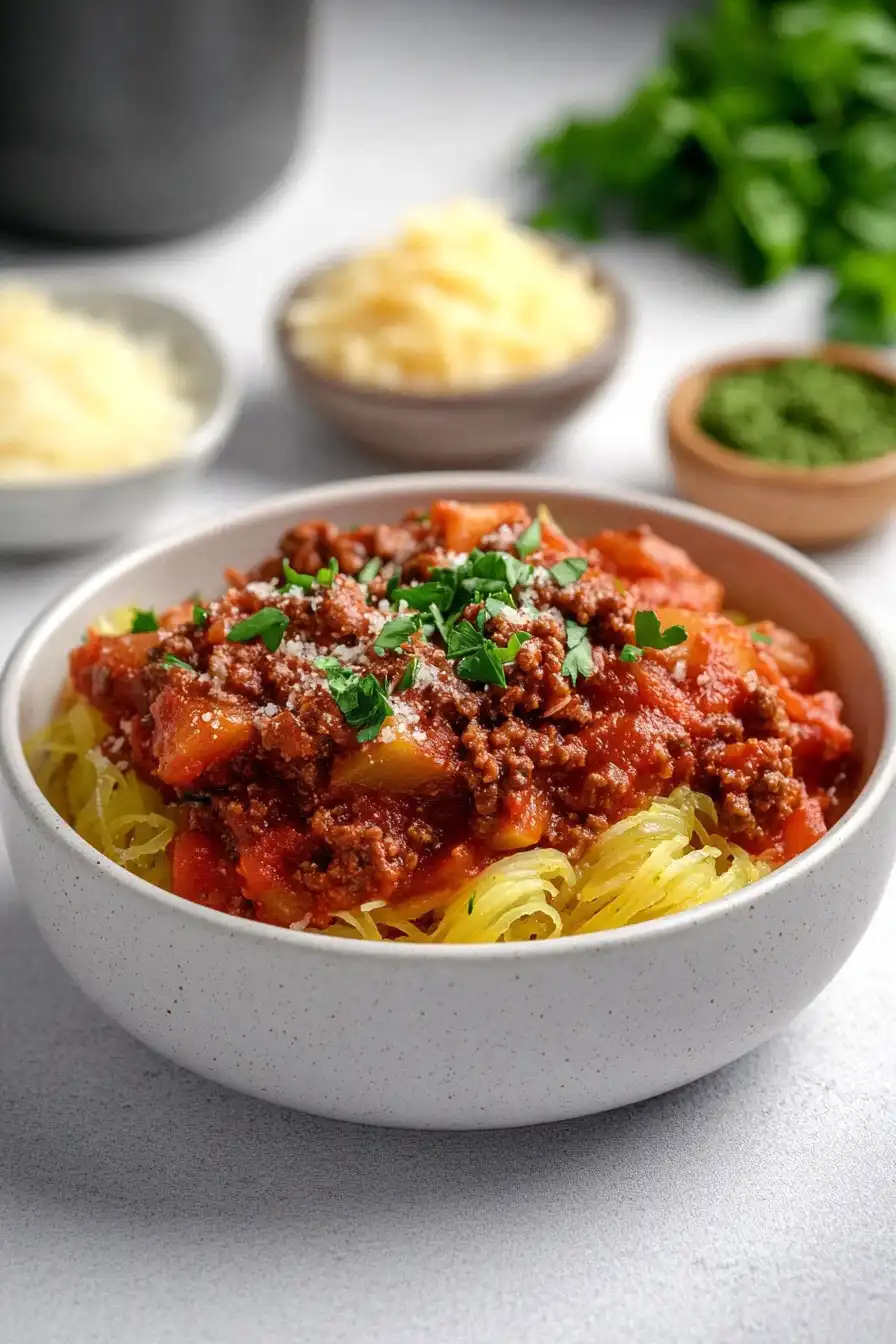
Since this dish is already a complete meal with protein and veggies, you might just want some simple sides to round things out. A fresh arugula salad with lemon dressing makes a nice light companion to the rich bolognese sauce. If you’re craving some bread (but wanting to keep things low-carb like the spaghetti squash), try some warm almond flour garlic bread or roasted vegetables like Brussels sprouts or broccoli on the side. For a true Italian-inspired meal, finish things off with a small bowl of mixed olives or a simple caprese salad using fresh mozzarella, tomatoes, and basil.
Storage Instructions
Keep Fresh: This hearty bolognese sauce keeps really well in the fridge. Just pop it in an airtight container and it’ll stay good for up to 4 days. The flavors actually get even better after a day or two as everything mingles together!
Freeze: Bolognese sauce is perfect for freezing! Let it cool completely, then portion it into freezer-safe containers or bags. It’ll keep well for up to 3 months. I like to freeze it in meal-sized portions so I can just grab what I need for dinner.
Reheat: To warm up your sauce, just put it in a pot over medium-low heat and stir occasionally until it’s heated through. If it seems a bit thick, you can thin it out with a splash of chicken stock. For the spaghetti squash, a quick zap in the microwave for 1-2 minutes usually does the trick.
| Preparation Time | 10-15 minutes |
| Cooking Time | 70-80 minutes |
| Total Time | 80-95 minutes |
| Level of Difficulty | Medium |
Estimated Nutrition
Estimated nutrition for the whole recipe (without optional ingredients):
- Calories: 1800-2000
- Protein: 120-130 g
- Fat: 100-110 g
- Carbohydrates: 60-70 g
Ingredients
- 1 tsp dried oregano
- 2 stalks celery (finely diced)
- black pepper
- 6 garlic cloves (freshly minced for best flavor)
- 1 yellow onion (finely diced)
- 1/2 tsp dried thyme
- 2 cups chicken stock
- 1/4 cup balsamic vinegar
- 1 tsp salt
- 2 carrots (peeled and diced)
- 1 lb ground pork
- 28 oz crushed tomatoes (I use Cento San Marzano crushed tomatoes)
- 1 lb ground beef (80/20 for richness)
- 3 dried bay leaves
- 1/2 cup full fat coconut milk (gives better texture and moisture)
- 1 tbsp olive oil
Step 1: Sauté the Vegetables
Start by heating a large heavy-bottomed pot over medium-high heat.
Once the pot is hot, add olive oil, diced carrots, celery, onion, and minced garlic.
Cook these veggies for about three to four minutes until the onions become translucent and fragrant.
Step 2: Brown the Meat
Next, add ground beef and ground pork to the pot.
Allow the meat to sear and brown, breaking it up with a spoon as it cooks.
Continue cooking until the meat is fully browned and no longer pink.
Step 3: Combine Ingredients into a Sauce
With the meat cooked, add crushed tomatoes, dried herbs, salt, pepper, balsamic vinegar, and chicken broth to the pot.
Stir the mixture thoroughly to ensure all ingredients are well combined.
Step 4: Simmer the Bolognese
Bring the sauce to a boil, then reduce the heat to a simmer.
Let the Bolognese sauce simmer uncovered for an hour, stirring occasionally.
This slow simmer allows the flavors to meld and intensify.
Step 5: Finish the Sauce
Once the simmering time is complete, stir in coconut milk to add creaminess.
Taste the sauce and season with additional salt and pepper if desired.
Step 6: Serve and Garnish
Serve the rich Bolognese sauce over spaghetti squash for a lighter, low-carb option.
Garnish with fresh basil and a sprinkle of cheese if you prefer to enhance the flavor and presentation.