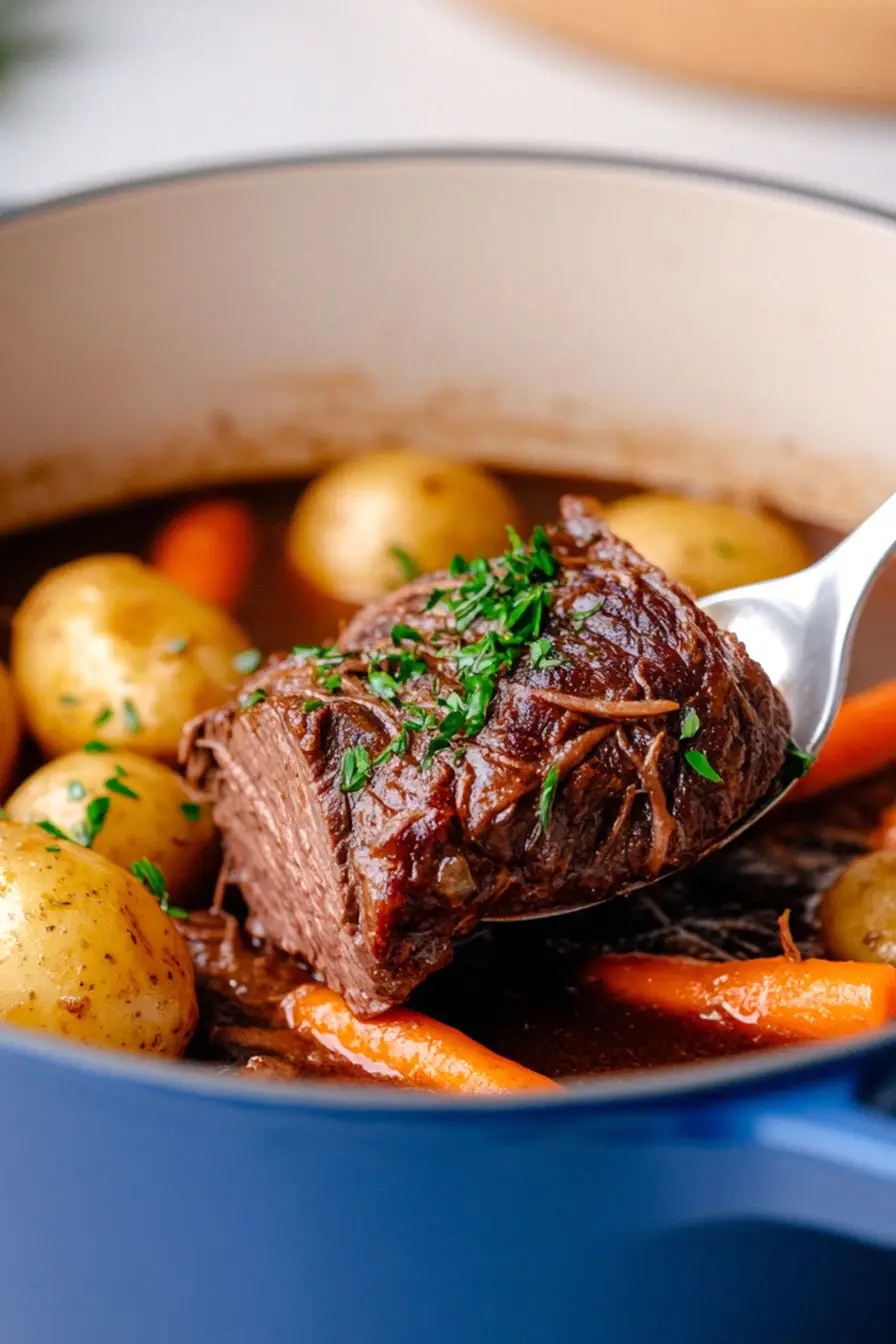
Here is my go-to Dutch oven pot roast recipe, with fork-tender meat, savory vegetables, and a rich gravy made from the natural cooking juices.
This pot roast is what my family asks for most on chilly Sunday afternoons. I usually add extra carrots and potatoes because everyone fights over them at dinner. Nothing beats walking into a house filled with the smell of slowly braised beef, right?
Why You’ll Love This Pot Roast
- One-pot meal – Everything cooks together in a single Dutch oven, which means less cleanup and dishes to wash after dinner.
- Rich, tender meat – The low and slow cooking method breaks down the tough chuck roast into fork-tender meat that practically melts in your mouth.
- Complete dinner solution – With meat, potatoes, and carrots all cooking together, you’ve got your protein and sides covered in one recipe – no need to plan additional dishes.
- Make-ahead friendly – This pot roast actually tastes better the next day, making it perfect for meal prep or when you want to cook ahead for company.
- Simple ingredients – You’ll find most of these ingredients in your pantry already, and the recipe uses basic vegetables and herbs you can get at any grocery store.
Which Type of Beef Chuck Roast Should I Use?
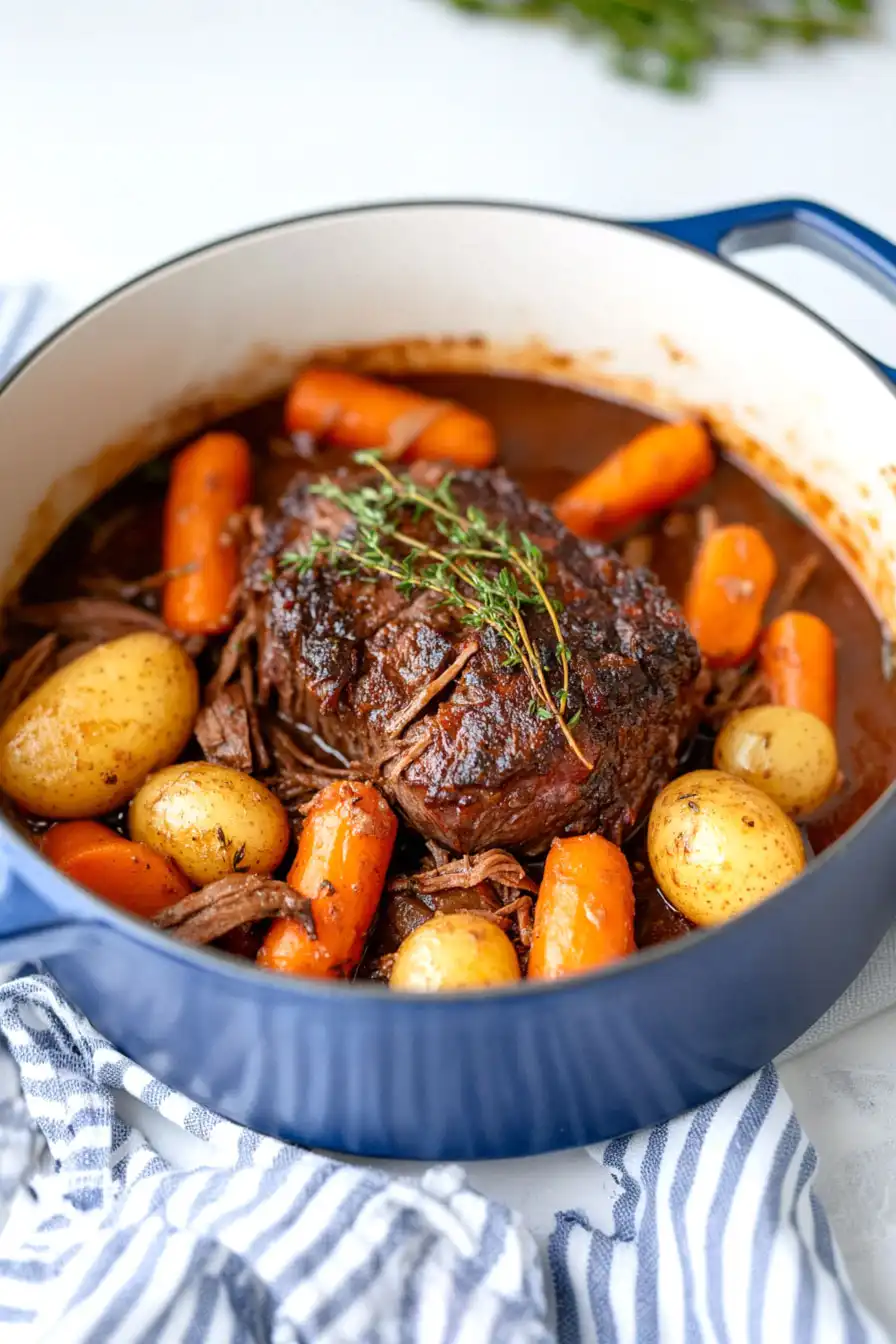
For a pot roast, you’ll want to look for a well-marbled chuck roast, which comes from the shoulder area of the cow. The most common cuts you’ll find at the store are labeled as “chuck roast,” “shoulder roast,” “chuck shoulder pot roast,” or sometimes “chuck seven-bone pot roast” – any of these will work great.
When shopping, look for a piece with good marbling (those white streaks of fat running through the meat) since this fat will melt during cooking and keep your roast moist and flavorful.
Try to avoid pieces that look too lean, as they can end up dry and tough even after long cooking. If you’re not sure which piece to pick, ask your butcher to help you select one that’s right for pot roasting.
Options for Substitutions
This classic pot roast recipe is pretty forgiving when it comes to swaps. Here’s what you can change up:
- Chuck roast: While chuck roast is really the best cut for this dish, you can use bottom round or brisket if needed. Just keep in mind these cuts might need different cooking times to get tender.
- Red wine: Not using wine? No worries – just use extra beef broth instead. To add depth, throw in a splash of balsamic vinegar (about 1 tablespoon).
- Fresh herbs: If you don’t have fresh thyme and rosemary, you can use dried herbs instead. Use about 1 teaspoon dried thyme and 1 teaspoon dried rosemary, since dried herbs are more concentrated.
- Yellow potatoes: Any potato variety works here – red potatoes, russets, or even sweet potatoes. Just cut them to similar sizes so they cook evenly.
- Tomato purée: Out of tomato purée? You can use tomato paste (use 1 tablespoon) or even ketchup in a pinch (use 3 tablespoons).
- Parsley: Feel free to skip the parsley or swap it with other fresh herbs like chives or cilantro for garnish.
Dutch Oven Pot Roast FAQ
What size Dutch oven do I need for this recipe?
You’ll need a 7-8 quart Dutch oven as specified in the recipe. This size ensures there’s enough room for the 3 lb roast plus all the vegetables and liquid without overcrowding.
Can I make this pot roast in a slow cooker instead of the oven?
Yes! Sear the meat in a skillet first, then transfer everything to a slow cooker. Cook on LOW for 8-10 hours or HIGH for 5-6 hours, adding vegetables during the last 2-3 hours.
How do I know when the pot roast is done and tender enough?
The roast is done when it’s fork-tender and easily falls apart when pierced with a fork. It should shred with minimal effort—this typically happens after the full 3.5 hours of cooking time.
Can I add other vegetables like celery, parsnips, or mushrooms?
Absolutely! Add celery and parsnips with the carrots and potatoes. For mushrooms, add them during the last hour of cooking to prevent them from becoming too soft and mushy.
Storage Instructions
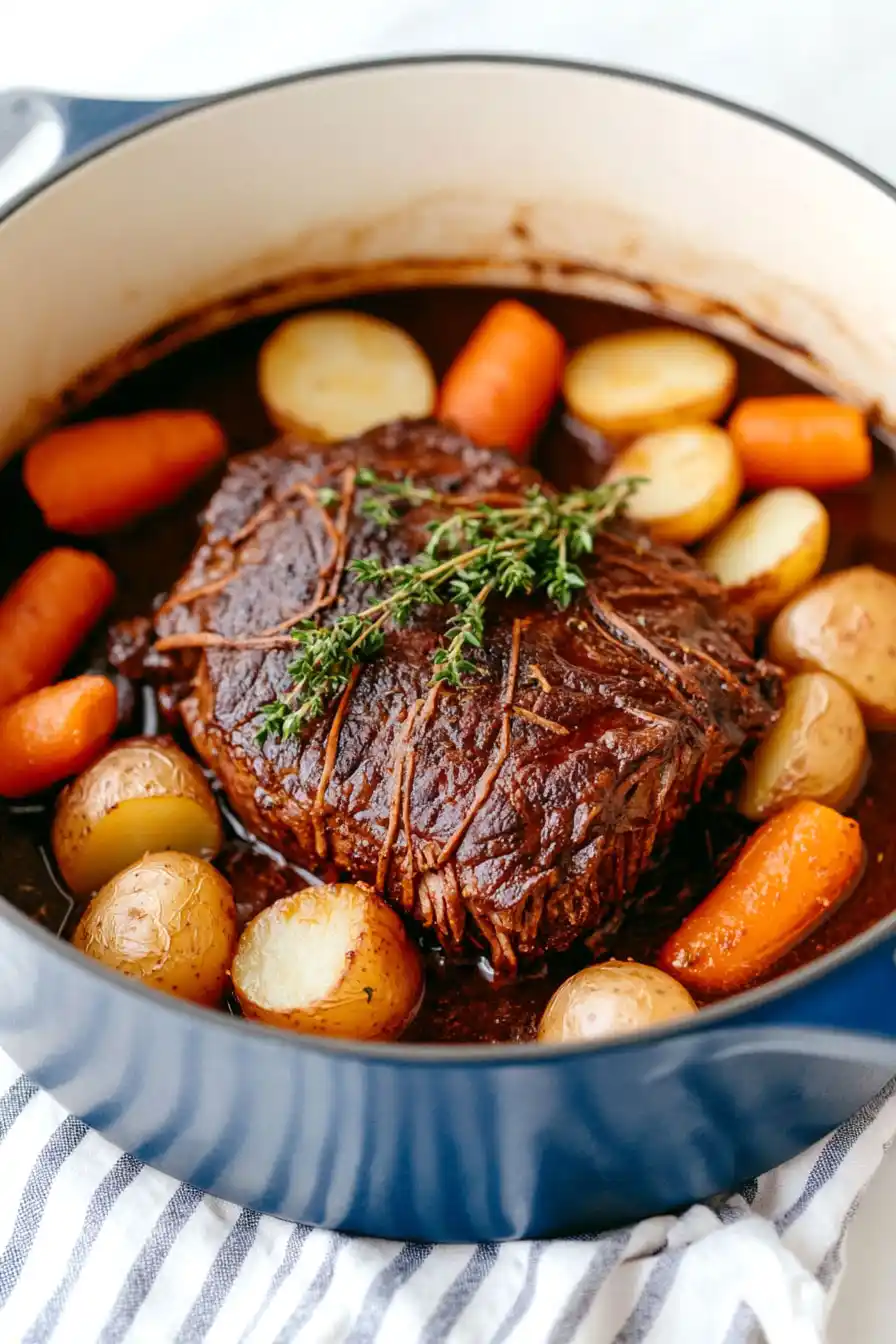
Keep: Let your pot roast cool down, then place it in an airtight container with its gravy and vegetables. It’ll stay good in the fridge for up to 4 days. The flavors actually get better after a day or two as everything mingles together!
Freeze: This pot roast is perfect for freezing! Put it in a freezer-safe container with the gravy and vegetables, and it’ll keep well for up to 3 months. I like to portion it out before freezing so I can thaw just what I need for a meal.
Warm Up: To reheat, put your pot roast and all the goodies in a covered pot on the stove over low heat until it’s warm through, about 15-20 minutes. You can add a splash of beef broth if needed. For smaller portions, the microwave works too – just heat in short intervals, stirring now and then.
| Preparation Time | 15-20 minutes |
| Cooking Time | 180-210 minutes |
| Total Time | 195-230 minutes |
| Servings | 6-8 |
| Level of Difficulty | Medium |
Estimated Nutrition
Estimated nutrition for the whole recipe (without optional ingredients):
- Calories: 2500-2800
- Protein: 200-220 g
- Fat: 150-170 g
- Carbohydrates: 150-180 g
Ingredients
For the pot roast:
- 1 tsp ground black pepper (freshly ground for best flavor)
- 4 sprigs fresh thyme
- 2 large yellow onions (cut into 1-inch pieces)
- 3 lb boneless beef chuck roast
- 2 tsp Worcestershire sauce (I like Lea & Perrins)
- 2 to 3 cups beef broth
- 1 lb small carrots (peeled and left whole)
- 6 cloves garlic (freshly minced for best aroma)
- 1.5 tsp kosher salt
- 1 cup red wine (or beef broth)
- olive oil (for searing, about 2-3 tbsp)
- 2 tbsp tomato puree (adds depth of flavor)
- 2 sprigs fresh rosemary
- 1.5 lb small yellow potatoes (halved if larger than 1.5 inches)
- 2 dried bay leaves
For the garnish:
- fresh Italian parsley (finely chopped)
Step 1: Prepare and Sear the Meat
Preheat your oven to 300 degrees F.
Generously season the meat with about 1 ½ teaspoons of Kosher salt and 1 teaspoon of ground black pepper on all sides.
Heat about 2 tablespoons of olive oil in a large 7-8 quart Dutch oven over medium-high heat.
Sear the meat on each side until golden brown, about 5-6 minutes per side.
Remove the meat from the pot and set it aside.
Remember not to wipe the Dutch oven clean, as the flavor from the searing will enhance the dish.
Step 2: Saute Onions and Garlic
Reduce the heat to medium and add the onions to the Dutch oven.
Saute them until they start to brown, about 3 minutes.
Scrape the bottom and sides of the pot to deglaze it with the moisture from the onions.
If the brown bits are burning too fast, add a few splashes of broth to help deglaze.
Stir in the minced garlic and cook for another minute until fragrant.
Use a wooden spoon to avoid scratching the cast iron surface.
Step 3: Create the Sauce
Add red wine (or substitute with beef broth) to the pot and quickly deglaze the brown bits from the bottom and sides.
Then, add 2 cups of beef broth, Worcestershire sauce, tomato paste, fresh thyme sprigs, fresh rosemary sprigs, and bay leaves.
Stir until everything is evenly combined, and bring the mixture to a low boil.
Step 4: Slow Cook the Meat
Return the seared meat back to the pot, along with any juices.
The liquid should cover about half of the meat—add more beef broth if necessary.
Cover the pot securely with the lid and bake in the oven at 300 degrees F for 1.5 hours.
Step 5: Add Vegetables and Continue Cooking
Remove the pot from the oven and add baby carrots and potatoes.
At this stage, you can also adjust the seasoning with additional salt and pepper if needed.
Place the lid back on and return the pot to the oven.
Cook for another 2 hours, or until the meat is fork-tender and falls apart, and the vegetables are tender.
For even more tender meat, consider cooking for an additional 15-30 minutes.
Step 6: Garnish and Serve
If desired, garnish the dish with fresh parsley for added flavor and color.
To serve, you can transfer the meat and vegetables to a large platter or serve directly from the Dutch oven.
Enjoy your meal!