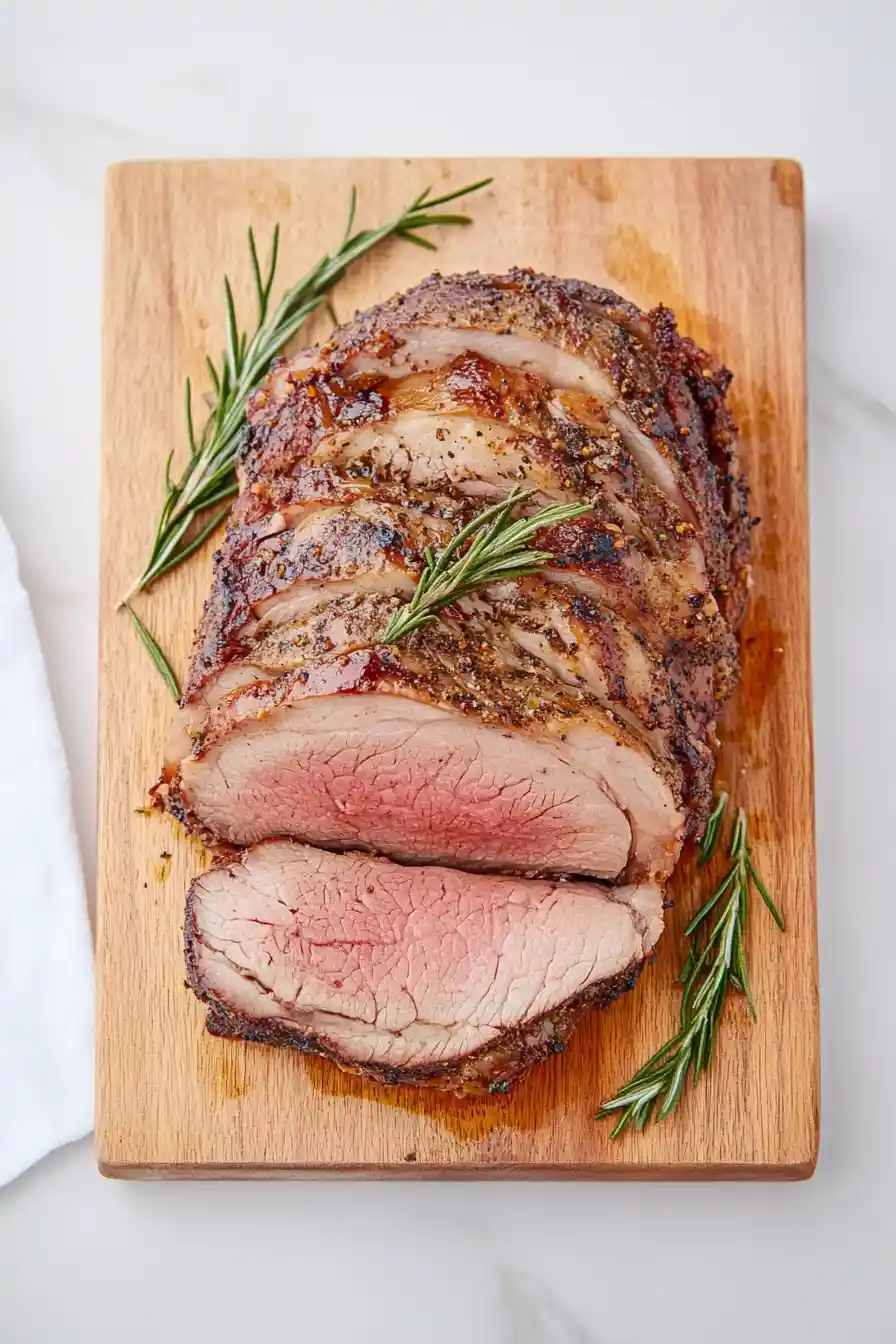
Here is my trusty roast leg of lamb recipe, with a simple herb and garlic rub, cooked until tender and juicy – perfect for your Easter celebration.
This lamb roast has become our go-to Easter Sunday tradition. I always make a little extra because everyone asks for seconds, and the leftovers make amazing sandwiches the next day. Nothing says spring quite like a classic roasted lamb, don’t you think?
Why You’ll Love This Roast Lamb
- Make-ahead friendly – You can prep this lamb the day before, letting the marinade work its magic overnight for maximum flavor development.
- Perfect for special occasions – This impressive centerpiece dish feeds a crowd and brings that wow factor to your Easter or holiday table without requiring complex cooking techniques.
- Mediterranean flavors – The combination of garlic, rosemary, lemon, and anchovies creates a classic flavor profile that perfectly complements the rich lamb meat.
- Foolproof preparation – The butterflied cut ensures even cooking throughout, making it easier to achieve the perfect doneness compared to a rolled roast.
What Kind of Lamb Should I Use?
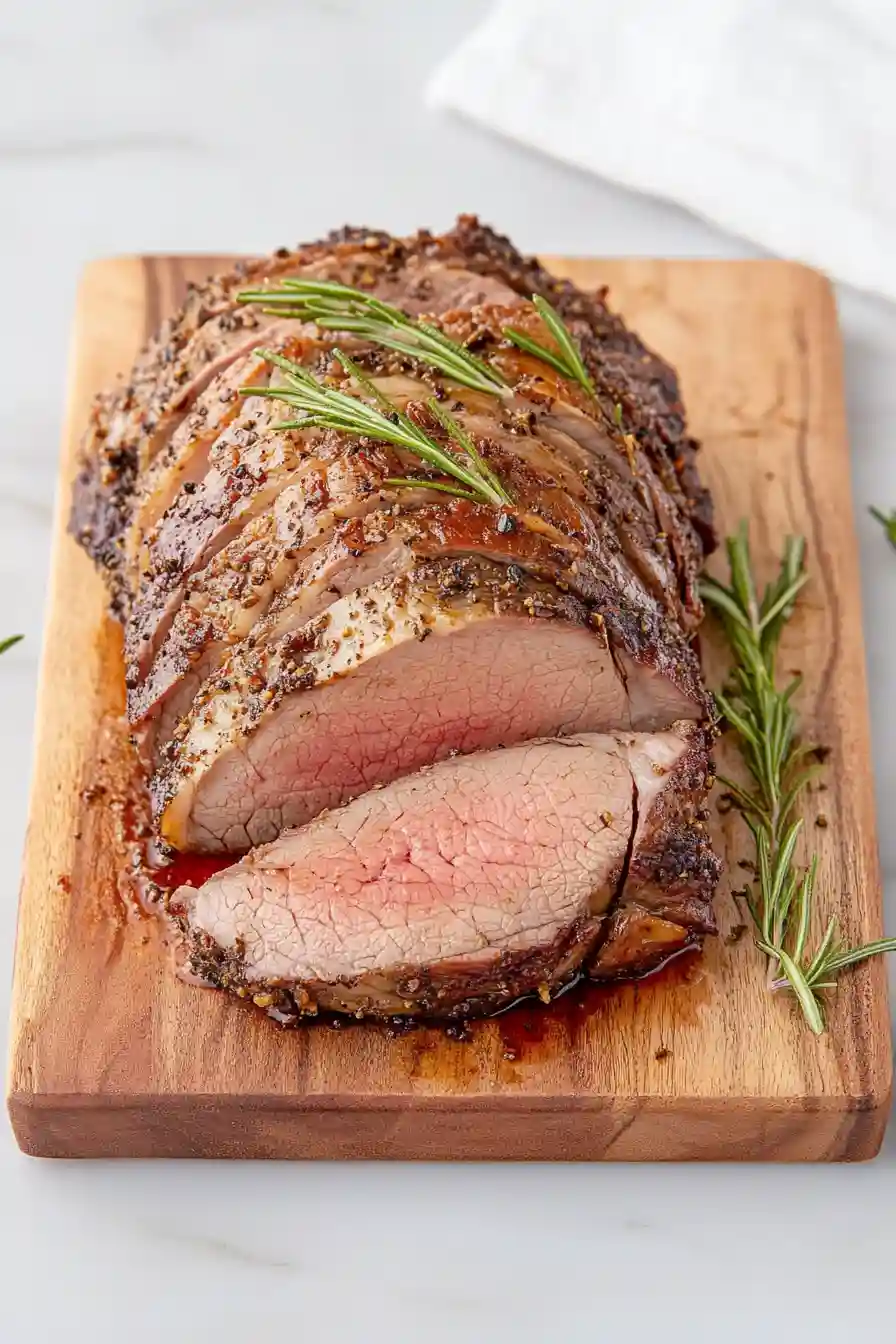
For this Easter roast, you’ll want to start with a boneless leg of lamb that’s been butterflied – this means the bone has been removed and the meat has been cut to lay flat, which helps it cook more evenly. When shopping, look for meat that’s pink to light red with white marbling throughout and avoid any cuts that appear dark or have yellowing fat. Most supermarkets sell New Zealand or Australian lamb, which tends to be smaller and milder in flavor, while American lamb is typically larger and has a slightly stronger taste – either option works great for this recipe. If you’re not comfortable butterflying the lamb yourself, ask your butcher to do it for you and make sure they trim away any excess fat and tough connective tissue.
Options for Substitutions
While this lamb recipe has some key ingredients, there’s room for a few substitutions if needed:
- Boneless leg of lamb: If you can’t find a boneless leg, you can use a bone-in leg (just adjust cooking time up by about 20-30 minutes). In a pinch, you could also use lamb shoulder, though it might need a longer cooking time to become tender.
- Anchovies: Don’t worry if you’re not an anchovy fan – you can substitute with 2 tablespoons of fish sauce or Worcestershire sauce. The goal is to add that savory umami flavor, not fishiness.
- Fresh rosemary: If fresh rosemary isn’t available, use 2 teaspoons of dried rosemary instead. Just crush it between your fingers before using to release the oils.
- Shallots: No shallots? Use 1/4 cup of finely minced red onion or sweet onion plus one small clove of extra garlic.
- Lemon zest: Orange zest works as a nice alternative, or you can use 1 teaspoon of dried lemon peel if fresh isn’t available.
- Crushed red pepper flakes: You can swap these with 1/4 teaspoon of cayenne pepper or just black pepper if you prefer less heat.
Watch Out for These Mistakes While Roasting
The biggest mistake when cooking a leg of lamb is not letting it come to room temperature before roasting – take it out of the fridge at least 1 hour before cooking to ensure even cooking throughout the meat. A common error is skipping the resting period after cooking – always let your lamb rest for 15-20 minutes under loose foil to allow the juices to redistribute, preventing them from running out when you slice. Temperature control is crucial – using a meat thermometer is essential since relying on cooking time alone can lead to overcooked, tough meat (aim for 135°F for medium-rare). For the best flavor development, don’t rush the seasoning process – massage the herb and anchovy mixture thoroughly into the meat and let it marinate for at least 4 hours, or ideally overnight in the refrigerator. Finally, when butterflying the lamb, make sure to cut it evenly to maintain a consistent thickness, which helps achieve uniform cooking throughout the roast.
What to Serve With Roast Lamb?
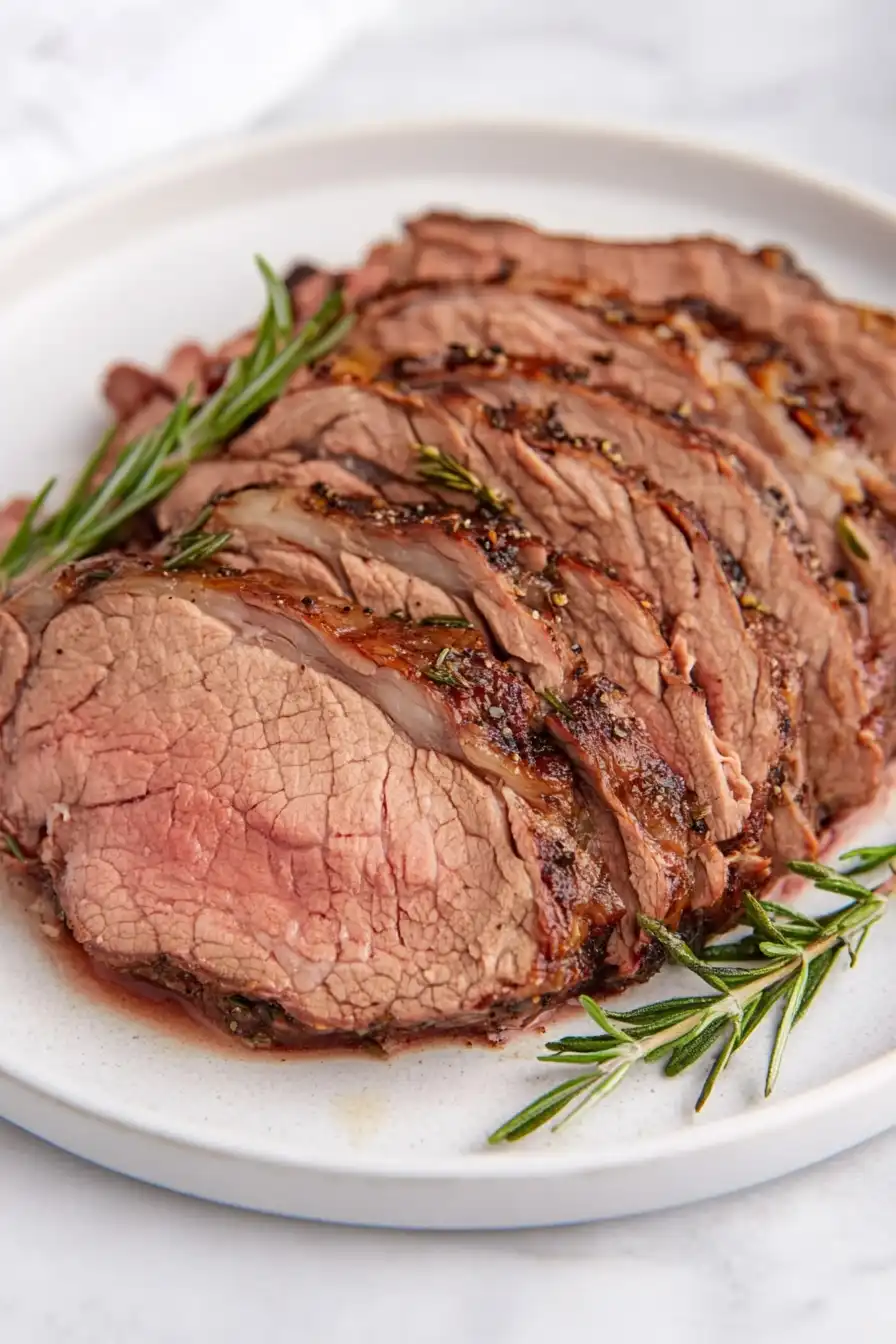
This Mediterranean-style roast lamb calls for some classic sides that’ll make your meal feel extra special. Roasted potatoes seasoned with herbs like rosemary and thyme are a natural choice – they’re perfect for soaking up all those tasty meat juices. A fresh spring vegetable like asparagus or green beans adds a nice pop of color to the plate, while mint sauce or mint jelly provides that traditional lamb pairing that everyone loves. For a complete spread, consider adding a simple Greek salad with cucumber, tomatoes, and feta, which complements the Mediterranean flavors in the lamb seasoning.
Storage Instructions
Keep Fresh: Got leftover Easter lamb? Place it in an airtight container and pop it in the fridge within 2 hours of cooking. It’ll stay good for up to 4 days. Pro tip: slice the lamb before storing – it makes it super easy to grab portions for sandwiches or quick dinners later!
Freeze: This roasted lamb freezes really well for future meals. Wrap individual portions tightly in plastic wrap, then place in freezer bags with the air squeezed out. It’ll keep its flavor for up to 3 months in the freezer. Just remember to label the bags with the date!
Reheat: To warm up your lamb without drying it out, place the slices in a baking dish with a splash of broth or water, cover with foil, and heat in a 325°F oven until warm (about 15-20 minutes). You can also microwave individual portions on 50% power, covered with a damp paper towel, for quick meals.
| Preparation Time | 30-720 minutes |
| Cooking Time | 150-180 minutes |
| Total Time | 180-900 minutes |
| Level of Difficulty | Medium |
Estimated Nutrition
Estimated nutrition for the whole recipe (without optional ingredients):
- Calories: 2500-3000
- Protein: 200-230 g
- Fat: 180-200 g
- Carbohydrates: 10-15 g
Ingredients
For the flavor mixture:
- 1/2 tsp red pepper flakes
- 2 tbsp kosher salt
- 6 anchovy fillets
- 3 medium garlic cloves (finely minced)
- 1 medium shallot (finely chopped)
- 1 lemon (zest and juice used)
- 2 tbsp olive oil (I use Colavita extra virgin olive oil)
- 2 tbsp fresh rosemary (finely chopped for best aroma)
- 1/2 tsp ground black pepper (freshly ground for best flavor)
For the lamb:
- 1 boneless leg of lamb (butterflied and trimmed of excess fat)
Step 1: Prepare the Flavor Mixture
Start by adjusting the oven rack to the lower-third position and preheating the oven to 275°F (135°C).
In a small saucepan set over medium heat, heat olive oil until shimmering, about 3 minutes.
Add garlic, shallot, anchovies, rosemary, lemon zest, and red pepper flakes.
Cook, stirring occasionally, until the shallots and garlic are softened, roughly 3 to 5 minutes.
Once cooked, transfer the mixture to a small heatproof bowl and stir in salt and pepper to taste.
Step 2: Season and Tie the Lamb
Rub half of the prepared mixture inside the butterflied lamb leg.
Roll the leg tightly and secure it by tying with butcher’s twine at 1-inch intervals.
Rub the remaining mixture over the exterior of the lamb.
You can choose to cook the lamb immediately or allow it to rest uncovered in the refrigerator for up to 12 hours to enhance flavor and texture.
Step 3: Roast the Lamb
When ready to cook, place the lamb, fat side up, on a wire rack set in a foil-lined rimmed baking sheet.
Transfer to the preheated oven and roast until an instant-read thermometer inserted into the thickest section of the lamb reads 125°F to 130°F (52° to 54°C) for medium-rare, or 130°F to 135°F (54° to 57°C) for medium.
This should take approximately 2 1/2 to 3 hours.
Remove the lamb from the oven and let it rest, uncovered, for 40 minutes.
Step 4: Sear the Lamb
While the lamb is resting, increase the oven temperature to 500°F (260°C).
Once the oven reaches the temperature, return the lamb to the oven and roast until the exterior is deep brown and crisp, about 15 minutes.
This will give a perfect crust to the lamb.
Step 5: Serve the Lamb
After the final roast, remove the lamb from the oven and let it rest for another 5 minutes.
Use kitchen shears to carefully remove the twine.
Transfer the lamb to a cutting board, slice it into 1/4 inch slices, and serve warm.
Enjoy your flavorful and tender lamb!