Fish tacos have become a regular at our dinner table, especially during the warmer months. There’s something about that combination of flaky halibut, fresh toppings, and warm tortillas that just feels right when the sun’s out. But I’ll be honest – I avoided making them at home for years because I thought they’d be too complicated.
These halibut tacos changed my mind completely. They’re actually pretty simple to put together, and they’re the kind of meal that makes everyone at the table happy. I usually prep all the toppings while the fish cooks, and before you know it, dinner’s ready. My kids love building their own tacos, and I love that we’re getting a good mix of flavors and textures without spending hours in the kitchen.
If you’ve been nervous about cooking fish at home, or just want to try something different for taco night, this recipe is a great place to start. The cooking method is straightforward, and I’ll walk you through each step to make sure your tacos turn out great every time.
Why You’ll Love These Fish Tacos
- Quick preparation – Ready in just 30 minutes, these fish tacos are perfect for busy weeknights when you want something fresh and tasty without spending hours in the kitchen.
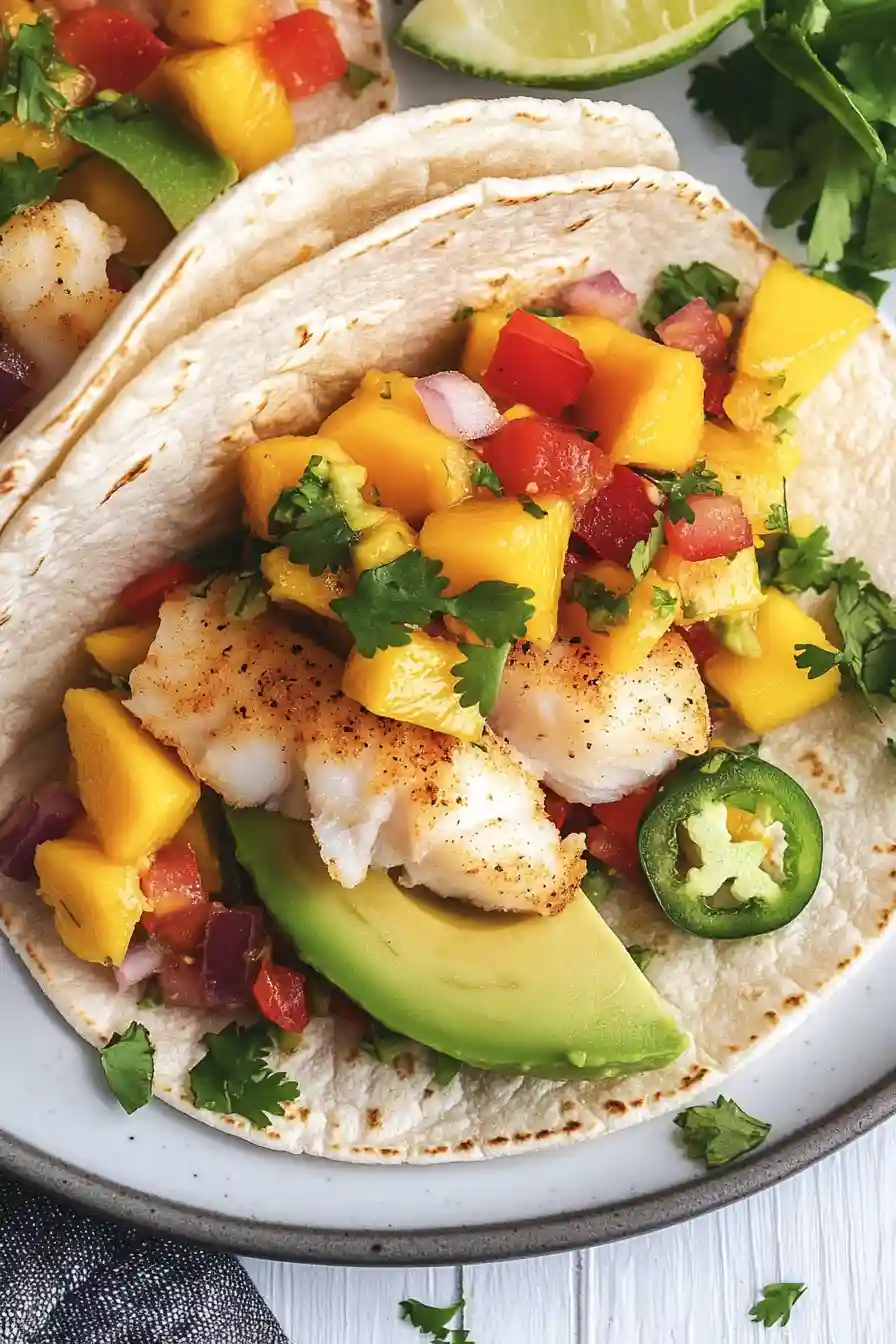
- Fresh and light – The combination of flaky halibut, bright mango salsa, and creamy avocado creates a light yet satisfying meal that’s perfect for lunch or dinner.
- Diet-friendly options – These tacos can easily be adapted for different dietary needs – make them AIP-friendly by skipping the bell pepper and jalapeño, or keep them grain-free with alternative tortillas.
- Restaurant-quality at home – With simple ingredients and easy preparation, you can create restaurant-style fish tacos right in your own kitchen for a fraction of the cost.
What Kind of Halibut Should I Use?
For fish tacos, wild-caught Pacific halibut is your best bet, though it can be a bit pricey compared to other white fish. Fresh halibut should have a clean, ocean-like smell and firm, translucent flesh – if it smells fishy or looks dull, it’s probably not fresh enough. If fresh isn’t available, don’t worry – good quality frozen halibut works well too, just make sure to thaw it slowly in the refrigerator overnight. When shopping, look for fillets that are about 1-inch thick, as these will cook evenly and stay moist during cooking. Remember that Atlantic halibut is currently overfished, so Pacific halibut is the more sustainable choice.
Options for Substitutions
This fish taco recipe is pretty flexible and you can make several swaps based on what you have available:
- Halibut: While halibut makes for amazing tacos, you can use other firm white fish like cod, mahi-mahi, or sea bass. Just adjust cooking time based on the thickness of your fillets – thinner pieces will cook faster.
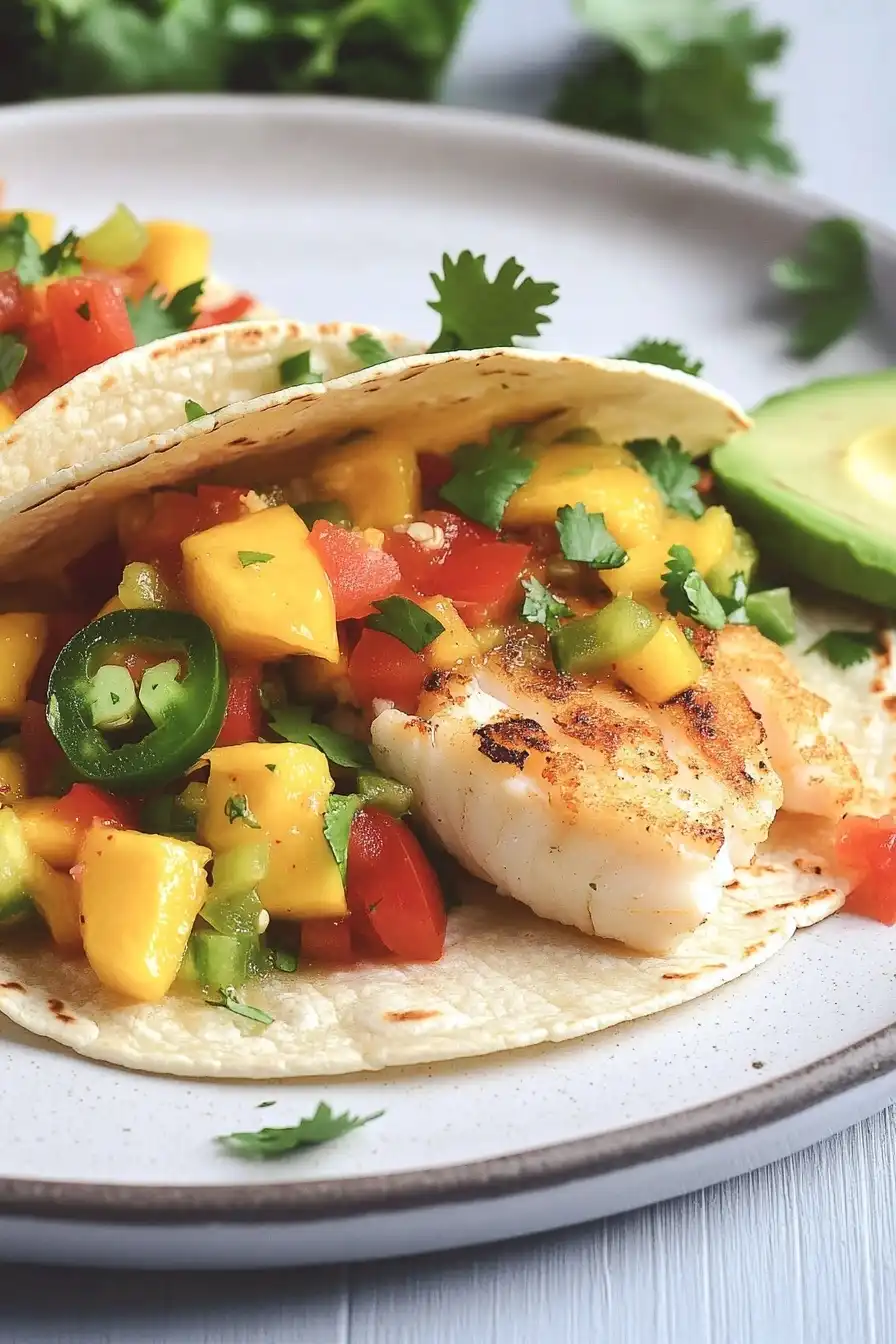
- Mango: No fresh mangos? Try using peaches in summer, or even pineapple for that tropical sweetness. You can also use thawed frozen mango chunks if fresh isn’t available.
- Red bell pepper: Yellow or orange bell peppers work just as well. If you’re not following AIP, you could also try poblano peppers for a mild kick.
- Red onion: White or sweet onions can step in for red onions. If raw onions are too strong for you, try soaking them in cold water for 10 minutes before using.
- Cilantro: If you’re in the ‘cilantro tastes like soap’ camp, try using fresh parsley instead. You’ll get a different but still fresh flavor.
- Ghee: Any neutral cooking oil works well here – try avocado oil, light olive oil, or coconut oil.
- Tortillas: Feel free to use any type you prefer – corn, flour, or grain-free alternatives like cassava or almond flour tortillas. For a low-carb option, try using lettuce wraps.
Watch Out for These Mistakes While Cooking
The biggest mistake when cooking halibut is overcooking it, as this delicate fish can quickly become dry and rubbery – aim for an internal temperature of 135°F and remember that the fish will continue cooking slightly after you remove it from the heat. A common error is moving the fish too much while it’s cooking; instead, let it develop a nice crust by leaving it undisturbed for 3-4 minutes on each side. To prevent your fish from sticking to the pan, make sure your cooking surface is properly heated before adding the fish, and pat the fillets dry with paper towels before seasoning. For the best taco assembly, warm your tortillas separately and avoid overfilling them – this helps prevent breaking and ensures you get the perfect balance of fish, mango salsa, and toppings in each bite.
What to Serve With Fish Tacos?
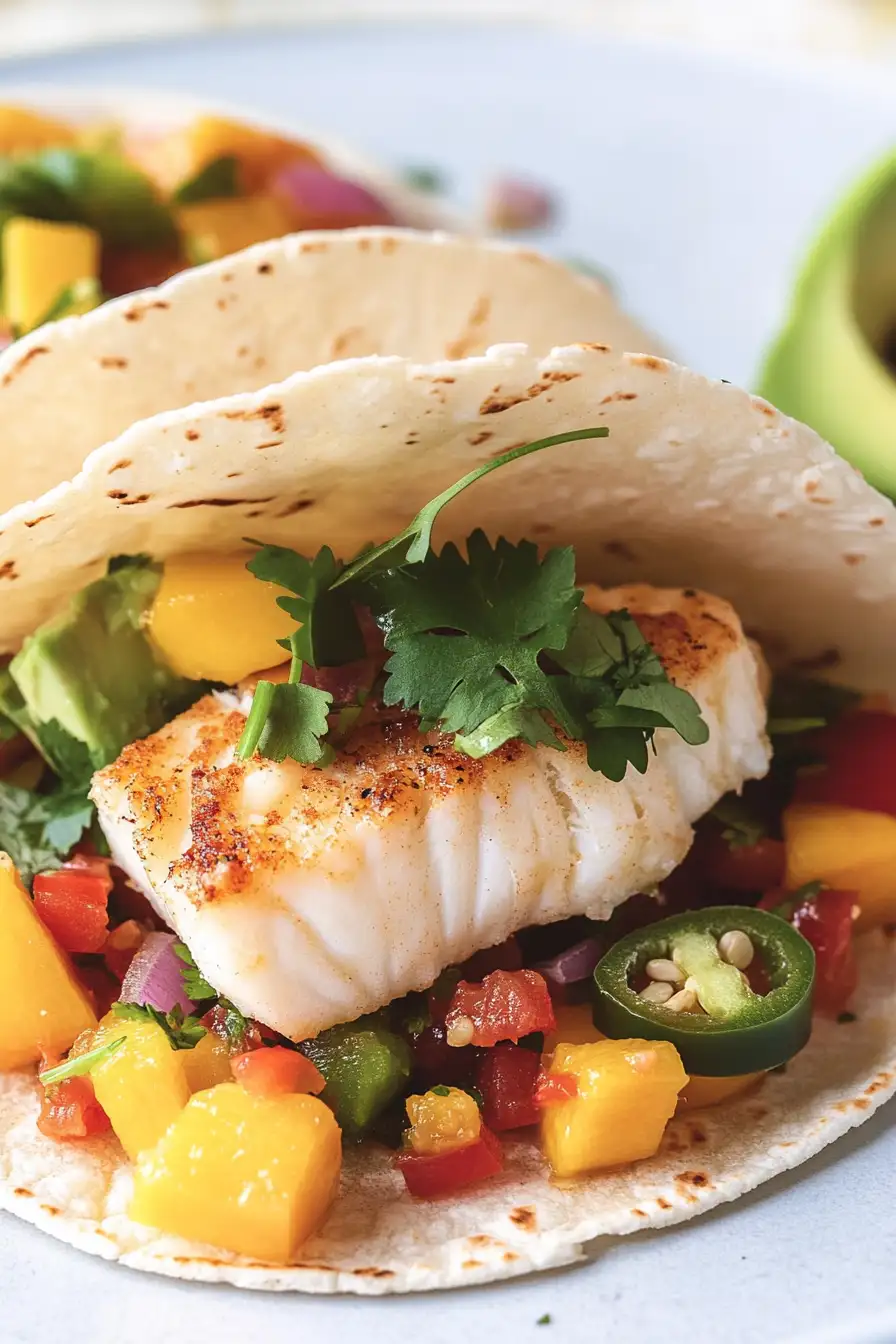
Fish tacos are super flexible when it comes to side dishes, and I love serving them with classic Mexican-inspired accompaniments. A simple pot of Mexican rice or cilantro-lime rice makes the perfect base, while black beans seasoned with cumin and garlic round out the meal nicely. For a lighter option, try a crunchy jicama slaw dressed with lime juice and chili powder, or whip up a quick corn salad with cherry tomatoes and red onions. You can also set up a toppings bar with extra lime wedges, pickled red onions, and different salsas so everyone can customize their tacos just the way they like them.
Storage Instructions
Keep Components Separate: For the best taco experience, store your cooked halibut and mango salsa separately in airtight containers in the fridge. The fish will stay good for up to 3 days, while the salsa keeps fresh for about 2 days. Keep your avocados whole until you’re ready to use them, and store tortillas according to package instructions.
Save: If you have leftover cooked halibut, place it in an airtight container and pop it in the fridge. Just remember that seafood is best enjoyed within 1-2 days of cooking for optimal taste and texture. The mango salsa might get a bit watery after day one, but you can easily drain off any excess liquid before serving.
Prepare: When you’re ready for round two of tacos, gently warm the halibut in a skillet over low heat just until heated through – about 2 minutes. Overheating can make the fish dry and rubbery. Assemble your tacos with the cold salsa and freshly sliced avocado for the best results.
| Preparation Time | 10-15 minutes |
| Cooking Time | 18-20 minutes |
| Total Time | 28-35 minutes |
| Level of Difficulty | Easy |
Estimated Nutrition
Estimated nutrition for the whole recipe (without optional ingredients):
- Calories: 1200-1400
- Protein: 100-110 g
- Fat: 70-80 g
- Carbohydrates: 110-120 g
Ingredients
For the pico de gallo:
- 1 cup fresh cilantro (chopped, including tender stems)
- 1 red bell pepper (diced for texture)
- 1 jalapeno (thinly sliced, remove seeds for less heat)
- 2 mangoes (ripe, diced into 1/2-inch pieces)
- 3 limes
- 1 pinch sea salt
- 1 red onion (finely chopped, about 1/4-inch pieces)
For the fish:
- 5 halibut fillets (about 6 oz each, 1-inch thick)
- cooking oil (I use avocado oil for high heat)
- 1/2 tsp black pepper (freshly ground for best flavor)
- 1/4 tsp sea salt
For serving:
- lime juice (freshly squeezed for brightness)
- avocado slices (firm but ripe Haas avocados)
- 10 tortillas (warm for pliability)
Step 1: Prepare the Pico de Gallo
Begin by finely chopping the mango, purple onion, red pepper, and jalapeno.
Combine all the chopped ingredients in a bowl.
Juice the limes over the mixture, making sure to coat everything well.
Sprinkle a bit of sea salt and add some fresh cilantro to taste.
Mix everything together and store in the fridge to let the flavors meld.
Step 2: Cook the Fish on the Stovetop
Pat the fish dry with paper towels to remove excess moisture.
Heat a pan on high and add ghee.
While the pan heats up, coat the fish fillets with salt and pepper.
Once the ghee is hot and shimmering, place the fish in the pan.
Cook for about 4 minutes on one side before flipping and cooking for another 4 minutes.
Remove the fish from the pan when it is cooked through.
Step 3: Prepare the Fish for Grilling
Melt additional ghee and combine it with your choice of spices in a bowl.
Brush this ghee-spice mixture over the cooked fish fillets to add extra flavor.
Preheat the grill to 350°F (177°C).
Step 4: Grill the Fish
Place the fish directly onto the grill racks once preheated.
Grill the fish for about 5 minutes on one side, then flip and cook for an additional 5 minutes, or until the fish reaches an internal temperature of 145°F (63°C).
Carefully remove the fish from the grill once cooked.
Step 5: Assemble and Serve Tacos
Place the grilled fish fillets into taco shells.
Top with a generous spoonful of the prepared pico de gallo.
Finish by squeezing a little more lime on top for added freshness.
Serve immediately while the fish is still warm, and enjoy your flavorful fish tacos!