There’s something special about a bundt cake that always makes me smile. Maybe it’s the way it looks on my grandmother’s cake stand, or how the shape creates the perfect ratio of slightly crispy exterior to soft, moist center. I’ve tried countless bundt recipes over the years, but this carrot version has become my go-to when I need something reliable and comforting.
I love how this cake doesn’t require fancy ingredients or complicated steps. Just grab your carrots, your basic pantry staples, and that bundt pan that’s probably hiding in the back of your cabinet. The best part? While it bakes, your kitchen fills with the warm, sweet scent of cinnamon and carrots – the kind of smell that makes everyone ask “What’s in the oven?”
And if you’re like me and enjoy making things ahead, you’ll be happy to know this cake actually tastes better the next day. The flavors have time to settle in, making it perfect for busy weekends or when you’re planning ahead for company.
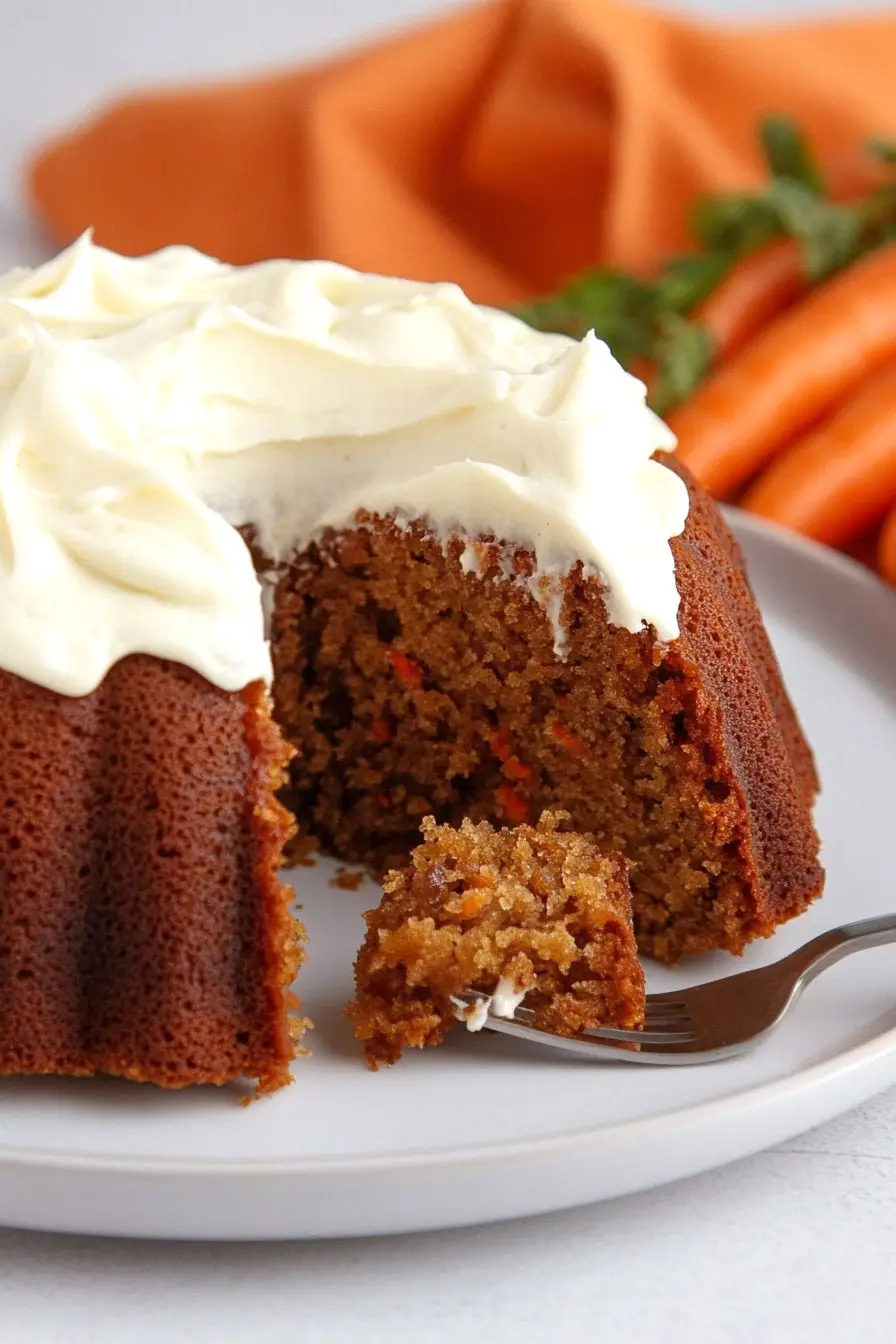
Why You’ll Love This Carrot Cake
- Extra moist texture – Using both carrot puree and fresh grated carrots creates an incredibly moist cake that stays fresh for days – no dry cake here!
- Perfect balance of spices – The combination of cinnamon and nutmeg gives this cake that classic carrot cake flavor without being overpowering.
- Make-ahead friendly – This cake actually tastes even better the next day, making it perfect for preparing in advance for special occasions or gatherings.
- Foolproof recipe – With simple mixing methods and basic ingredients you probably already have in your pantry, this recipe is great for both beginning and experienced bakers.
- Customizable – You can easily adapt this recipe to your taste – skip the nuts if you prefer, or add raisins for extra sweetness.
What Kind of Carrots Should I Use?
For this bundt cake, you’ll want to look for fresh, firm carrots with a bright orange color – the fresher they are, the sweeter your cake will be. Regular full-sized carrots work better than baby carrots here, since they tend to have more flavor and moisture. When grating, use the medium holes on your box grater rather than the finest setting, which can turn the carrots too wet and mushy. If you’re short on time, you can use store-bought carrot puree or baby food as the recipe suggests, but using freshly grated carrots will give you the best flavor and that classic carrot cake texture.
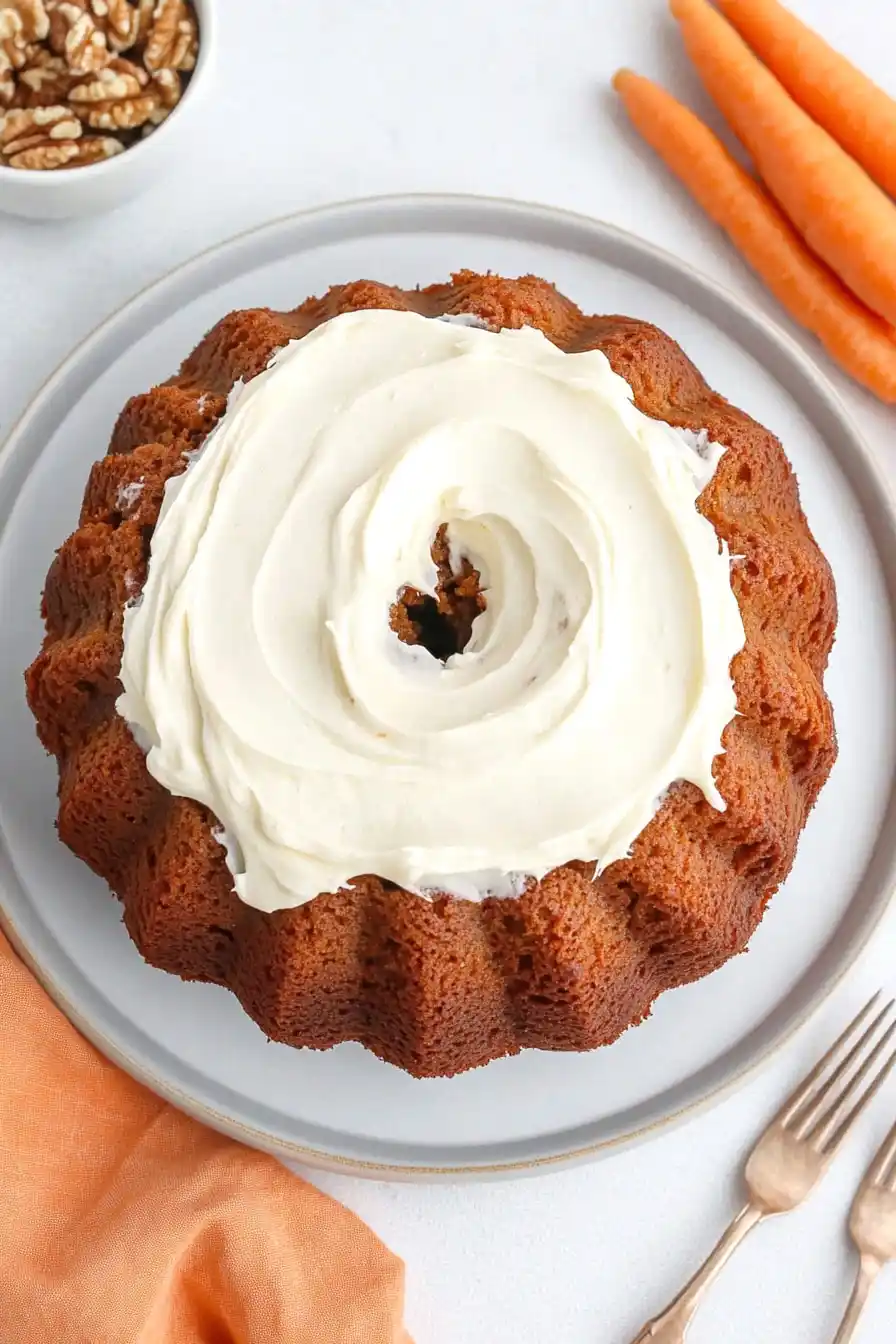
Options for Substitutions
This carrot cake recipe is pretty adaptable – here are some swaps you can try:
- Plain flour: You can use whole wheat flour for up to half of the plain flour to add some nutty flavor. For gluten-free needs, try a 1:1 gluten-free flour blend.
- Oil: While vegetable oil works great, you can use melted coconut oil, canola oil, or even applesauce (use 3/4 cup) for a lower-fat version. Keep in mind that applesauce will make the cake more dense.
- Carrot puree: If you don’t have carrot puree or baby food, just increase the grated carrots to 2 cups total. You could also use pumpkin puree or applesauce instead.
- Walnuts: Feel free to swap walnuts with pecans, almonds, or leave them out completely. You could add raisins or shredded coconut instead.
- Cream cheese: For the frosting, mascarpone cheese works great as a substitute. For dairy-free options, try dairy-free cream cheese alternatives, though the texture might be slightly different.
- Brown sugar: You can replace this with white sugar plus 1 tablespoon of molasses, or coconut sugar for a less refined option.
Watch Out for These Mistakes While Baking
The biggest mistake when making carrot bundt cake is overmixing the batter – once you add the flour mixture to the wet ingredients, stir just until combined, as overmixing will lead to a dense, tough cake instead of a light, tender crumb. Another common error is not properly greasing and flouring your bundt pan – make sure to get into all the nooks and crannies, or your cake might stick and break when unmolding. When it comes to the carrots, avoid using pre-shredded ones from the store as they’re often too dry; instead, grate them yourself right before mixing into the batter for the perfect moisture content. For the best texture, let the cake cool in the pan for exactly 10 minutes before turning it out – any sooner and it might break, any later and it could stick to the pan. Finally, make sure your cream cheese and butter are truly at room temperature before making the frosting, or you’ll end up with lumpy icing that’s hard to spread.
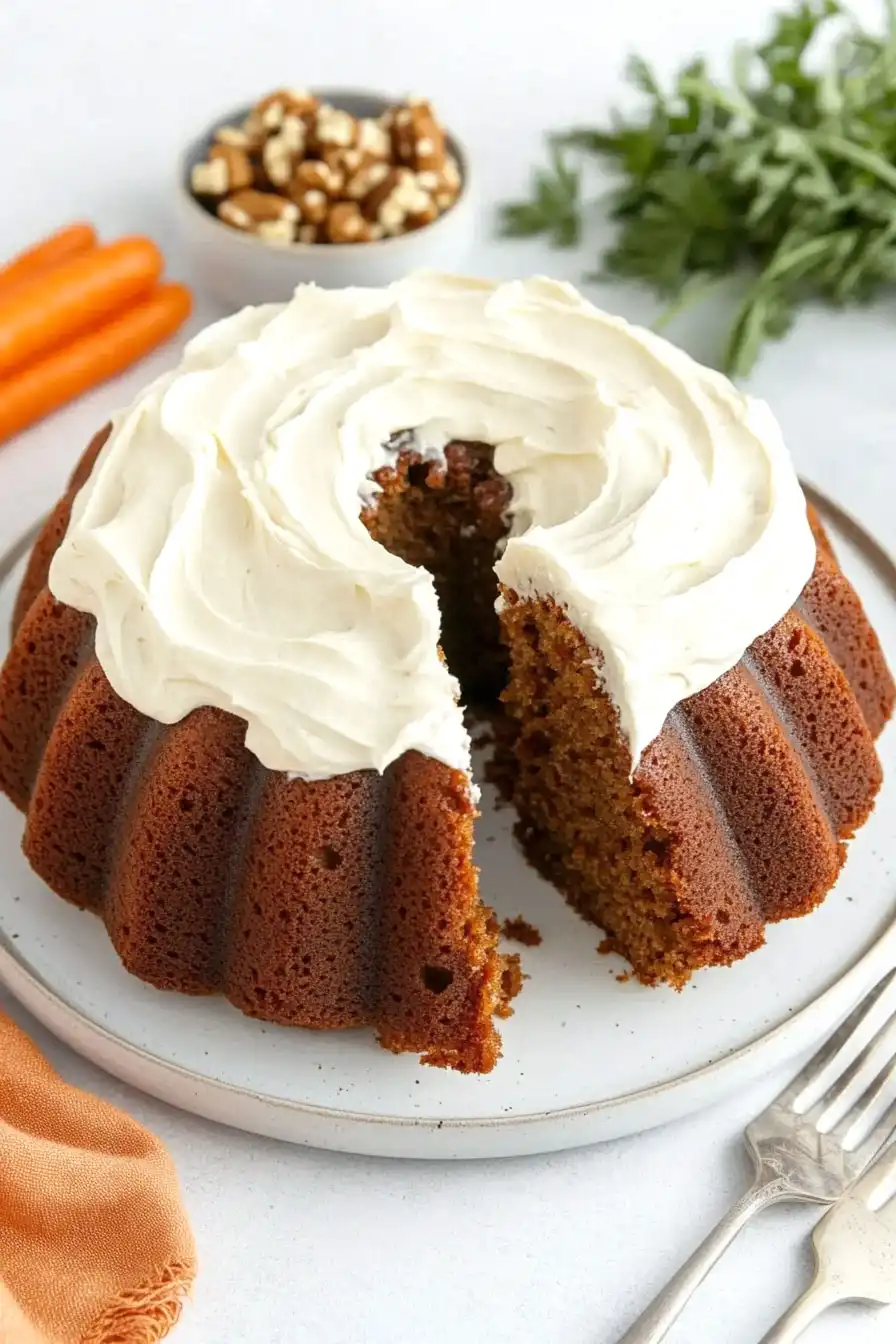
What to Serve With Carrot Bundt Cake?
This sweet and spiced carrot bundt cake pairs wonderfully with a hot cup of coffee or tea for an afternoon treat. A scoop of vanilla ice cream on the side adds a nice temperature contrast and makes the cake feel extra special, especially when served warm. If you’re hosting a brunch or dessert party, try serving it alongside some fresh berries or a dollop of whipped cream to add a pop of color to the plate. For a cozy fall gathering, hot apple cider makes an excellent beverage pairing that complements the cake’s cinnamon and nutmeg flavors.
Storage Instructions
Keep Fresh: This carrot bundt cake stays moist and yummy when kept in an airtight container at room temperature for up to 2 days. If you’ve added the cream cheese frosting, it’s best to pop it in the fridge where it’ll stay good for up to 5 days. Just make sure to cover it well to prevent it from drying out or absorbing other flavors.
Freeze: Want to save some for later? You can freeze the unfrosted cake for up to 3 months! Wrap it tightly in plastic wrap, then in foil. I recommend freezing it without the frosting, as cream cheese frosting can change texture when frozen. When you’re ready to serve, just make fresh frosting.
Make Ahead: You can bake this cake a day before your event – it actually gets better as the flavors have time to develop! Just wait to add the frosting until a few hours before serving. If you’re planning ahead, you can also mix the dry ingredients and store them in an airtight container for up to a month.
| Preparation Time | 20-30 minutes |
| Cooking Time | 50-60 minutes |
| Total Time | 70-90 minutes |
| Level of Difficulty | Medium |
Estimated Nutrition
Estimated nutrition for the whole recipe (without optional ingredients):
- Calories: 3600-4000
- Protein: 50-60 g
- Fat: 200-220 g
- Carbohydrates: 450-480 g
Ingredients
For the cake:
- 1 cup granulated sugar
- 2 cups all-purpose flour (I always use King Arthur all-purpose flour for consistent baking results)
- 1 cup packed brown sugar
- 1 tsp baking soda
- 1 cup shredded carrots
- 2 tsp vanilla extract
- 1 tbsp ground cinnamon
- 1 tsp baking powder
- 1 cup carrot puree (or baby food, gives better texture and moisture)
- 1 cup chopped walnuts (optional, adds a nice crunch)
- 1/2 tsp coarse salt
- 1/2 tsp ground nutmeg (freshly ground preferred for more flavor)
- 4 large eggs (room temperature for better emulsification)
- 1 cup vegetable oil (or any other neutral oil like canola)
For the frosting:
- 4 oz cream cheese (room temperature, I prefer Philadelphia cream cheese)
- 1 tsp vanilla extract
- 1/4 cup unsalted butter (room temperature)
- 2 cups confectioners’ sugar
- small pinch salt
Step 1: Prepare the Oven and Bundt Pan
Preheat your oven to 350ºF (175ºC).
Spray a 12-cup bundt pan with nonstick cooking spray, preferably one made for baking, to ensure easy removal of the cake.
Alternatively, you can generously butter and flour the pan if you prefer.
Step 2: Mix the Dry Ingredients
In a large bowl, sift together the flour, baking powder, baking soda, salt, and cinnamon.
This will help ensure even distribution of the leavening agents and spices, giving your cake a uniform texture and flavor.
Step 3: Combine Wet Ingredients
In another large bowl, whisk together the sugar, oil, eggs, vanilla, and carrot baby food.
Mix until the ingredients are well-combined and smooth, creating a consistent base for your cake.
Step 4: Create the Batter
Use a rubber spatula to gradually fold the dry ingredient mixture into the wet ingredients until fully incorporated.
Add the shredded carrots and, if using, fold in the optional walnuts.
Stir gently until everything is evenly distributed throughout the batter.
Step 5: Bake the Cake
Pour the batter into the prepared bundt pan, smoothing the top with your spatula.
Place the pan in the preheated oven and bake for 50-60 minutes, or until a toothpick inserted into the center of the cake comes out clean.
Let the cake cool in the pan for approximately 20 minutes before turning it out onto a wire rack to cool completely.
Step 6: Prepare and Apply the Frosting
Once the cake has cooled completely, prepare the frosting.
In a large bowl, use an electric hand mixer to beat the butter and cream cheese together for 3 minutes until smooth.
Add the salt, vanilla, and powdered sugar, beating on low speed until the sugar is incorporated.
Increase the speed to medium-high and beat for an additional 3 minutes, scraping down the sides of the bowl as needed.
Spread or pipe the icing onto the cooled cake.
Step 7: Storing the Cake
Keep any leftovers covered in the refrigerator for up to 3 days.
This will ensure the frosting and cake remain fresh and delicious.