If you ask me, roasted duck is one of those dishes that seems fancy but is actually pretty simple to master.
This classic preparation takes a humble duck half and turns it into a cozy dinner that’s rich and satisfying. The skin gets wonderfully crispy while the meat stays tender and juicy inside.
It’s roasted low and slow, letting the fat render out naturally, then finished at a higher temperature for that perfect golden-brown exterior. A sprinkle of salt and fresh herbs is all you need to make the flavors sing.
It’s a comforting meal that feels special without being fussy, perfect for Sunday dinners or when you want to treat yourself to something nice.
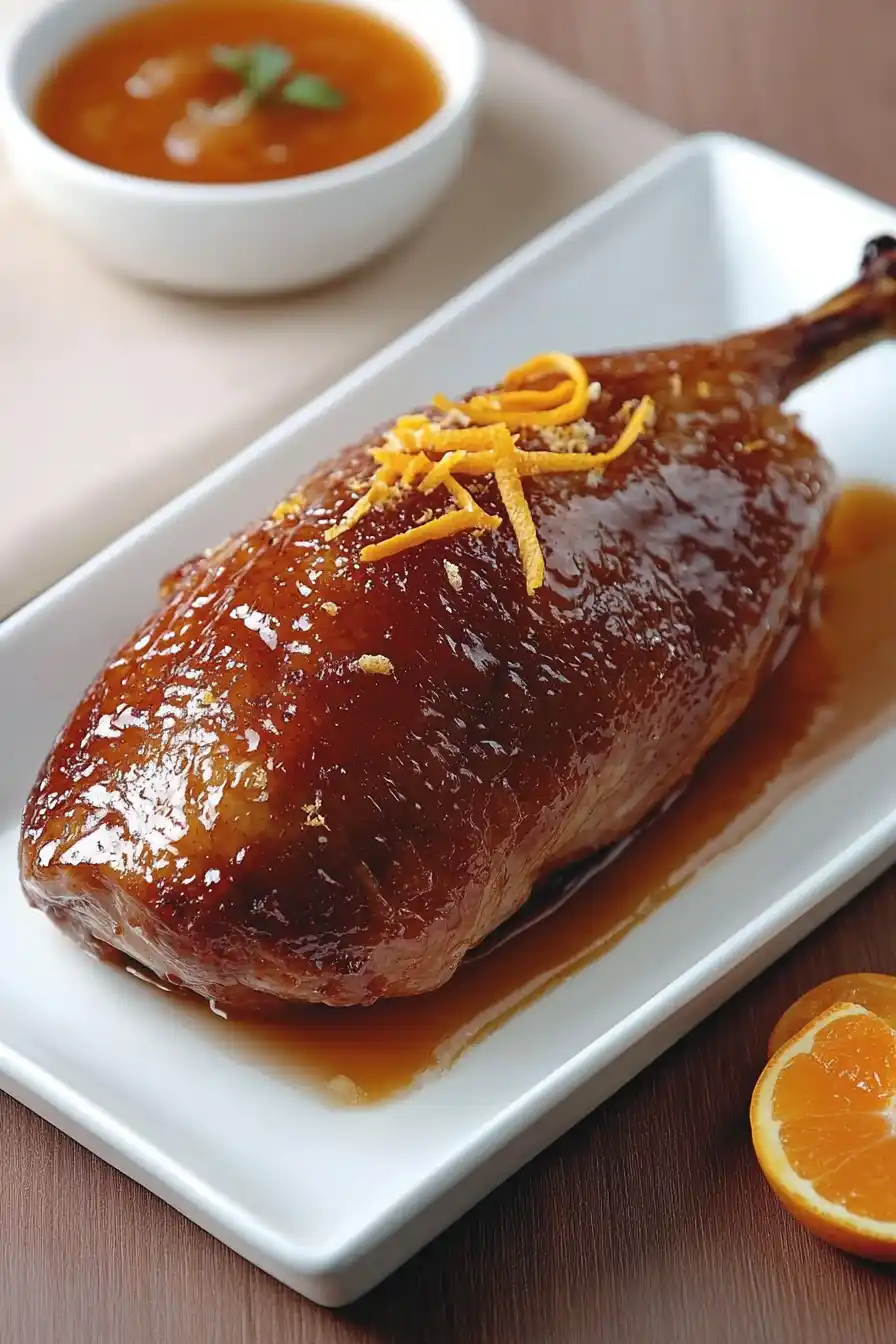
Why You’ll Love This Roasted Duck
- Quick preparation – Ready in just 35 minutes, this duck recipe fits perfectly into your weeknight dinner rotation or last-minute dinner plans.
- Simple ingredients – With basic pantry staples like sugar, orange juice, and common herbs, you won’t need to hunt down any special ingredients.
- Restaurant-quality meal – This recipe helps you create an impressive main dish that tastes like it came from a fancy restaurant, but at a fraction of the cost.
- Foolproof method – The straightforward preparation means you’ll get consistently good results, even if you’ve never cooked duck before.
What Kind of Duck Should I Use?
For roasted duck, Pekin (also called Long Island duck) is your best bet and the most commonly available variety in American grocery stores. While Muscovy duck will also work, Pekin tends to be more tender and has a milder flavor that pairs really well with citrus and herbs. If you’re lucky enough to find it, Moulard duck is another excellent choice – it’s known for being a bit meatier than Pekin. When shopping, look for duck that has a pinkish color and feels firm to the touch, avoiding any that appears grayish or has an off smell. For the best results, let your duck come to room temperature for about 30 minutes before cooking, and be sure to score the skin in a crosshatch pattern to help render the fat.
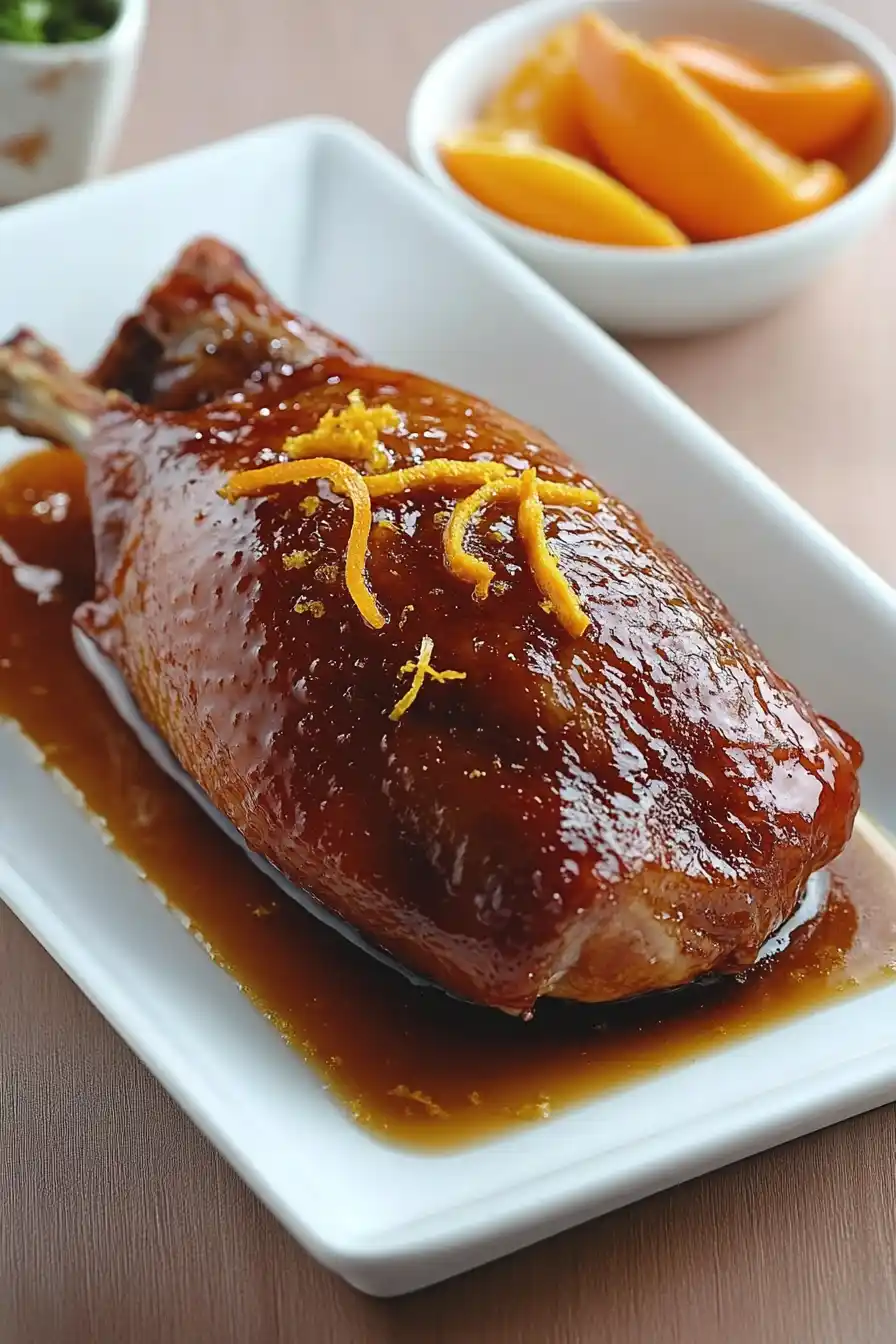
Options for Substitutions
While duck is the star of this recipe, there are some ingredients you can swap around if needed:
- Duck: Duck is really the main event here and can’t be substituted without completely changing the recipe. If you can’t find duck halves, you can use a whole duck and ask your butcher to split it, or learn to do it yourself.
- Brown and white sugar: You can use all brown sugar or all white sugar if you’re short on one. Honey can also work – use about 1/2 cup total, as it’s sweeter than sugar. Just keep an eye on it as honey can brown faster.
- Orange juice: Fresh-squeezed is best, but bottled works too. In a pinch, you could use mandarin juice or even a mix of apple juice with a splash of lemon for tartness.
- Cornstarch: All-purpose flour can work as a thickener – use 2 tablespoons instead of 1 tablespoon of cornstarch. Arrowroot powder works in equal amounts to cornstarch.
- Herbs: If you don’t have fresh rosemary or thyme, use 1/2 teaspoon dried rosemary and 1/2 teaspoon dried thyme. Sage or tarragon could also work well with duck.
Watch Out for These Mistakes While Roasting
The biggest challenge when roasting duck is dealing with its fatty skin – not scoring the skin properly before cooking can prevent the fat from rendering out, leaving you with a chewy rather than crispy exterior. To achieve that golden-brown, crispy skin, make sure to score the skin in a diamond pattern, being careful not to cut into the meat underneath. Another common mistake is roasting the duck at too high a temperature from the start – instead, begin at 300°F to slowly render the fat, then increase to 375°F for the final 30 minutes to crisp up the skin. The internal temperature should reach 165°F at the thickest part, but don’t rely solely on time – use a meat thermometer to ensure it’s properly cooked without drying out. For the best results, let the duck rest for 15-20 minutes before serving, which allows the juices to redistribute throughout the meat.
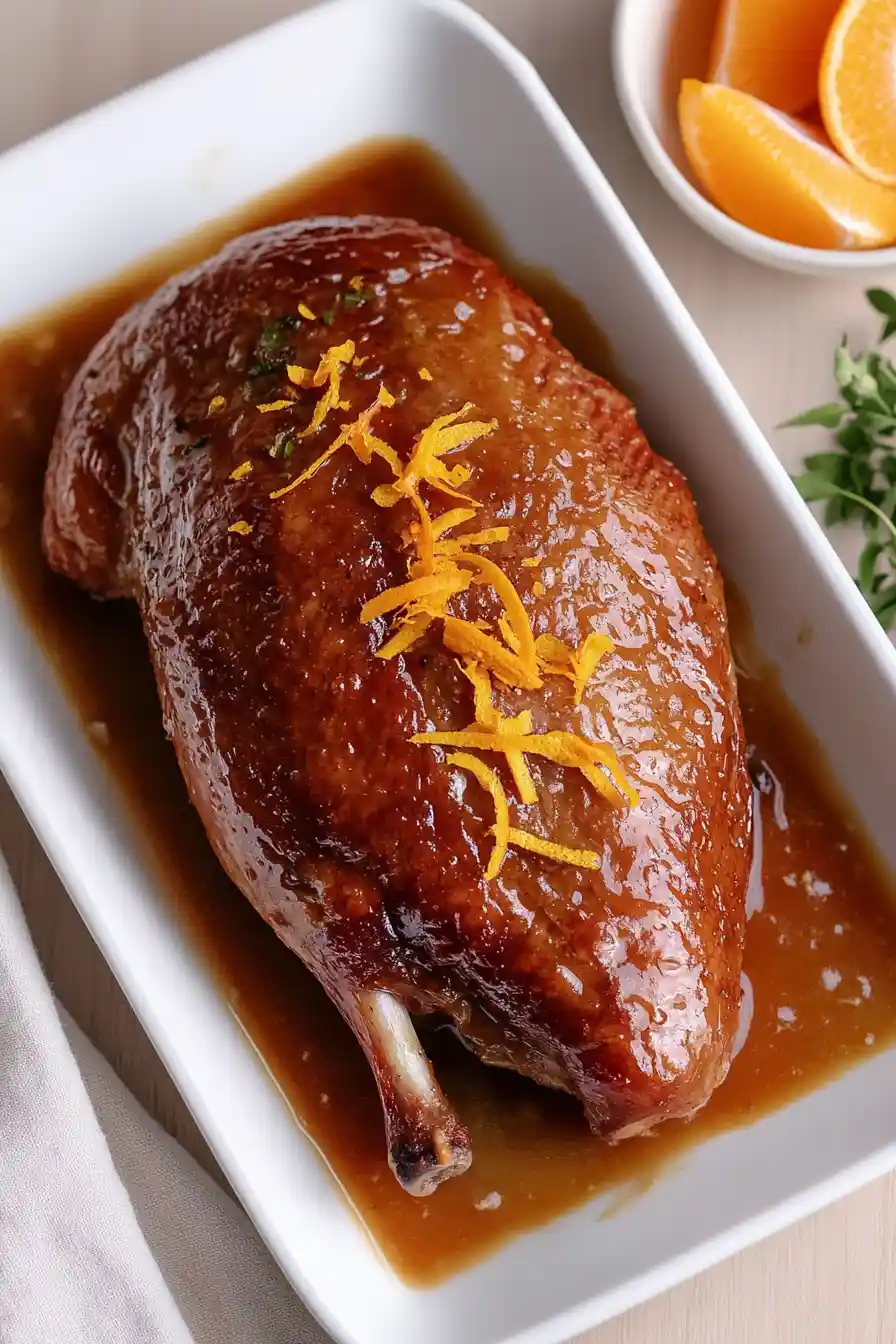
What to Serve With Roasted Duck?
When serving roasted duck with its sweet orange and herb sauce, I love to pair it with sides that complement its rich flavor. A wild rice pilaf or roasted fingerling potatoes work great to soak up all those tasty juices from the plate. For vegetables, try some roasted Brussels sprouts or green beans with garlic – they provide a nice contrast to the duck’s richness. If you want to add some brightness to the meal, a simple arugula salad with a light vinaigrette helps cut through the richness and rounds out the plate perfectly.
Storage Instructions
Keep Fresh: Got leftover duck? Place it in an airtight container and pop it in the fridge within two hours of cooking. It’ll stay good for up to 3 days. If you have extra orange sauce, store it separately in its own container – this helps keep the duck skin from getting too soft.
Freeze: Duck freezes really well! Wrap it tightly in aluminum foil or place it in a freezer bag with as much air removed as possible. It’ll keep its quality for up to 4 months in the freezer. The orange sauce can be frozen separately in a freezer-safe container for up to 3 months.
Reheat: To bring back that tasty crispy skin, reheat the duck in the oven at 350°F for about 15-20 minutes, or until heated through. If you’re using the microwave, heat it in short bursts to prevent the meat from drying out. Warm the sauce separately on the stovetop or microwave, stirring occasionally.
| Preparation Time | 10-15 minutes |
| Cooking Time | 15-20 minutes |
| Total Time | 25-35 minutes |
| Level of Difficulty | Medium |
Estimated Nutrition
Estimated nutrition for the whole recipe (without optional ingredients):
- Calories: 1800-2100
- Protein: 100-120 g
- Fat: 120-140 g
- Carbohydrates: 150-170 g
Ingredients
For the duck:
- 2 roasted duck halves
For the sauce:
- 1 tbsp cornstarch (for thickening the sauce)
- 1 cup orange juice (freshly squeezed for best flavor, I use Florida’s Natural)
- 1 sprig fresh rosemary
- 1/4 tsp salt
- 1/3 cup granulated sugar
- 2 sprigs fresh thyme
- 1/3 cup packed brown sugar
Step 1: Prepare and Cook the Duck
Preheat your oven to 375 degrees Fahrenheit.
Place the half roast duck in a shallow baking pan.
Bake the duck in the preheated oven for 15-20 minutes until it is heated through and crispy.
For a faster method, you can air fry the duck at 390 degrees Fahrenheit for 12 minutes.
Step 2: Begin Making the Sauce
As the duck is cooking, start preparing the sauce.
Place a saucepan on medium heat and add sugars and salt.
Slowly stir in the juice until the mixture is smooth and well combined.
Add rosemary and thyme to the saucepan.
Step 3: Simmer the Sauce
Lower the heat and let the sauce simmer gently.
Allow it to simmer until it turns transparent and thickened; this should take about 10 minutes.
Step 4: Finalize the Sauce
Once the sauce is thickened, slowly add in the cornstarch while stirring continuously.
Allow the sauce to simmer for an additional 3 minutes to ensure it reaches the desired consistency.
Remove the fresh herb sprigs before serving.
Step 5: Serve the Duck
Once the duck is cooked to perfection, take it out of the oven or air fryer.
Pour the prepared sauce over the top of the roast half duck.
Serve immediately and enjoy your flavorful dish.