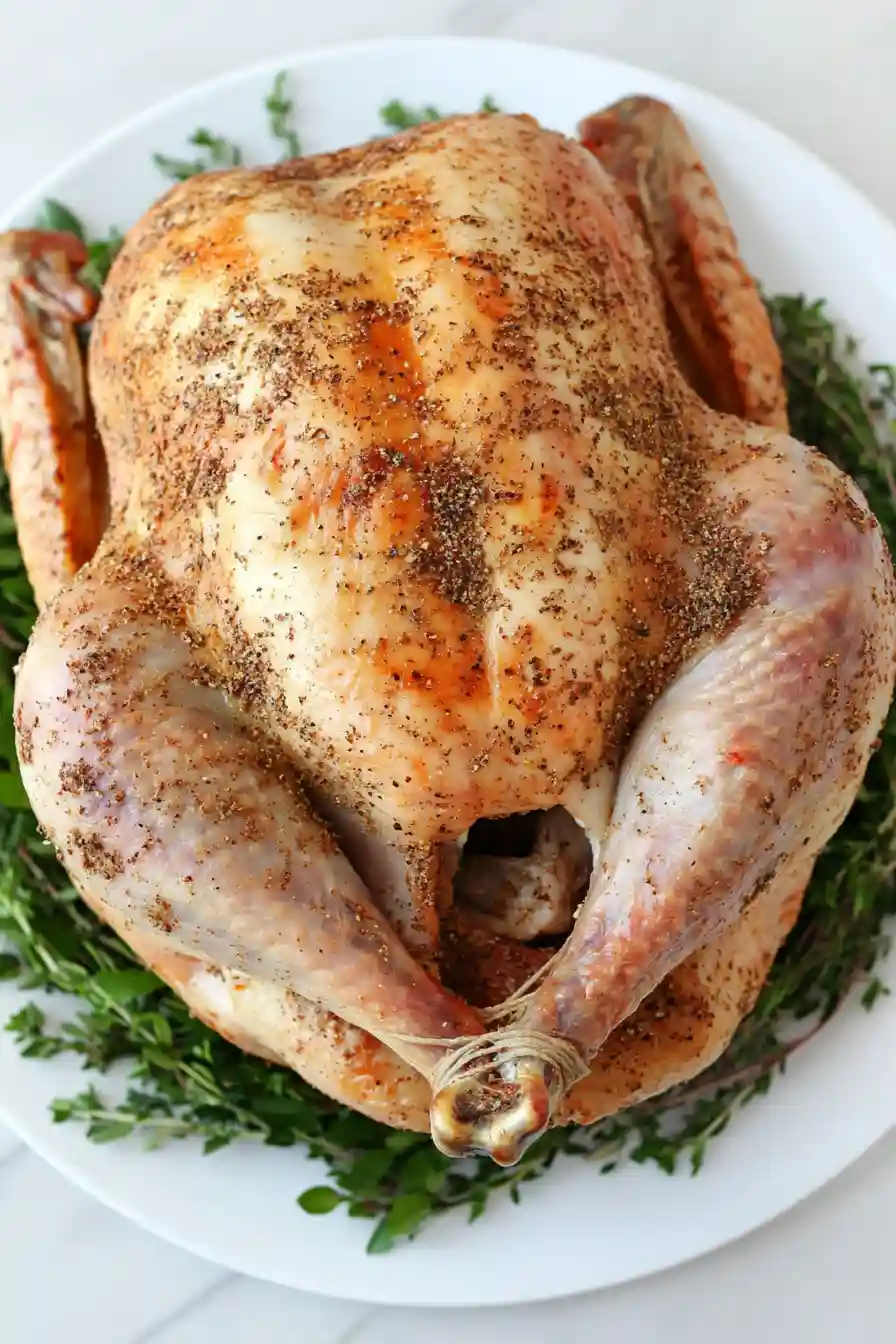
If you ask me, a dry rub turkey is one of the smartest ways to cook your bird.
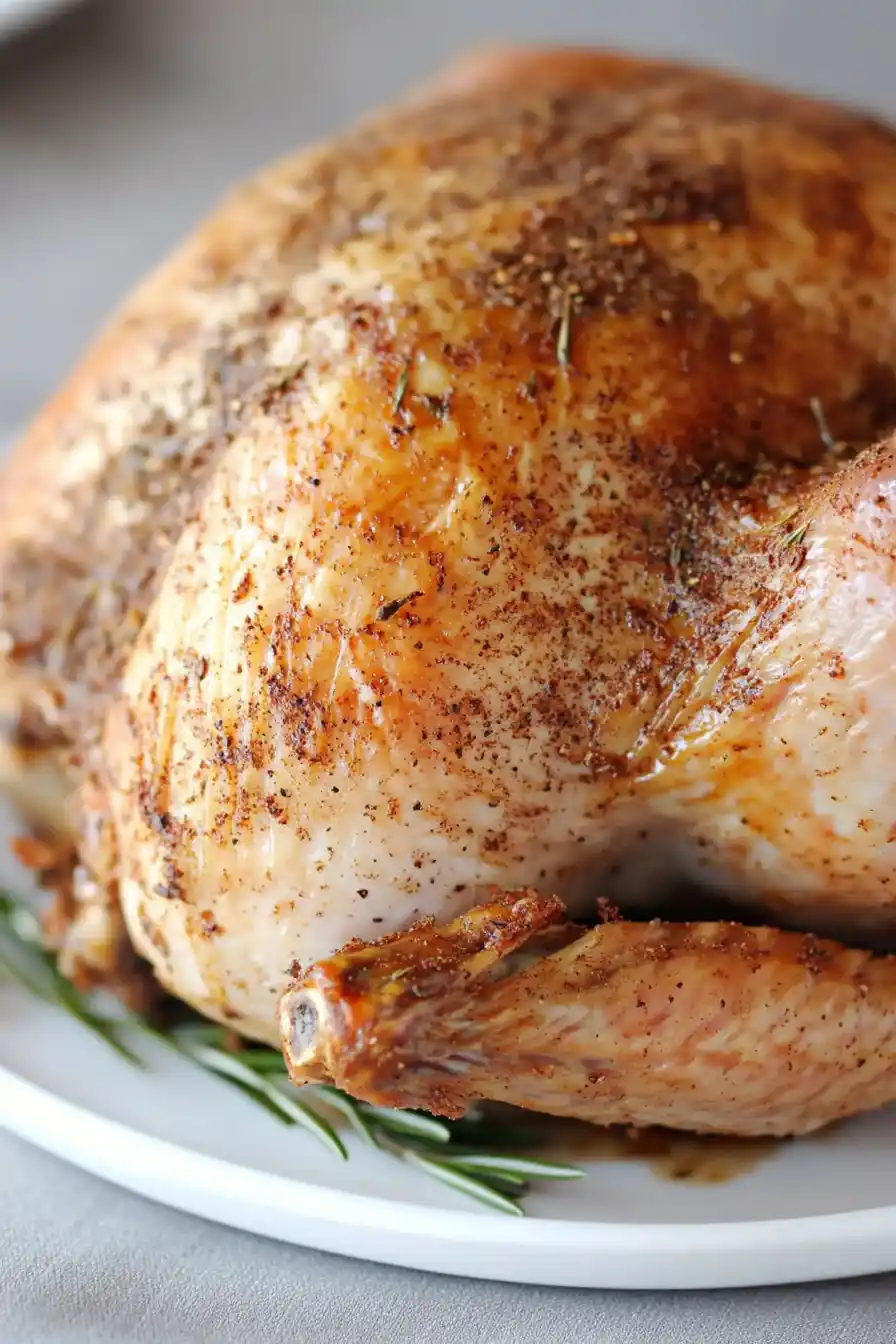
This no-fuss approach gives you a golden-brown turkey that’s packed with flavor from the inside out. The blend of herbs and spices creates a tasty crust on the skin while keeping the meat nice and juicy.
The secret is taking time to pat the turkey completely dry, then massaging that seasoning mix into every nook and cranny. No brining, no basting – just straightforward roasting that lets the spices do their magic.
It’s a foolproof method that’ll make you wonder why you ever prepared turkey any other way, perfect for holidays or Sunday family dinners.
Why You’ll Love This Roast Turkey
- Simple dry rub method – No messy brining or complicated marinades needed – just a flavorful blend of herbs and spices rubbed right onto the bird.
- Basic ingredients – You’ll only need common herbs and spices that you probably already have in your pantry, making this recipe both convenient and cost-effective.
- Foolproof preparation – With just a simple rub and roasting process, this method takes the stress out of preparing your turkey – perfect for first-time turkey roasters.
- Classic flavor profile – The combination of sage, rosemary, and thyme creates that traditional turkey taste everyone knows and loves, without any fancy or unusual ingredients.
What Kind of Turkey Should I Use?
For this dry rub recipe, you’ll want to start with a fresh turkey rather than a frozen one, as fresh birds tend to have better texture and are easier to work with. The recipe calls for a 10-12 pound turkey, which is perfect for serving 8-10 people and ensures even cooking throughout. If you’re shopping at the grocery store, look for a turkey that’s labeled “natural” or “minimally processed” – avoid any that have been pre-brined or injected with a salt solution, since we’re adding our own seasonings. Make sure to check the sell-by date and pick a turkey that feels firm to the touch and doesn’t have any off odors or discoloration.
Options for Substitutions
Let me share some helpful substitutions for this roast turkey recipe:
- Turkey: While this recipe is designed for a whole turkey, you can use the same rub on turkey breast if you’re cooking for a smaller group. Just cut the ingredients in half and reduce cooking time accordingly.
- Olive oil: You can swap olive oil with melted butter, avocado oil, or even canola oil. Each will help the rub stick to the bird and create nice, brown skin.
- Fresh thyme sprigs: No fresh thyme? Use 1 additional teaspoon of dried thyme instead. The flavor won’t be quite as fresh, but it’ll still taste good!
- Kosher salt: If using table salt instead of kosher salt, reduce the amount to 1 tablespoon since table salt is more concentrated.
- Ground sage: If you’re out of ground sage, you can use poultry seasoning as a substitute – it contains sage and similar herbs. Use the same amount.
- Fresh rosemary: Fresh and dried rosemary are interchangeable here – if switching from fresh to dried, use just ⅓ of the amount since dried herbs are more concentrated.
Watch Out for These Mistakes While Roasting
The biggest mistake when roasting a turkey is not letting it come to room temperature before cooking – take your bird out of the fridge at least 1-2 hours before it goes in the oven, which helps it cook more evenly and stay juicy. Another common error is not patting the turkey completely dry before applying the rub – any moisture left on the skin will prevent it from getting that beautiful golden-brown color and crispy texture you’re looking for. To ensure the dry rub sticks properly and flavors penetrate the meat, gently lift the skin and massage some of the seasoning directly onto the flesh, being careful not to tear the skin. Remember to let your turkey rest for at least 30-45 minutes after cooking – cutting into it too soon will release all those flavorful juices you worked so hard to keep in.
What to Serve With Roast Turkey?
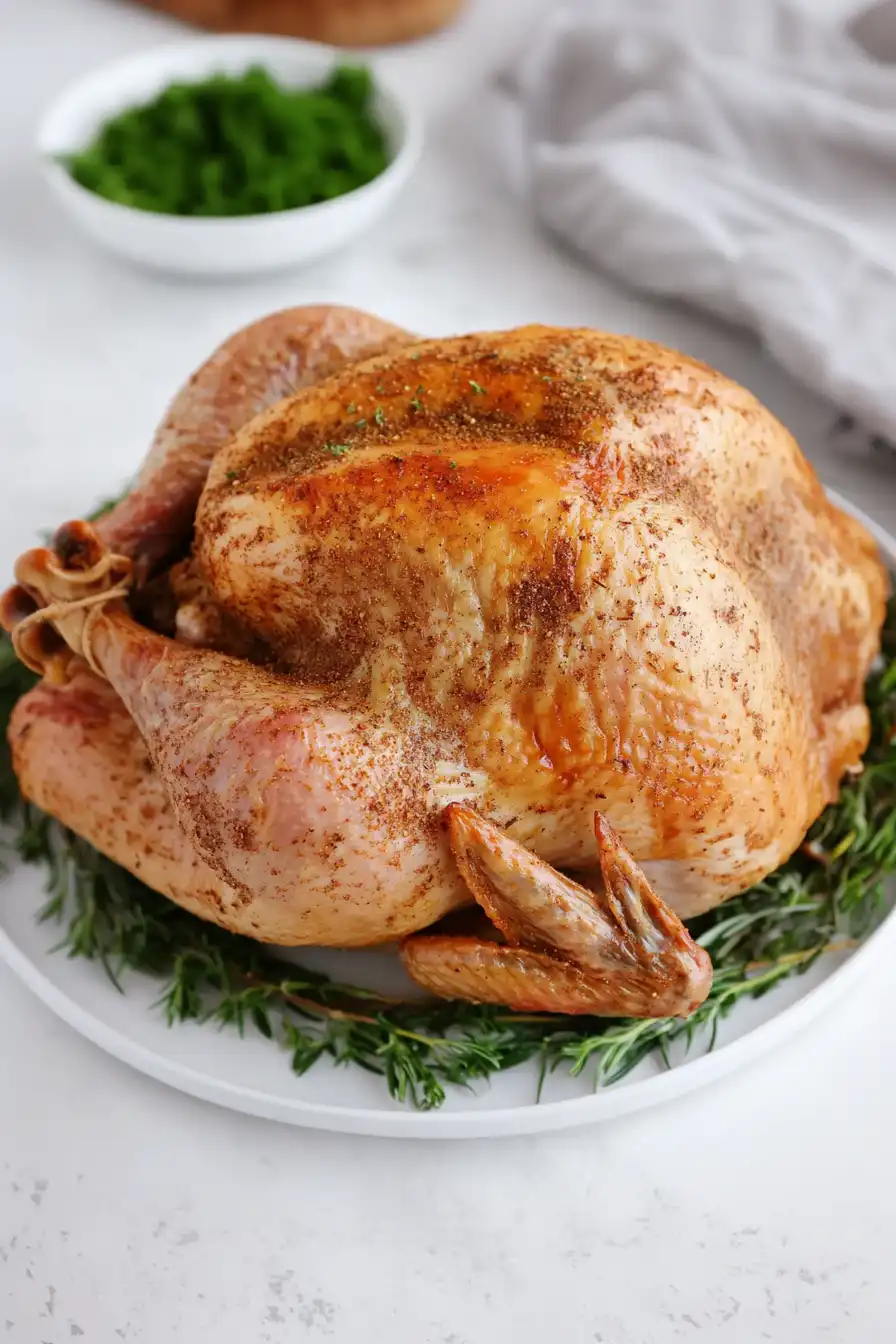
When it comes to serving roast turkey, there’s nothing better than going with the classic holiday sides that everyone loves. Creamy mashed potatoes and turkey gravy are must-haves, while green bean casserole or roasted Brussels sprouts add a nice veggie element to the plate. I always include some type of stuffing or dressing – whether it’s cooked inside the bird or separately – plus a scoop of cranberry sauce for that perfect sweet-tart balance. For a complete spread, add some dinner rolls or crusty bread to soak up all those tasty turkey juices, and don’t forget a simple garden salad to round out the meal.
Storage Instructions
Keep Fresh: Got leftover turkey? Place it in an airtight container and pop it in the fridge within two hours of cooking. It’ll stay good for 3-4 days, perfect for sandwiches and salads throughout the week. Make sure to carve the turkey and store the meat separate from the bones for best results.
Freeze: Turkey freezes really well! Wrap the meat tightly in plastic wrap or aluminum foil, then place it in freezer bags with the air squeezed out. It’ll keep nicely for up to 3 months. I like to portion it out before freezing – it makes it super easy to grab just what I need later.
Warm Up: To keep your turkey moist when reheating, place it in a baking dish with a splash of broth or water, cover with foil, and warm in a 325°F oven until heated through. For quick meals, you can also microwave individual portions with a damp paper towel over the top to keep the meat from drying out.
| Preparation Time | 30-45 minutes |
| Cooking Time | 150-180 minutes |
| Total Time | 180-225 minutes |
| Level of Difficulty | Medium |
Estimated Nutrition
Estimated nutrition for the whole recipe (without optional ingredients):
- Calories: 2400-2800
- Protein: 250-300 g
- Fat: 100-120 g
- Carbohydrates: 30-40 g
Ingredients
For the turkey:
- 3 tbsp olive oil (I use Bertolli, for even browning)
- 1 onion (cut into quarters)
- 1 (10-12 lb) whole turkey
- a few sprigs fresh thyme
For the dry rub:
- 1 tsp rosemary
- 1 tsp dried thyme
- 1/2 tsp black pepper (freshly ground for best flavor)
- 1 tbsp ground sage
- 1.5 tbsp kosher salt (Morton Coarse Kosher Salt is my favorite)
Step 1: Prepare the Turkey
Begin by removing the neck and giblets from the turkey.
Check for any excess fat and leftover pinfeathers, and remove them.
Wash the turkey thoroughly inside and out, then pat it dry using paper towels to remove excess moisture.
Step 2: Preheat Oven and Prepare Dry Rub
Preheat your oven to 375°F (190°C).
While the oven is heating, combine all the dry rub ingredients in a small bowl, mixing well to ensure an even distribution of flavors.
Step 3: Season and Stuff the Turkey
Place the turkey breast side up on a roasting rack inside a deep pan.
Rub olive oil all over the turkey to help the skin crisp up during roasting.
Stuff an onion into the neck cavity and fold the neck skin flap over the onion to hold it in place.
Insert sprigs of thyme into the body cavity, then sprinkle some of the dry rub inside as well.
Pat the remaining dry rub all over the outer body of the turkey for full coverage.
Step 4: Prepare for Roasting
Tuck the turkey’s wings under its body to prevent them from overcooking.
If the turkey does not come with plastic ties, tie the legs together with kitchen twine to help the roast cook evenly.
Transfer the turkey to the preheated oven and roast for 30 minutes at 375°F (190°C).
Step 5: Adjust Heat and Continue Roasting
After the initial 30 minutes, reduce the oven temperature to 325°F (165°C).
Continue to roast the turkey for another 2 to 2½ hours, or until a food thermometer inserted into the innermost part of the thigh and wing and the thickest part of the breast reaches a safe temperature of 165°F (74°C).
This ensures the turkey is cooked thoroughly and safely.
Step 6: Rest and Carve the Turkey
Once the turkey reaches the desired temperature, remove it from the oven.
Allow it to rest for about 20 minutes before carving.
This resting period helps the juices redistribute, resulting in a moist and flavorful turkey.
Carve and serve your perfectly roasted turkey.

