Easter dinner has always held a special place in my heart. There’s something about gathering around the table with family that makes the holiday feel complete. And while there are many traditional Easter dishes, a roasted lamb with potatoes has become our family’s go-to centerpiece. I’ve learned over the years that this classic combination doesn’t need to be complicated to be delicious.
The beauty of this recipe is how the meat and potatoes cook together, creating a meal that’s both simple and satisfying. I usually prep everything the night before, so when Sunday comes around, I can focus on spending time with my family instead of being stuck in the kitchen. The potatoes soak up all those good flavors from the lamb, and the whole house fills with the most wonderful aroma.
Want to know the best part? This recipe is pretty forgiving, even if you’re new to cooking lamb. I remember being nervous the first time I made it, but now it’s become second nature. Trust me, if you’re looking for an Easter main dish that’ll make everyone happy, this one’s a keeper.

Why You’ll Love This Roast Lamb
- Perfect for special occasions – This roast lamb is ideal for Easter celebrations or any gathering where you want to impress your guests with a classic, elegant main dish.
- Mediterranean flavors – The combination of fresh herbs, garlic, lemon, and olive oil creates that authentic Mediterranean taste that pairs perfectly with the tender lamb.
- One-pan meal – The potatoes cook right alongside the lamb, soaking up all those delicious juices and reducing cleanup time.
- Simple ingredients – Despite its impressive appearance, this recipe uses basic, easy-to-find ingredients that create maximum flavor.
- Foolproof method – The straightforward roasting technique makes it hard to go wrong, even if you’re cooking lamb for the first time.
What Kind of Lamb Should I Use?
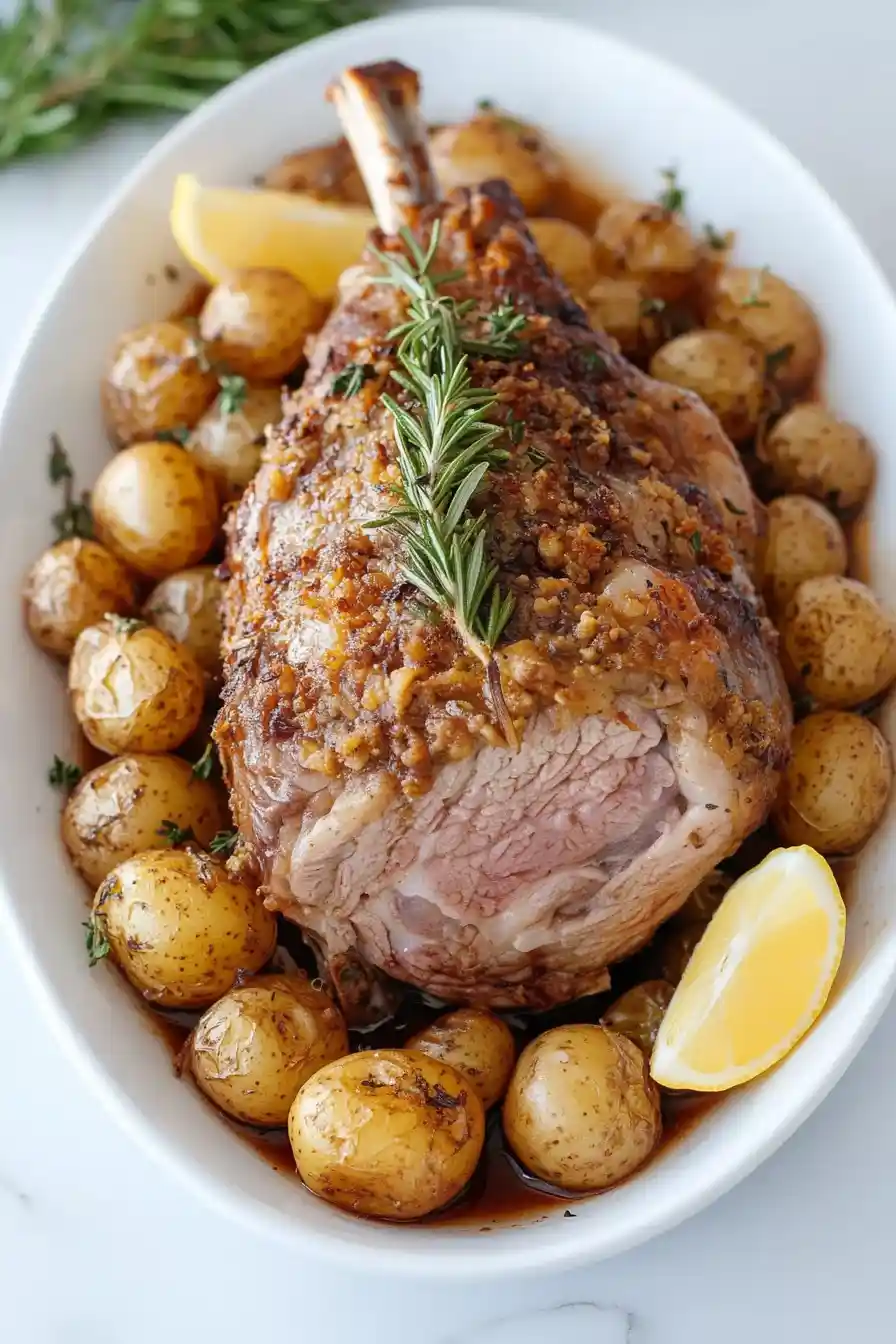
For a classic Easter roast, you’ll want to look for a bone-in leg of lamb, which tends to be more flavorful than boneless cuts. The bone helps conduct heat and adds extra flavor during cooking, while also making it easier to tell when the meat is done. If you’re shopping at the butcher counter, ask for a leg that’s around 4-6 pounds – this size is perfect for even cooking and will feed about 6-8 people. Fresh lamb should have a bright pink color and feel firm to the touch, and while grass-fed lamb can be a bit pricier, it often has a milder flavor that many people prefer over grain-fed. Just remember to let your lamb come to room temperature before cooking, which helps ensure even cooking throughout the roast.
Options for Substitutions
While some ingredients are key to this classic Easter dish, there’s room for flexibility with others:
- Leg of lamb: While leg of lamb gives the best results for this recipe, you could use lamb shoulder as an alternative. Just note that cooking times might need to be adjusted slightly as shoulder can be a bit fattier.
- Fresh herbs: If you can’t find fresh rosemary or thyme, use dried herbs instead – but reduce the amount to 1 teaspoon each since dried herbs are more concentrated. Fresh oregano can replace the dried version (use 3 tablespoons fresh).
- Dijon mustard: Regular yellow mustard works in a pinch, or try whole grain mustard for a different texture. If you’re not a fan of mustard, you can skip it entirely.
- Small potatoes: Any potato variety works here – red potatoes, Yukon golds, or even regular russets cut into chunks. Just keep the pieces similar in size for even cooking.
- Lemon: No fresh lemons? Use 2 tablespoons of bottled lemon juice per lemon. For the zest, orange zest makes a nice substitute, or you can skip it if needed.
- Broth: Chicken or vegetable broth can be used interchangeably. If you’re out of both, you can use water mixed with a bouillon cube, or even white wine mixed with water.
Watch Out for These Mistakes While Roasting
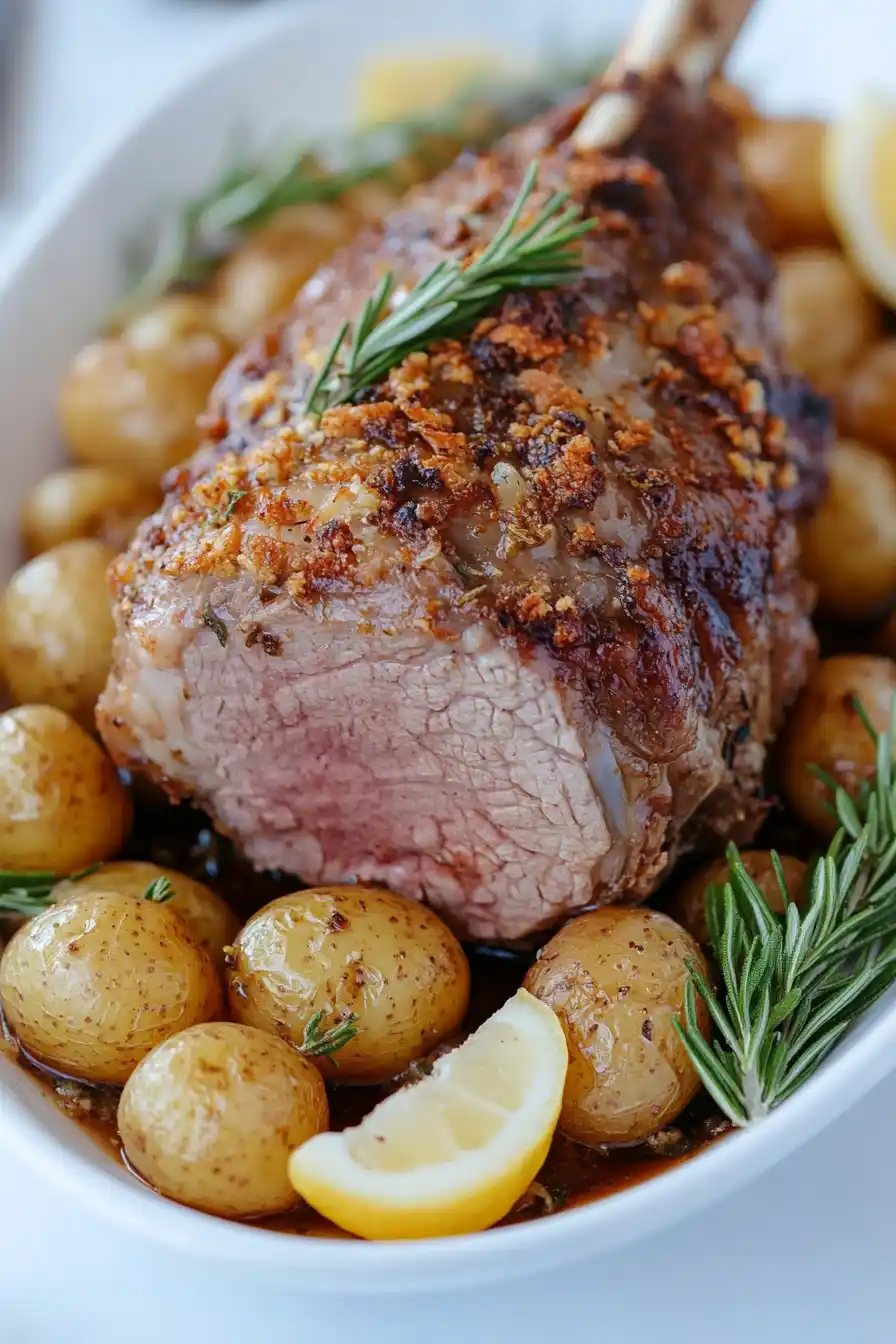
The biggest mistake when cooking lamb is not letting it come to room temperature before roasting – take it out of the fridge at least 1 hour before cooking to ensure even cooking from edge to center. Another common error is rushing the cooking process – a meat thermometer is your best friend here, as lamb should reach 135°F for medium-rare, and remember that the temperature will rise another 5-10 degrees while resting. Speaking of resting, don’t skip the 15-20 minute rest period after cooking, as cutting into the lamb too soon will release all those flavorful juices onto your cutting board instead of staying in the meat. For the crispiest potatoes, make sure to spread them in a single layer with enough space between each piece – overcrowding the pan will steam rather than roast them, leaving you with soft instead of crispy spuds.
What to Serve With Roast Lamb?
This tender roast lamb deserves some fresh, Mediterranean-inspired sides to round out your Easter feast or special dinner. A bright Greek salad with cucumber, tomatoes, red onions, and feta cheese adds a nice cool contrast to the warm, herb-crusted meat. Since you’ve already got potatoes covered, try adding some roasted vegetables like honey-glazed carrots or green beans with garlic to bring color to your plate. For a sauce option, mint jelly is traditional, but you could also whip up a quick yogurt-cucumber sauce (tzatziki) that pairs beautifully with both the lamb and potatoes.
Storage Instructions
Keep Fresh: Place your leftover roast lamb and potatoes in an airtight container and pop it in the fridge. It’ll stay good for up to 4 days. Pro tip: store the meat and potatoes separately if you can – this helps keep both components at their best!
Freeze: If you’ve got more lamb than you can eat within a few days, freezing is your friend! Wrap the meat tightly in foil or freezer paper, then place in a freezer bag – it’ll keep for up to 3 months. The potatoes can be frozen too, but they might get a bit mushy when thawed.
Reheat: To bring back that fresh-from-the-oven taste, warm the lamb in the oven at 325°F, covered with foil and with a splash of broth for moisture. Heat until it reaches 165°F inside (about 20-25 minutes). The potatoes can go right on a baking sheet – they’ll crisp up nicely in about 15 minutes.
| Preparation Time | 30-60 minutes |
| Cooking Time | 70-85 minutes |
| Total Time | 100-145 minutes |
| Level of Difficulty | Medium |
Estimated Nutrition
Estimated nutrition for the whole recipe (without optional ingredients):
- Calories: 3000-3500
- Protein: 180-220 g
- Fat: 200-240 g
- Carbohydrates: 180-210 g
Ingredients
For the herb rub:
- 3 tbsp extra virgin olive oil
- 1 tbsp fresh thyme
- 1 tbsp chopped rosemary
- 2 tsp black pepper
- 1 tbsp sea salt
- zest and juice from 1 lemon
- 4 minced garlic cloves (freshly minced for best flavor)
- 1 tbsp dijon mustard (I prefer Maille Dijon Originale)
For the lamb:
- 1 (4 to 6 lb) bone-in leg of lamb
For the potatoes:
- pepper as desired
- 4 unpeeled garlic cloves
- salt as desired
- 3 tbsp olive oil (or other neutral oil)
- 1 tbsp dried oregano
- juice from 1 lemon
- 3 lb small potatoes (such as baby Yukon Golds, halved if larger)
For the liquid:
- 1 cup chicken or vegetable broth (low sodium preferred)
Step 1: Prepare the Lamb
Begin by removing the lamb from the refrigerator.
Pat it dry with paper towels.
If you desire, make shallow slits in the leg of lamb using a sharp knife.
This can help the rub penetrate more deeply into the meat.
Step 2: Prepare the Herb Rub
In a small bowl, mix together minced garlic, olive oil, chopped rosemary, thyme, Dijon mustard, sea salt, black pepper, lemon zest, and lemon juice to create a flavorful rub.
Spoon the rub over the lamb, ensuring it is evenly distributed and thoroughly rubbed into the meat.
Allow the lamb to sit at room temperature for 30-60 minutes to marinate and absorb the flavors.
Step 3: Preheat Oven and Prepare Potatoes
Preheat your oven to 450°F (232°C) to get ready for roasting.
In a large roasting pan, toss baby potatoes with olive oil, lemon juice, dried oregano, salt, and whole unpeeled garlic cloves.
Ensure the potatoes are well-coated with the seasoning for maximum flavor.
Step 4: Combine and Begin Roasting
Place the marinated lamb on top of the seasoned potatoes in the roasting pan.
Pour chicken or vegetable broth over the potatoes to enhance their flavor and prevent them from drying out during roasting.
Place the roasting pan in the preheated oven.
Step 5: Adjust Oven Temperature and Continue Roasting
Roast the lamb initially for 10-15 minutes until it begins to develop some color.
Then, reduce the oven temperature to 350°F (177°C) to ensure even cooking.
Continue roasting for another 1 to 1¼ hours, or until a meat thermometer inserted into the thickest part of the lamb registers 130 to 135°F (54 to 57°C) for medium-rare doneness.
Step 6: Check and Rest the Lamb
Once the lamb reaches your desired internal temperature, carefully remove it from the oven.
Let the lamb rest for a few minutes to allow the juices to redistribute.
This resting period results in a juicier and more tender roast.
After resting, slice the lamb and serve alongside the savory and aromatic roasted potatoes.