Planning a special dinner that feels fancy doesn’t have to mean hours of complicated cooking or professional chef skills. Let’s be honest – most of us get a bit nervous about preparing duck at home, worried we’ll end up with something too dry or not quite right. I know I certainly did the first few times!
That’s why this Italian roasted duck recipe has become one of my favorites to share. It’s straightforward enough for home cooks to master, brings incredible flavor to your table, and gives you that restaurant-quality result without the fuss. Plus, the leftovers (if you have any!) make amazing sandwiches the next day.

Why You’ll Love This Roasted Duck
- Restaurant-quality results – This recipe helps you create a duck that’s crispy on the outside and juicy on the inside – just like what you’d get at a fancy Italian restaurant.
- Simple ingredients – Most of what you need are basic herbs and pantry staples, making this impressive dish surprisingly accessible to make at home.
- Built-in side dish – The bread cubes soak up all the flavorful drippings from the duck, creating a delicious stuffing-like side dish right in the same pan.
- Make-ahead friendly – While it takes some time to cook, most of it is hands-off oven time, letting you prepare other dishes or relax while it roasts to perfection.
What Kind of Duck Should I Use?
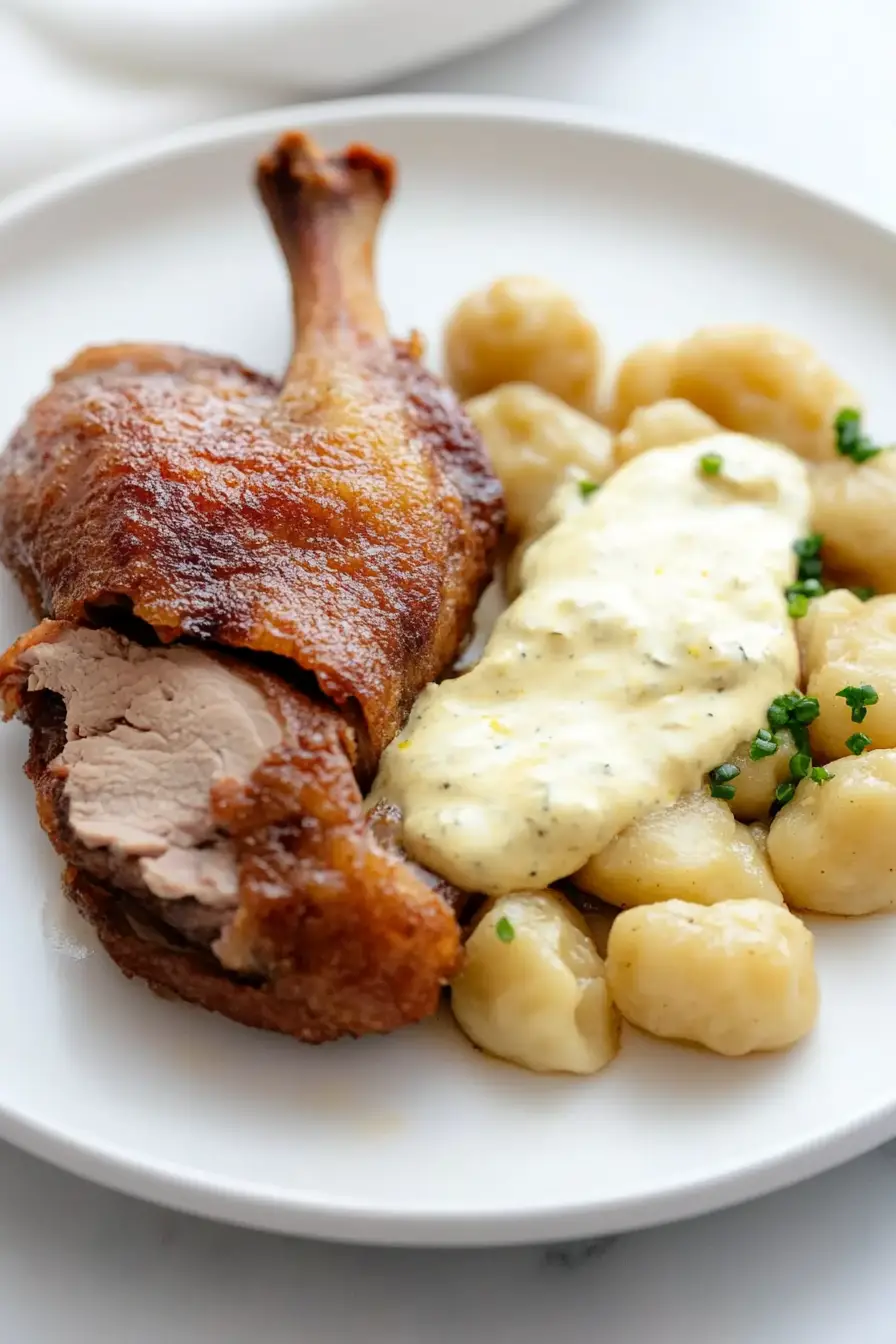
For roasting, Pekin (also called Long Island) duck is your best bet and the most commonly available variety in grocery stores. While Muscovy duck can work too, it tends to be a bit leaner and might not give you that same level of juiciness. A 5-6 pound duck is perfect for this recipe and will feed about 4 people comfortably. When shopping, look for a duck with pinkish, unblemished skin and no strong odors – fresh duck should smell clean, not gamey. If you can only find frozen duck, that’s totally fine – just make sure to thaw it completely in the fridge for 2-3 days before cooking.
Options for Substitutions
While some ingredients in this recipe are key, there’s room for a few swaps if needed:
- Duck: Duck is really the star here and gives this dish its special flavor, but if you absolutely can’t find it, you could use a large chicken (4-5 lbs). Just note that chicken has less fat and will need more frequent basting to stay moist.
- Fresh and dried herbs: Fresh herbs can replace dried ones (use 3 times the amount listed), or mix and match what you have. Fresh sage and rosemary work great instead of dried, and oregano can sub for thyme in a pinch.
- Wine: Both red or white wine work here. If you prefer not to use alcohol, replace it with extra chicken broth plus 1 tablespoon of apple cider vinegar for that touch of acidity.
- Ciabatta bread: Any rustic bread works well – sourdough, French bread, or even day-old country bread. Just avoid very soft sandwich bread as it can get too mushy.
- Soy sauce: Since it’s optional, you can skip it or use Worcestershire sauce instead. Both add a nice savory note to the dish.
Watch Out for These Mistakes While Roasting
The biggest challenge when roasting duck is dealing with all the fat – not scoring the skin in a diamond pattern before cooking means you’ll miss out on that perfectly crispy exterior, while the fat won’t render properly. Another common mistake is roasting the duck at a constant temperature; instead, start high at 425°F for 15 minutes to crisp the skin, then lower to 350°F for the remaining cooking time. Overcrowding the roasting pan with too many vegetables or bread cubes can steam rather than roast the duck, so make sure there’s enough space for air circulation. For the juiciest results, let the duck rest for at least 20 minutes after cooking, and don’t forget to occasionally drain the rendered fat during cooking (save it for later – it’s liquid gold for roasting potatoes!).
What to Serve With Roasted Duck?
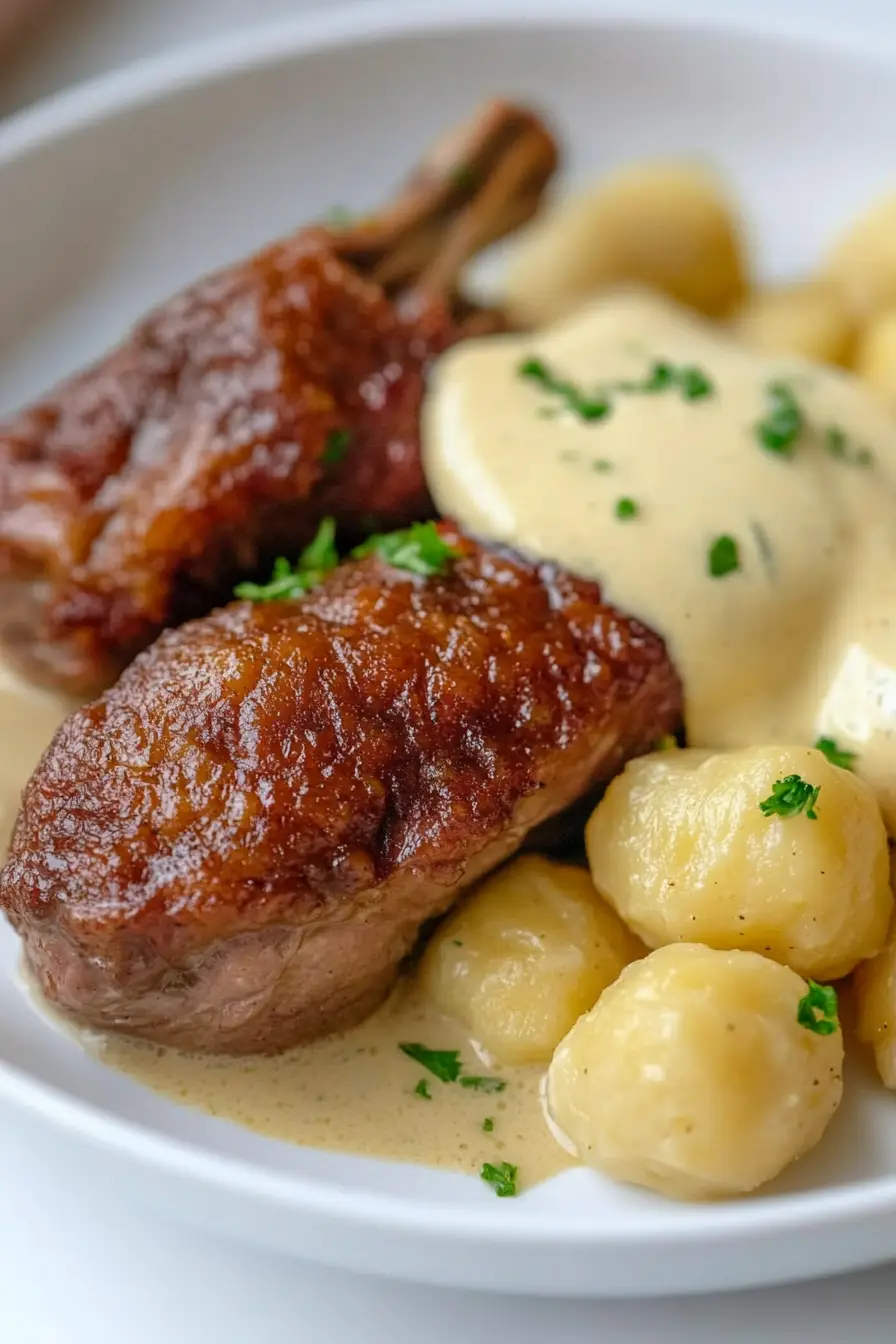
This rich and flavorful roasted duck calls for sides that can balance its natural richness while complementing those Italian herbs. A simple wild rice pilaf makes an excellent base, soaking up all those wonderful pan juices. For vegetables, roasted root vegetables like carrots, parsnips, and potatoes work really well – just toss them with olive oil and herbs and roast them right alongside the duck. I also love serving this with sautéed green beans or steamed broccoli tossed with garlic and a squeeze of lemon to cut through the richness of the meat. If you want to go full Italian-style, a side of polenta with fresh herbs would be perfect too!
Storage Instructions
Keep Fresh: Place any leftover roasted duck in an airtight container and pop it in the fridge. It’ll stay good for up to 3 days. Pro tip: store the meat and stuffing separately to keep both at their best quality. The duck skin might lose some crispiness, but the meat will still be super tasty!
Freeze: If you want to save your duck for later, you can freeze it for up to 2 months. Remove the meat from the bones, wrap it well in foil or freezer paper, then place in a freezer bag. The stuffing can be frozen separately in its own container. Just remember to squeeze out as much air as possible to prevent freezer burn.
Warm Up: To bring back that fresh-from-the-oven taste, let the duck thaw in the fridge overnight if frozen. Then wrap it in foil and warm in a 300°F oven for about 15-20 minutes, or until heated through. For extra-crispy skin, unwrap the foil for the last few minutes. The stuffing can be warmed separately in the microwave or oven with a splash of broth to keep it moist.
| Preparation Time | 20-30 minutes |
| Cooking Time | 90-120 minutes |
| Total Time | 110-150 minutes |
| Level of Difficulty | Medium |
Estimated Nutrition
Estimated nutrition for the whole recipe (without optional ingredients):
- Calories: 2500-2800
- Protein: 185-200 g
- Fat: 170-200 g
- Carbohydrates: 70-80 g
Ingredients
For the duck:
- 4 sprigs fresh thyme
- 1 tbsp salt (Diamond Crystal Kosher Salt recommended)
- 1 whole duck (4-5 lbs, preferably Pekin or Muscovy duck)
- 1/2 tsp dried sage
- 1 onion
- 1/2 tsp dried rosemary
- 1 head garlic
- 1 tbsp soy sauce (optional, for extra umami)
- 1/4 cup red wine (a dry red like Chianti works well)
- 1 tsp dried parsley
For the stuffing:
- 1/2 loaf ciabatta bread (cubed into 1-inch pieces)
- 1/2 cup chicken broth (Swanson’s is my go-to)
Step 1: Prepare and Clean the Duck
Begin by removing any contents from the cavity of the duck.
Wash the duck inside and out using water and lemon juice to enhance freshness.
After washing, pat the duck dry with paper towels.
Place the cleaned duck in an iron skillet or baking tray for seasoning.
Step 2: Season the Duck
Generously salt the inside of the duck’s cavity as well as the top and bottom of the bird.
If you choose to use soy sauce, add about 1 tablespoon inside the cavity.
This will enhance the flavor of the meat as it cooks.
Step 3: Add Herbs and Stuff the Cavity
Sprinkle the dried herbs (such as sage, rosemary, thyme, and parsley) into the cavity of the duck to infuse it with aromatic flavors.
You can also place fresh thyme on the outside of the cavity if you prefer.
Stuff the cavity with chunks of Ciabatta bread.
This will help to absorb the juices and add flavor.
Step 4: Final Preparations for Roasting
Sprinkle additional parsley over the top of the duck to add color and flavor.
Pour the wine into the bottom of the baking tray or skillet to create a moist cooking environment for the duck as it roasts, ensuring it remains tender.
Step 5: Roast the Duck
Place the prepared duck in a preheated oven and roast for at least 1.5 hours.
Cook until it is done and the juices run clear when tested with a skewer.
This indicates that the duck is fully cooked through.
Periodically check the duck to ensure even roasting and desired doneness.