I never knew shortbread cookies could be more than plain butter and sugar until my grandma showed me her raspberry version. Growing up, shortbread meant those simple, round cookies that came in blue tins during the holidays. When anyone else tried adding fruit, they usually ended up with a soggy mess.
That’s because most people make the mistake of using fresh raspberries, which have too much moisture. The secret, as I learned from grandma, is using freeze-dried raspberries crushed into powder. They give you that perfect raspberry flavor without turning your cookies into a soft, mushy disaster. For anyone who’s hesitant about fruit in shortbread, these cookies might just change your mind.
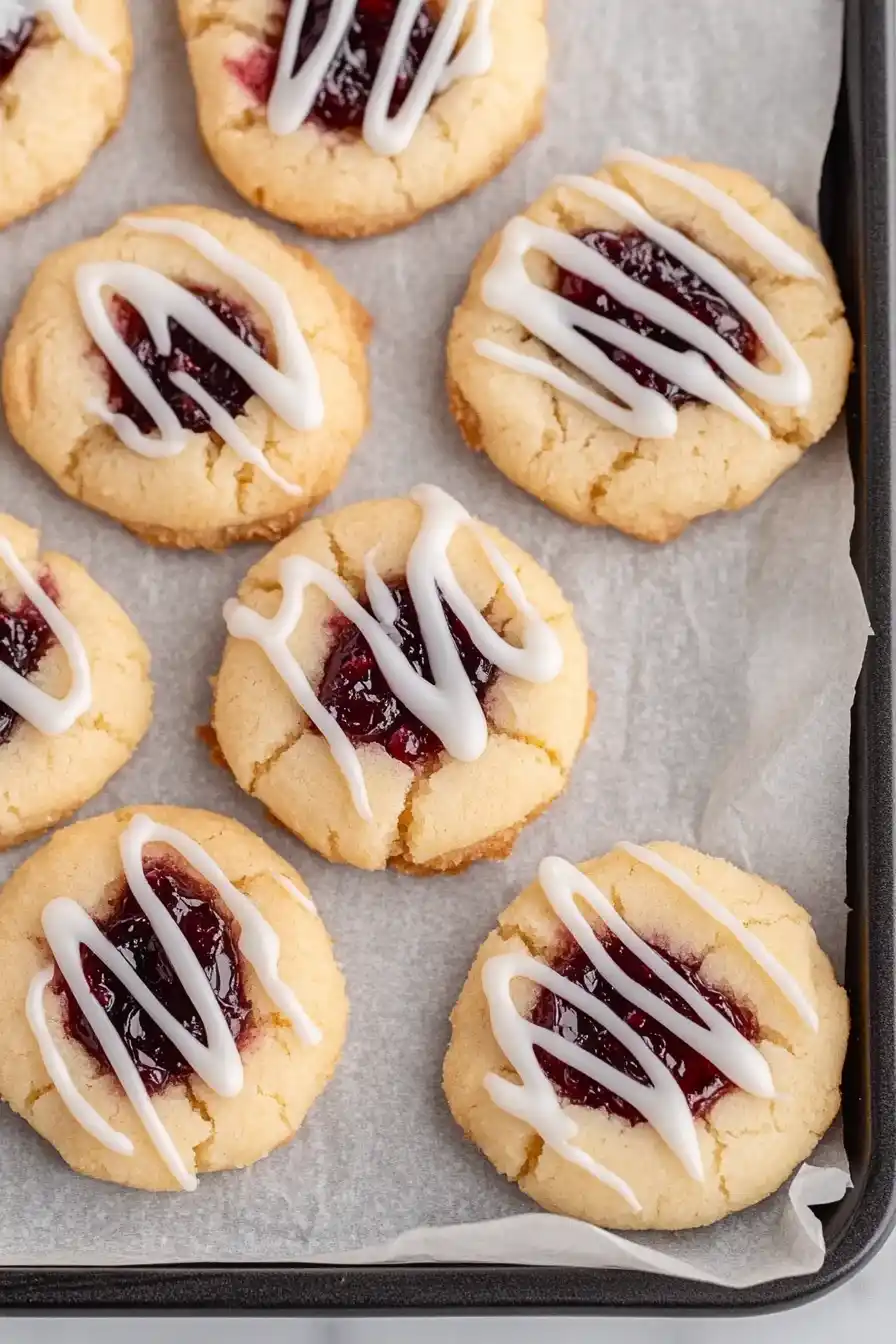
Why You’ll Love These Shortbread Cookies
- Simple ingredients – You only need a few basic pantry staples to make these cookies, with most ingredients being common baking essentials you likely already have.
- Classic buttery taste – The combination of real butter and almond flavoring creates that melt-in-your-mouth texture that makes shortbread so irresistible.
- Make-ahead friendly – These cookies store well and can be made in advance for parties, holiday gatherings, or weekend treats.
- Perfect balance of flavors – The sweet-tart raspberry preserves complement the rich, buttery shortbread base, while the almond glaze adds an extra special touch.
What Kind of Raspberry Preserves Should I Use?
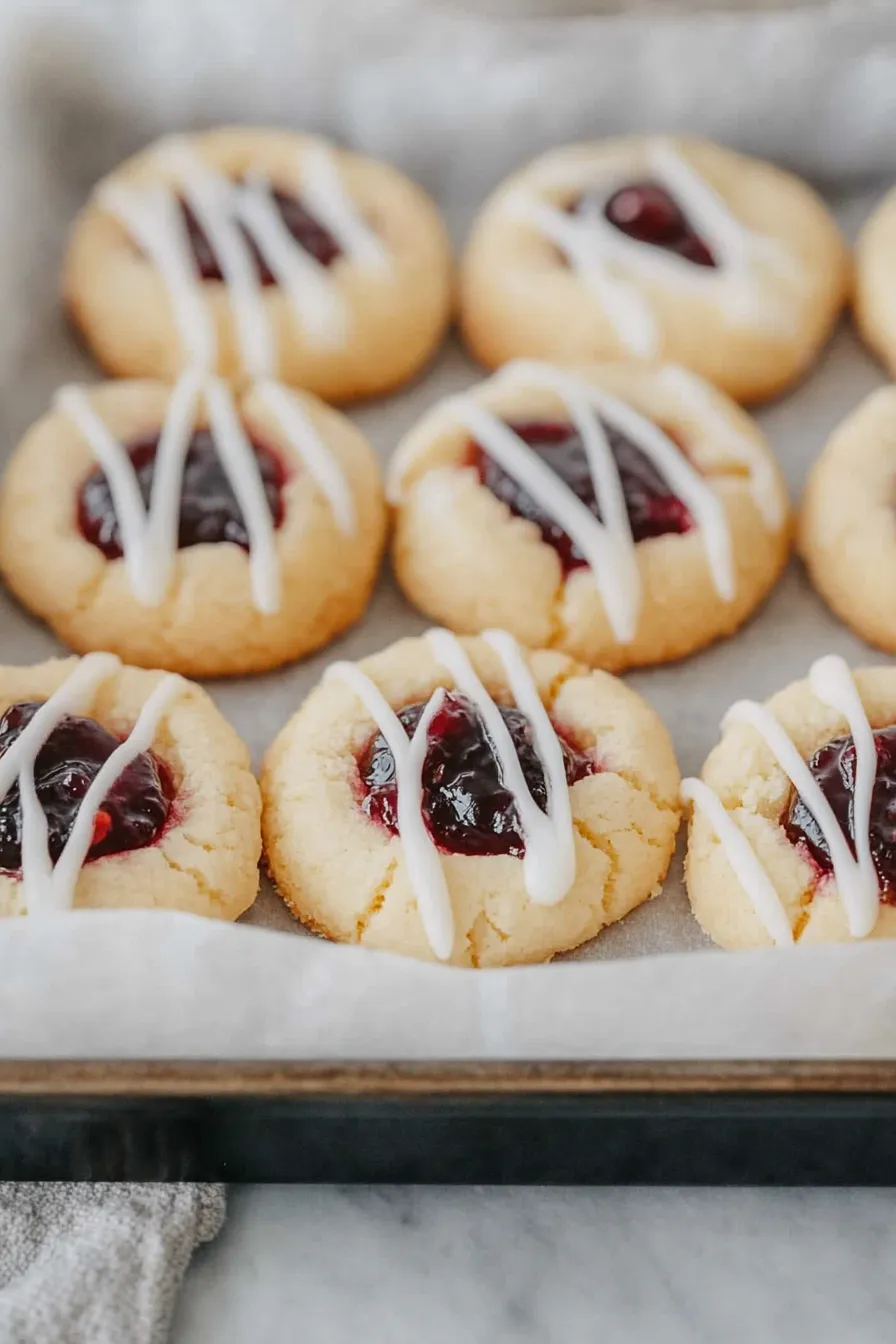
For these shortbread cookies, the quality of your raspberry preserves will make a noticeable difference in the final taste. Look for preserves (not jelly) that contain actual fruit pieces and seeds – these tend to have a more authentic raspberry flavor than smooth, seedless varieties. If you’re shopping at the grocery store, brands like Bonne Maman or St. Dalfour are good options, but any good-quality preserve will work well. Just check the ingredient list and make sure real raspberries are listed first, rather than sugar or corn syrup. For the best results, avoid using sugar-free preserves in this recipe, as they can become runny when baked and might not set properly.
Options for Substitutions
Need to make some swaps? Here are some helpful substitutions for these cookies:
- Butter: For the best texture, stick with real butter – margarine won’t give you the same crisp, melt-in-your-mouth shortbread. If needed, use dairy-free butter alternatives made specifically for baking.
- Almond flavoring: You can swap this with vanilla extract for a classic taste, or try other extracts like lemon or orange for a different twist. Use the same amount as called for in the recipe.
- Raspberry preserves: Any fruit preserves will work here – try strawberry, blackberry, or apricot. Just make sure to use preserves rather than jam or jelly for the best texture and fruit pieces.
- Plain flour: All-purpose flour is a must for the right texture. Gluten-free all-purpose flour blends can work, but the texture might be slightly different.
- Heavy cream: For the glaze, you can use any milk you have on hand – whole milk, 2%, or even non-dairy milk like almond or oat milk. Just adjust the amount to get the right consistency.
Watch Out for These Mistakes While Baking
The biggest challenge when making shortbread cookies is overworking the dough – mixing too much can activate the gluten in the flour, resulting in tough, dense cookies instead of the desired melt-in-your-mouth texture.
Temperature control is crucial – using butter that’s too soft or too cold can affect the texture, so aim for butter that’s just soft enough to leave a slight indent when pressed (about 65°F).
When adding the raspberry preserves, avoid the common mistake of overfilling the thumbprint indentations, as the preserves will bubble and spread during baking – stick to about 1/2 teaspoon per cookie and make sure the indentation is deep enough to hold the filling.
For the perfect glaze consistency, add milk gradually to the icing sugar – you can always add more liquid, but fixing a too-thin glaze means starting over.
What to Serve With Raspberry Shortbread Cookies?
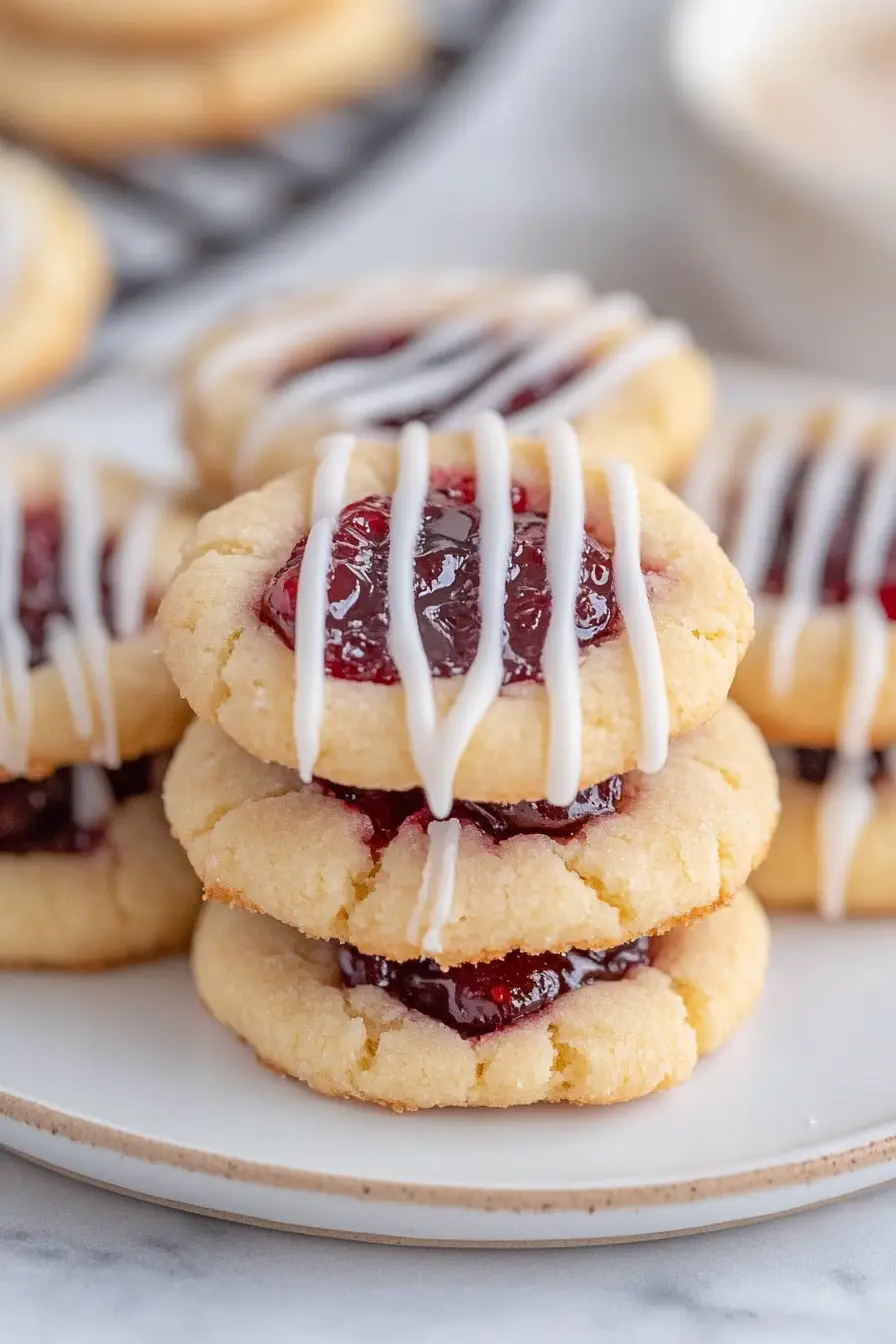
These sweet and buttery cookies are perfect for afternoon tea or coffee time! A hot cup of Earl Grey tea makes an especially nice pairing since its subtle bergamot notes complement the raspberry and almond flavors in the cookies. If you’re setting up a dessert spread, try serving these cookies alongside some fresh berries and a bowl of vanilla ice cream – the combination of warm cookies and cold ice cream is always a winner. For a cozy winter treat, pair them with a mug of hot chocolate topped with whipped cream, which plays nicely with the almond notes in the cookies.
Storage Instructions
Keep Fresh: These raspberry shortbread cookies stay fresh when kept in an airtight container at room temperature for up to 5 days. I like to place a piece of parchment paper between layers to prevent the glaze from sticking. The cookies might soften a bit over time, especially if your kitchen is humid.
Freeze: Want to make these ahead? You can freeze the unglazed cookies in a freezer-safe container for up to 3 months. Just place parchment paper between layers to prevent sticking. When you’re ready to enjoy them, thaw at room temperature and add the glaze fresh – it’ll taste like you just baked them!
Make Ahead: The cookie dough can be made up to 2 days ahead and stored in the fridge. Just wrap it tightly in plastic wrap and let it come to room temperature for about 30 minutes before rolling and cutting. This is super handy when you’re planning for parties or holiday baking!
| Preparation Time | 60-75 minutes |
| Cooking Time | 14-20 minutes |
| Total Time | 74-95 minutes |
| Level of Difficulty | Medium |
Estimated Nutrition
Estimated nutrition for the whole recipe (without optional ingredients):
- Calories: 2800-3000
- Protein: 30-40 g
- Fat: 180-200 g
- Carbohydrates: 350-370 g
Ingredients
For the cookies:
- 1/2 tsp almond extract
- 2 cups all-purpose flour
- 2/3 cup white sugar
- 1 cup unsalted butter (softened to room temperature)
For the filling:
- 1/2 cup raspberry preserves (I use Bonne Maman)
For the glaze:
- 1 1/2 tsp almond extract
- 2-3 tsp milk
- 1 cup powdered sugar (sifted for a smooth glaze)
Step 1: Prepare the Cookie Dough
In a mixing bowl, combine butter, sugar, and 1/2 teaspoon almond extract.
Mix at medium speed, scraping the bowl often, until the mixture becomes creamy.
Once creamy, reduce the speed of the mixer and add in the flour.
Continue beating until the dough just starts to come together.
It may look dry and crumbly at first, but as soon as all the flour is absorbed and the dough begins to form, stop the mixer.
Use your hands to bring the dough into a cohesive ball.
The warmth from your hands will help bind it together.
Be careful not to overmix.
Step 2: Chill the Dough
Form the dough into a ball, then cover it with plastic wrap and place it in the refrigerator to chill until firm, for at least one hour.
This resting period helps the dough firm up and makes it easier to handle later.
Step 3: Preheat the Oven and Shape the Cookies
Preheat your oven to 350°F (175°C).
Once the dough has chilled, shape it into one-inch balls using your hands.
Arrange the balls on an ungreased cookie sheet, leaving about two inches of space between each ball.
Step 4: Add Jam and Bake
Use your thumb to make an indentation in the center of each cookie dough ball.
Fill each indentation with 1/4 teaspoon of jam, being careful not to overfill.
Bake the cookies in the preheated oven for 14 minutes, or until the edges are lightly browned.
Let the cookies stand on the sheet for 1 minute before removing them to cool completely on a wire rack.
Step 5: Prepare and Apply the Glaze
While the cookies are cooling, combine powdered sugar, 1 1/2 teaspoons almond extract, and enough milk to reach your desired glazing consistency in a small bowl.
Stir until smooth.
Once the cookies are completely cool, drizzle the glaze over them.
Allow the glaze to set before serving.