Growing up, I only knew bruschetta as something you ordered at Italian restaurants – those perfectly toasted pieces of bread topped with fresh tomatoes and herbs. My mom never made it at home because she said it was “too fussy” and the bread would get soggy before we could eat it all.
That’s why I got so excited when I discovered this bruschetta in a jar recipe. It takes all those classic bruschetta flavors and preserves them, so you can enjoy them whenever you want. No more rushing to eat it all before the bread gets mushy, and no more saving it just for special occasions at restaurants.
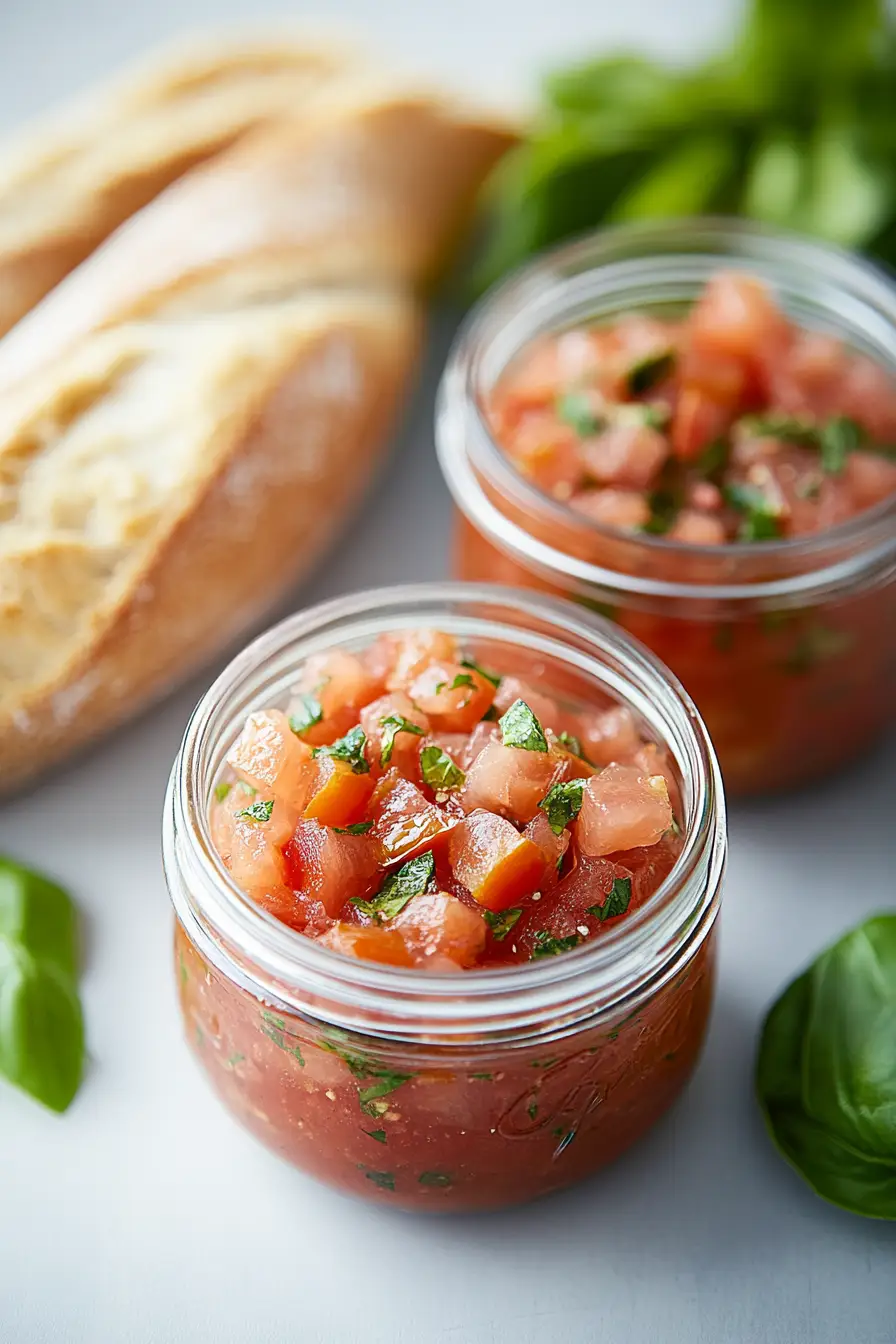
Why You’ll Love This Bruschetta
- Make-ahead convenience – This jarred bruschetta lets you enjoy fresh-tasting Italian appetizers anytime – perfect for unexpected guests or quick entertaining.
- Long shelf life – Once properly canned, this bruschetta stays good for months in your pantry, helping you preserve summer tomatoes for year-round enjoyment.
- Classic Italian flavors – The combination of garlic, wine, herbs, and tomatoes creates that authentic bruschetta taste you’d expect from your favorite Italian restaurant.
- Versatile usage – Beyond the traditional toasted bread topping, you can use this as a pasta sauce, pizza topping, or sandwich spread.
What Kind of Tomatoes Should I Use?
Plum tomatoes, also known as Roma tomatoes, are the perfect choice for making bruschetta in a jar because they have thick, meaty walls and fewer seeds than regular tomatoes. These qualities make them ideal for canning since they hold their shape well and don’t turn mushy during processing. While Roma tomatoes are the classic choice, you can also use San Marzano tomatoes, which are a premium variety of plum tomato with a slightly sweeter flavor and less acidity. Just make sure to pick tomatoes that are ripe but still firm, with no blemishes or soft spots – this will give you the best results for your preserved bruschetta.

Options for Substitutions
Here are some helpful substitutions you can make for this bruschetta recipe:
- Dry white wine: If you prefer not to use wine, you can replace it with white grape juice mixed with 1 tablespoon of white wine vinegar, or simply use chicken broth for a different but still tasty flavor.
- White wine vinegar: Apple cider vinegar or rice vinegar can work instead. The taste will be slightly different, but they’ll provide the same acidity needed for safe canning.
- Plum tomatoes: While plum tomatoes are best because they’re meatier and less watery, you can use regular garden tomatoes. Just make sure to remove more of the seeds and juice if using regular tomatoes.
- Dried herbs: If you have fresh basil and oregano, you can use those instead – triple the amount called for (6 tablespoons each). Just know that the dried herbs help create a more concentrated flavor for long-term storage.
- Balsamic vinegar: You can swap this with red wine vinegar plus 1/2 teaspoon of honey to mimic balsamic’s sweetness. Don’t skip the vinegar entirely though – it’s important for the recipe’s acidity.
Watch Out for These Mistakes While Cooking
The biggest challenge when making bruschetta in a jar is using overripe or watery tomatoes, which can make your preserve too liquid – always choose firm, ripe plum tomatoes and remove the seeds before chopping to maintain the right consistency. A common mistake is skipping the proper sterilization of jars, which is crucial for safe preservation – make sure to boil your jars and lids for at least 10 minutes before filling them. When cooking the tomato mixture, avoid rushing the process by cranking up the heat – a gentle simmer helps the flavors meld together while preventing the tomatoes from turning to mush. For the best flavor development, let the jars rest for at least 2 weeks before opening, and remember to check for proper sealing by pressing the center of each lid (it shouldn’t flex up and down).
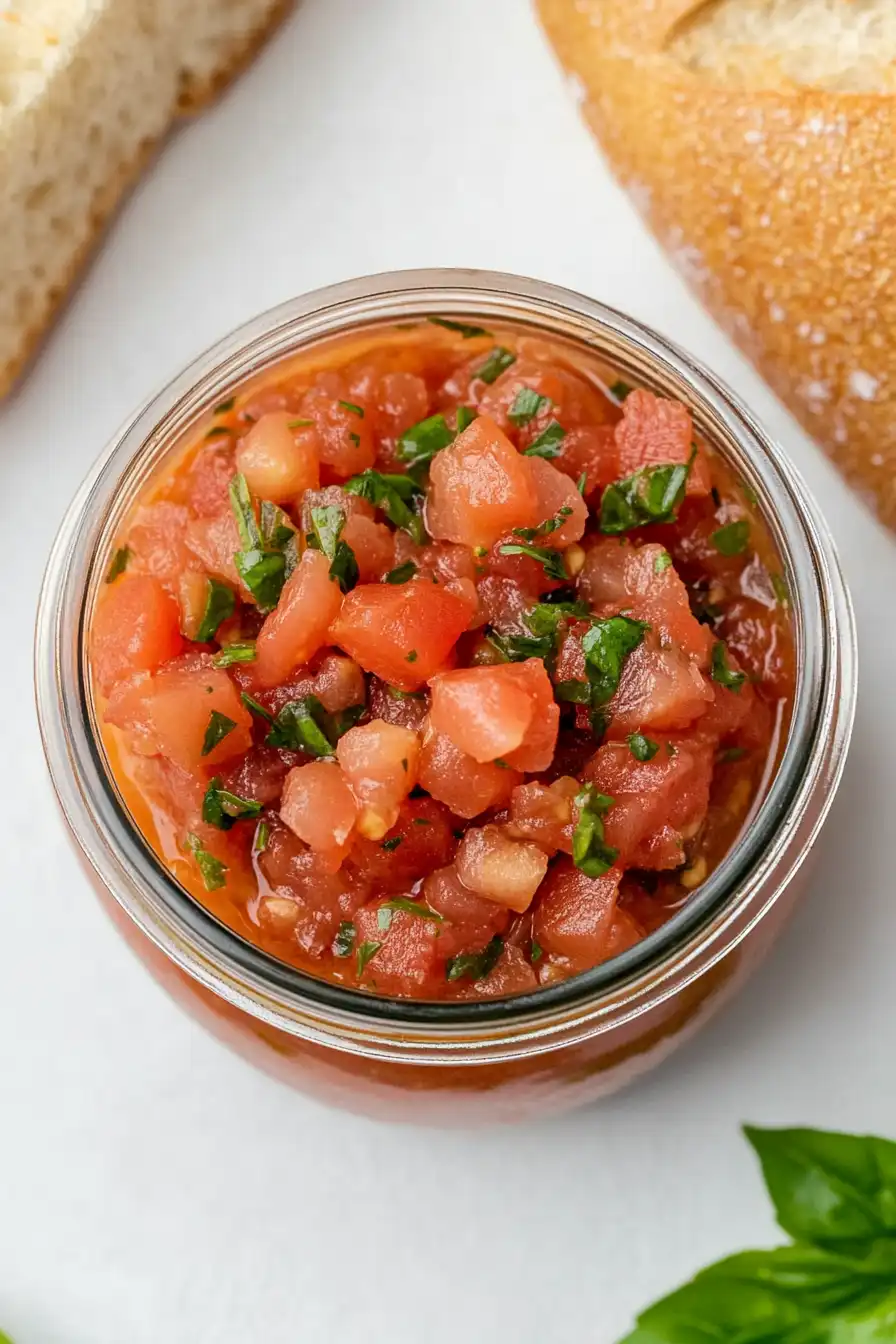
What to Serve With Bruschetta?
This homemade bruschetta is perfect spooned over toasted slices of crusty Italian or French bread that have been rubbed with a little olive oil and garlic. If you’re hosting a party, try setting up a bruschetta bar with different types of toasted bread, from baguette rounds to ciabatta slices. For a complete appetizer spread, serve it alongside some fresh mozzarella balls, olives, and maybe some cured meats like prosciutto or salami. This also makes a great topping for grilled chicken or fish if you want to turn it into a main course!
Storage Instructions
Preserve: After properly canning your bruschetta in sterilized jars, store them in a cool, dark place like your pantry or cellar. When sealed correctly, these jars will stay good for up to 12 months. Just remember to check that the seal is intact before using.
Keep Fresh: Once you’ve opened a jar, transfer any unused portion to an airtight container and pop it in the fridge. It’ll stay fresh for about 5-7 days. The flavors actually get better after a day or two as everything mingles together!
Before Serving: Take your bruschetta out of the fridge about 30 minutes before serving to let it come to room temperature. This helps bring out all those lovely herb and garlic flavors. Give it a quick stir before spooning it onto your toasted bread.
| Preparation Time | 15-30 minutes |
| Cooking Time | 25-35 minutes |
| Total Time | 40-65 minutes |
| Level of Difficulty | Medium |
Estimated Nutrition
Estimated nutrition for the whole recipe (without optional ingredients):
- Calories: 300-350
- Protein: 5-7 g
- Fat: 0-2 g
- Carbohydrates: 70-75 g
Ingredients
- 1/2 cup water
- 5 minced garlic cloves (freshly minced for best flavor)
- 2 tbsp balsamic vinegar
- 1 cup dry white wine (like Pinot Grigio or Sauvignon Blanc)
- 2 tbsp dried basil
- 2 tbsp dried oregano (I use McCormick brand)
- 2 tbsp sugar (granulated white sugar)
- 9 cups chopped plum tomatoes (about 4 lbs, finely chopped)
- 1 cup white wine vinegar
Step 1: Prepare the Canning Equipment
Begin by preparing your boiling water canner.
Heat your jars in simmering water until they are ready to be used, ensuring they do not boil.
Meanwhile, wash the lids in warm, soapy water and set the bands aside to be used later.
Step 2: Make the Vinegar Mixture
In a large saucepan, combine garlic, wine, wine vinegar, water, sugar, basil, oregano, and balsamic vinegar.
Bring this mixture to a full rolling boil over high heat, stirring occasionally.
Once boiling, reduce the heat, cover the saucepan, and let it simmer for 5 minutes or until the garlic is heated through.
Remove from heat and set aside.
Step 3: Pack the Tomatoes
Pack your tomatoes into the hot jars, leaving a 1/2-inch headspace at the top.
Carefully ladle the hot vinegar mixture over the packed tomatoes, ensuring to leave the same 1/2-inch headspace.
Using a non-metallic utensil, remove any air bubbles by gently stirring the jar’s contents.
Wipe the rims of the jars clean to ensure a good seal.
Center a hot lid on each jar, apply the band, and adjust it until it’s fingertip tight.
Step 4: Process the Jars
Place the filled jars into the boiling water canner.
Process them for 20 minutes, making any necessary adjustments for altitude.
After processing, carefully remove the jars and let them cool at room temperature.
Step 5: Check Seals and Store
After 24 hours, check the lids for a proper seal by pressing down in the center.
The lid should not flex up and down when pressed, indicating a secure seal.
Store the sealed jars in a cool, dark place.
Enjoy your preserved tomatoes!