Easter has always been one of those holidays that brings out my creative side in the kitchen. While chocolate eggs and jelly beans are fun, there’s something special about making treats that tell the Easter story. These tomb sugar cookies have become a tradition in our house – they’re not just cookies, they’re little edible reminders of what Easter morning means to so many families.
I started making these with my kids a few years ago, and now they ask for them as soon as they spot Easter decorations in stores. The best part? They’re actually pretty simple to make. I usually prep the dough while dinner’s in the oven, then we all gather around the kitchen table to decorate them together. It’s become one of those sweet holiday moments that everyone looks forward to.
And if you’re worried about your decorating skills – don’t be! These cookies are meant to be fun and meaningful, not perfect. Each one tells its own story, and that’s exactly what makes them special.

Why You’ll Love These Easter Tomb Cookies
- Meaningful baking activity – These special cookies are perfect for teaching children about Easter, combining a fun baking project with a spiritual lesson.
- Simple ingredients – You only need 5 basic ingredients that are easy to find in any grocery store – no fancy ingredients required.
- Kid-friendly recipe – Children can help with measuring and mixing, making this a great family activity that creates lasting memories.
- Naturally gluten-free – Since these meringue-based cookies don’t contain any flour, they’re perfect for those avoiding gluten in their diet.
What Kind of Pecans Should I Use?
Raw pecan halves are your best bet for this recipe, though you can also use pecan pieces if that’s what you have on hand. If you’re buying them from the store, take a quick look through the package to make sure there aren’t any dark or shriveled nuts, as these can taste bitter. Fresh pecans should have a light, sweet smell – if they smell rancid, it’s best to pick up a new package. You can toast the pecans lightly before using them to bring out their natural flavor, but make sure they’re completely cool before adding them to your cookie mixture.

Options for Substitutions
This special cookie recipe can be adapted with a few simple swaps if needed:
- Pecans: The recipe works great with other nuts like walnuts or almonds, or you can stick with chocolate chips as mentioned. For a nut-free version, try using crushed graham crackers or crushed vanilla wafers.
- Vinegar: Regular white vinegar works best, but you can substitute with apple cider vinegar or cream of tartar (use 1/2 teaspoon instead of 1 teaspoon vinegar).
- Egg whites: Fresh egg whites are essential for this recipe and cannot be substituted with liquid egg whites from a carton or any other ingredient, as they won’t whip up properly to create the needed meringue texture.
- Sugar: Regular granulated sugar works best here. While you might be tempted to use alternatives, stick to regular sugar as it’s crucial for the proper meringue structure. Superfine sugar can work, but avoid powdered sugar or sugar substitutes.
Watch Out for These Mistakes While Baking
The success of these Easter tomb cookies hinges on properly beaten egg whites – if you get any yolk in your whites or use a greasy bowl, they won’t whip up to the stiff peaks needed for these meringue-style cookies.
Temperature plays a crucial role too – make sure your egg whites are at room temperature before beating, and avoid making these cookies on humid days as moisture in the air can prevent them from drying properly.
A common mistake is opening the oven door while these cookies bake – resist the temptation to peek, as this disrupts the careful drying process and can cause your cookies to crack or collapse.
For the best texture, let the cookies cool completely in the turned-off oven (ideally overnight) – removing them too soon can result in a chewy rather than crisp texture.
What to Serve With Easter Tomb Cookies?
These special Easter cookies are perfect for serving alongside other holiday treats at your Easter celebration. Since they’re sweet meringue-style cookies, they pair really nicely with a cup of hot coffee, tea, or even a glass of cold milk. I like to create a little Easter dessert board by arranging these cookies with some fresh strawberries, chocolate eggs, and maybe some pastel-colored macarons. If you’re serving these at an Easter brunch, they make a great addition to a spread that includes fruit salad and other light, spring-inspired treats.
Storage Instructions
Keep Fresh: These Easter tomb sugar cookies stay nice and crisp when stored in an airtight container at room temperature. Place a piece of parchment paper between layers to prevent sticking. They’ll keep well for about 5-7 days, though they’re usually so good they disappear much faster!
Store: If you live in a humid climate, add a piece of bread to your storage container – it’ll help keep the cookies from getting too soft. Just remember to replace the bread every couple of days to keep things fresh.
Make Ahead: These cookies aren’t the best candidates for freezing since they’re meringue-based and can get sticky when thawed. It’s better to make them fresh when you need them. You can measure out your dry ingredients ahead of time though, which makes the baking process quicker when you’re ready to make them!
| Preparation Time | 20-30 minutes |
| Cooking Time | 0 minutes |
| Total Time | 20-30 hours |
| Level of Difficulty | Medium |
Estimated Nutrition
Estimated nutrition for the whole recipe (without optional ingredients):
- Calories: 900-1000
- Protein: 10-15 g
- Fat: 65-75 g
- Carbohydrates: 80-90 g
Ingredients
- 1 tsp vinegar (white vinegar is best for baking)
- 1 cup pecans or small chocolate chips
- 3 egg whites
- 1 pinch salt
- 1 cup sugar
Step 1: Prepare the Pecans
Start by placing pecans in a plastic bag.
Use the back of a wooden spoon to gently crush the pecans into smaller pieces.
This will make them easier to incorporate into the meringue mixture later.
Step 2: Preheat the Oven
Preheat your oven to 300 degrees F.
Although the oven won’t be on for the entire cooking process, it needs to be hot initially to help set the meringues.
Step 3: Prepare the Meringue Mixture
In a mixer, combine vinegar, egg whites, salt, and sugar.
Beat the mixture at a high speed until the egg whites are stiff, which should take about 5-10 minutes.
The mixture should form stiff peaks that hold their shape.
Step 4: Fold in Additional Ingredients
Once the egg whites are stiff, gently fold in the crushed pecans.
If you desire, you can also fold in chocolate chips for added texture and flavor.
Be careful not to deflate the mixture as you fold in these ingredients.
Step 5: Prepare the Baking Sheet
Cover a cookie sheet with parchment paper or a brown grocery bag to prevent sticking.
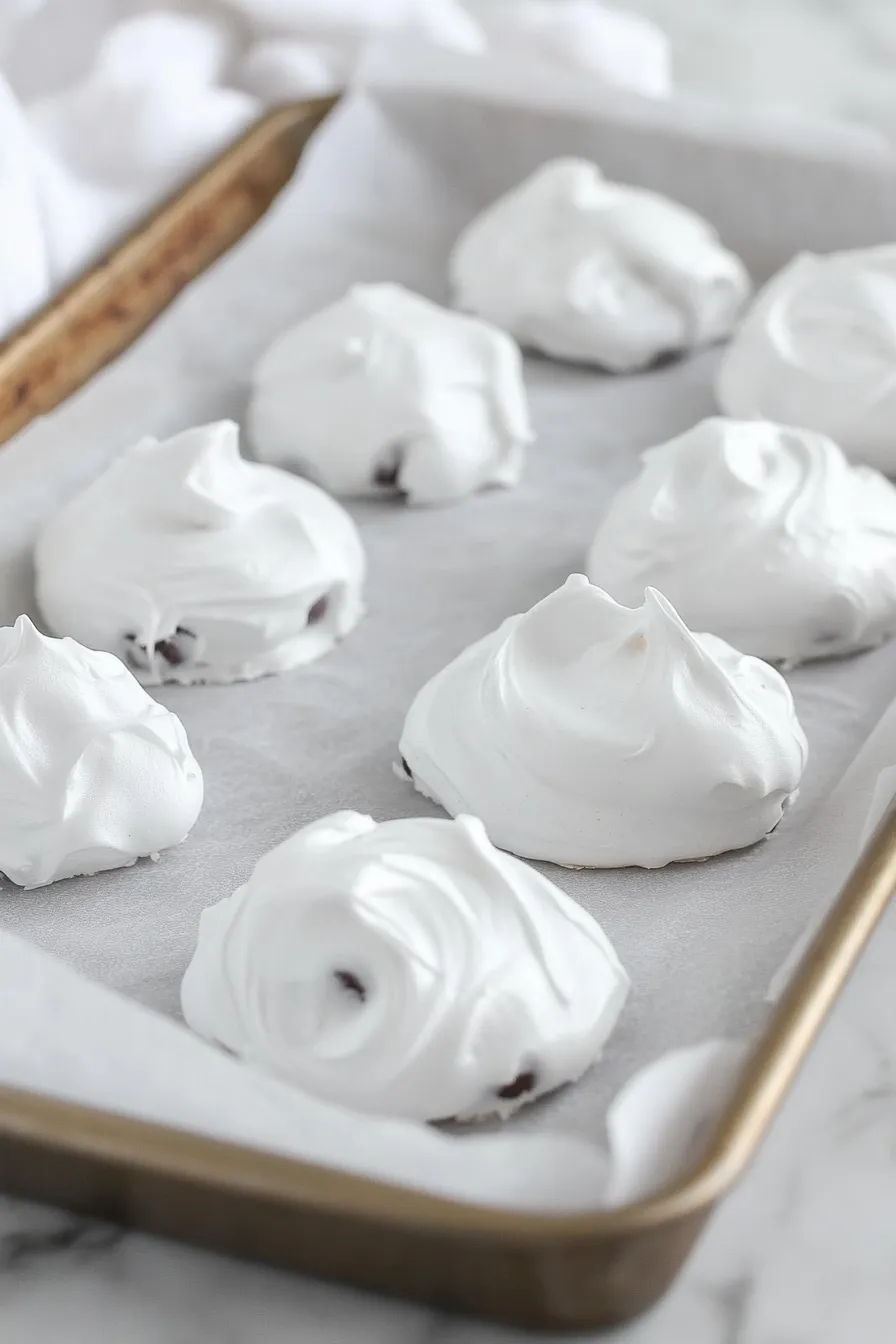
Using a spoon, place spoonfuls of the meringue mixture onto the prepared baking sheet, spacing them apart to allow for any expansion during baking.
Step 6: Bake and Let Set Overnight
Place the meringue-topped baking sheet into the preheated oven.
Immediately turn the oven off and keep the door shut.
Let the meringues sit in the turned-off oven overnight without opening the door.
This slow, gradual cooling process will help the meringues dry out and develop their characteristic crisp texture.