Finding a quick and satisfying dinner option for busy weeknights can feel like an impossible task. Between after-school activities, work deadlines, and the general chaos of everyday life, it’s tempting to just order takeout or heat up another frozen meal.
That’s why this fish with couscous recipe has become my weeknight lifesaver: it’s ready in under 30 minutes, uses simple ingredients you probably already have, and combines lean protein with whole grains for a meal that’s both good for you and actually fills you up.

Why You’ll Love This Fish and Couscous
- Quick weeknight dinner – This meal comes together in under an hour, making it perfect for busy evenings when you want something good but don’t have hours to spend in the kitchen.
- Healthy and nutritious – Packed with lean protein from the salmon, whole grains from the couscous, and plenty of vegetables, this dish hits all the marks for a well-balanced meal.
- Simple ingredients – You’ll find everything you need at your regular grocery store, and many items might already be in your pantry.
- Light and fresh flavors – The combination of fresh vegetables, herbs, and lemon creates a light, refreshing meal that’s perfect for any season.
Which Kind of Salmon Should I Use?
For this recipe, either Atlantic or Pacific salmon varieties will work great – common options you’ll find at the store include sockeye, coho, or king salmon. Fresh salmon is wonderful if you can get it, but don’t worry if frozen is what’s available – most “fresh” salmon at grocery stores was actually frozen at some point anyway. When choosing your fillets, look for pieces that are similar in thickness so they’ll cook evenly, and check that the flesh is firm and doesn’t have any strong fishy smell. If you’re buying skin-on salmon, that’s perfectly fine – the skin helps keep the fish moist during cooking and can be easily removed after if you prefer not to eat it.
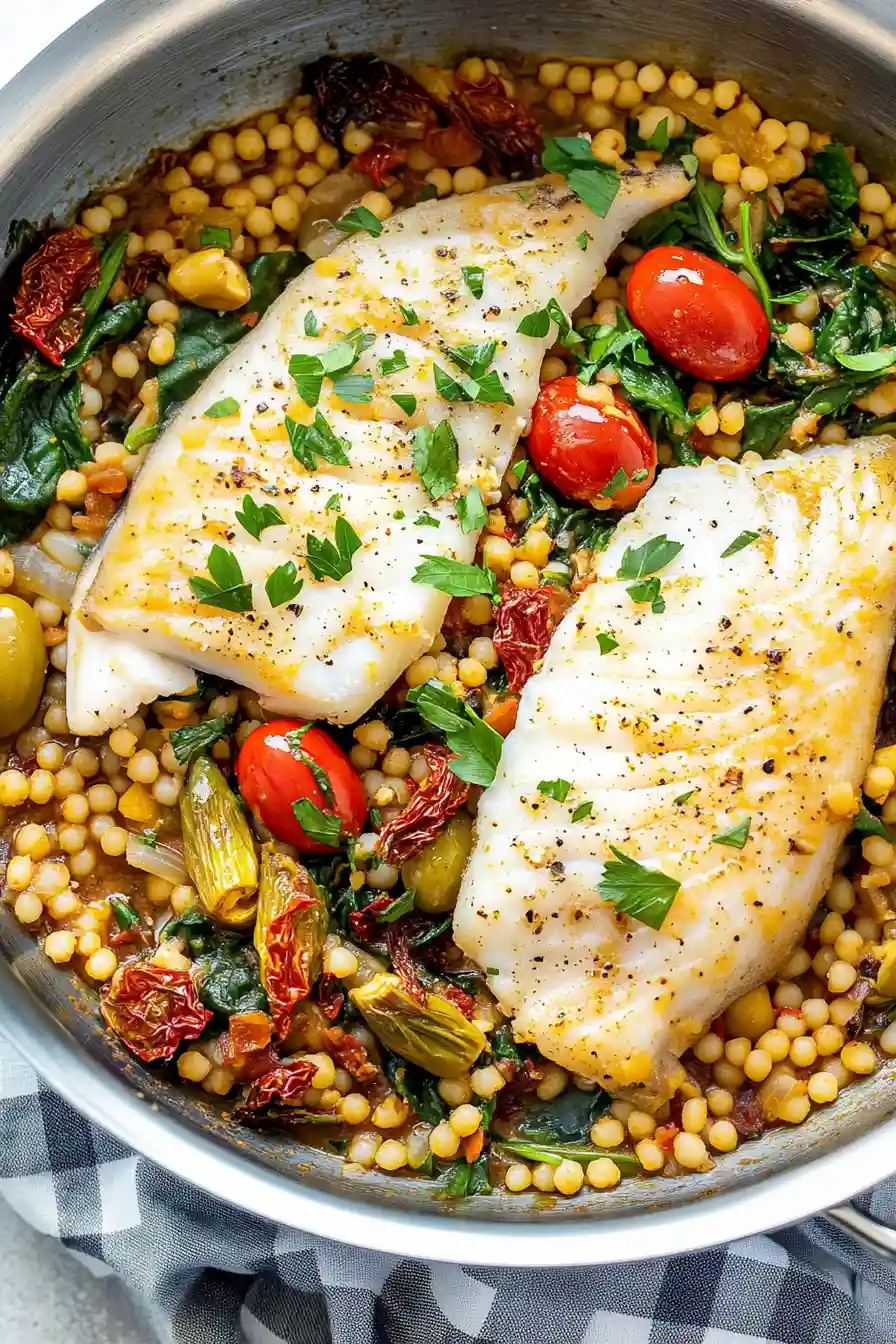
Options for Substitutions
This recipe is pretty flexible and you can make several swaps based on what you have in your kitchen:
- Couscous: You can swap couscous with quinoa or bulgur wheat – just follow the cooking instructions on the package. Rice also works well, though cooking time will be longer.
- Salmon fillets: Any firm white fish like cod, halibut, or sea bass would work great here. You could even use chicken breast if you’re not a fish fan, just adjust cooking time accordingly.
- Asparagus and Courgette: Feel free to use any seasonal vegetables you have on hand – green beans, bell peppers, or broccoli would all work nicely.
- Chili: If you don’t like heat, leave it out completely. Or swap with chili flakes or a dash of hot sauce to taste.
- Greek yogurt: Sour cream makes a good substitute, or try coconut yogurt for a dairy-free option.
- Coriander: Not everyone loves coriander – feel free to use parsley or fresh basil instead.
Watch Out for These Mistakes While Cooking
The biggest mistake when preparing fish with couscous is overcooking the salmon, which can quickly turn from perfectly flaky to dry and tough – aim for an internal temperature of 145°F (63°C) and remember that the fish will continue cooking slightly after you remove it from heat. A common error with couscous is adding too much water, which leads to mushy results – stick to a 1:1 ratio of couscous to hot water, and let it steam covered for exactly 5 minutes before fluffing with a fork. When cooking the vegetables, avoid stirring them too frequently as this prevents them from getting that nice golden caramelization – instead, let them sit undisturbed in the hot pan for a few minutes on each side. For the best flavor combination, make sure to season each component separately rather than just at the end, and always finish the dish with a generous squeeze of fresh lemon juice to bring all the flavors together.

What to Serve With Fish and Couscous?
This Mediterranean-style dish pairs really well with a few simple sides that complement its light, fresh flavors. A quick cucumber and mint salad makes a cooling side dish that balances the warmth of the fish and couscous perfectly. Since you’ve already got some veggies in the mix, try adding a bowl of marinated olives and some warm pita bread on the side for a complete meal. For a nice finishing touch, serve some extra lemon wedges on the plate – a little extra citrus really brings out the best in seafood dishes!
Storage Instructions
Keep Fresh: Got leftovers? Place your fish and couscous in separate airtight containers in the fridge. The couscous will stay good for up to 4 days, while the cooked salmon is best enjoyed within 2 days. The roasted veggies can go in their own container and will keep for 3-4 days.
Prep Ahead: You can get a head start by cooking the couscous and prepping the veggies a day before. Just store them separately in the fridge. I’d recommend cooking the fish fresh though – it really tastes best right after it’s made!
Serve Again: When you’re ready for round two, warm the couscous with a splash of water in the microwave or on the stovetop. The veggies can be warmed up too, but I’d suggest eating any leftover fish cold or at room temperature to keep it from getting dry. A fresh squeeze of lemon juice and a dollop of yogurt will make your leftovers taste great!
| Preparation Time | 20-30 minutes |
| Cooking Time | 20-30 minutes |
| Total Time | 40-60 minutes |
| Level of Difficulty | Medium |
Estimated Nutrition
Estimated nutrition for the whole recipe (without optional ingredients):
- Calories: 700-800
- Protein: 50-60 g
- Fat: 30-40 g
- Carbohydrates: 60-70 g
Ingredients
For the couscous:
- 5.3 oz couscous
For the salmon:
- 2 salmon fillets (about 6 oz each, skin on or off)
- Pepper (freshly ground black pepper for best flavor)
- Salt (kosher or sea salt preferred)
For the vegetables:
- Olive oil (extra virgin for flavor)
- Asparagus (tough ends trimmed)
- Courgette (1 medium zucchini)
- 1 chili (red or green, deseeded for less heat)
For the salsa:
- Salt
- Pepper
- 3 tomatoes (Roma or cherry, finely diced)
- Olive oil
- Lemon juice (freshly squeezed for brighter flavor)
- Fresh coriander (finely chopped, I use Tanimura & Antle)
For serving:
- Natural or Greek yogurt (plain, full-fat for creaminess)
Step 1: Prepare the Couscous
Measure 75 grams of couscous per person (totaling 150 grams) and place it in a bowl.
Pour boiling water over the couscous, ensuring the water level is about a centimeter above the couscous.
For added flavor, you can optionally include a mint tea bag, a slice of lemon, or your choice of herbs.
Cover the bowl with a lid or a plate to allow the couscous to steam and absorb the flavor.
Step 2: Prepare and Cook the Salmon
Heat a pan over medium-low heat.
Prepare two salmon fillets by ensuring they are scaled, de-boned, and have the skin on.
Slice one fillet into centimeter-wide pieces for quicker cooking.
Score the skin of the other fillet to help it cook evenly, then season both sides of the salmon with salt and pepper.
Place the chunk of salmon skin-side down in the hot pan and press down on it for about 10 seconds to ensure the skin becomes crispy.
Step 3: Prepare and Add the Vegetables
Snap the ends off a handful of asparagus per person, cutting it at an angle for a more appealing presentation.
Add a touch of olive oil to the pan and incorporate the asparagus, stirring occasionally.
Slice a courgette (zucchini) at an angle similar to the asparagus and add it to the pan.
Remove seeds from a chili pepper, finely chop it, and add these to the pan along with the vegetables.
Step 4: Prepare the Tomato Salsa
While the salmon is cooking to a golden hue, chop three or four juicy tomatoes into small pieces for making the salsa.
Season them with salt, pepper, olive oil, and a dash of lemon juice.
Finely chop some coriander and mix it into the tomato salsa using your hands to meld the flavors together.
Step 5: Final Cooking Steps and Assemble the Dish
Once the salmon is golden, turn it over to cook the other side.
Check the couscous; it should be fluffy and not sticky.
Fluff it gently with a fork.
Serve the couscous on warm plates, topped with the prepared tomato salsa.
Add the cooked asparagus and courgette on top of the couscous.
Finally, place the salmon fillets on top, ensuring the crispy skin is facing up for presentation.
Step 6: Garnish and Serve
Optionally, you may add a spoonful of natural or Greek yogurt on the side for added flavor and creaminess.
Your dish of pan-fried salmon with tomato couscous, asparagus, and courgette is ready to enjoy.
Serve immediately while warm and savor the delicious blend of flavors and textures.