Making pizza at home can feel like a daunting task, especially when you’re trying to nail that perfect sauce that ties the whole pie together. After years of experimenting with store-bought options and complex recipes that left me frustrated, I realized the best pizza sauce doesn’t need to be complicated or time-consuming.
That’s why I’m excited to share this simple pizza sauce recipe that’s become my family’s go-to favorite. It uses basic pantry ingredients, comes together in just minutes, and tastes way better than anything you’ll find in a jar at the grocery store.
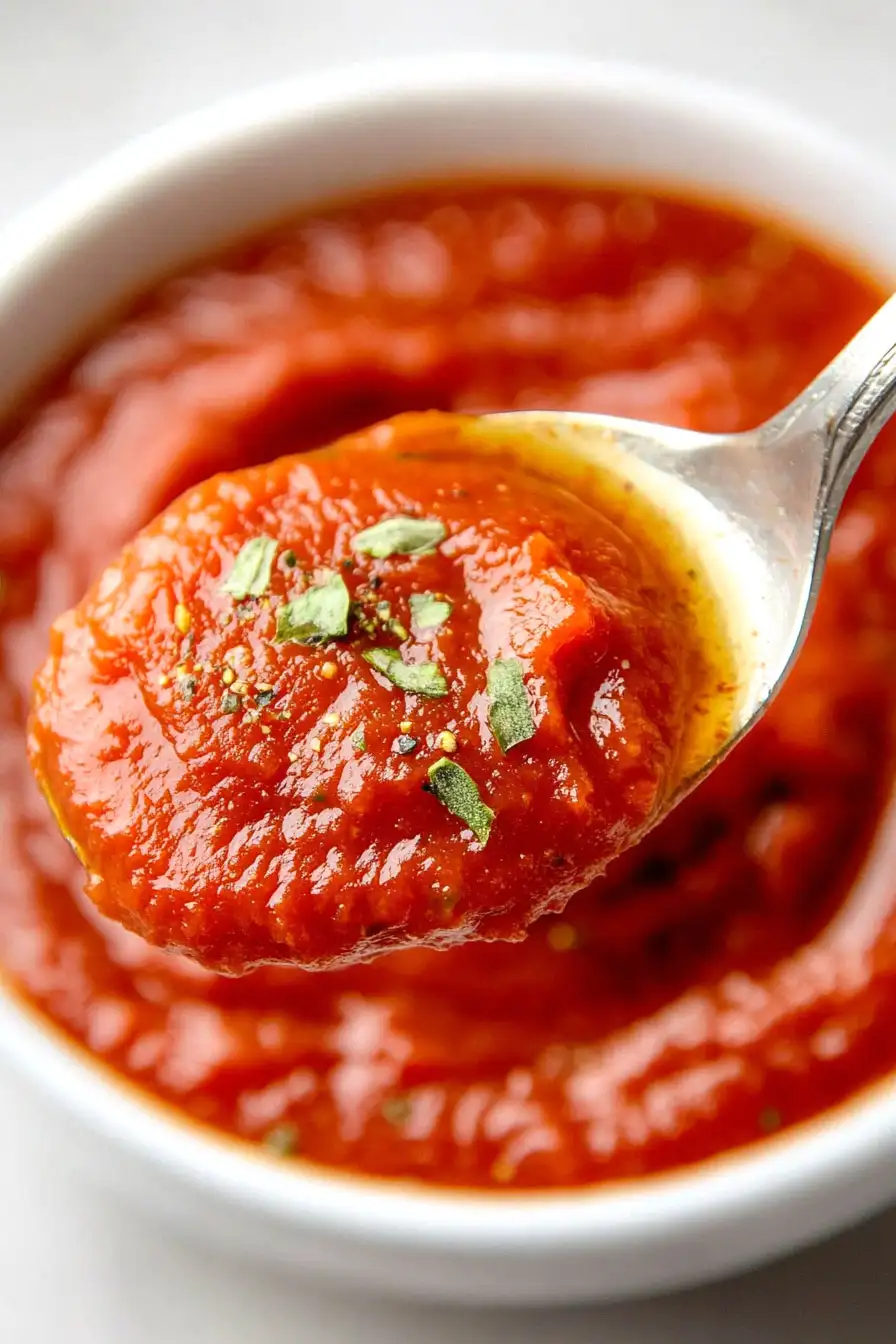
Why You’ll Love This Pizza Sauce
- Quick preparation – This sauce comes together in just 10-15 minutes, making it perfect for those last-minute pizza cravings or busy weeknight dinners.
- Pantry-friendly ingredients – You probably already have most of these basic ingredients in your kitchen cabinet – no special shopping trip needed.
- Customizable flavor – You can easily adjust the herbs and seasonings to match your taste preferences, making it milder or more robust depending on what you like.
- Cost-effective – Making your own pizza sauce costs much less than store-bought versions, and you’ll know exactly what goes into it – no preservatives or artificial ingredients.
- Make-ahead friendly – This sauce stores well in the fridge for up to a week, so you can make it ahead and have it ready for pizza night.
What Kind of Tomato Products Should I Use?
The combination of tomato paste and tomato sauce creates the perfect base for pizza sauce, and you’ve got options at the grocery store. For tomato sauce, look for plain, unseasoned varieties so you can control the seasoning yourself – brands like Hunt’s or Contadina work great. Tomato paste comes in both cans and tubes, and while both work well, the tubes are super convenient if you make pizza sauce often since you can easily store the leftover paste in the fridge. Just make sure to check that your tomato products don’t have added seasonings or salt, as this can throw off the balance of flavors in your sauce. If you’re in a pinch, you can substitute crushed tomatoes for the sauce, but you might need to cook it down a bit longer to get that perfect pizza sauce consistency.
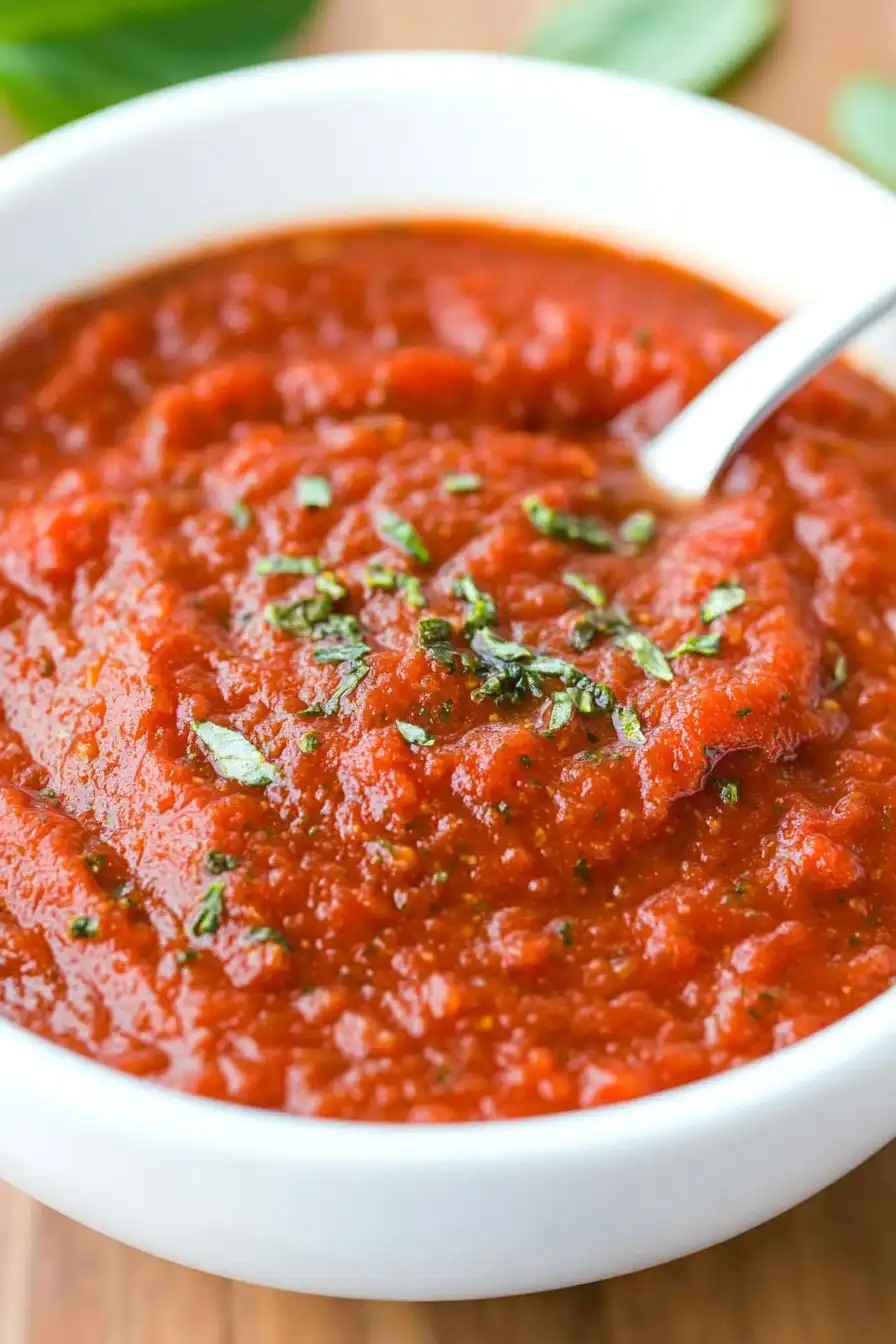
Options for Substitutions
Making pizza sauce but missing some ingredients? Here are some helpful swaps you can try:
- Tomato paste and sauce: These are pretty important for the right texture, but in a pinch, you can use canned crushed tomatoes (drain excess liquid) plus 2 tablespoons of tomato paste. Avoid using fresh tomatoes as they’re too watery.
- Italian herb blend: No Italian seasoning? Make your own by mixing equal parts dried basil, thyme, rosemary, and marjoram. Or just use extra oregano with some dried basil if that’s what you have.
- Garlic and onion powder: Fresh works too! Use 2 minced garlic cloves instead of powder, and 2 tablespoons of finely minced onion instead of onion powder. Just make sure to mince them very finely.
- Sugar: The sugar helps balance acidity. You can use honey or maple syrup instead, or skip it if your tomatoes aren’t too acidic.
- Garlic salt: Out of garlic salt? Use 1/4 teaspoon regular salt plus an extra 1/4 teaspoon garlic powder instead.
Watch Out for These Mistakes While Cooking
The biggest mistake when making pizza sauce is not giving it enough time to simmer – rushing this step prevents the herbs from releasing their full flavor, so let it cook on low heat for at least 15-20 minutes while stirring occasionally. Another common error is adding too much sugar right away; it’s better to start with less and adjust at the end of cooking, as the tomatoes naturally become sweeter as they cook down. To avoid an overly thick sauce that’s difficult to spread, keep an eye on the consistency while simmering and add a splash of water if needed – remember, the sauce will continue to thicken as it cools. For the best flavor development, try mixing the dried herbs with a spoonful of warm water before adding them to the sauce, which helps release their essential oils and creates a more robust taste.

What to Serve With Pizza Sauce?
This homemade pizza sauce is just begging to be spread on some fresh pizza dough! While pizza is the obvious choice, you can also use this sauce as a dip for breadsticks, garlic knots, or mozzarella sticks. I like to keep a batch in the fridge for quick Italian-style sandwiches – it’s perfect spread inside a toasted sub roll with melted mozzarella and Italian cold cuts. For a lighter option, you can use it as a dipping sauce for raw veggies like carrots, celery, and bell peppers, or spread it on zucchini or eggplant slices before grilling.
Storage Instructions
Keep Fresh: This homemade pizza sauce stays good in an airtight container in the fridge for up to 5-7 days. I like to make a batch on Sunday and use it throughout the week for quick pizzas, calzones, or even as a dipping sauce for breadsticks.
Freeze: You can freeze portions of this sauce in small freezer-safe containers or ice cube trays for up to 3 months. The ice cube method is super handy – just pop out what you need for individual pizzas! Once frozen in cubes, transfer them to a freezer bag to save space.
Thaw: When you’re ready to use your frozen sauce, just move it to the fridge the night before. If you’re in a hurry, you can thaw it in the microwave using short bursts on low power, stirring between each interval. Give it a good stir before using, as the ingredients might separate a bit during storage.
| Preparation Time | 10-15 minutes |
| Cooking Time | 0 minutes |
| Total Time | 10-15 minutes |
| Level of Difficulty | Easy |
Estimated Nutrition
Estimated nutrition for the whole recipe (without optional ingredients):
- Calories: 250-300
- Protein: 5-10 g
- Fat: 2-5 g
- Carbohydrates: 55-65 g
Ingredients
- 1/2 tsp onion powder
- 15 oz tomato sauce (I prefer Muir Glen Organic)
- 2 tbsp Italian herb blend (look for a blend containing basil, oregano, rosemary, and thyme)
- 1/2 tsp garlic powder
- 1/2 tbsp garlic salt
- 1 to 2 tbsp dried oregano (for best flavor, use genuine Mediterranean)
- 1 tsp sugar
- 6 oz tomato paste
- 1/4 tsp ground black pepper (freshly ground for better aroma)
Step 1: Combine Tomato Paste and Sauce
In a medium-sized bowl, start by mixing together your desired amount of tomato paste and tomato sauce until the mixture is smooth and well-blended.
This creates the base for your pizza sauce, giving it a rich texture and flavor.
Step 2: Add Seasonings
To the smooth tomato base, add the remaining ingredients: a generous sprinkle of oregano and Italian seasoning, a dash of garlic powder, onion powder, garlic salt, and a touch of pepper.
Add a bit of sugar to balance the acidity of the tomatoes.
Stir the ingredients well until they are evenly distributed throughout the sauce, ensuring a uniform flavor.
Step 3: Taste and Adjust
Give the sauce a taste and adjust the seasonings to your liking.
You might want to add a little more of something based on your preference—perhaps more herbs for aroma or extra garlic salt for those who love a savory kick.
Step 4: Spread on Pizza Crust
Once you’re happy with the flavor of the sauce, generously spread it onto your favorite pizza dough.
Make sure the sauce covers the entire surface evenly, creating the perfect canvas for your desired toppings.