If you ask me, al pastor pork shoulder is one of Mexico’s best gifts to the food world.
This crowd-pleasing dish brings together tender pork shoulder marinated in a mix of dried chilies, achiote paste, and pineapple. The slow-roasted meat picks up a slightly sweet and smoky flavor that’s simply hard to resist.
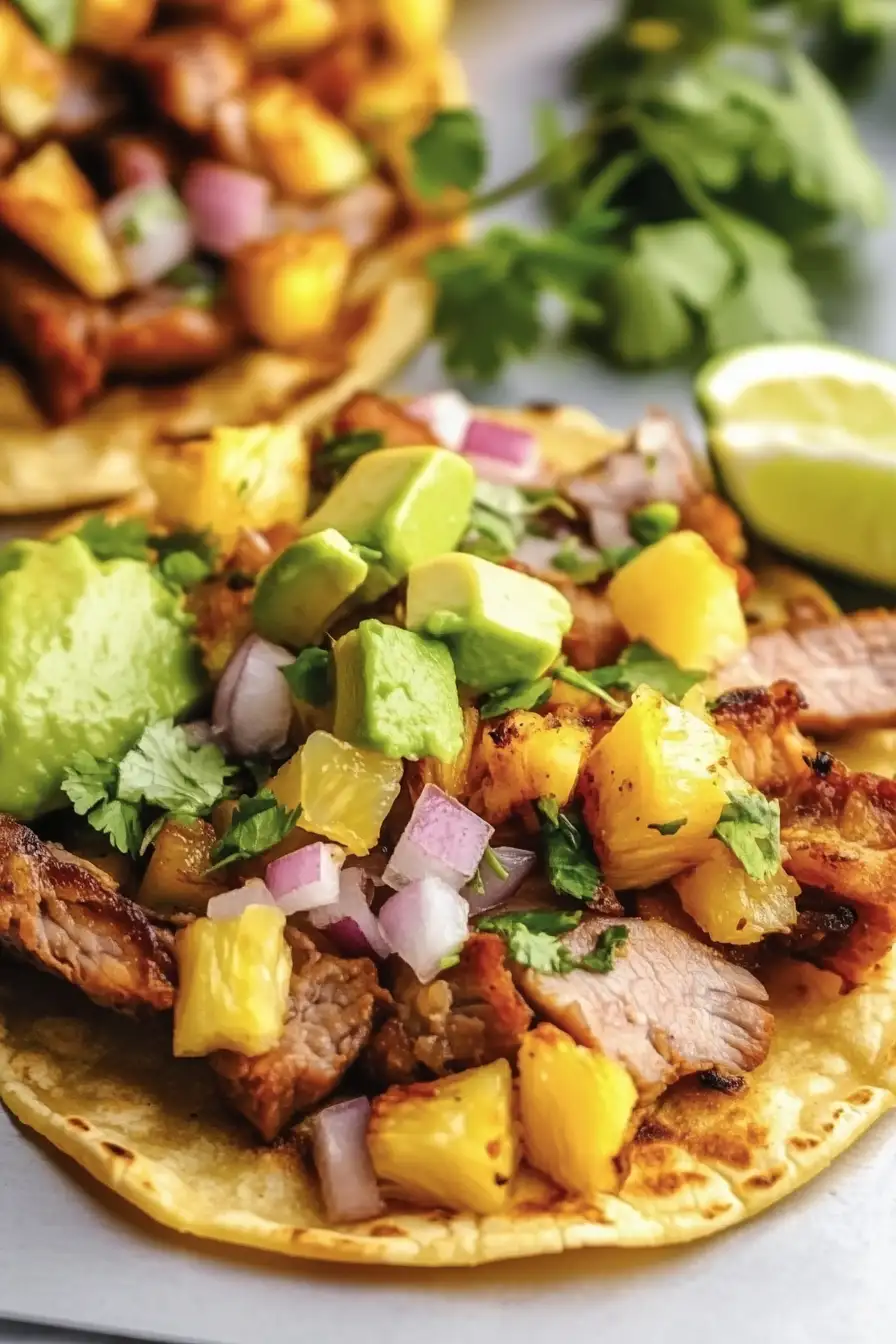
It’s cooked low and slow until the outside gets a bit crispy while the inside stays juicy and tender. Served with warm corn tortillas and topped with diced onions, cilantro, and fresh pineapple chunks, it’s pure taco heaven.
It’s the kind of meal that makes any dinner feel like a celebration, perfect for feeding a hungry crowd or meal prepping for the week ahead.
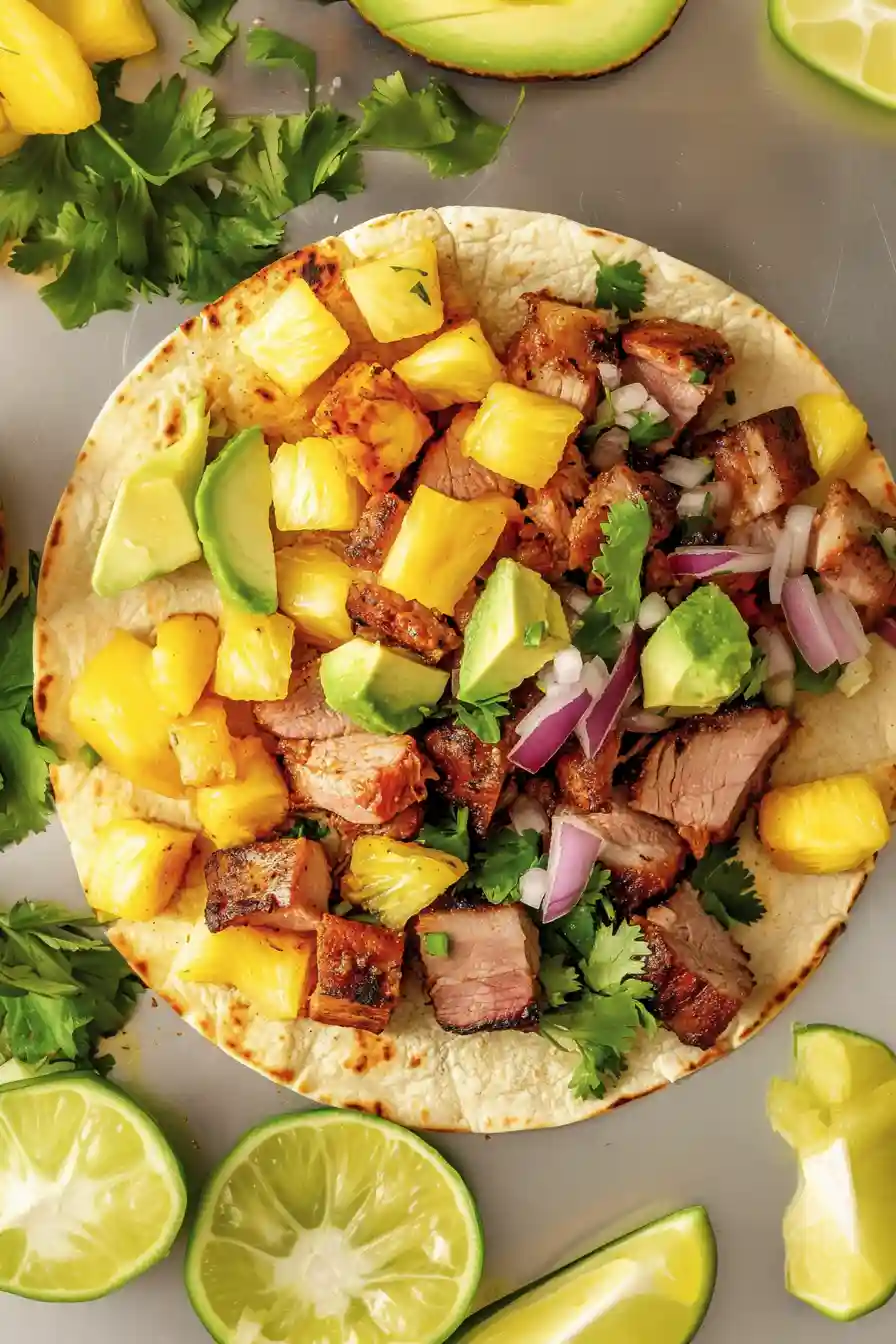
Why You’ll Love This Al Pastor
- Restaurant-quality results – This homemade al pastor brings the authentic flavors of Mexican street food right to your kitchen, with perfectly seasoned pork that’s tender and full of flavor.
- Make-ahead friendly – The marinade can be prepared in advance, and the long cooking time means you can start it early and have it ready exactly when you need it.
- Customizable serving options – Set up a taco bar with all the fixings and let everyone build their perfect taco with fresh pineapple, onions, cilantro, and their favorite salsa.
- Cost-effective – Using affordable pork shoulder, you can make enough to feed a crowd for much less than ordering takeout, and the leftovers taste even better the next day.
- Complex flavor profile – The combination of dried chilies, achiote, and pineapple creates that perfect balance of heat, smokiness, and sweetness that al pastor is famous for.
What Kind of Pork Should I Use?
For al pastor, you’ll want to focus on pork shoulder (also called pork butt or Boston butt), which is perfect for this traditional Mexican dish. The meat from this cut has great marbling throughout and plenty of connective tissue that breaks down during cooking, making it ideal for the long, slow cooking process that al pastor requires. While you might see recipes calling for pork loin, I’d recommend sticking with shoulder since it’s more forgiving and won’t dry out as easily. If you’re at the store and can’t find a cut labeled “pork shoulder,” just ask your butcher for a Boston butt – they’re the same thing. Just make sure your piece of meat has a good amount of fat marbled throughout, as this will help keep the meat moist and flavorful during cooking.
Options for Substitutions
While some ingredients are key to getting that authentic al pastor flavor, there are several substitutions you can try if needed:
- Dried chilies: If you can’t find ancho, pasilla, or guajillo chilies, you can use 3-4 tablespoons of regular chili powder mixed with 1 tablespoon of smoked paprika. The flavor won’t be exactly the same, but it’ll work in a pinch.
- Achiote powder/paste: This ingredient gives al pastor its signature color and flavor – it’s hard to substitute, but in an emergency, you can use a mix of paprika and turmeric (2:1 ratio). Just know the taste will be different.
- Pork roast: While shoulder/butt is ideal, you can use pork loin – just watch it carefully as it can dry out more easily. Cooking time might need to be reduced by 15-20 minutes.
- Chipotle in adobo: You can swap this with 1 tablespoon of smoked paprika plus 1/2 teaspoon of cayenne pepper, mixed with 2 teaspoons of tomato paste.
- Fresh pineapple: Canned pineapple rings will work if fresh isn’t available. Just make sure to drain them well and pat dry before using.
- Corn tortillas: While corn tortillas are traditional, flour tortillas can work too. Just warm them slightly before serving.
Watch Out for These Mistakes While Cooking
The biggest challenge when making pork al pastor is rushing through the marination process – giving the meat at least 4 hours (or ideally overnight) to soak in the chile marinade is crucial for developing those deep, authentic flavors. When working with dried chilies, avoid burning them during the toasting process – heat them just until they become fragrant and pliable, about 2-3 minutes per side, or they’ll turn bitter and ruin your marinade. A common error is cutting the pork pieces too thick – aim for slices about 1/4 inch thick so they can cook evenly and develop those crispy, caramelized edges that make al pastor so special. For the best texture and flavor balance, make sure to baste the meat with pineapple juices during cooking, and let the meat rest for 5-10 minutes before chopping it up for tacos.
What to Serve With Pork Al Pastor?
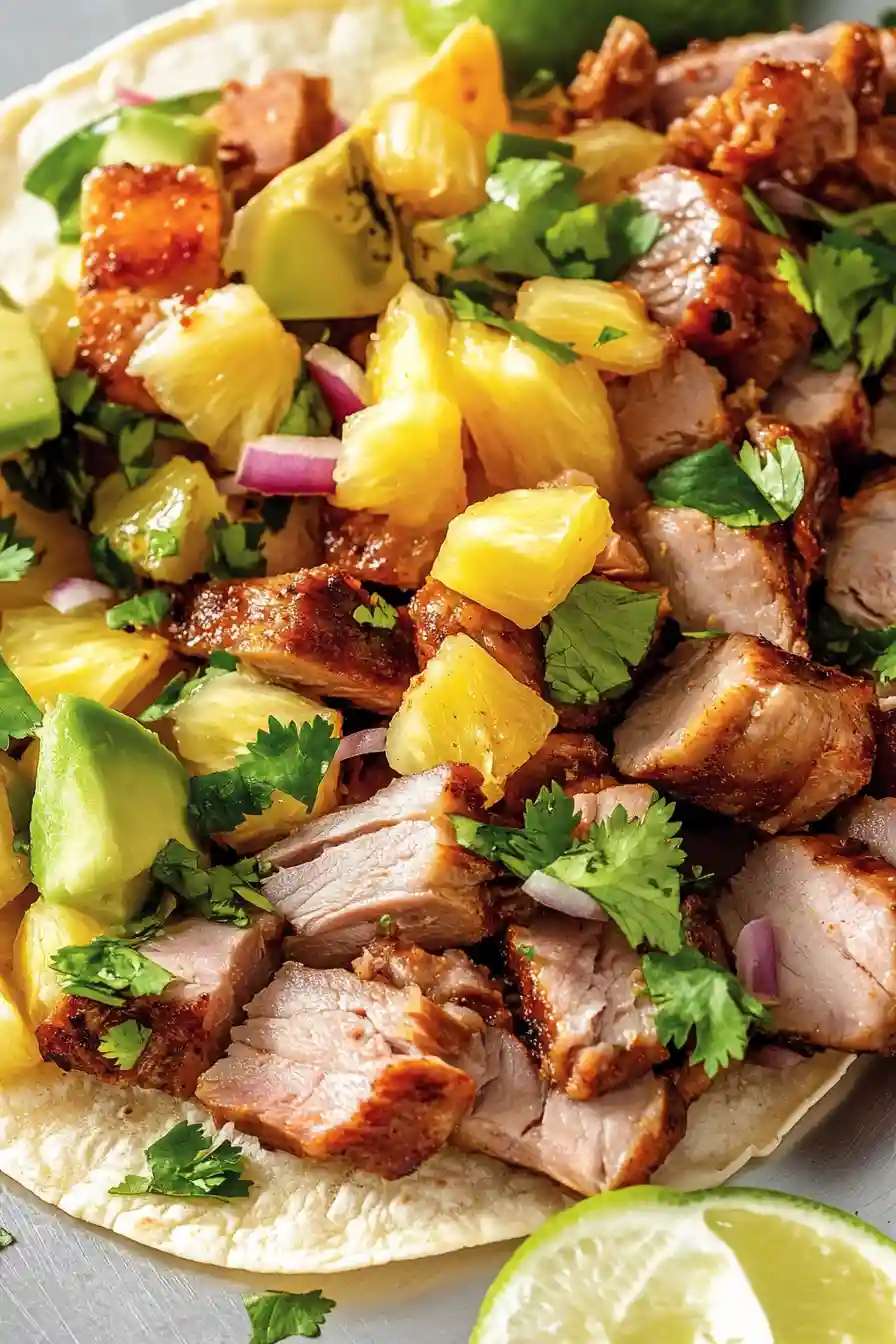
When serving pork al pastor, I love to set up a full taco bar spread that lets everyone build their perfect taco. Mexican rice and refried beans make excellent side dishes that help round out the meal. I usually put out some extra toppings beyond the traditional onions and cilantro – try diced avocado, pickled red onions, or Mexican crema for people to mix and match. For a fresh contrast to the rich pork, a simple cabbage slaw dressed with lime juice and a pinch of salt adds the perfect crunch. Don’t forget to have plenty of lime wedges and different salsas on hand – I like to include both red and green varieties to give people options!
Storage Instructions
Keep Fresh: Once cooked, your pork al pastor will stay good in the fridge for up to 4 days when stored in an airtight container. The flavors actually get even better after a day or two as they continue to meld together! Just keep the meat, pineapple, and toppings stored separately to maintain their best quality.
Freeze: This meat freezes really well! Pack the cooked pork (without toppings) in freezer-safe containers or bags and it’ll keep for up to 3 months. I like to portion it out before freezing so I can thaw just what I need for tacos later.
Reheat: To warm up your al pastor, spread it on a baking sheet and pop it under the broiler for a few minutes until the edges get slightly crispy. You can also heat it in a skillet over medium heat. If it’s frozen, thaw overnight in the fridge before reheating. The pineapple is best served fresh, so I recommend cutting new pieces when serving leftovers.
| Preparation Time | 20-30 minutes |
| Cooking Time | 240-270 minutes |
| Total Time | 260-300 minutes |
| Level of Difficulty | Medium |
Estimated Nutrition
Estimated nutrition for the whole recipe (without optional ingredients):
- Calories: 3000-3500
- Protein: 180-220 g
- Fat: 200-240 g
- Carbohydrates: 150-180 g
Ingredients
For the pork:
- 1/4 cup white vinegar
- 2 lb boneless pork roast (shoulder or butt cut into 1-inch cubes)
- 1 tsp ground cumin
- 1 chipotle chili in adobo (plus 2 tsp adobo sauce)
- 2 tsp sugar
- 2 tsp cooking oil
- 8 oz bacon (thinly sliced, I use Oscar Mayer)
- 3 garlic cloves
- 2 1/2 tsp coarse salt
- 1/2 cup chicken broth
- 2 ancho chilies
- 2 pasilla or guajillo chilies
- 1 tsp dried Mexican oregano
- 1 tbsp achiote powder
To finish and serve:
- 1 small pineapple (peeled, cored, and cut into 1/2-inch pieces)
- 1/2 cup fresh cilantro (leaves and tender stems, finely chopped)
- 3 to 4 limes (cut into wedges for serving)
- 1 cup salsa verde
- 1 medium white onion (finely diced)
- 32 to 48 corn tortillas (warmed before serving)
Step 1: Prepare the Chiles and Stock
Place the chiles in a large saucepan over medium-high heat.
Cook, turning occasionally, until puffed, pliable, lightly browned in spots, and very aromatic, about 5 minutes.
Add chicken stock, ensuring it boils immediately, then pour the saucepan contents into a small bowl.
Cover the bowl loosely and set aside.
Step 2: Cook Aromatics and Blend Sauce
Wipe the saucepan clean, add oil, and return it to medium-high heat until the oil is shimmering.
Add cumin, oregano, and achiote, stirring frequently until aromatic but not browned, about 30 seconds.
Add chipotle chile and sauce, cooking until aromatic, approximately 30 seconds longer.
Add vinegar, salt, and sugar, then remove from heat.
Transfer the saucepan’s contents to a blender, along with garlic and the chiles with their soaking liquid.
Blend on high speed until completely smooth, about 1 minute, scraping down sides as needed.
Set sauce aside to cool slightly.
Step 3: Prepare and Marinate the Meat
Using a sharp chef’s knife, slice the pork sirloin as thin as possible.
If necessary, freeze the meat for 15 minutes to firm it up.
Cut open the sides of a heavy-duty zipper-lock bag.
Place one slice of meat inside the bag, pounding it with the bottom of a heavy 8-inch skillet or a meat pounder until less than 1/4-inch thick.
Transfer to a large bowl and repeat with the remaining meat.
Add the marinade to the bowl, tossing with your hands until every piece of meat is evenly coated.
Step 4: Layer the Meat and Bacon
Line the bottom of a disposable aluminum loaf pan with a layer of bacon.
Add a layer of thin-sliced marinated meat.
Continue layering bacon and meat until all the meat is used, even if it piles above the pan.
Cover tightly with plastic wrap and refrigerate for at least 4 hours, or up to 36 hours.
Step 5: Cook the Meat
To cook indoors: Preheat the oven to 275°F.
Uncover the aluminum loaf pan and place it on a foil-lined rimmed baking sheet.
Transfer to the oven and cook until the meat is completely tender (it will release a lot of fat), about 4 hours.
Remove from the oven, allow to cool slightly, cover with aluminum foil, and refrigerate for at least 2 hours or overnight.
To cook outdoors: Light half a chimney of charcoal, preheat until coals are mostly covered in gray ash.
Spread coals under one half of the grate and place the cooking grate on top.
Alternatively, set one gas grill burner to low, leaving the others off.
Unwrap the aluminum loaf pan and place it over the cooler side.
Cover the grill and cook until the loaf registers 180 to 190°F in the center, about 4 hours.
Remove from grill and refrigerate for at least 2 hours or up to overnight.
Step 6: Final Preparations and Serving
Preheat the oven to 350°F.
Remove cooked meat from the aluminum tray, scraping off any fat or jellied juices.
Collect the fat and juices separately.
Slice meat thinly with a sharp knife, creating fine shavings.
Transfer to a bowl.
If solid, melt the reserved fat.
Place pineapple pieces on a foil-lined baking sheet, brush with fat, and roast until tender, about 25 minutes.
Cool slightly.
About 10 minutes before the pineapple finishes roasting, heat the meat and 1 tablespoon of fat in a skillet over medium-high heat until meat is crisp and deeply browned.
Add reserved juices to create a moist glaze, then transfer to a serving bowl.
Chop roasted pineapple into large chunks.
Serve the meat and pineapple immediately with warmed tortillas, onion, cilantro, salsa, and lime wedges.
The meat is very moist, so pack it into double-stacked tortillas for serving.