If you’ve been following the keto trend like me, you already know that chaffles have become a breakfast game-changer. But let me tell you about my latest obsession – Eggs Benedict Chaffles. They combine everything I love about traditional eggs benedict with the crispy, cheesy goodness of chaffles. As someone who enjoys a good brunch but doesn’t want to mess with complicated hollandaise sauce first thing in the morning, I’ve found a way to make this classic dish more approachable.
I started making these on lazy Sunday mornings when I wanted something special but didn’t feel like changing out of my PJs to go to a restaurant. The best part? You can prep most components ahead of time, so you’re not juggling multiple tasks before your morning coffee kicks in. Trust me, once you try these, regular eggs benedict might just become your second favorite breakfast.
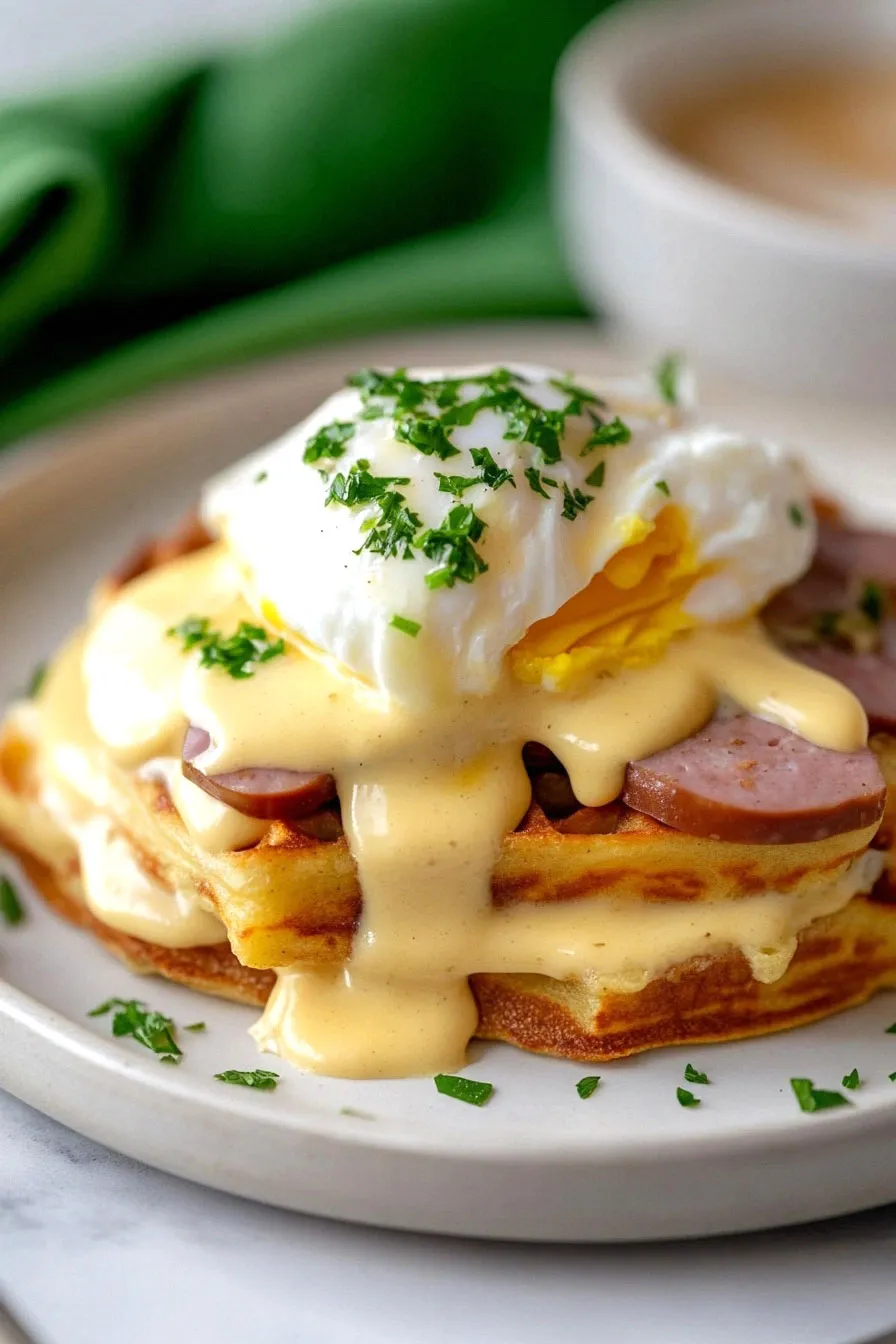
Why You’ll Love These Eggs Benedict Chaffles
- Keto-friendly breakfast – These chaffles swap traditional English muffins for a low-carb cheese-based waffle, making them perfect for anyone following a keto or low-carb diet.
- Quick preparation – You can have this fancy-looking breakfast ready in just 30-40 minutes, making it doable even on weekend mornings when you don’t want to spend hours in the kitchen.
- Restaurant-quality at home – You’ll save money by making this classic brunch dish at home, and the homemade hollandaise sauce tastes just like what you’d get at a café.
- Customizable recipe – While this version uses liverwurst, you can easily swap it for traditional Canadian bacon, regular bacon, or even smoked salmon to suit your taste.
What Kind of Cheese Should I Use?
While the recipe recommends mozzarella, you’ve got some flexibility when it comes to choosing your cheese for chaffles. Low-moisture mozzarella is a great starting point since it melts smoothly and creates that perfect crispy exterior without becoming too oily. If you want to switch things up, other mild cheeses like mild cheddar or Monterey Jack work well too – just make sure whatever cheese you pick isn’t too aged or sharp, as that can overpower the eggs Benedict flavors. For the best results, grate your cheese fresh rather than using pre-shredded varieties, since freshly grated cheese melts more evenly and doesn’t contain the anti-caking agents that can affect texture.
Options for Substitutions
Let’s talk about how you can switch things up with this chaffle recipe if needed:
- Mozzarella cheese: While mozzarella gives the best texture, you can use other mild cheeses like cheddar, provolone, or a cheese blend. Just avoid very soft cheeses like brie or very aged cheeses that might make the chaffles too greasy.
- Liverwurst: Not everyone’s a fan of liverwurst – feel free to use Canadian bacon, regular bacon, ham, or even smoked salmon for a different spin. For a vegetarian version, try sautéed mushrooms or avocado.
- Apple cider vinegar: For poaching the eggs, you can use white vinegar instead. The vinegar helps the eggs hold their shape, so don’t skip it entirely.
- Lemon juice: Fresh lemon juice works best for hollandaise, but in a pinch, you can use bottled lemon juice – just use about 25% less as it’s usually more concentrated.
- Butter: For the hollandaise, salted butter is recommended, but unsalted works too – just add an extra 1/4 teaspoon of salt. Don’t substitute with margarine or oil as they won’t give you the right consistency.
Watch Out for These Mistakes While Cooking
The trickiest part of eggs Benedict chaffles is getting the hollandaise sauce just right – the most common mistake is overheating it, which can cause the sauce to separate or become lumpy. To prevent this, use a double boiler method and whisk constantly while keeping the heat low and steady. When making the chaffles, avoid overmixing the cheese and egg whites, as this can make them dense instead of light and crispy – fold them together gently until just combined. Another crucial point is poaching the eggs: adding too much vinegar or letting the water boil too vigorously will result in stringy, tough eggs instead of perfectly tender ones. For the best results, maintain the water at a gentle simmer (tiny bubbles, not a rolling boil) and create a gentle whirlpool before dropping in your eggs. Finally, timing is everything with this dish – make sure your chaffles stay warm while you prepare the other components, as cold chaffles can make the whole dish less enjoyable.

What to Serve With Eggs Benedict Chaffles?
Since this keto-friendly breakfast is already pretty filling, you’ll want to keep the sides simple and light. Fresh fruit like berries or melon chunks work great on the side – they add a nice pop of sweetness to balance out the rich hollandaise sauce. If you’re looking to add some greens, a handful of fresh arugula or some simple sautéed asparagus pairs really well with the eggs and liverwurst. For a weekend brunch setup, serve these chaffles with some crispy bacon on the side and a hot cup of coffee or a spicy Bloody Mary.
Storage Instructions
Keep Fresh: The chaffles themselves can be kept in an airtight container in the fridge for up to 2 days. I recommend storing the hollandaise sauce separately from the chaffles to maintain the best texture. The sauce will keep in the fridge for about 1-2 days when stored in a sealed container.
Make Ahead: You can make the chaffles ahead of time and toast them when you’re ready to serve. However, the hollandaise sauce is best made fresh – it can be tricky to reheat without separating. If you need to prep in advance, focus on making just the chaffles and whip up the sauce right before serving.
Serve: When you’re ready to eat your stored chaffles, pop them in the toaster or air fryer for a quick crisp-up. If you have leftover hollandaise, warm it gently in 10-second intervals in the microwave, stirring between each interval, or use a double boiler on very low heat to prevent the sauce from breaking.
| Preparation Time | 15-20 minutes |
| Cooking Time | 15-20 minutes |
| Total Time | 30-40 minutes |
| Level of Difficulty | Medium |
Estimated Nutrition
Estimated nutrition for the whole recipe (without optional ingredients):
- Calories: 1500-1700
- Protein: 50-60 g
- Fat: 130-150 g
- Carbohydrates: 10-15 g
Ingredients
For the chaffles:
- 2 eggs
- 1 cup grated mozzarella cheese
- 1 tsp salt
For the hollandaise sauce:
- 2 tbsp fresh lemon juice (Meyer lemons are less acidic)
- 2 egg yolks
- 10 tbsp salted butter (I like Kerrygold brand for hollandaise)
For the poached eggs:
- 1/4 cup apple cider vinegar
- 2 eggs
For assembly and garnish:
- 4 to 6 slices liverwurst
- chopped parsley (optional, for garnish)
Step 1: Prepare and Cook the Waffles
Preheat your waffle maker according to the manufacturer’s instructions.
In a blender, pulse together 2 eggs and shredded cheese until well combined to form the waffle batter.
Carefully pour the batter from the blender into the preheated waffle maker, then cook for 3-4 minutes or until the waffles are golden brown and easily lift out of the machine.
Repeat this process until all the batter is used up, setting the cooked waffles aside when done.
Step 2: Make the Hollandaise Sauce
Place lemon juice and egg yolks into the blender and blend until just combined.
In a small saucepan over low heat, melt the butter completely.
With the blender running on a low setting, slowly and steadily add the melted butter in a very thin stream to the egg yolk mixture.
Continue blending until all the butter is incorporated and an emulsion forms, giving you a medium-thickness hollandaise sauce.
Set aside this sauce while you move on to the next step.
Step 3: Poach the Eggs
Fill a small saucepan about three-quarters full with water, then add a pinch of salt and a splash of vinegar.
Place the saucepan over medium heat and bring the water to a rolling boil.
Using a whisk, create a swirling motion in the water and gently drop the eggs into the center.
Cook the eggs for 3-4 minutes, then use a slotted spoon to carefully remove them and place on a paper towel to absorb any excess moisture.
Step 4: Cook the Braunschweiger
In a frying pan over medium heat, cook the braunschweiger for 1-2 minutes on each side until browned.
This will add a rich flavor element to your dish.
Step 5: Assemble and Serve
Begin assembling your dish by placing the waffles on a plate.
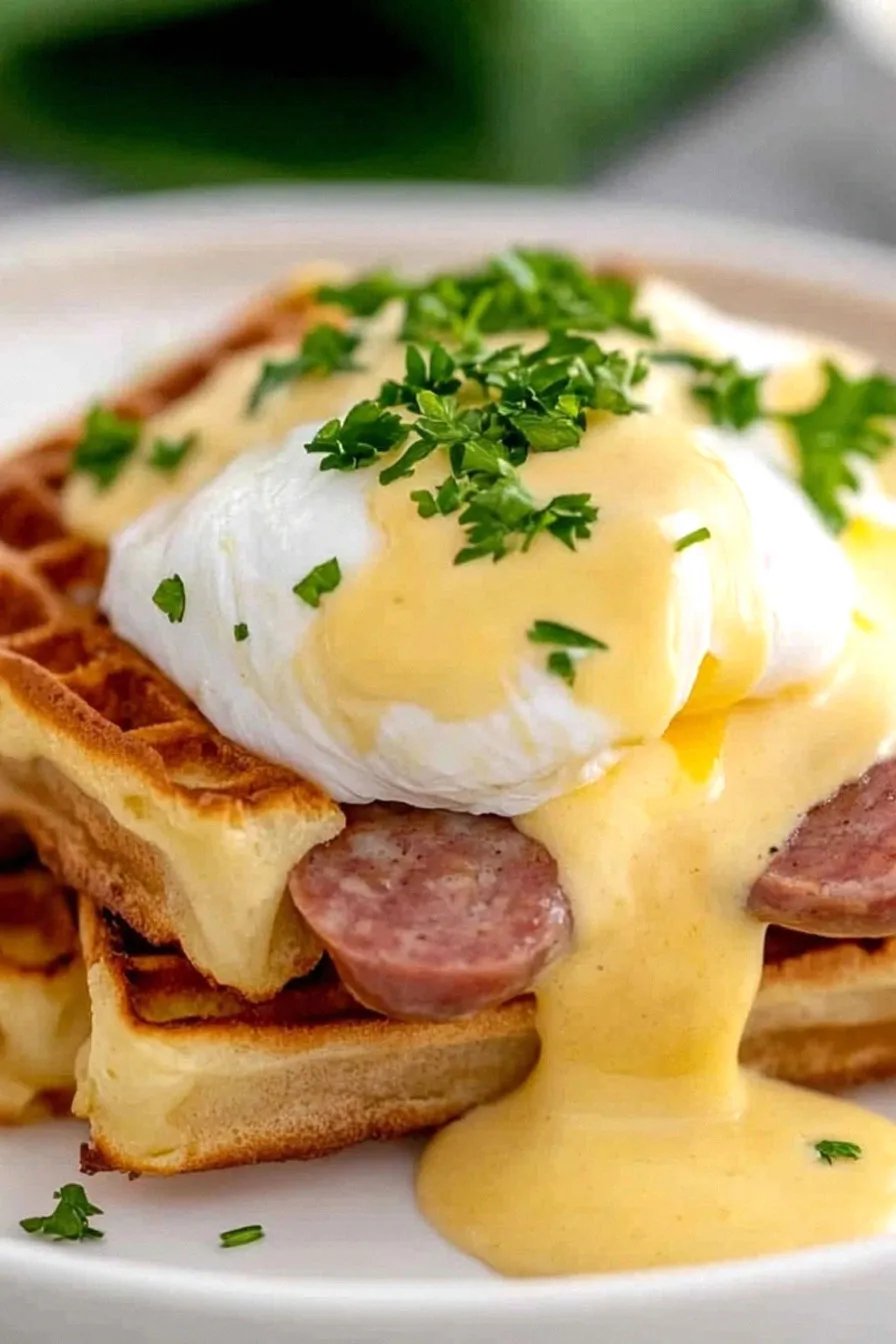
Top each waffle with browned braunschweiger, followed by a poached egg.
Drizzle generously with hollandaise sauce and garnish with fresh herbs if desired.
Serve immediately and enjoy your delicious creation!