There’s something special about serving halibut with beurre blanc sauce. I discovered this combination years ago at a small French bistro, and I’ve been making it at home ever since. But here’s the thing – while it sounds fancy, it’s actually pretty straightforward to prepare. The creamy, buttery sauce pairs perfectly with the mild fish, and it’s become my go-to dish when I want to impress without spending hours in the kitchen.
I’ve simplified this classic recipe over time, testing different methods until I found the easiest way to get it right. Now I can make it confidently on a regular weeknight, though it’s still my first choice when friends come over for dinner. The best part? You probably have most of the ingredients in your kitchen already. Let me show you how to make this restaurant-worthy dish at home.
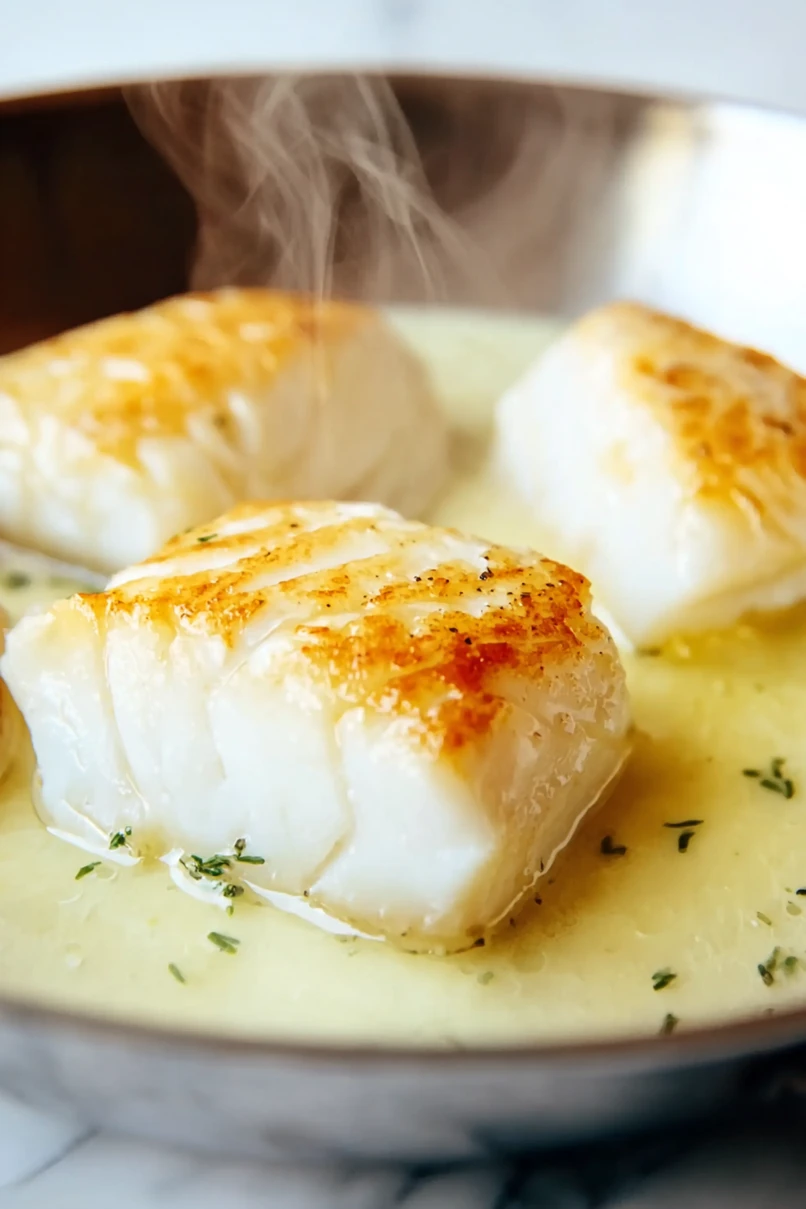
Why You’ll Love This Halibut with Beurre Blanc
- Restaurant-quality dish – This elegant French-inspired recipe lets you create a dish that tastes like it came from a high-end seafood restaurant, right in your own kitchen.
- Quick preparation – Ready in just 25-35 minutes, this impressive dish fits perfectly into your weeknight dinner rotation or last-minute dinner plans.
- Simple ingredients – With just a handful of basic ingredients like butter, wine, and lemon, you can create a sauce that perfectly complements the delicate halibut.
- Light and fresh – The combination of fresh dill, lemon, and white wine creates a light, bright dish that’s perfect for any season.
What Kind of Halibut Should I Use?
Fresh halibut is your best bet for this recipe, and you’ll specifically want halibut cheeks – these are considered a delicacy because they’re exceptionally tender and sweet. If you can’t find fresh halibut cheeks at your local fish market, you can substitute regular halibut fillets, but you’ll want to adjust the cooking time accordingly since fillets are typically thicker than cheeks. When shopping, look for halibut that’s firm to the touch and has a clean, ocean-like smell (never fishy). If you’re using frozen halibut, make sure to thaw it completely in the refrigerator overnight and pat it dry with paper towels before cooking to ensure you get a nice sear.
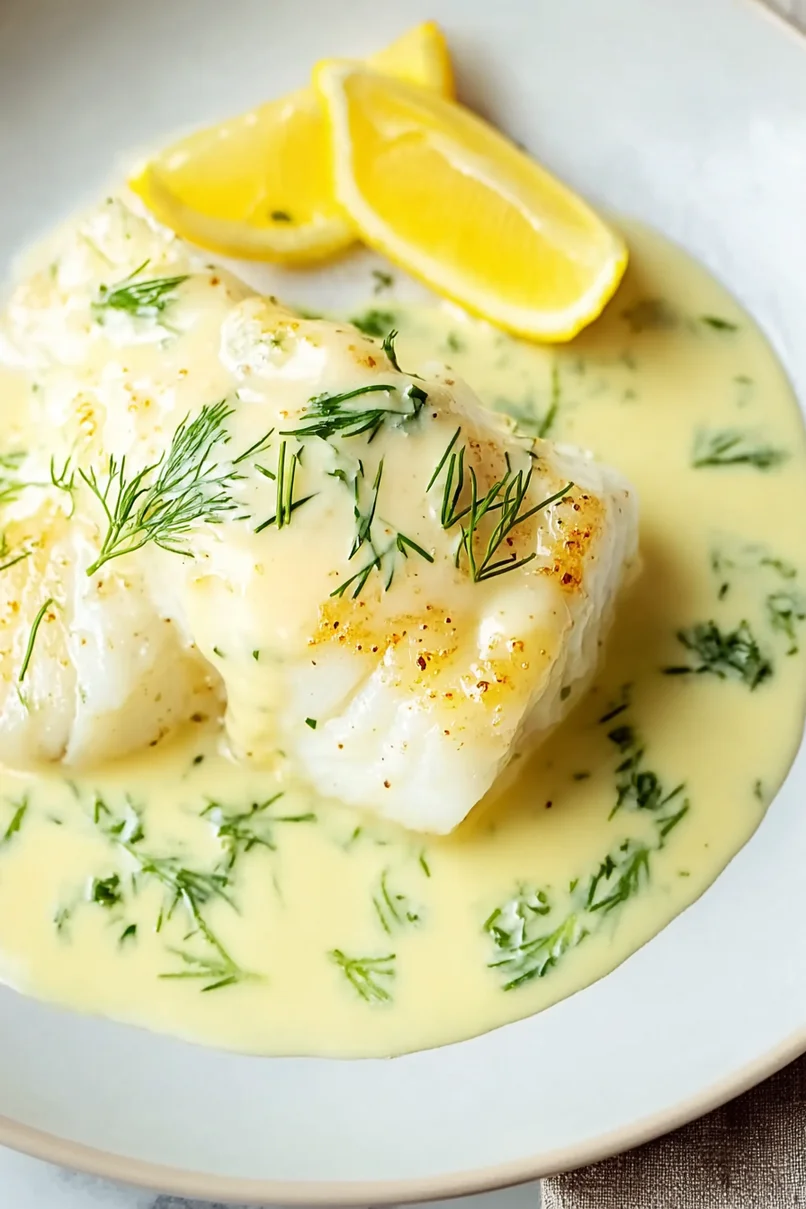
Options for Substitutions
While some ingredients in this classic French dish are essential, there’s room for a few smart swaps:
- Halibut cheeks: If you can’t find halibut cheeks, you can use halibut fillets or other firm white fish like cod, sea bass, or grouper. Just adjust cooking time based on the thickness of your fish.
- Shallots: No shallots? Use finely minced white onion mixed with a tiny bit of minced garlic (about 1/4 clove) to get a similar flavor.
- White wine: For a non-alcoholic version, use white wine vinegar mixed with water (1:1 ratio) or just white grape juice with a splash of vinegar.
- Grapeseed oil: Any neutral oil works here – try canola, vegetable, or light olive oil. Avoid using regular olive oil as it can overpower the delicate sauce.
- Fresh dill: You can swap fresh dill with fresh tarragon or parsley. If using dried dill, use just 1/3 teaspoon since dried herbs are more concentrated.
- Butter: For the beurre blanc sauce, cold unsalted butter is essential and shouldn’t be substituted as it’s the foundation of the sauce. The texture and taste won’t be the same with margarine or other alternatives.
Watch Out for These Mistakes While Cooking
The biggest challenge when making beurre blanc sauce is preventing it from breaking – keep your heat low and whisk constantly while adding cold butter one cube at a time, waiting for each piece to fully incorporate before adding the next. A common error with halibut is overcooking, which can turn this delicate fish dry and rubbery – instead, cook just until the fish flakes easily with a fork and appears opaque in the center, usually about 3-4 minutes per side. Temperature control is crucial throughout this recipe – if your pan is too hot when searing the halibut, you’ll end up with a burnt exterior and raw interior, so maintain a medium-high heat and watch for the edges of the fish to turn opaque before flipping. For the best results, pat your halibut completely dry before cooking and let it come to room temperature for 15-20 minutes, which helps ensure even cooking and a perfect golden crust.
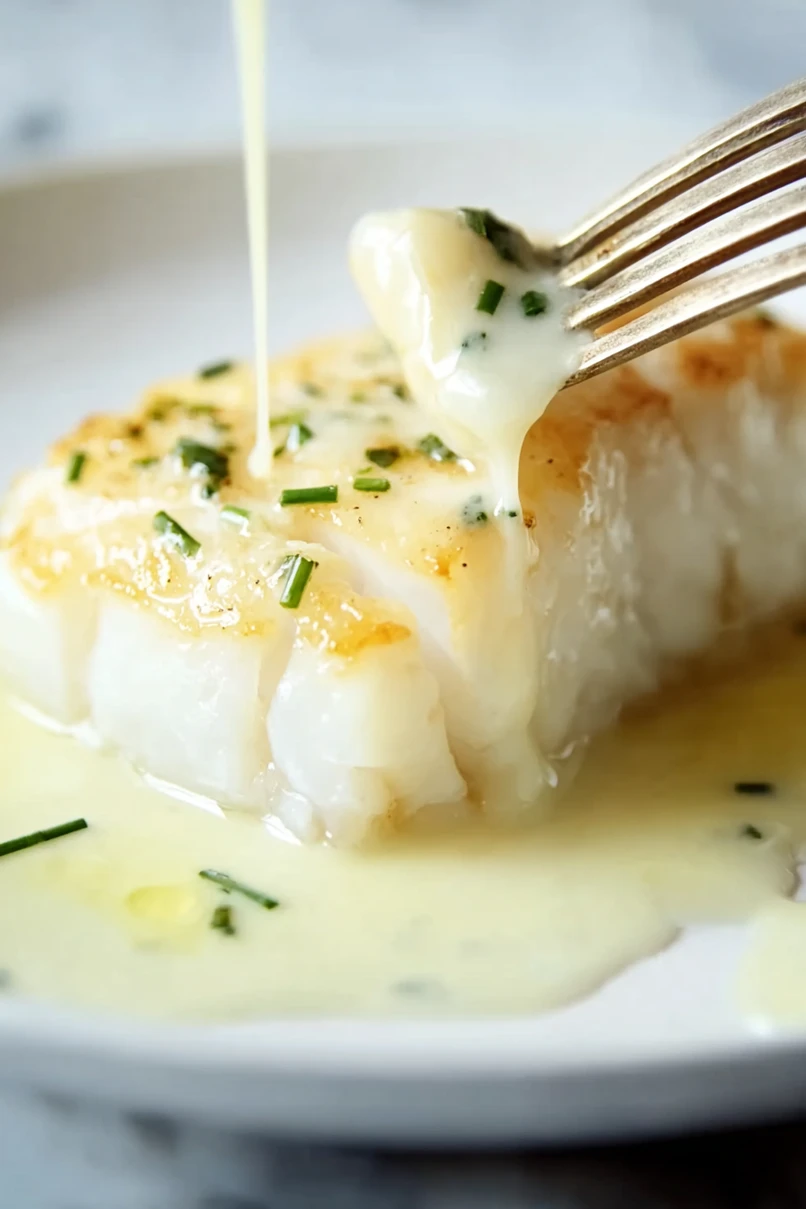
What to Serve With Halibut?
This elegant halibut dish pairs beautifully with simple sides that let the delicate fish and buttery sauce shine. A bed of fluffy rice pilaf or roasted fingerling potatoes makes the perfect base to soak up all that amazing sauce. For vegetables, try steamed asparagus, roasted Brussels sprouts, or a mix of sautéed green beans with sliced almonds – these lighter sides balance out the richness of the beurre blanc. I also love serving this with a crisp white wine like Sauvignon Blanc or Chablis, which complements both the fish and the sauce while cutting through the buttery flavors.
Storage Instructions
Keep Fresh: If you have leftover halibut with beurre blanc, place it in an airtight container and keep it in the fridge for up to 2 days. The sauce might separate a bit, but don’t worry – that’s totally normal! Just keep the fish and sauce in separate containers if possible.
Make Ahead: While this dish is best served fresh, you can prep some components ahead. The beurre blanc sauce can be made up to an hour before serving – just keep it warm (not hot) in a thermos or insulated container. The halibut should be cooked right before serving for the best taste and texture.
Warm Up: To enjoy leftover halibut, gently warm it in the microwave at 50% power in short bursts, or place it in a covered pan over low heat just until heated through. For the sauce, warm it slowly in a small pan over low heat while whisking – but be careful not to let it get too hot or it might separate!
| Preparation Time | 10-15 minutes |
| Cooking Time | 15-20 minutes |
| Total Time | 25-35 minutes |
| Level of Difficulty | Medium |
Estimated Nutrition
Estimated nutrition for the whole recipe (without optional ingredients):
- Calories: 600-700
- Protein: 40-50 g
- Fat: 50-60 g
- Carbohydrates: 5-10 g
Ingredients
For the beurre blanc sauce:
- 8 tbsp cold unsalted butter (cut into 1-inch cubes for faster melting)
- 1 tsp fresh dill (finely chopped for better distribution)
- salt to taste
- 1 tbsp minced shallots
- 2 tbsp lemon juice
- white pepper to taste
- 2 tbsp white wine (dry white wine like Sauvignon Blanc works best)
For the halibut:
- 1 tsp grapeseed oil (or any other neutral oil like avocado oil)
- 1/4 lemon
- 4 to 8 pieces halibut cheeks
- 1 tsp unsalted butter
Step 1: Prepare Ingredients
Start by mincing the shallots and setting them aside for later use.
Squeeze the lemon to extract the juice and measure out the white wine.
Also, cut the cold butter into tablespoon-size pieces and set aside to ensure a smooth cooking process.
Step 2: Create the Flavor Base
Place a small saucepan over medium heat and combine the shallots, lemon juice, and white wine.
Allow the mixture to come to a simmer, reducing the liquid by about two-thirds until it achieves a syrupy consistency.
This concentrated base will be crucial to the flavor profile of your sauce.
Step 3: Mix in Butter for the Beurre Blanc
Once the base is ready, turn the heat to the lowest setting.
Gradually whisk in the cold butter pieces one at a time, forming a smooth emulsion.
After all the butter pieces are incorporated, season the sauce with kosher salt and white pepper to your taste.
If desired, adjust with additional lemon juice to enhance the tanginess.
Keep the sauce warm by whisking frequently to prevent separation while you prepare the fish.
Step 4: Prepare and Cook the Fish
Heat a non-stick fry pan over medium heat and add grapeseed oil along with unsalted butter.
While the pan is heating up, pat the halibut cheeks dry with a paper towel and season with a bit of salt.
Cook the fish for about 1 to 2 minutes per side, or until they are just cooked through.
Finish the fish by squeezing a bit of fresh lemon juice over them for added brightness.
Step 5: Finalize the Beurre Blanc
Chop the fresh dill finely.
Whisk the chopped dill into the warm beurre blanc sauce.
This step gives the sauce a refreshing burst of herbal flavor, complementing the richness.
Step 6: Serve and Enjoy
Serve the halibut cheeks drizzled with the dill-infused beurre blanc sauce.
Enjoy the delightful balance of flavors and textures in your dish!


Thanks for sharing! Does it keep long?