Finding a comforting dinner that pleases everyone at the table can feel like an impossible task, especially on those busy weeknights when you’re juggling homework help, after-school activities, and trying to get a decent meal on the table. Between picky eaters and time constraints, dinner can sometimes feel more like a challenge than a pleasure.
That’s why this pot roast with rice has become my family’s go-to meal: it’s tender and satisfying, practically cooks itself while you’re busy with other things, and pairs perfectly with a simple side of rice that soaks up all those wonderful juices.
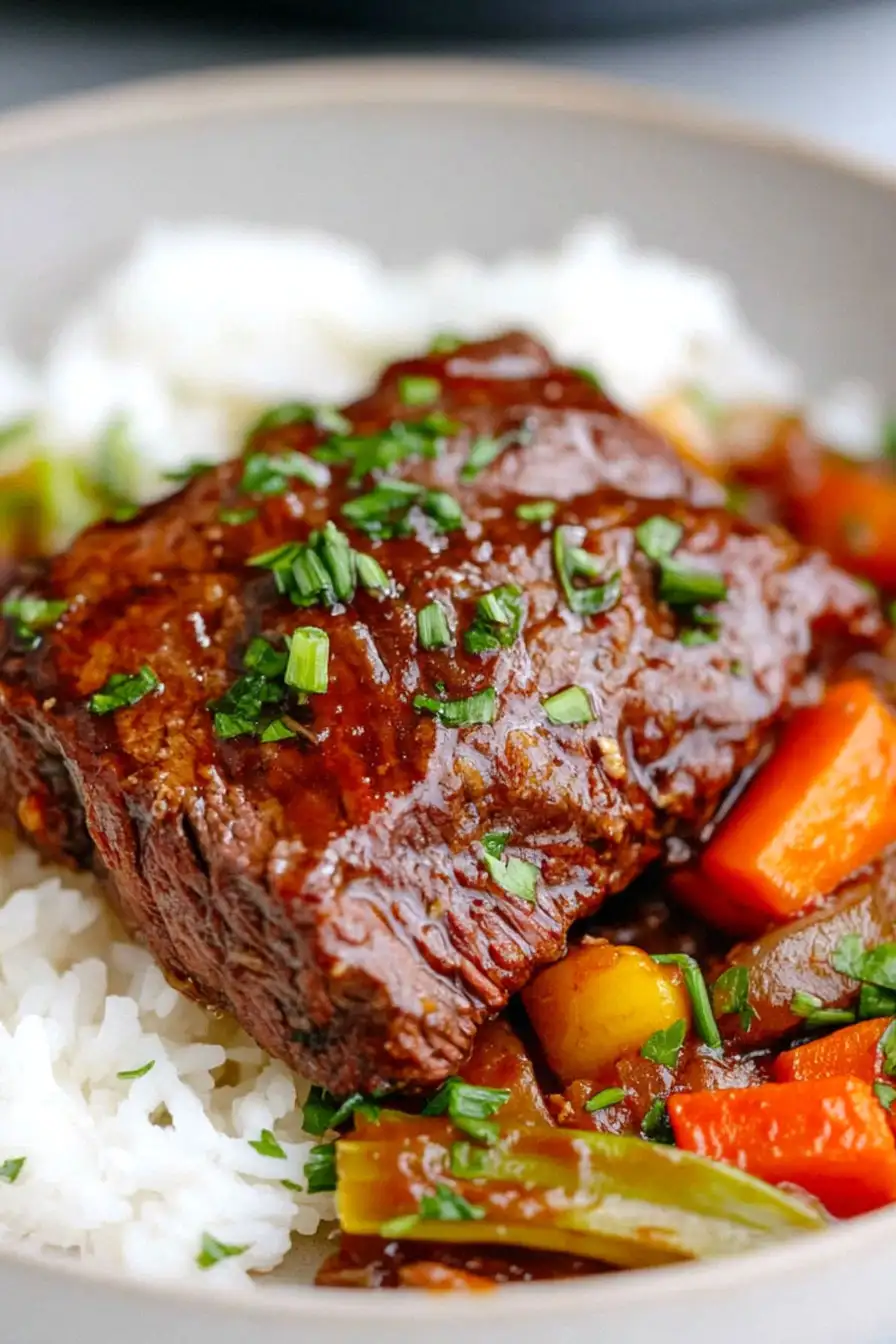
Why You’ll Love This Pot Roast
- Asian-inspired twist – This isn’t your typical pot roast – the combination of soy sauce, oyster sauce, and Shaoxing wine adds an exciting Asian flavor profile that’ll make this dish stand out from traditional recipes.
- Tender, fall-apart meat – The slow cooking process breaks down the chuck roast into incredibly tender meat that practically melts in your mouth.
- One-pot meal – Everything cooks together in a single pot, which means less cleanup and more time to enjoy your dinner.
- Make-ahead friendly – This pot roast actually tastes better the next day, making it perfect for meal prep or when you’re planning to host guests.
- Feeds a crowd – With 4 pounds of meat plus vegetables, this recipe makes enough to feed a large family with potential leftovers for the next day.
What Kind of Chuck Roast Should I Use?
For a delicious pot roast, you’ll want to look for a well-marbled chuck roast with good fat distribution throughout the meat. The best cuts typically come from the shoulder area and might be labeled as “chuck roast,” “shoulder roast,” “chuck shoulder pot roast,” or “chuck seven-bone pot roast.” When shopping, pick a piece that has a bright red color with white fat marbling running through it – this marbling is what keeps the meat moist and adds flavor during the long cooking process. If you’re not sure which cut to choose, don’t hesitate to ask your butcher for help selecting a piece that’s ideal for pot roast, and they can even trim any excess fat if needed.

Options for Substitutions
This pot roast recipe can be adapted with several ingredient swaps if needed:
- Chuck roast: While chuck roast is ideal for this dish, you can use other tough cuts like bottom round, brisket, or rump roast. Just keep the cooking time the same to ensure the meat gets tender.
- Shaoxing wine: If you can’t find Shaoxing wine, dry sherry works perfectly. In a pinch, you can use rice wine vinegar mixed with a touch of sugar, or even chicken broth with a splash of rice vinegar.
- Dark soy sauce: No dark soy sauce? Use regular soy sauce plus a tiny drop of molasses to get that deep color and flavor. Or just use all regular soy sauce – the taste will be lighter but still good.
- Oyster sauce: For a vegetarian option or if you’re out of oyster sauce, try hoisin sauce or mushroom sauce. You can also mix soy sauce with a bit of sugar and fish sauce.
- Cornstarch: To thicken the sauce, you can use flour (double the amount), arrowroot powder (same amount), or potato starch (same amount) instead of cornstarch.
- Fresh ginger: If fresh ginger isn’t available, you can use 1/4 teaspoon of ground ginger per piece of fresh ginger called for in the recipe.
Watch Out for These Mistakes While Cooking
The biggest mistake when cooking pot roast is rushing the process – this cut of meat needs low and slow cooking (about 2.5-3 hours) to break down the tough connective tissues and become fork-tender. Another common error is not searing the meat properly before braising; make sure to brown all sides until they’re deeply golden, as this step creates a rich flavor base for your sauce. The temperature control is crucial – keeping the liquid at a gentle simmer rather than a rolling boil will prevent the meat from becoming tough and chewy. For the best results, avoid lifting the lid too frequently during cooking as this lets heat escape and increases cooking time – instead, check the meat’s tenderness only in the final hour of cooking. To make the dish even better, let the pot roast rest for 15-20 minutes before slicing, allowing the juices to redistribute throughout the meat.
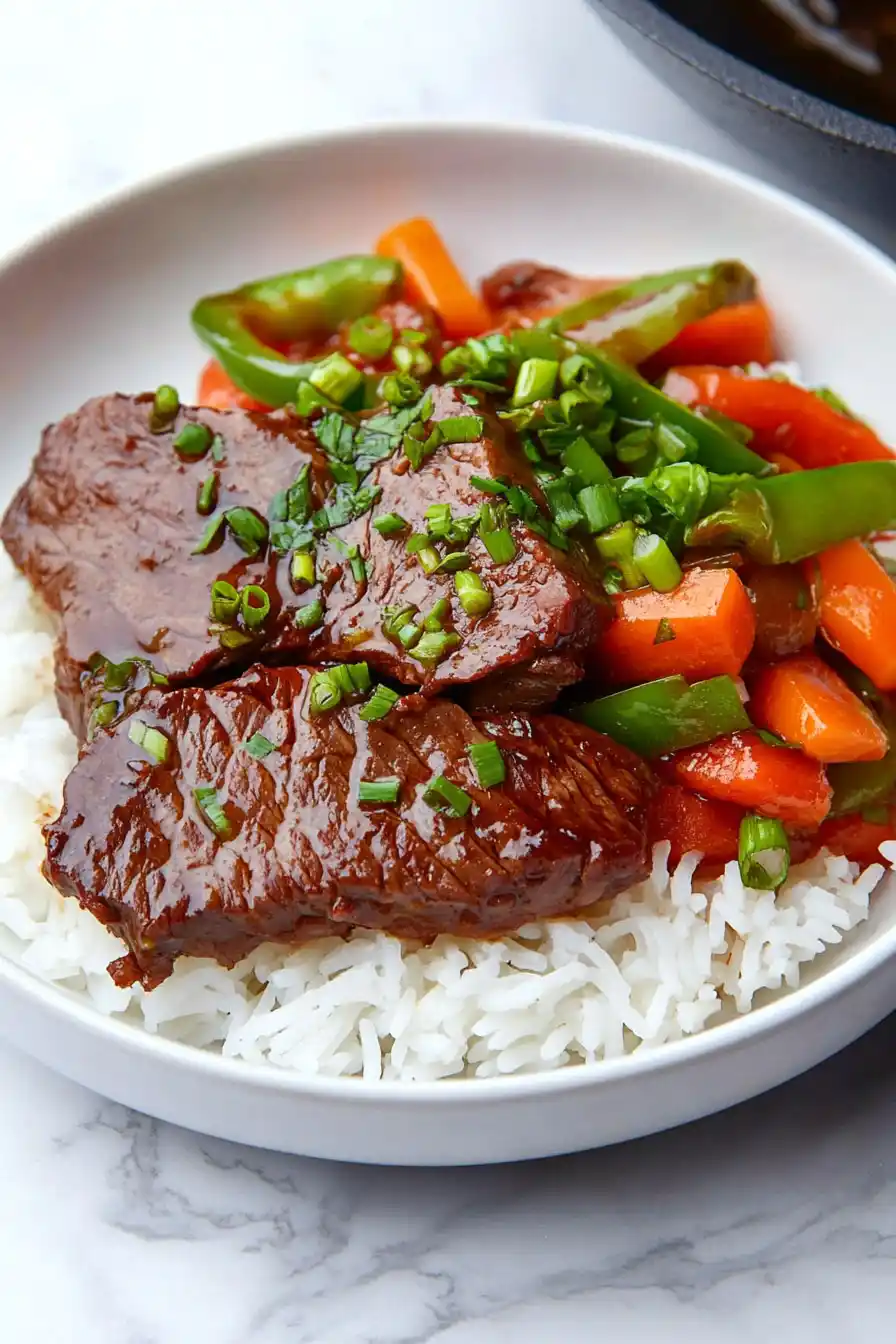
What to Serve With Pot Roast?
Since this Asian-inspired pot roast already comes with rice, you’ve got your main components covered, but a few simple sides can really round out the meal. A quick stir-fry of bok choy or Chinese broccoli would add a nice green element and works great with the savory sauce from the roast. For something cool and crisp, try a cucumber salad with rice vinegar and sesame oil, which offers a nice contrast to the rich meat. If you want to keep things super simple, some steamed snow peas or edamame would work perfectly too – just toss them with a little salt and they’re good to go.
Storage Instructions
Keep Fresh: Pop your leftover pot roast and rice in separate airtight containers and place them in the fridge. The pot roast will stay good for up to 4 days, while the rice is best eaten within 2 days. The flavors actually get even better after a day as they continue to meld together!
Freeze: This pot roast is perfect for freezing! Let it cool completely, then transfer to freezer-safe containers or bags. It’ll keep well for up to 3 months. I suggest freezing the meat and sauce separately from any rice you plan to save – rice tends to get a bit mushy when frozen with liquid.
Reheat: To warm up your pot roast, place it in a pot over low heat with a splash of beef broth to keep things moist. Stir occasionally until heated through. For the rice, sprinkle a few drops of water over it before microwaving to bring back its fluffy texture. You can also steam both the rice and meat for the best results.
| Preparation Time | 10-15 minutes |
| Cooking Time | 120-135 minutes |
| Total Time | 130-150 minutes |
| Level of Difficulty | Medium |
Estimated Nutrition
Estimated nutrition for the whole recipe (without optional ingredients):
- Calories: 2500-2800
- Protein: 180-200 g
- Fat: 120-140 g
- Carbohydrates: 150-170 g
Ingredients
For the pot roast:
- 1 tbsp oyster sauce
- 3 green onions (chopped for garnish)
- 2 tbsp regular soy sauce (adds umami)
- 4 lb boneless chuck roast (preferably USDA Choice or higher for better marbling)
- 2 tbsp vegetable oil
- 3 slices fresh ginger (about 1/4-inch thick)
- 1 tbsp dark soy sauce (for color and mild sweetness)
- 2 medium onions (cut into 1-inch chunks)
- 5 garlic cloves (lightly smashed)
- 2 tsp sugar
- 5 medium carrots (cut into 1-inch pieces)
- 2 cups beef broth (I like Pacific Foods Organic)
- 1/3 cup shaoxing wine
For the sauce thickener:
- 1/4 cup water (cold water works best to prevent lumps)
- 1 1/2 tbsp cornstarch
Step 1: Sear the Beef
Begin by patting the beef dry with a paper towel to ensure a good sear.
Heat oil in a large skillet or Dutch oven over medium heat.
Once the oil is hot, add the roast to the skillet and sear it for 5 minutes on each side, making sure it is browned all over.
This helps to lock in the flavor and juices.
Step 2: Start the Simmer
Add the ginger to the pan with the beef and cook for 2 minutes until it becomes fragrant.
Then, add the onions and garlic, followed by beef stock, wine, soy sauce, dark soy sauce, oyster sauce, and sugar.
Stir all the ingredients together and bring the mixture to a boil.
Once boiling, lower the heat to a simmer, cover the pan, and let it simmer for 1 hour and 30 minutes to allow the flavors to meld.
Step 3: Add Carrots and Continue Cooking
After 1 hour and 30 minutes, stir in the carrots to the simmering beef mixture.
Cover the pan again and let it simmer for an additional hour.
This will make the beef and carrots tender and absorb the delicious flavors of the sauce.
Step 4: Final Touches and Thicken the Sauce
Remove the lid and stir in the scallions along with the cornstarch mixture to thicken the sauce.
Continue to simmer, stirring gently, until the sauce has thickened and the scallions have wilted, which should take about 2-3 minutes.
Be sure to stir carefully so as not to break up the tender beef.
Step 5: Serve and Enjoy
Once the sauce has thickened to your liking, remove the dish from heat.
Serve the beef and vegetable mixture while hot, and enjoy your flavorful and hearty meal!