Here is my favorite Easter ham recipe, with a sweet and tangy glaze made from brown sugar, Dijon mustard, honey, and warm spices, topped with pineapple slices for a classic holiday look.
This Easter ham is what I make every single year for our family gathering. It’s become such a tradition that my kids actually ask about it weeks in advance. The glaze caramelizes beautifully in the oven, and using a spiral-sliced ham makes serving a breeze when you’ve got a crowd to feed.
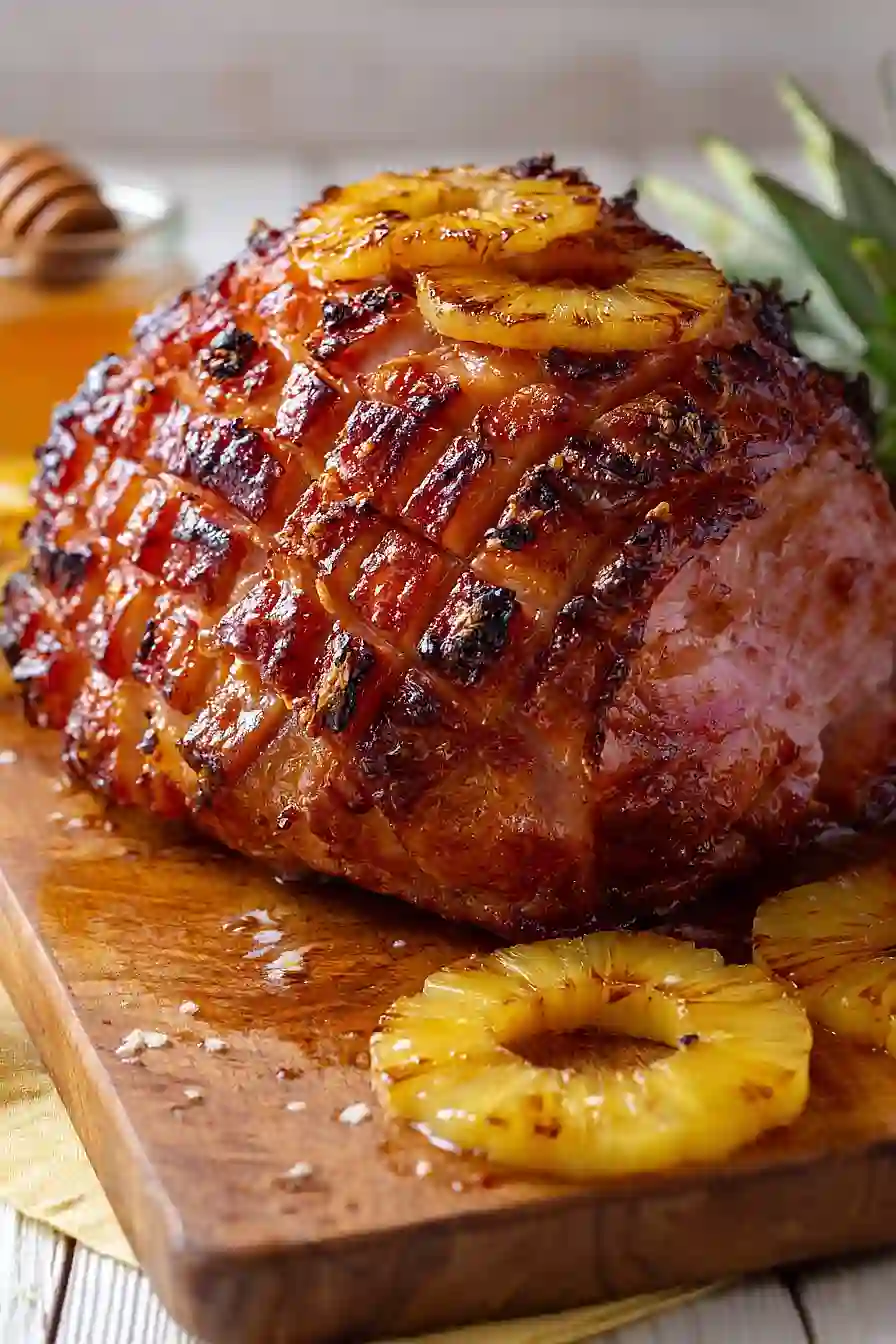
Why You’ll Love This Easter Ham
- Perfect for feeding a crowd – A 7-pound ham is ideal for holiday gatherings, giving you plenty of servings for your Easter dinner with leftovers for sandwiches throughout the week.
- Sweet and savory glaze – The combination of brown sugar, honey, and pineapple creates a delicious caramelized coating that makes every bite irresistible.
- Simple ingredients – You only need five basic ingredients to create an impressive centerpiece for your holiday table.
- Minimal hands-on time – While the ham bakes for about an hour and a half, you’re free to prepare side dishes or spend time with family.
- Holiday-worthy presentation – This glazed ham looks beautiful on the table and makes your Easter meal feel special without requiring advanced cooking skills.
What Kind of Ham Should I Use?
For this recipe, you’ll want to grab a pre-cooked spiral-sliced ham from your grocery store, which makes serving super easy since it’s already cut into slices. Most hams you’ll find at the store are already fully cooked, so you’re really just heating it through and adding that delicious glaze. A bone-in ham tends to have more flavor and stays moister during cooking, but a boneless ham works just fine if that’s what you prefer or if you’re feeding a smaller crowd. Just check the label to make sure it says “fully cooked” so you know you’re good to go.
Options for Substitutions
This Easter ham recipe is pretty straightforward, but here are some swaps you can make if needed:
- Brown sugar: You can use white sugar mixed with a tablespoon of molasses, or try maple sugar for a different flavor profile. Honey can also work, though you’ll want to reduce the separate honey in the recipe by about half a cup.
- Mustard: Yellow mustard, Dijon, or whole grain mustard all work here. Each gives a slightly different taste, but they’ll all add that tangy kick the glaze needs.
- Ham: Don’t substitute the ham itself – it’s the star of the show! Just make sure you’re using a pre-cooked ham, whether bone-in or boneless, as this recipe is designed to glaze and heat rather than fully cook raw meat.
- Pineapple: Fresh pineapple works great if you don’t have canned. You can also use pineapple juice (about 1/2 cup) if you prefer a glaze without chunks, or swap for orange slices for a citrus twist.
- Honey: Maple syrup makes a nice substitute and adds a deeper flavor. You could also use agave nectar, though it’s a bit less thick, so you might want to reduce it slightly on the stove first.
Watch Out for These Mistakes While Cooking
The biggest mistake people make with glazed ham is applying the sweet glaze too early, which causes it to burn and turn bitter instead of creating that beautiful caramelized coating – wait until the last 30-45 minutes of baking to add your brown sugar mixture for the best results.
Skipping the basting step every 15 minutes might seem like no big deal, but those pan juices are what keep your ham moist and build up layers of flavor, so set a timer and don’t forget this crucial step.
Another common error is not scoring the ham deep enough – your diamond cuts should go about 1/2-inch into the meat to allow the glaze to penetrate and create more surface area for caramelization.
Finally, resist the urge to crank up the oven temperature to speed things up, as cooking ham too hot will dry it out quickly, and since most hams are pre-cooked, you’re really just heating it through and adding flavor.

What to Serve With Easter Ham?
Easter ham is a showstopper that pairs beautifully with classic spring sides that balance out its sweet and savory flavors. I love serving it with creamy mashed potatoes or scalloped potatoes, which soak up all those delicious pan juices from the ham. Green beans almondine or roasted asparagus add a fresh, crisp element to the plate, and don’t forget about a warm dinner roll or two for mopping up any extra glaze. For a complete Easter spread, add a simple mixed green salad and maybe some roasted carrots or sweet potato casserole to round everything out.
Storage Instructions
Store: Leftover ham is a gift that keeps on giving! Wrap it tightly in aluminum foil or store in an airtight container in the fridge for up to 5 days. I love using the leftovers for sandwiches, omelets, or tossed into a quick pasta dish throughout the week.
Freeze: Ham freezes really well for up to 2 months. I like to slice or cube it first, then portion it into freezer bags so I can grab just what I need. This makes it super easy to add to soups, casseroles, or breakfast scrambles down the road.
Reheat: To warm up your ham, cover it with foil and heat in a 325°F oven until warmed through, about 10 minutes per pound. You can also reheat individual slices in the microwave for about 30-45 seconds. Add a splash of water or leftover glaze to keep it from drying out.
| Preparation Time | 15-20 minutes |
| Cooking Time | 60-90 minutes |
| Total Time | 75-110 minutes |
| Level of Difficulty | Medium |
| Servings | 14 servings |
Estimated Nutrition
Estimated nutrition for the whole recipe (without optional ingredients):
- Calories: 4700-5100
- Protein: 320-350 g
- Fat: 190-220 g
- Carbohydrates: 610-660 g
Ingredients
For the ham:
- 7 lb ham (I use Smithfield spiral-sliced for easier serving)
For the glaze:
- 2.25 cups brown sugar (packed firmly for a deeper caramel flavor)
- 4 tbsp mustard (I prefer Grey Poupon Dijon for a sharp contrast)
- 1.25 cups honey
- 0.25 tsp ground cloves
For the topping:
- 8 oz pineapple (I use Dole slices to decorate the surface)
Step 1: Prepare the Glaze and Score the Ham
- 7 lb ham
- 2.25 cups brown sugar
- 4 tbsp mustard
- 0.25 tsp ground cloves
Preheat your oven to 350°F.
While it heats, pat the ham dry with paper towels and place it cut-side down in a roasting pan.
Using a sharp knife, score the surface with a crosshatch diamond pattern, cutting about 1/2-inch deep into the ham’s exterior—this creates pockets for the glaze to penetrate and helps it caramelize beautifully during baking.
In a small bowl, whisk together the brown sugar, mustard, and ground cloves until well combined.
I like to pack the brown sugar firmly before measuring to ensure you get that deeper caramel flavor throughout the glaze.
Step 2: Apply Glaze and Decorate with Pineapple
- 1.25 cups honey
- 8 oz pineapple slices
- glaze mixture from Step 1
Pour the honey and the juice from the canned pineapple over the ham in the roasting pan, then spread or drizzle the glaze mixture from Step 1 evenly over the top and into the scored diamond cuts.
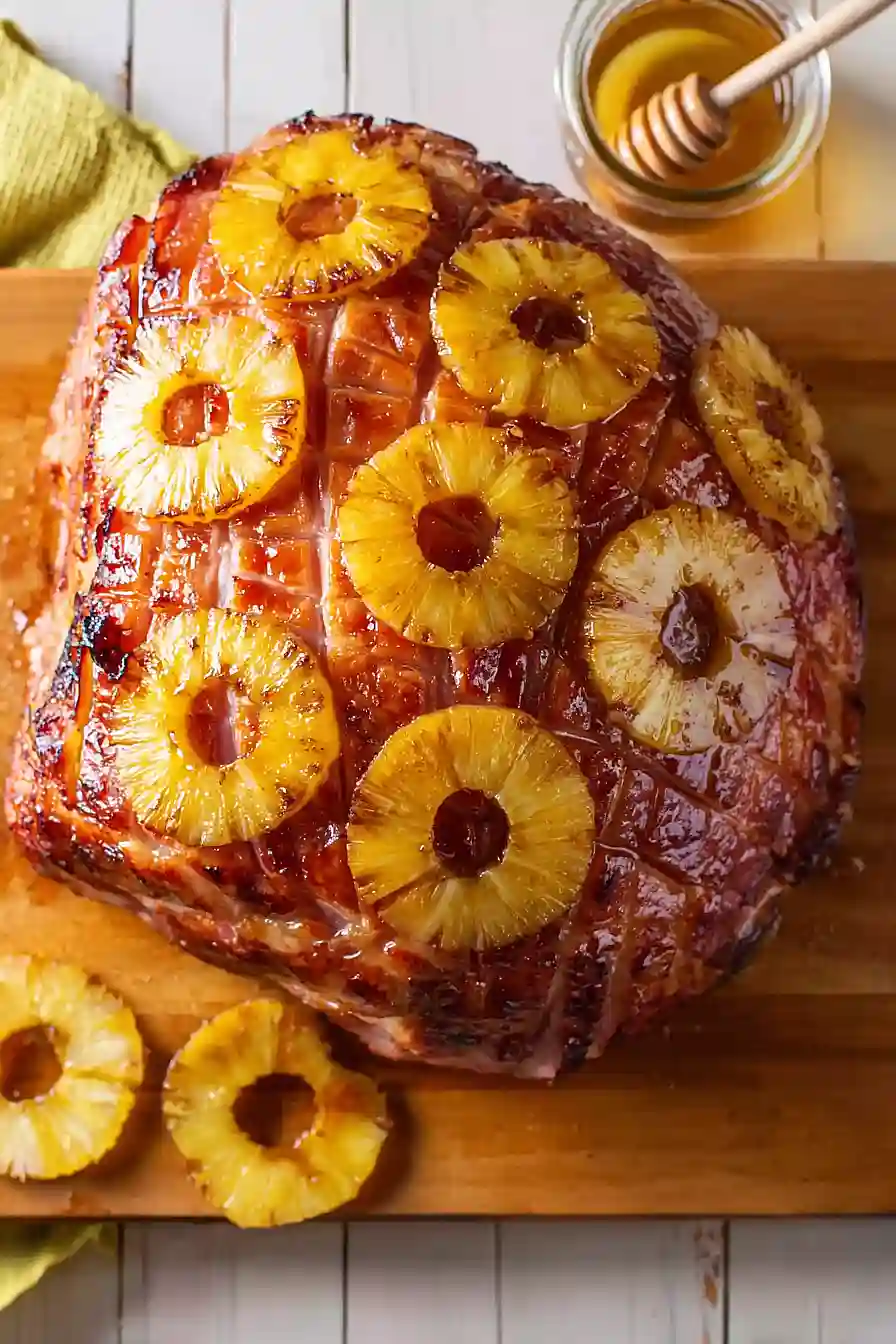
Arrange the pineapple slices decoratively across the ham’s surface, securing each slice with a toothpick to keep them in place as the ham cooks and releases moisture.
The pineapple not only adds visual appeal but also contributes subtle sweetness and helps keep the surface moist during the long bake.
Step 3: Bake and Baste for a Caramelized Finish
Place the prepared ham in the preheated 350°F oven and bake for 1 to 1.5 hours, depending on the exact size of your ham.
Every 15 minutes, carefully remove the pan from the oven and baste the ham by spooning the pan juices (which will pool at the bottom and contain dissolved glaze) over the top and sides—this is crucial for building a rich, caramelized crust and keeping the meat moist.
I always set a timer to make sure I don’t skip a basting; it really makes the difference in achieving that gorgeous glossy finish.
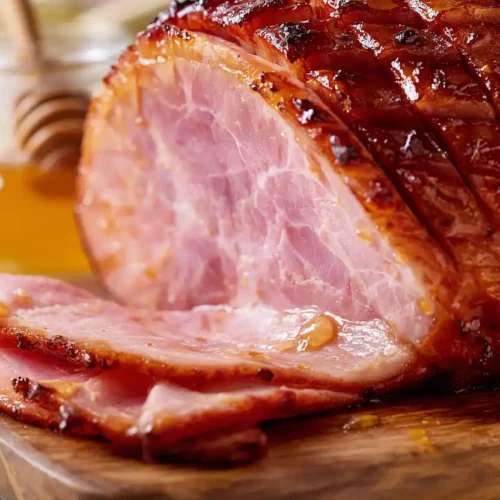
The ham is done when it’s heated through and the exterior has developed a deep, glossy caramel color.
Step 4: Rest and Serve
Remove the ham from the oven and let it rest in the pan for 10 minutes before transferring to a serving platter—this allows the juices to redistribute throughout the meat, keeping it moist when sliced.
Transfer the pan drippings to a small saucepan or gravy boat to serve alongside the ham as an optional glaze sauce for guests to drizzle over their slices.
Homemade Easter Ham
Ingredients
For the ham::
- 7 lb ham (I use Smithfield spiral-sliced for easier serving)
For the glaze::
- 2.25 cups brown sugar (packed firmly for a deeper caramel flavor)
- 4 tbsp mustard (I prefer Grey Poupon Dijon for a sharp contrast)
- 1.25 cups honey
- 0.25 tsp ground cloves
For the topping::
- 8 oz pineapple (I use Dole slices to decorate the surface)
Instructions
- Preheat your oven to 350°F. While it heats, pat the ham dry with paper towels and place it cut-side down in a roasting pan. Using a sharp knife, score the surface with a crosshatch diamond pattern, cutting about 1/2-inch deep into the ham's exterior—this creates pockets for the glaze to penetrate and helps it caramelize beautifully during baking. In a small bowl, whisk together the brown sugar, mustard, and ground cloves until well combined. I like to pack the brown sugar firmly before measuring to ensure you get that deeper caramel flavor throughout the glaze.
- Pour the honey and the juice from the canned pineapple over the ham in the roasting pan, then spread or drizzle the glaze mixture from Step 1 evenly over the top and into the scored diamond cuts. Arrange the pineapple slices decoratively across the ham's surface, securing each slice with a toothpick to keep them in place as the ham cooks and releases moisture. The pineapple not only adds visual appeal but also contributes subtle sweetness and helps keep the surface moist during the long bake.
- Place the prepared ham in the preheated 350°F oven and bake for 1 to 1.5 hours, depending on the exact size of your ham. Every 15 minutes, carefully remove the pan from the oven and baste the ham by spooning the pan juices (which will pool at the bottom and contain dissolved glaze) over the top and sides—this is crucial for building a rich, caramelized crust and keeping the meat moist. I always set a timer to make sure I don't skip a basting; it really makes the difference in achieving that gorgeous glossy finish. The ham is done when it's heated through and the exterior has developed a deep, glossy caramel color.
- Remove the ham from the oven and let it rest in the pan for 10 minutes before transferring to a serving platter—this allows the juices to redistribute throughout the meat, keeping it moist when sliced. Transfer the pan drippings to a small saucepan or gravy boat to serve alongside the ham as an optional glaze sauce for guests to drizzle over their slices.

