There’s something special about making jam at home, especially when summer brings fresh strawberries and rhubarb to our local markets. I’ve been making this no-pectin version for years, and it’s become a family favorite. My kids love watching the fruit bubble away on the stove, turning into something they can spread on their morning toast.
Making jam without pectin might sound tricky, but trust me – it’s actually easier than you’d think. The natural pectin in the fruit does all the heavy lifting, and you’ll end up with a perfectly set jam that tastes just like summer. Plus, with only a few ingredients, you can really taste the fruit instead of having it hidden behind added thickeners.
Whether you’re new to jam-making or just looking for a simpler way to preserve the season’s best fruits, this recipe is a great place to start. I always make extra to share with neighbors and friends, and it’s become my go-to gift for special occasions.
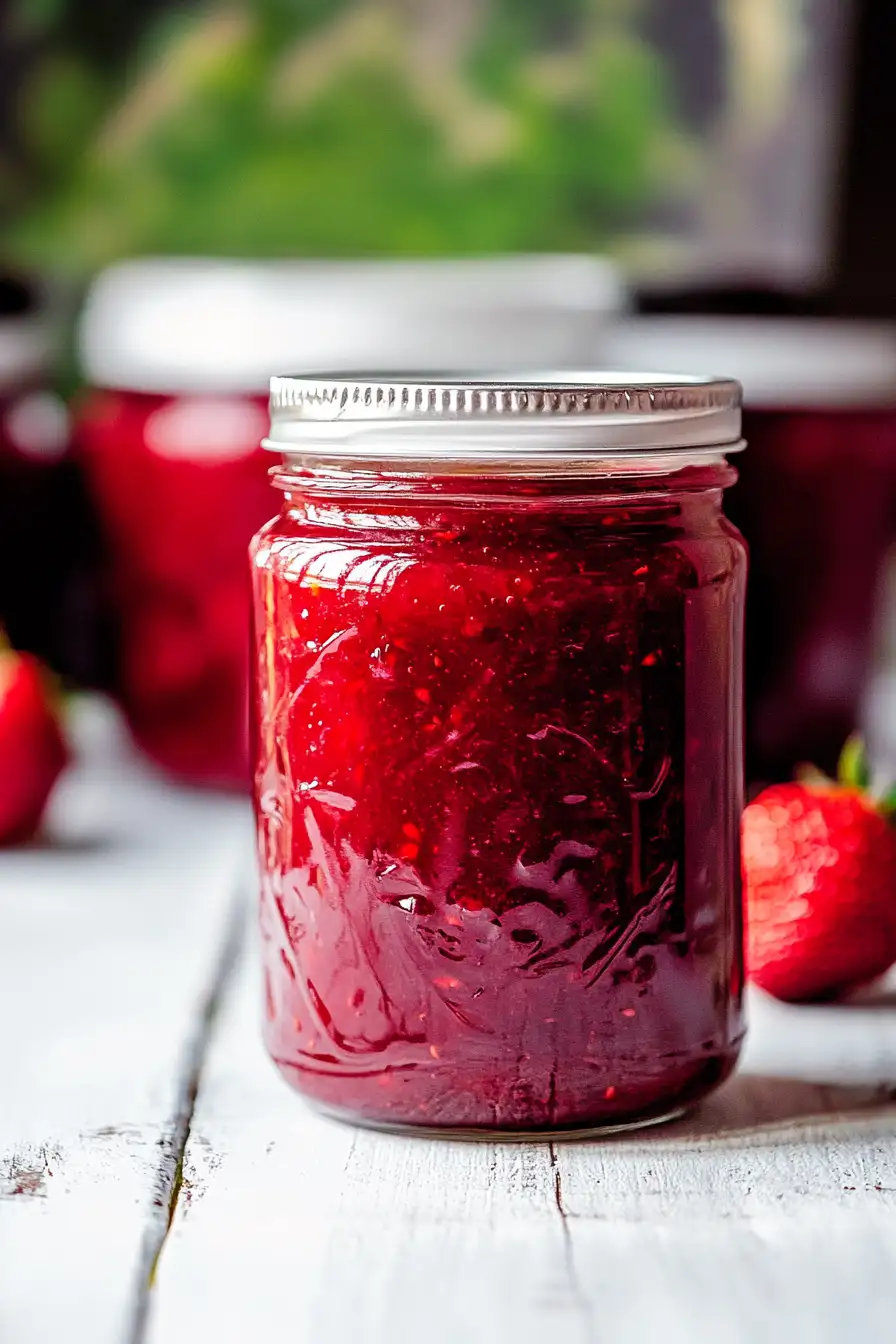
Why You’ll Love This Strawberry Rhubarb Jam
- No special ingredients needed – Skip the pectin and other preserving agents – this jam uses just fresh fruit, sugar, and common pantry ingredients you already have at home.
- Pure fruit flavor – The natural sweetness of strawberries perfectly balances the tartness of rhubarb, creating a jam that tastes like summer in a jar.
- Money-saving recipe – Make the most of seasonal produce by turning fresh strawberries and rhubarb into homemade jam that costs less than store-bought versions.
- Customizable taste – You can adjust the vanilla and almond extracts to match your preference, making this recipe truly your own.
What Kind of Rhubarb Should I Use?
For jam making, both green and red rhubarb stalks will work perfectly fine – the color difference doesn’t affect the taste or jamming properties. Look for stalks that are firm and crisp, with no signs of wilting or soft spots. While thinner stalks tend to be more tender, the thicker ones work just as well for jam since everything gets cooked down anyway. Just remember to only use the stalks and discard the leaves, as rhubarb leaves are toxic. If you’re buying rhubarb in season (spring to early summer), you can chop and freeze extra stalks for making jam later in the year – frozen rhubarb works just as well as fresh in this recipe.
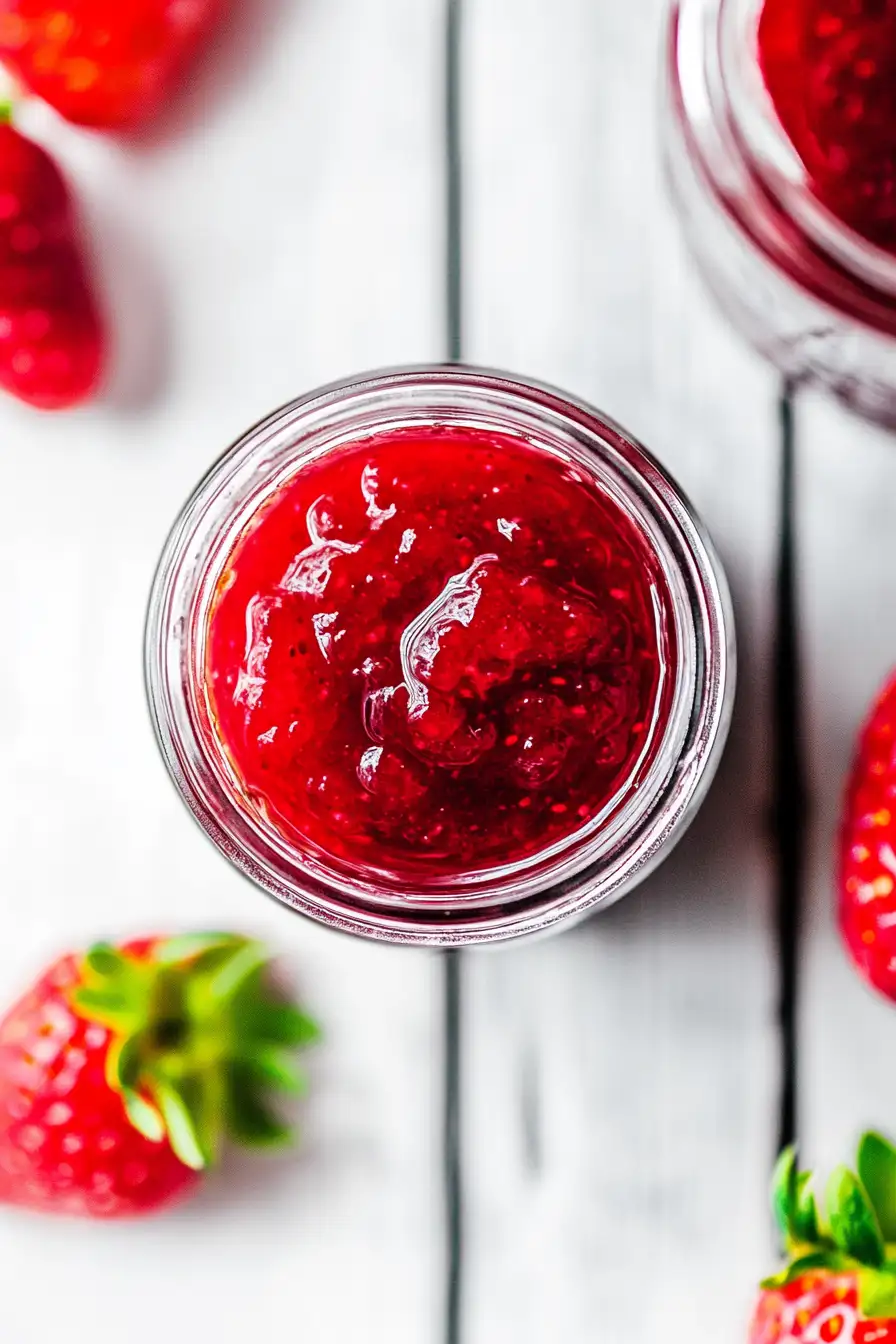
Options for Substitutions
While this jam recipe is pretty straightforward, here are some helpful substitution tips:
- Rhubarb: Fresh rhubarb is best, but frozen works too – just thaw and drain it first. Note that you can’t substitute rhubarb with another ingredient as it’s essential for this specific jam.
- Strawberries: Fresh or frozen strawberries both work great. If using frozen, no need to thaw them first. The cooking time might be slightly longer with frozen berries.
- White sugar: For this no-pectin recipe, stick with white sugar as it’s crucial for proper setting. Brown sugar or sugar alternatives won’t give you the same results and might prevent the jam from thickening properly.
- Lemon juice: You can use bottled lemon juice if fresh isn’t available. In a pinch, lime juice works too, though it will add a slightly different flavor.
- Extracts: Feel free to skip either extract if you don’t have them. You could try orange extract instead, or add a dash of cinnamon for a different spin. Just don’t use more than 1 teaspoon total of any extracts.
Watch Out for These Mistakes While Cooking
The biggest challenge when making pectin-free jam is achieving the right consistency – cooking it too quickly on high heat can lead to a runny result or worse, a burnt bottom. Instead, maintain a steady medium heat and stir frequently, watching for the mixture to thicken and coat the back of a spoon (this usually takes 45-60 minutes). Another common mistake is not testing the jam’s readiness properly – place a small plate in the freezer before you start, then drop a small amount of jam on the cold plate and run your finger through it; if it wrinkles and stays separated, it’s ready. To prevent crystallization, make sure your sugar is completely dissolved before bringing the mixture to a boil, and don’t skip the lemon juice as it’s crucial for both proper setting and safe preservation. For the best flavor development, add your extracts only in the final few minutes of cooking, as prolonged heat can dull their impact.

What to Serve With Strawberry Rhubarb Jam?
This sweet and tangy jam is super versatile and works great spread on all sorts of breakfast favorites. The most obvious (and delicious) way to enjoy it is on warm, buttery toast or freshly baked biscuits right out of the oven. For breakfast or brunch, try spreading it on English muffins, bagels, or swirling it into plain yogurt with some crunchy granola. You can also use it as a filling for thumbprint cookies, as a topping for vanilla ice cream, or spread between layers of a simple pound cake for an extra special treat.
Storage Instructions
Preserve: For the best results, pour your hot jam into clean, sterilized jars leaving 1/4 inch headspace, then process in a water bath for 10 minutes. Once properly sealed, these jars will keep at room temperature in a cool, dark place for up to 1 year. After opening, keep refrigerated.
Refrigerate: If you’re not processing the jam for long-term storage, no worries! Just pop it in airtight containers or jars and keep it in the fridge. It’ll stay good for about 3-4 weeks – perfect for enjoying on your morning toast or stirring into yogurt.
Freeze: Want to save some for later? This jam freezes really well! Just leave about 1/2 inch of space at the top of your freezer-safe containers (the jam will expand when frozen) and it’ll keep for up to 6 months. When you’re ready to use it, just thaw it overnight in the fridge.
| Preparation Time | 10-15 minutes |
| Cooking Time | 60-120 minutes |
| Total Time | 70-135 minutes |
| Level of Difficulty | Medium |
Estimated Nutrition
Estimated nutrition for the whole recipe (without optional ingredients):
- Calories: 4800-5000
- Protein: 5-10 g
- Fat: 0-5 g
- Carbohydrates: 1200-1300 g
Ingredients
- 3/4 tsp salt
- 1 tsp almond extract (gives the jam a unique depth of flavor)
- 1/4 cup fresh lemon juice
- 7 cups fresh rhubarb (sliced into 1/2-inch pieces)
- 7 cups strawberries (fresh or frozen, hulled and halved)
- 4 cups granulated sugar (Domino or C&H brands work well)
- 1 tsp pure vanilla extract
Step 1: Prepare the Ingredients
Begin by placing the pieces of rhubarb and strawberries into a large heavy-bottom saucepan.
Add sugar, lemon juice, salt, and pepper to the pan, then stir them together to combine all the ingredients.
Step 2: Cook the Jam
Place the saucepan over medium heat and bring the mixture to a boil, stirring occasionally to prevent sticking.
Once boiling, partially cover the pan, adjusting the lid to cover about 80% of it.
Adjust the heat to maintain a gentle simmer instead of a violent boil.
Insert a small dish into the freezer for later use.
Allow the jam to cook for at least one hour to two hours, stirring frequently, especially as it thickens to prevent splattering.
Step 3: Test the Jam’s Consistency
After one hour of cooking, remove the frozen dish and place a teaspoon or two of jam onto it.
Let it cool for a minute, then run your finger through the jam to check the consistency.
If it’s still runny, return the dish to the freezer and continue cooking, re-testing the consistency every 15 minutes.
Step 4: Finalize Flavoring
Once the jam has reached the desired thickness, remove the pan from heat.
Stir in the vanilla and almond extracts, starting with 1/2 teaspoon of each.
Taste and adjust to your preference.
If desired, add more black pepper for an additional kick.
Step 5: Jar the Jam
Ladle the jam into sterilized, dry glass jars, leaving about 1/4 inch of room at the top.
Use a damp cloth or paper towel to wipe the tops of the jars clean and ensure a good seal.
Cap the jars and screw on the lids loosely.
Step 6: Process the Jars
Bring a large pot of water, or a water-bath canner, to a rolling boil.
Gently lower the jars into the boiling water using tongs, ensuring the water covers the jars by at least 1/2 inch.
Process for 10 minutes.
Afterward, remove the jars and place them upside down on a dry towel to cool completely.
Step 7: Ensure Proper Sealing
Once the jars are completely cool, check the seals by gently pressing down on the center of each lid.
If a lid pops up and down, it isn’t sealed properly.
Store any unsealed jars in the refrigerator to be used within 3 weeks, or freeze them for 6-12 months.
Properly sealed jars can be kept in a cool, dark place for up to 2 years.