I grew up thinking corned beef and cabbage had to be cooked with beer. That’s just how everyone made it, right? Turns out, you don’t need beer at all to get that tender, flavorful corned beef we all love on St. Patrick’s Day—or any random Tuesday, honestly.
The secret is using apple cider vinegar and a good long simmer in water. The vinegar does the same job as beer, helping to break down the meat and add a little tang, without any alcohol involved. This version is perfect if you don’t drink, if you’re cooking for kids, or if you just don’t want to open a beer at 10 AM on a weekday.
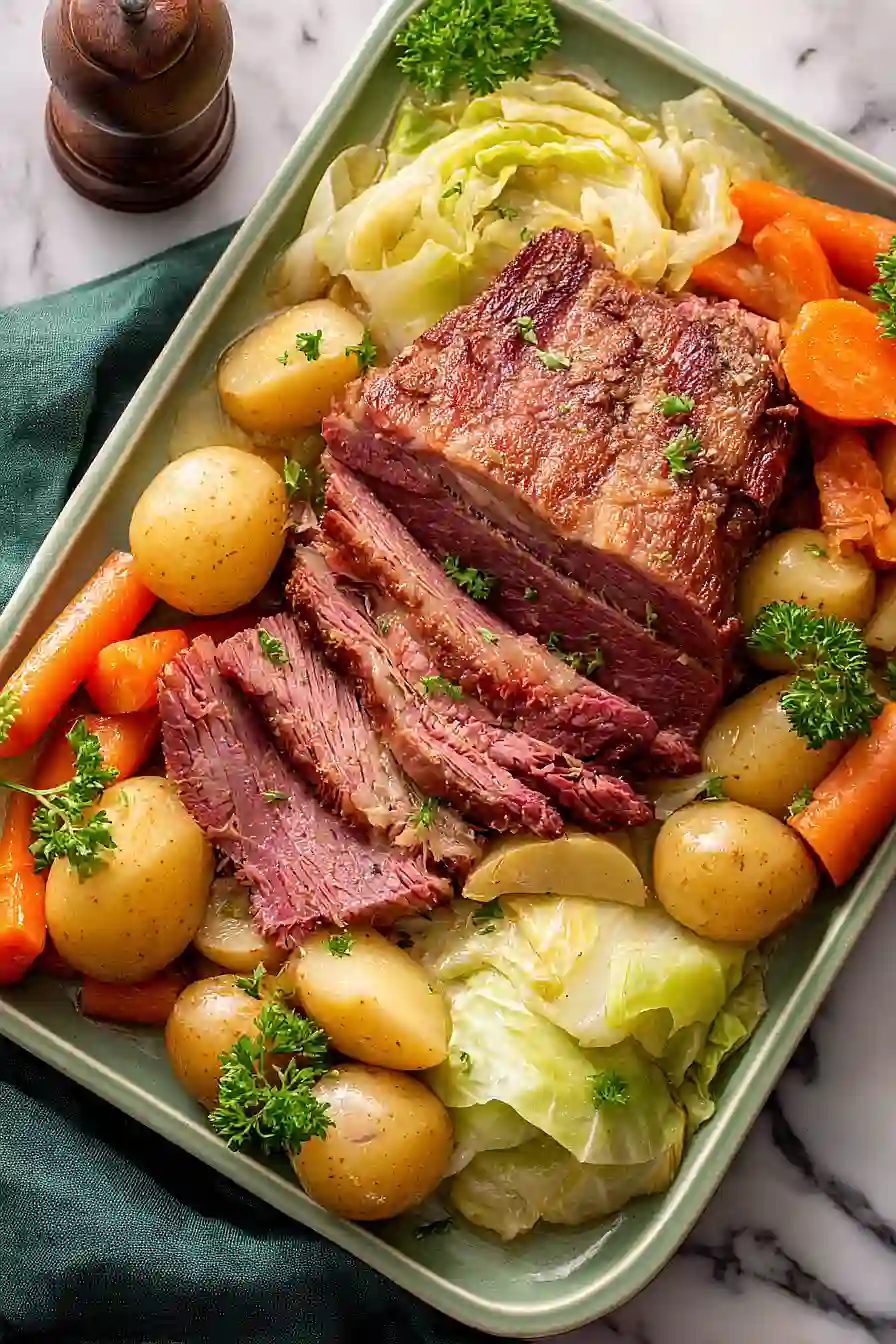
Why You’ll Love This Corned Beef and Cabbage
- No beer required – This recipe skips the beer entirely, making it perfect for anyone who prefers to cook without alcohol or wants a more family-friendly version.
- Set it and forget it – Just toss everything in your slow cooker and let it work its magic for 8-10 hours while you’re at work or running errands.
- Complete one-pot meal – With tender corned beef, potatoes, carrots, and cabbage all cooking together, you get a full dinner without juggling multiple pots and pans.
- Simple, everyday ingredients – No fancy ingredients needed here—just straightforward items you can easily find at any grocery store.
- Perfect for meal prep – This recipe makes plenty of servings, so you’ll have delicious leftovers for sandwiches or quick reheated meals throughout the week.
What Kind of Corned Beef Should I Use?
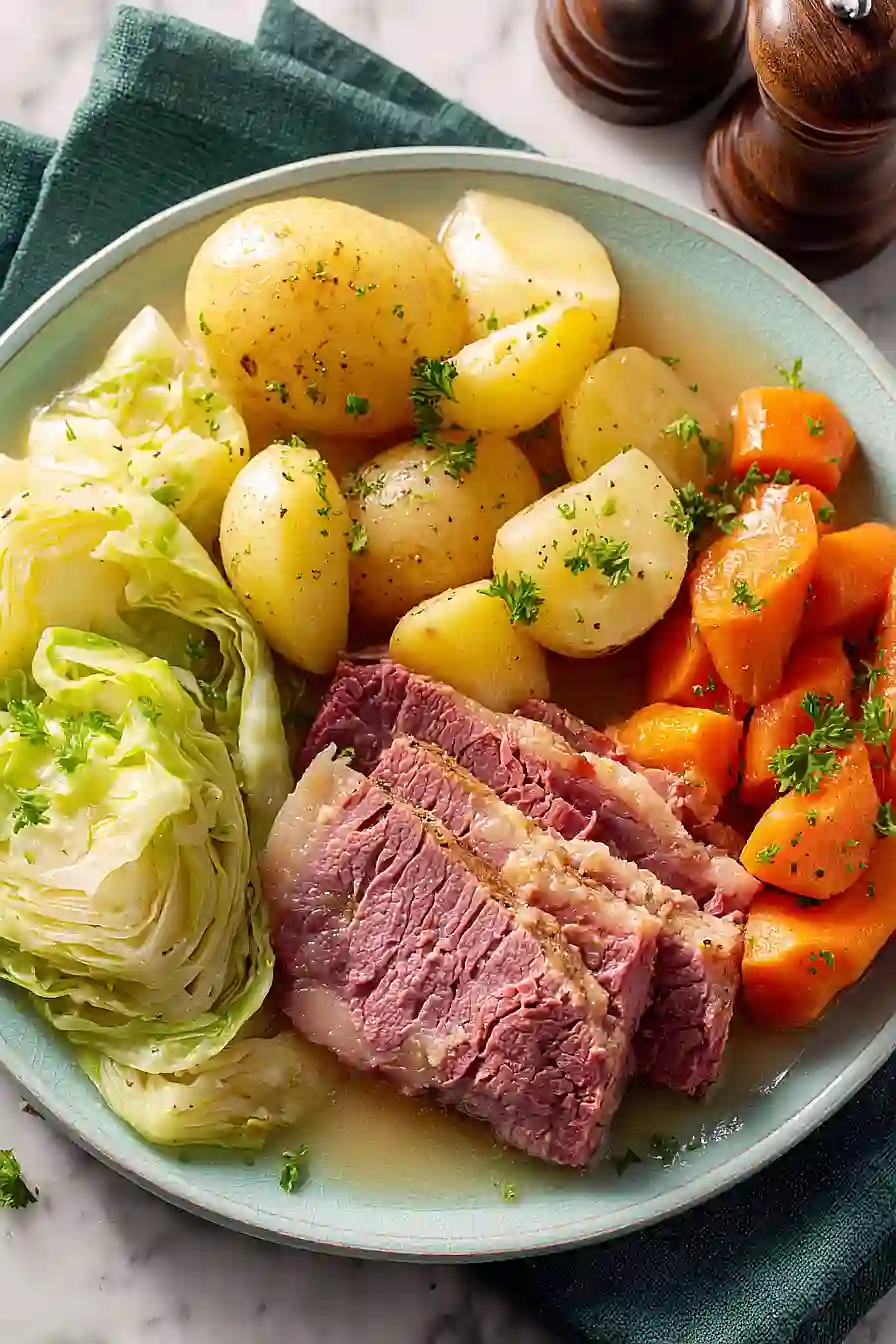
You’ll find corned beef brisket in two cuts at the grocery store: flat cut and point cut. The flat cut is leaner and slices more evenly, making it the popular choice for most home cooks, while the point cut has more marbling and fat, which means it’s a bit more flavorful and stays juicier during cooking. Either cut will work great for this recipe, so just grab whichever one looks good at your store. Most corned beef comes pre-brined in a vacuum-sealed package with a spice packet included, which makes prep super easy – just rinse it off before cooking to remove excess salt.
Options for Substitutions
This classic dish is pretty forgiving when it comes to swaps:
- Corned beef brisket: The corned beef is really the star here and shouldn’t be substituted – it’s what makes this dish what it is. However, you can use a flat cut or point cut depending on what’s available. The point cut has more fat and will be more tender.
- Potatoes: Any potato variety works well here. Yukon golds hold their shape nicely, russets are more budget-friendly, and red potatoes add a nice waxy texture. Just adjust cooking time if needed – smaller potatoes cook faster.
- Green cabbage: You can use savoy cabbage for a more tender result, or try half green and half purple cabbage for some color. Just note that purple cabbage will bleed color into the cooking liquid.
- Carrots: Regular carrots are traditional, but parsnips make a nice substitute if you want something a bit sweeter and earthier. You can also use baby carrots to save on prep time.
- Water: While this recipe skips beer, you can replace some of the water with beef or chicken broth for extra flavor. Apple cider or apple juice (about 1 cup) also adds a nice subtle sweetness.
Watch Out for These Mistakes While Cooking
The biggest mistake people make with corned beef is not rinsing it before cooking, which can leave your dish way too salty since the brisket comes packed in brine – give it a good rinse under cold water and pat it dry before adding it to the slow cooker.
Another common error is adding all the vegetables at once, which turns your potatoes and carrots into mush while leaving the cabbage undercooked – stick to the timing in the recipe, adding heartier vegetables first and cabbage last.
Make sure your corned beef is fully submerged in liquid during cooking, adding more water if needed, as exposed meat can dry out and become tough.
Finally, don’t skip the 15-minute rest after cooking – slicing the beef immediately causes all the juices to run out, and always slice against the grain for the most tender results.
What to Serve With Corned Beef and Cabbage?
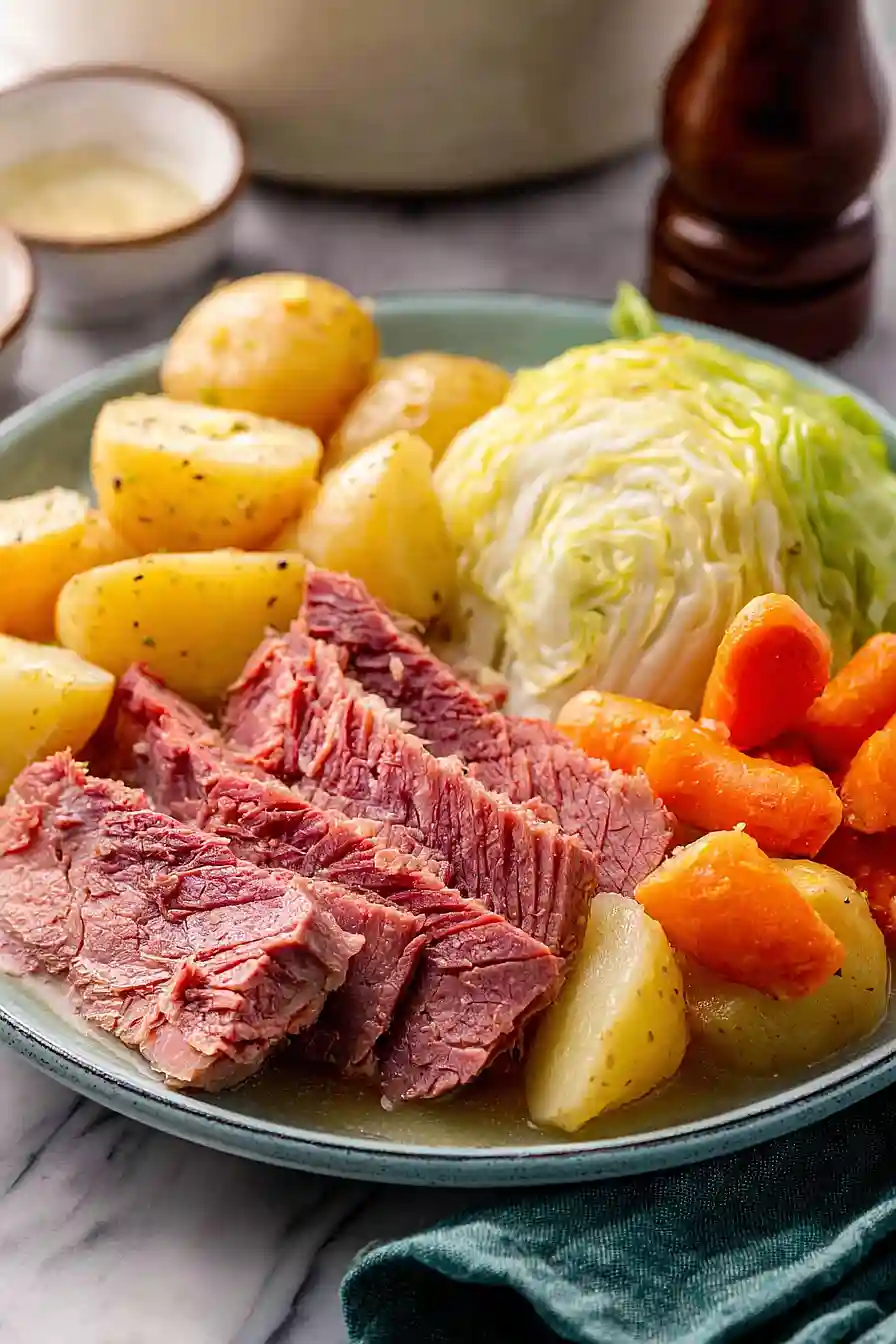
This dish is pretty hearty on its own since it already comes with potatoes, carrots, and cabbage, but I love adding some crusty rye bread or Irish soda bread on the side for soaking up all those delicious juices. A good grainy mustard or horseradish sauce is a must-have for me – it cuts through the richness of the corned beef perfectly. If you want to round out the meal, a simple side salad with a tangy vinaigrette helps balance everything out, or you could serve some buttered dinner rolls if you’re feeding a crowd. Some people also like to add a side of roasted root vegetables like parsnips or turnips to complement the flavors.
Storage Instructions
Store: Keep your leftover corned beef and cabbage in separate airtight containers in the fridge for up to 4 days. I like to store them separately because the cabbage can get a bit mushy if it sits with the meat for too long, and this way you can mix and match your portions.
Freeze: The corned beef freezes great for up to 3 months when wrapped tightly in plastic wrap and then placed in a freezer bag. I don’t recommend freezing the cooked cabbage and potatoes though, as they tend to get watery and lose their texture when thawed.
Reheat: Warm up the corned beef and veggies in a covered pot with a splash of water over medium-low heat, stirring occasionally. You can also microwave individual portions on medium power for 2-3 minutes until heated through.
| Preparation Time | 10-15 minutes |
| Cooking Time | 8-10 hours |
| Total Time | 8-10 hours |
| Level of Difficulty | Easy |
| Servings | 6 servings |
Estimated Nutrition
Estimated nutrition for the whole recipe (without optional ingredients):
- Calories: 3800-4200
- Protein: 275-310 g
- Fat: 210-240 g
- Carbohydrates: 185-210 g
Ingredients
- 4 lb corned beef brisket (I use Libby’s for the best fat-to-meat ratio)
- 1 large onion (cut into 1/2-inch thick wedges)
- 4 large garlic cloves (smashed to release oils and flavor)
- 3 bay leaves
- 3.5 cups water
- 1 tablespoon apple cider vinegar
- 1/2 teaspoon black pepper
- 2 lb potatoes (I prefer Ore-Ida for consistent texture when boiling)
- 3 carrots (peeled and cut into 2-inch chunks)
- 1 green cabbage
Step 1: Prepare Mise en Place and Season the Beef
- 1 large onion
- 4 large garlic cloves
- 1 green cabbage
- 3 carrots
- 2 lb potatoes
Cut the onion into 1/2-inch thick wedges and smash the garlic cloves with the side of your knife to release their oils and maximize flavor.
Cut the cabbage into wedges (leaving some core intact to keep pieces from falling apart during cooking).
Peel and cut the carrots into 2-inch chunks, and cut the potatoes into similar-sized pieces so everything cooks evenly.
This prep work ensures nothing delays the cooking process once everything goes into the slow cooker.
Step 2: Build the Cooking Base with Beef and Aromatics
- 4 lb corned beef brisket
- onion wedges from Step 1
- garlic from Step 1
- 3 bay leaves
- 3.5 cups water
- 1 tablespoon apple cider vinegar
- 1/2 teaspoon black pepper
Place the corned beef brisket in your slow cooker and arrange the onion wedges around it.
Add the smashed garlic cloves and bay leaves, then pour in the water (it should mostly cover the beef).
Stir in the apple cider vinegar and black pepper.
I like using apple cider vinegar here instead of beer because it adds brightness without heaviness, and it complements the beef’s natural richness.
Cover and set to low heat for 8-10 hours—the long, gentle cooking will render the fat and make the meat incredibly tender.
Step 3: Add Root Vegetables at the Midpoint
- potatoes from Step 1
- carrots from Step 1
After the beef has cooked for 3 hours, add the potatoes and carrots from Step 1 to the slow cooker.
Stir them gently into the broth so they’re partially submerged—this ensures even cooking and allows them to absorb the flavorful cooking liquid.
These vegetables need about 5-7 hours to become tender, so they’ll finish right around the same time as the beef.
Step 4: Finish with Cabbage for Optimal Texture
- cabbage from Step 1
About 2 hours before the cooking time ends (around the 6-8 hour mark depending on your slow cooker’s intensity), add the cabbage wedges from Step 1.
Push them down into the liquid so they cook evenly.
I find that adding cabbage this late keeps it tender but not mushy—if you add it at the beginning, it becomes too soft and loses its structure.
The final 2 hours gives it just enough time to become silky while maintaining some integrity.
Step 5: Rest and Slice the Beef
Once cooking is complete, carefully remove the corned beef from the slow cooker and place it on a cutting board.
Let it rest for 15 minutes—this allows the juices to redistribute throughout the meat, ensuring it stays moist and tender when sliced.
While the beef rests, use a slotted spoon to transfer the vegetables to a serving platter, leaving the cooking liquid in the slow cooker to keep everything warm.
Step 6: Slice, Plate, and Serve
Slice the rested beef against the grain into 1/4-inch thick slices—cutting against the grain breaks up the muscle fibers and makes each bite more tender.
Arrange the sliced beef on a serving platter with the cooked vegetables from Step 5.
Pour some of the cooking broth over everything to keep it moist and flavorful, or serve the broth on the side for drizzling.
This one-pot meal is now ready to serve.
Irresistible Corned Beef and Cabbage Without Beer
Ingredients
- 4 lb corned beef brisket (I use Libby's for the best fat-to-meat ratio)
- 1 large onion (cut into 1/2-inch thick wedges)
- 4 large garlic cloves (smashed to release oils and flavor)
- 3 bay leaves
- 3.5 cups water
- 1 tablespoon apple cider vinegar
- 1/2 teaspoon black pepper
- 2 lb potatoes (I prefer Ore-Ida for consistent texture when boiling)
- 3 carrots (peeled and cut into 2-inch chunks)
- 1 green cabbage
Instructions
- Cut the onion into 1/2-inch thick wedges and smash the garlic cloves with the side of your knife to release their oils and maximize flavor. Cut the cabbage into wedges (leaving some core intact to keep pieces from falling apart during cooking). Peel and cut the carrots into 2-inch chunks, and cut the potatoes into similar-sized pieces so everything cooks evenly. This prep work ensures nothing delays the cooking process once everything goes into the slow cooker.
- Place the corned beef brisket in your slow cooker and arrange the onion wedges around it. Add the smashed garlic cloves and bay leaves, then pour in the water (it should mostly cover the beef). Stir in the apple cider vinegar and black pepper. I like using apple cider vinegar here instead of beer because it adds brightness without heaviness, and it complements the beef's natural richness. Cover and set to low heat for 8-10 hours—the long, gentle cooking will render the fat and make the meat incredibly tender.
- After the beef has cooked for 3 hours, add the potatoes and carrots from Step 1 to the slow cooker. Stir them gently into the broth so they're partially submerged—this ensures even cooking and allows them to absorb the flavorful cooking liquid. These vegetables need about 5-7 hours to become tender, so they'll finish right around the same time as the beef.
- About 2 hours before the cooking time ends (around the 6-8 hour mark depending on your slow cooker's intensity), add the cabbage wedges from Step 1. Push them down into the liquid so they cook evenly. I find that adding cabbage this late keeps it tender but not mushy—if you add it at the beginning, it becomes too soft and loses its structure. The final 2 hours gives it just enough time to become silky while maintaining some integrity.
- Once cooking is complete, carefully remove the corned beef from the slow cooker and place it on a cutting board. Let it rest for 15 minutes—this allows the juices to redistribute throughout the meat, ensuring it stays moist and tender when sliced. While the beef rests, use a slotted spoon to transfer the vegetables to a serving platter, leaving the cooking liquid in the slow cooker to keep everything warm.
- Slice the rested beef against the grain into 1/4-inch thick slices—cutting against the grain breaks up the muscle fibers and makes each bite more tender. Arrange the sliced beef on a serving platter with the cooked vegetables from Step 5. Pour some of the cooking broth over everything to keep it moist and flavorful, or serve the broth on the side for drizzling. This one-pot meal is now ready to serve.