Here is my favorite Korean pot roast recipe, with tender beef braised in a savory sauce made with soy sauce, ginger, garlic, and a hint of sweetness that makes it totally different from traditional pot roast.
This Korean pot roast has become a weeknight staple in our house because it’s hands-off cooking at its best. I just throw everything in the pot and let it do its thing. The flavors are rich and comforting, and my kids actually ask for seconds!
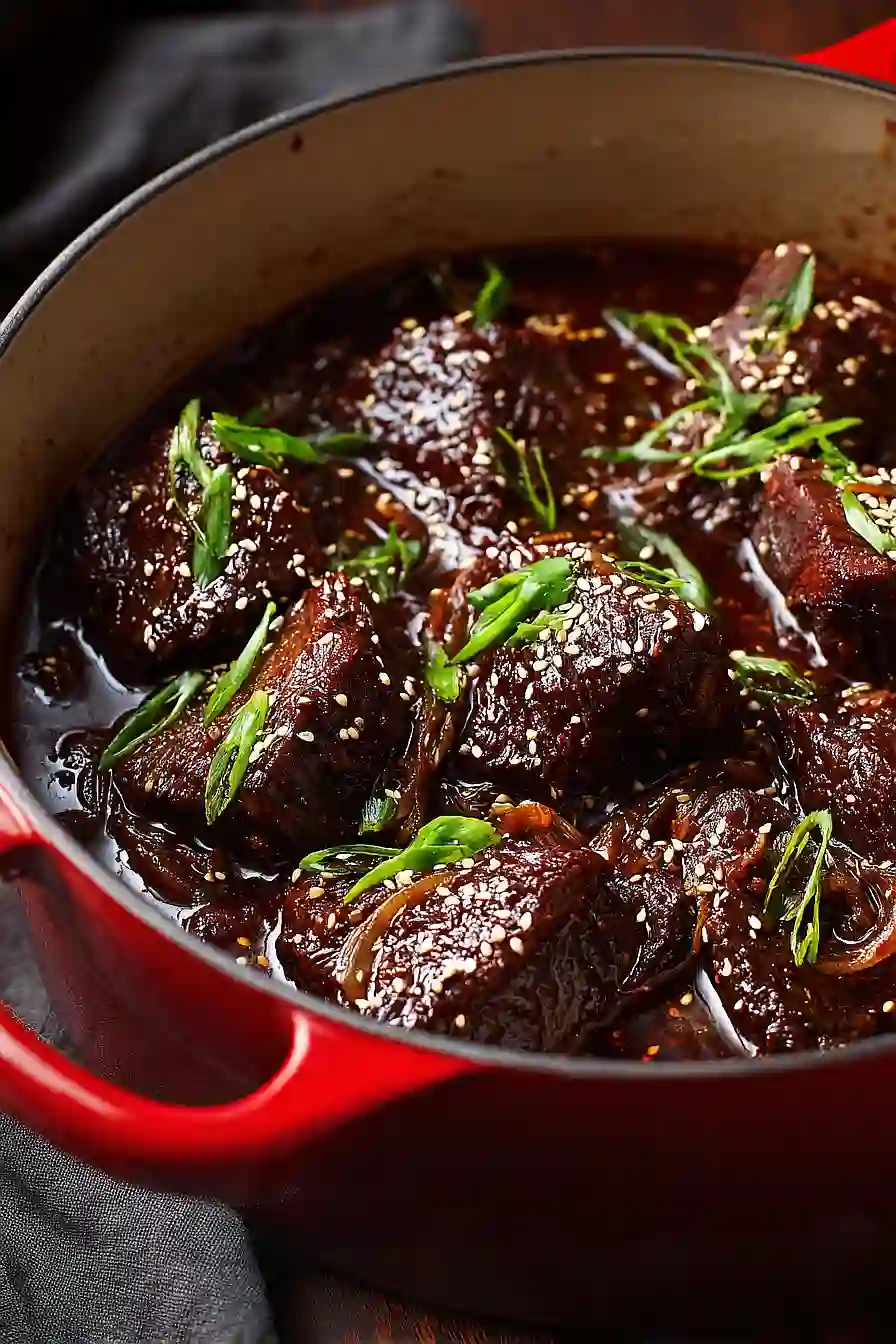
Why You’ll Love This Korean Pot Roast
- Bold, exciting flavors – The combination of gochujang, ginger, and garlic creates a sweet and spicy sauce that’s way more interesting than your typical pot roast.
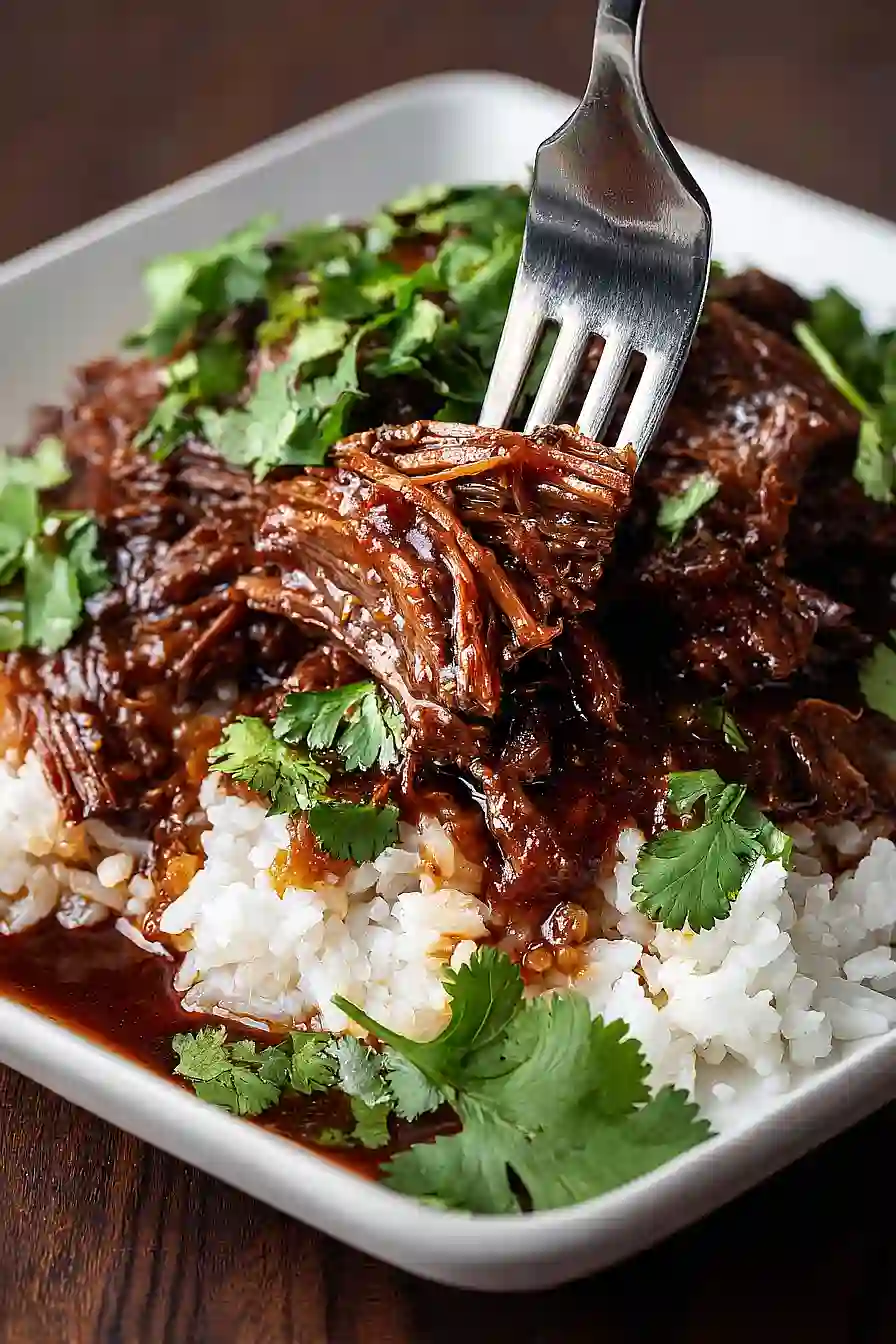
- Melt-in-your-mouth tender meat – The long, slow cooking breaks down the chuck roast into incredibly tender pieces that practically fall apart with your fork.
- Simple ingredients – You probably have most of these in your pantry already, and the few Korean ingredients are easy to find at most grocery stores these days.
- Perfect for meal prep – This makes plenty of servings and actually tastes even better the next day, so you can enjoy delicious leftovers throughout the week.
What Kind of Chuck Roast Should I Use?
For this Korean pot roast, you’ll want to look for a well-marbled chuck roast with good fat distribution throughout the meat. The fat is what keeps the meat tender and juicy during the long cooking process, so don’t be tempted to go for the leanest cut you can find. Most grocery stores sell chuck roast in the 3 to 5-pound range, which is perfect for this recipe. If your butcher hasn’t already cut it into pieces, just ask them to do it for you, or you can easily cut it yourself at home into roughly 3-inch chunks – they don’t need to be perfect since the meat will become fall-apart tender as it cooks.
Options for Substitutions
This recipe is pretty forgiving, so here are some swaps you can make if needed:
- Chuck roast: Chuck roast is really the best choice here since it gets super tender during the long cooking time. If you absolutely need to substitute, try beef brisket or short ribs, but I’d stick with chuck if possible.
- Gochujang paste: This Korean chili paste is what gives the dish its signature flavor, but if you can’t find it, mix 2 tablespoons of sriracha with 1 tablespoon of miso paste as a backup. The flavor won’t be exactly the same, but it’ll still be tasty.
- Fresh ginger: No fresh ginger? Use 1 teaspoon of ground ginger instead, though fresh really does make a difference in this recipe.
- Soy sauce or tamari: Tamari works great if you need a gluten-free option. Coconut aminos are another alternative, though they’re slightly sweeter, so you might want to reduce the brown sugar by a tablespoon.
- Sweet onion: Yellow or white onions work just fine here – no need to make a special trip if you don’t have sweet onions on hand.
- Brown sugar: White sugar or honey can replace brown sugar in equal amounts, though brown sugar adds a nice molasses flavor.
Watch Out for These Mistakes While Cooking
The biggest mistake with pot roast is cranking up the heat to speed things along, which will leave you with tough, chewy meat instead of the fall-apart texture you’re after – low and slow is the only way to break down the connective tissue in chuck roast properly.
Skipping the searing step might seem like a time-saver, but browning the meat first creates a deeper flavor that makes a real difference in the final dish.
Another common error is adding too much liquid, thinking more is better, but the meat releases its own juices as it cooks, so stick to the recipe amounts or you’ll end up with a watery sauce instead of a rich, concentrated one.
Finally, resist the urge to cut into the roast right away – letting it rest for 10-15 minutes after cooking allows the juices to redistribute throughout the meat.
What to Serve With Korean Pot Roast?
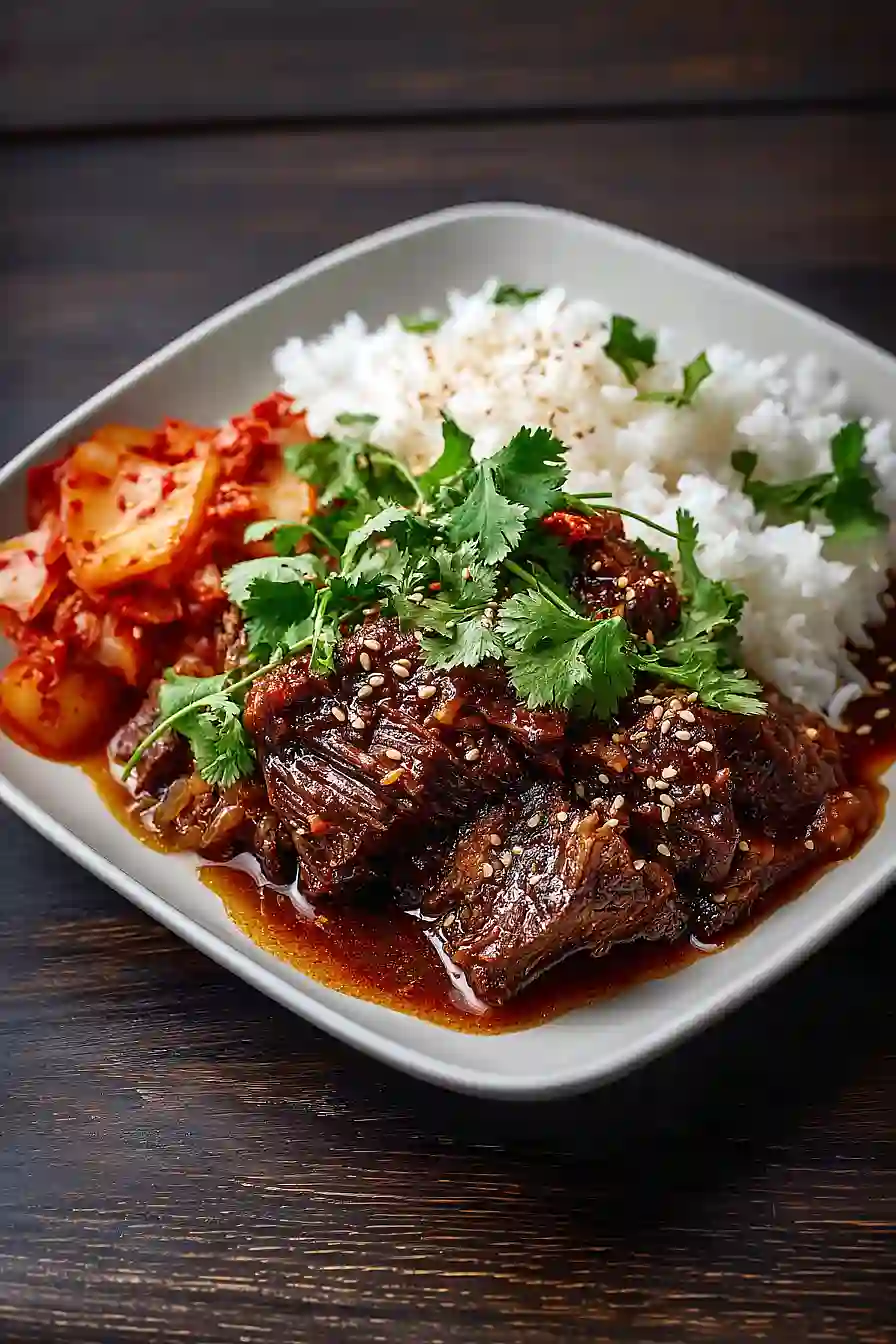
This Korean pot roast is packed with bold flavors, so I like to serve it over a big bowl of steamed white rice to soak up all that amazing sauce. A side of kimchi is pretty much a must – the tangy, spicy crunch balances out the rich, tender meat perfectly. I also love adding some simple steamed or roasted vegetables like bok choy, green beans, or broccoli to round out the meal. If you want to go all out, try making some cucumber salad with rice vinegar and sesame oil, or even some quick pickled radishes for extra freshness.
Storage Instructions
Store: This pot roast actually tastes even better the next day after all those flavors have had time to meld together. Keep it in an airtight container in the fridge for up to 4 days. The meat will soak up more of that delicious sauce as it sits, making it super flavorful for leftovers.
Freeze: Korean pot roast freezes really well for those busy weeknight dinners. Let it cool completely, then portion it into freezer-safe containers with plenty of the sauce. It’ll keep in the freezer for up to 3 months.
Reheat: Warm it up gently on the stovetop over medium-low heat, stirring occasionally until heated through. You can also microwave individual portions, but I find the stovetop keeps the meat more tender. Add a splash of beef stock if the sauce has thickened too much.
| Preparation Time | 15-20 minutes |
| Cooking Time | 120 minutes |
| Total Time | 135-140 minutes |
| Level of Difficulty | Medium |
Estimated Nutrition
Estimated nutrition for the whole recipe (without optional ingredients):
- Calories: 3400-3900
- Protein: 270-310 g
- Fat: 210-240 g
- Carbohydrates: 90-120 g
Ingredients
For the pot roast:
- 1 tbsp grated fresh ginger (freshly grated preferred)
- 1/4 cup brown sugar
- 1 tbsp kosher salt
- 2 tbsp gochujang paste (I use Korean brand)
- 1 tbsp vegetable oil
- 1/2 cup low-sodium soy sauce or tamari
- 6 garlic cloves, finely minced
- 2 cups beef stock
- 1 sweet onion, thinly sliced
- 1 (4 to 5 lb) chuck roast, cut into 3-inch pieces
For serving:
- fresh cilantro
- cooked rice
- kimchi
Step 1: Brown the Beef
- 1 (4 to 5 lb) chuck roast, cut into 3-inch pieces
- 1 tbsp kosher salt
- 1 tbsp vegetable oil
Preheat your oven to 350°F with the rack in the lower third.
Pat the chuck roast pieces dry, then season them thoroughly with kosher salt.
Heat the vegetable oil in a large Dutch oven over medium-high heat until it shimmers.
Working in batches, brown the beef on all sides, which should take about 10 minutes, then transfer the browned beef to a plate.
Step 2: Sauté the Aromatics
- 1 sweet onion, thinly sliced
- 6 garlic cloves, finely minced
- 1 tbsp grated fresh ginger (freshly grated preferred)
- 2 cups beef stock
Lower the heat to medium and add the sliced sweet onion to the Dutch oven.
Cook while stirring occasionally until the onions are softened slightly, about 4 minutes.
Add the minced garlic and freshly grated ginger, cooking for about 1 minute until fragrant.
If the aromatics start to stick or brown too quickly, pour in 1/4 cup of beef stock and scrape up any browned bits from the bottom—I find this adds great flavor to the base.
Step 3: Build the Braising Liquid
- 2 tbsp gochujang paste (I use Korean brand)
- 1/4 cup brown sugar
- 1/2 cup low-sodium soy sauce or tamari
- browned beef from Step 1
- aromatics from Step 2
- remaining beef stock from Step 2
Stir the gochujang paste, brown sugar, and soy sauce or tamari into the sautéed onions and aromatics until well combined.
Let the mixture cook for a minute to help the flavors come together.
Return the browned beef and any collected juices to the Dutch oven, then add the remaining beef stock.
Bring everything up to a simmer and cook for about 5 minutes, allowing the liquid to reduce slightly.
Step 4: Braise the Beef
Cover the Dutch oven and transfer it to the preheated oven.
Let it cook for 2 hours, or until the beef is very tender and can be easily shredded with a fork.
This slow braising infuses the meat with all the delicious flavors you’ve built up so far.
Sometimes, I like to check and stir halfway through to make sure nothing is sticking.
Step 5: Serve with Rice, Cilantro, and Kimchi
- cooked rice
- fresh cilantro
- kimchi
Once the beef is fully tender, serve the pot roast family-style.
Accompany with cooked rice, a generous scattering of fresh cilantro, and a side of kimchi.
I love how the freshness of cilantro and the tangy crunch of kimchi brighten up the rich, savory flavors of the beef.
Irresistible Korean Pot Roast
Ingredients
For the pot roast:
- 1 tbsp grated fresh ginger (freshly grated preferred)
- 1/4 cup brown sugar
- 1 tbsp kosher salt
- 2 tbsp gochujang paste (I use Korean brand)
- 1 tbsp vegetable oil
- 1/2 cup low-sodium soy sauce or tamari
- 6 garlic cloves, finely minced
- 2 cups beef stock
- 1 sweet onion, thinly sliced
- 1 (4 to 5 lb) chuck roast, cut into 3-inch pieces
For serving:
- fresh cilantro
- cooked rice
- kimchi
Instructions
- Preheat your oven to 350°F with the rack in the lower third. Pat the chuck roast pieces dry, then season them thoroughly with kosher salt. Heat the vegetable oil in a large Dutch oven over medium-high heat until it shimmers. Working in batches, brown the beef on all sides, which should take about 10 minutes, then transfer the browned beef to a plate.
- Lower the heat to medium and add the sliced sweet onion to the Dutch oven. Cook while stirring occasionally until the onions are softened slightly, about 4 minutes. Add the minced garlic and freshly grated ginger, cooking for about 1 minute until fragrant. If the aromatics start to stick or brown too quickly, pour in 1/4 cup of beef stock and scrape up any browned bits from the bottom—I find this adds great flavor to the base.
- Stir the gochujang paste, brown sugar, and soy sauce or tamari into the sautéed onions and aromatics until well combined. Let the mixture cook for a minute to help the flavors come together. Return the browned beef and any collected juices to the Dutch oven, then add the remaining beef stock. Bring everything up to a simmer and cook for about 5 minutes, allowing the liquid to reduce slightly.
- Cover the Dutch oven and transfer it to the preheated oven. Let it cook for 2 hours, or until the beef is very tender and can be easily shredded with a fork. This slow braising infuses the meat with all the delicious flavors you've built up so far. Sometimes, I like to check and stir halfway through to make sure nothing is sticking.
- Once the beef is fully tender, serve the pot roast family-style. Accompany with cooked rice, a generous scattering of fresh cilantro, and a side of kimchi. I love how the freshness of cilantro and the tangy crunch of kimchi brighten up the rich, savory flavors of the beef.