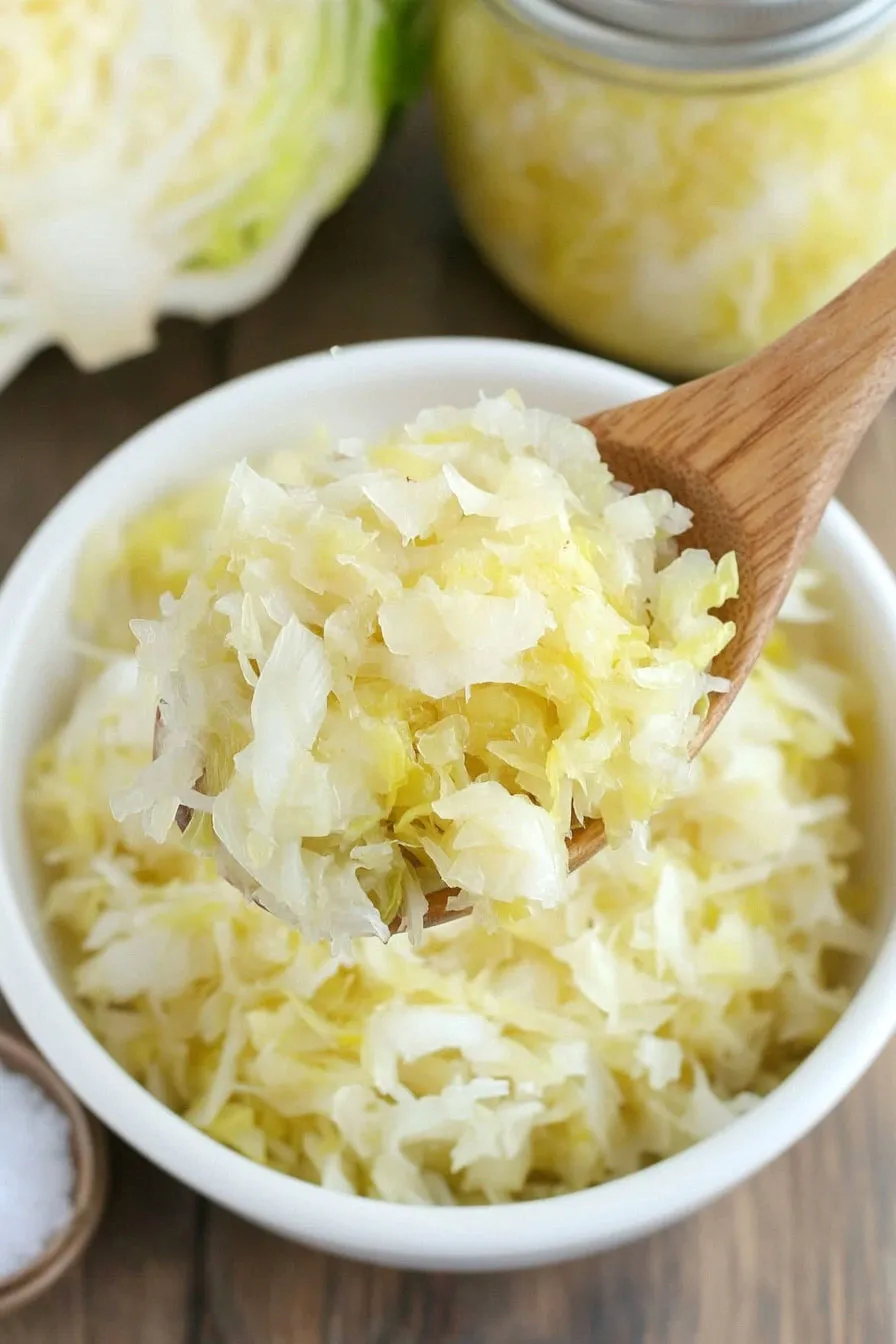
If you ask me, making your own sauerkraut is easier than most people think.
This old-world fermented classic brings a tangy crunch to any meal, and making it at home in quart jars is surprisingly straightforward. Fresh cabbage and salt are all you really need to create this traditional side dish.
The natural fermentation process does all the heavy lifting while you wait, transforming simple ingredients into a gut-healthy food that’s both tasty and crisp. A sprinkle of caraway seeds adds a subtle flavor that reminds me of my grandmother’s recipe.
It’s a simple project that pays off with months of homemade sauerkraut, perfect for topping hot dogs or serving alongside your favorite German dishes.
Why You’ll Love This Homemade Sauerkraut
- Cost-effective – With just two simple ingredients – cabbage and salt – you can make large batches of sauerkraut that would cost much more at the store.
- Gut-healthy probiotics – The fermentation process creates natural probiotics that are great for your digestive health and immune system – much better than store-bought versions with added preservatives.
- Simple ingredients – You only need cabbage and salt to get started – no special ingredients or complicated steps required.
- Customizable fermentation – You can control how tangy your sauerkraut becomes by letting it ferment anywhere from 2-6 weeks, making it exactly how you like it.
- Long shelf life – Once fermented, your homemade sauerkraut will keep in the refrigerator for months, so you can enjoy it whenever you want.
What Kind of Cabbage Should I Use?
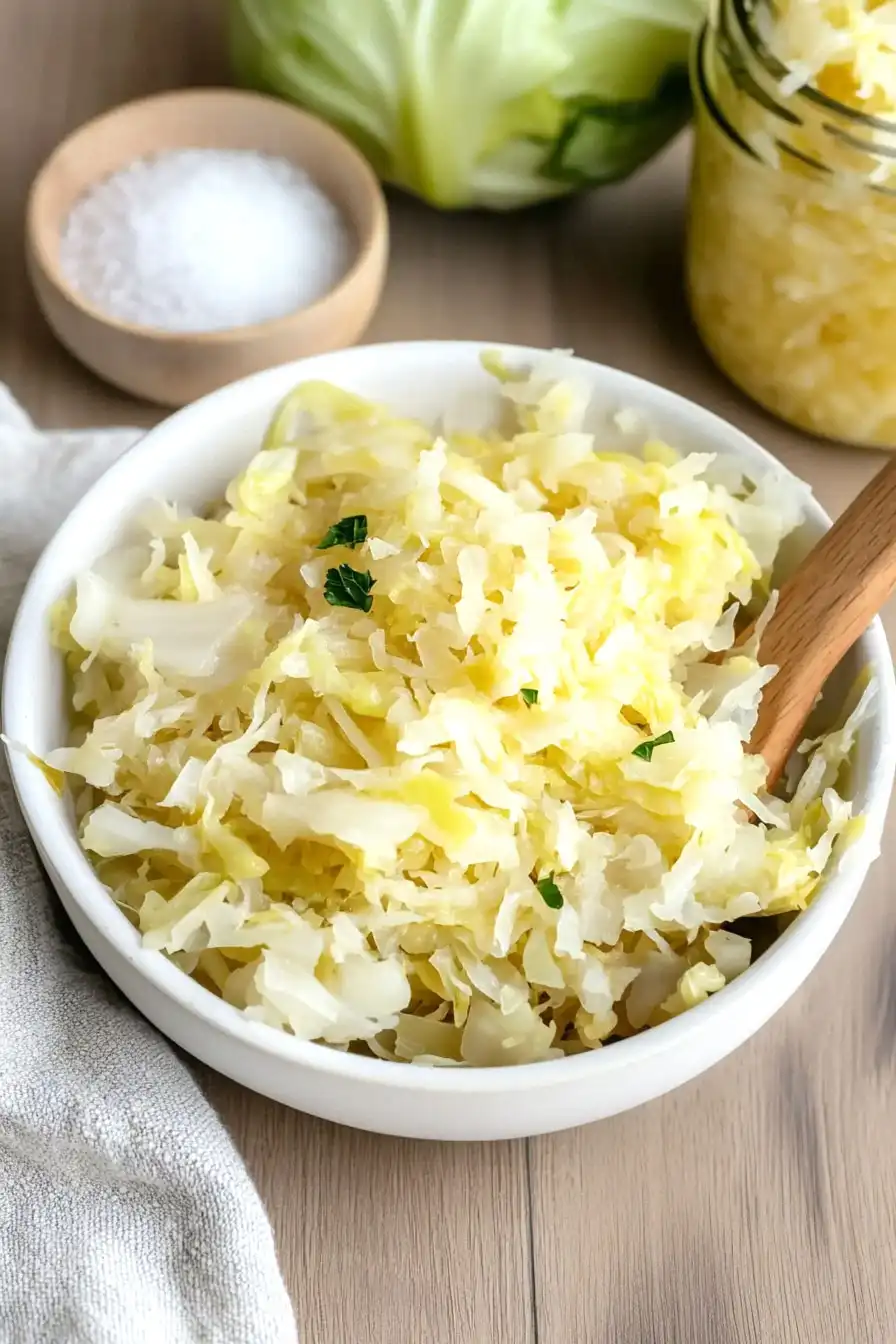
Both green and red cabbage work great for making sauerkraut, though green cabbage is the traditional choice and will give you that classic pale color. Fresh, firm heads are your best bet – look for cabbage that feels heavy for its size and has crisp, tightly-packed leaves. You’ll want to avoid any heads with brown spots, soft areas, or damaged outer leaves. If you’re using red cabbage, keep in mind that your sauerkraut will turn out a beautiful purple-pink color, and the flavor tends to be slightly stronger than green cabbage. For the best results, pick medium-sized heads rather than really large ones, since they’re usually more tender and sweet.
Options for Substitutions
When making sauerkraut, there’s not much room for substitutions since it’s a fermentation process that relies on specific ingredients, but here are some important notes:
- Cabbage: You can use either green or red cabbage interchangeably – red will give you a beautiful pink sauerkraut. However, don’t try to substitute with other vegetables alone, as cabbage has the perfect water and sugar content needed for fermentation.
- Pickling salt: This is one ingredient where you need to be careful with substitutions. Use pure salt without additives – kosher salt or sea salt (non-iodized) can work, but you’ll need to adjust the amount slightly (use about 3.5 tablespoons instead of 3). Never use iodized table salt as it can prevent proper fermentation and turn your sauerkraut brown.
- Optional additions: While not in the basic recipe, you can add caraway seeds, juniper berries, or shredded carrots for variety. Just don’t add anything that might interfere with fermentation, like vinegar or fresh herbs.
Watch Out for These Mistakes While Fermenting
The biggest challenge when making sauerkraut is not using enough salt, which can lead to spoilage – stick to the ratio of 3 tablespoons of salt per 5 pounds of cabbage for consistent, safe fermentation. A common error is using iodized table salt instead of pure pickling salt, as the additives in table salt can make your sauerkraut bitter and cloudy. To ensure successful fermentation, don’t forget to keep the cabbage completely submerged under the brine by weighing it down with a clean fermentation weight or a cabbage leaf – any exposure to air can lead to mold growth. For the crunchiest results, make sure to pound or massage the cabbage thoroughly until it releases enough liquid to create its own brine, and remember to leave at least 2 inches of headspace in your jars to accommodate the bubbling that occurs during fermentation.
What to Serve With Sauerkraut?
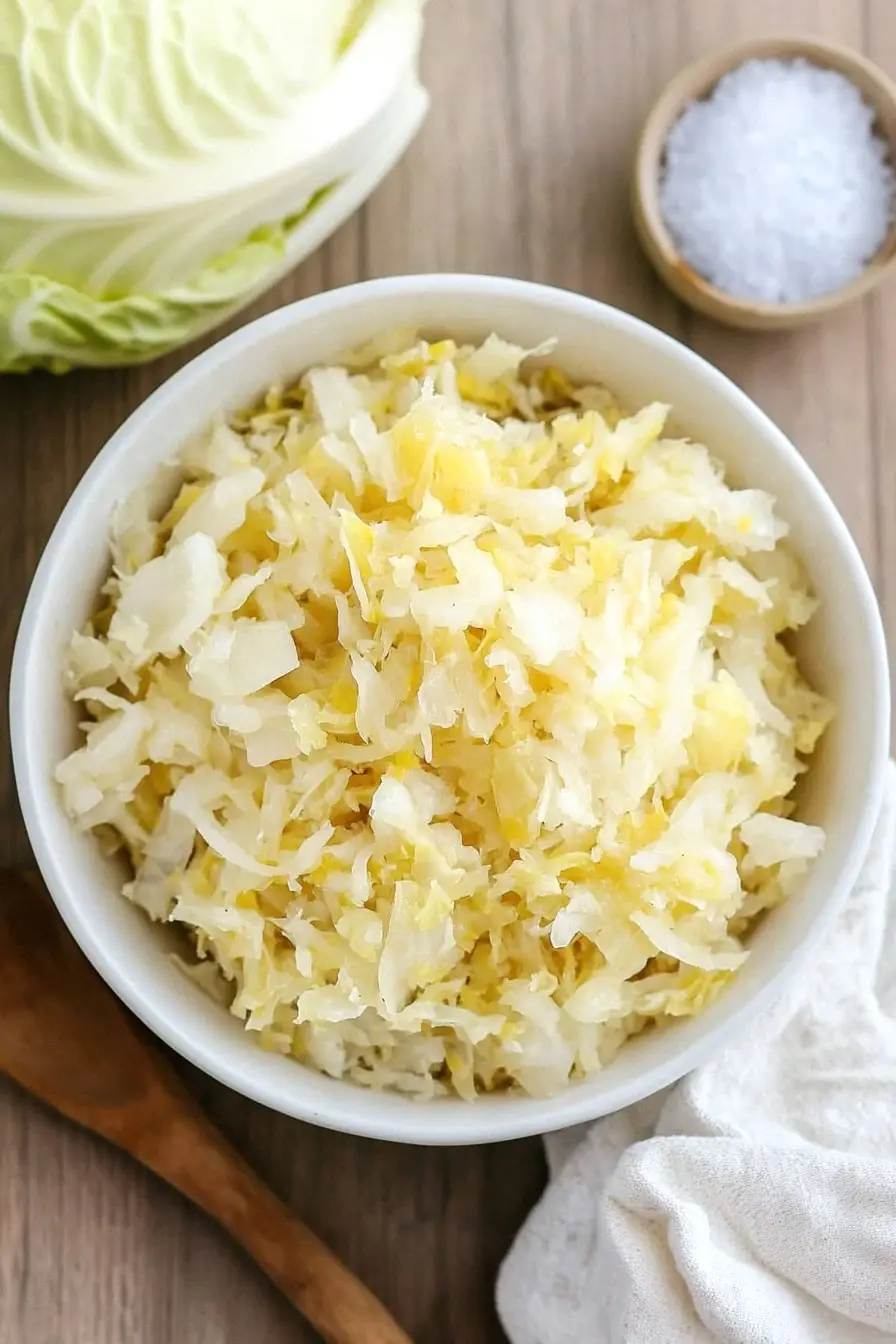
Sauerkraut is such a fantastic side dish that adds a tangy crunch to so many meals! It’s perfect alongside classic German dishes like bratwurst, knockwurst, or any other sausages you enjoy. For a traditional comfort meal, serve it with pork chops or roasted pork shoulder – the acidic kraut cuts through the richness of the meat perfectly. If you’re making sandwiches, try adding a scoop to your favorite Reuben or turkey sandwich for extra zip. You can even keep things simple and serve it as a topping for hot dogs at your next cookout!
Storage Instructions
Ferment: Let your sauerkraut ferment at room temperature (65-75°F) for about 3-4 weeks. You’ll want to keep it in a dark spot and check it occasionally to make sure the cabbage stays submerged under the brine. It’s normal to see bubbles – that’s the good bacteria doing their work!
Keep: Once your sauerkraut has reached the perfect tanginess, move those jars to the refrigerator. The cold temperature slows down fermentation, and your kraut will stay good for up to 6 months. The flavor actually continues to develop slowly, getting better with time.
Tips: Always use clean utensils when scooping out your sauerkraut, and make sure the remaining cabbage stays under the brine. If you notice any odd colors or smells, it’s better to play it safe and start fresh. A properly fermented batch should smell pleasantly sour and look crisp and pale.
| Preparation Time | 30-45 minutes |
| Cooking Time | 2-6 weeks (fermentation time) |
| Total Time | 2-6 weeks |
| Level of Difficulty | Medium |
Estimated Nutrition
Estimated nutrition for the whole recipe (without optional ingredients):
- Calories: 100-150
- Protein: 5-10 g
- Fat: 0-1 g
- Carbohydrates: 22-30 g
Ingredients
- 5 lb green or red cabbage (preferably organic for best fermentation results)
- 3 tbsp pickling salt
Step 1: Shred the Cabbage
Begin by coring and shredding the cabbage.
For fine, uniform shreds, using a shredding attachment on a food processor or a stand mixer is recommended.
Alternatively, you can use a knife for this task.
Transfer the shredded cabbage into an extra-large bowl.
Step 2: Salt and Rest the Cabbage
Add salt to the cabbage in the bowl and stir well to combine.
Allow the salted cabbage to stand at room temperature for 2 hours.
During this time, the cabbage will start releasing its liquid, which is essential for fermentation.
Step 3: Pound and Pack the Cabbage
After the resting period, pound the cabbage using a potato masher, a meat pounder, or a heavy-bottomed glass.
This helps to bruise the cabbage and release more liquid.
Carefully pack the cabbage firmly into two sterilized quart-sized jars.
Ensure there’s enough juice in the jars to cover the cabbage; if not, add a little water to top it off.
Step 4: Seal and Store the Jars
Cover each jar with a lid and screw band, but do not tighten them firmly; simply screw until you feel resistance.
Place the jars on a tray or plate to catch any escaping juices.
Store in a location where the temperature remains steady between 60 and 70 degrees Fahrenheit.
Step 5: Monitor Fermentation
Check the sauerkraut after 24 hours to make sure the cabbage remains submerged in the liquid.
If needed, make additional brine by dissolving 1 1/2 tablespoons of pickling salt in 1 quart of water, and add this to keep the cabbage covered.
Every few days, skim off any foam from the surface.
Bubbles rising to the surface are a sign that fermentation is occurring.
Step 6: Taste and Adjust
Begin tasting the sauerkraut after 2 weeks.
The flavor should transition from salty to pickled over time.
Fermentation typically takes 2 to 6 weeks, depending on ambient temperature.
If the sauerkraut tastes very salty, consider rinsing it before serving, but only rinse what you plan to eat immediately.
Step 7: Store the Final Product
Once fermentation is complete and the sauerkraut is to your tasting preference, store it in the refrigerator.
Properly stored sauerkraut can last for several months, retaining its flavor and crunchiness.