If you ask me, homemade jam without all the sugar is a real game-changer.
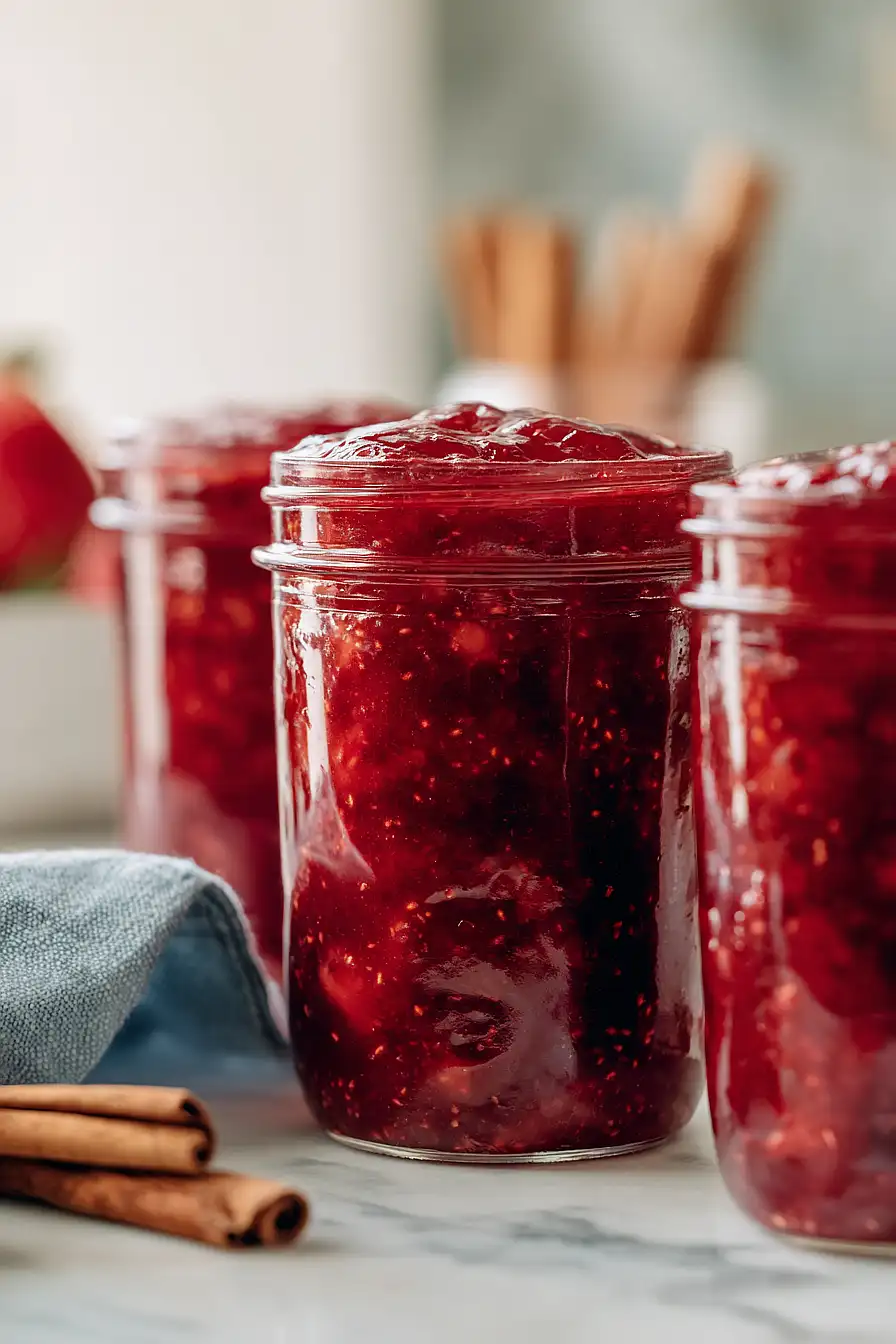
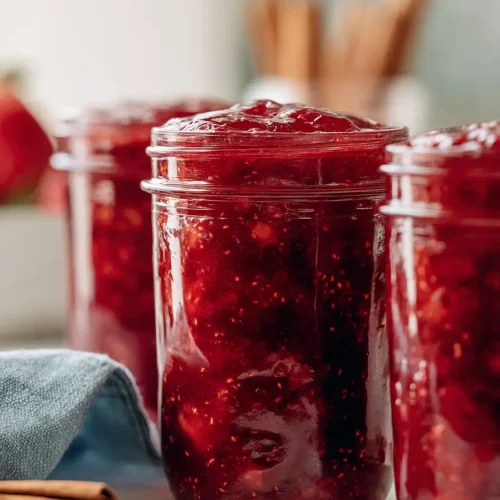
This sugar-free strawberry rhubarb jam brings together tart rhubarb and sweet berries in a spread that tastes like spring. The allulose keeps it naturally sweet while the pectin gives you that thick, spoonable texture you want from jam.
It’s flavored with cinnamon, ginger, and a touch of vanilla that make each bite interesting. Lemon juice brightens everything up and helps the fruit flavors shine through.
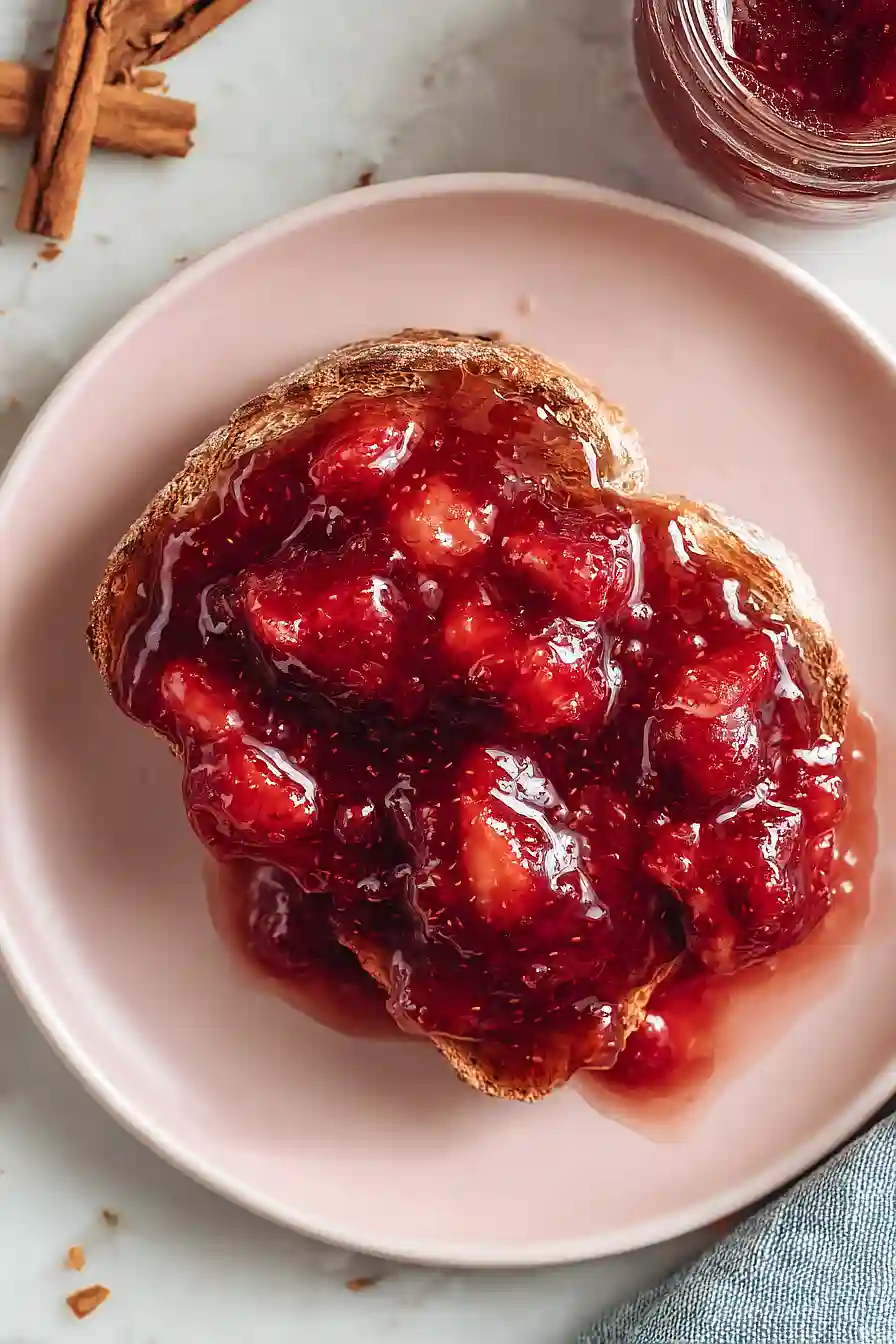
It’s a healthier option that doesn’t skimp on taste, perfect for spreading on morning toast or stirring into yogurt.
Why You’ll Love This Sugar Free Strawberry Rhubarb Jam
- Sugar-free and keto-friendly – Made with allulose instead of regular sugar, this jam lets you enjoy the classic strawberry rhubarb flavor without the guilt or blood sugar spike.
- Fresh, homemade taste – Nothing beats the flavor of homemade jam, and this recipe captures that perfect balance of sweet strawberries and tart rhubarb that store-bought versions just can’t match.
- Simple ingredients – You probably have most of these pantry staples on hand, and the fresh fruit comes together quickly without any complicated steps.
- Perfect for meal prep – Make a batch on the weekend and you’ll have delicious jam ready for your morning toast, yogurt, or low-carb desserts all week long.
What Kind of Rhubarb Should I Use?
Fresh rhubarb is always your best bet for making jam, and you’ll find it in grocery stores during spring and early summer. The color of the stalks can range from deep red to pale green, and while the red stalks look prettier in your finished jam, the green ones taste just as good and work perfectly fine. Make sure to trim off and discard the leaves completely since they’re toxic, and only use the stalks for your recipe. If fresh rhubarb isn’t available, frozen rhubarb works great too – just thaw it first and drain any excess liquid before measuring it out.
Options for Substitutions
This jam recipe offers some room for swaps, though a few ingredients are pretty important to keep:
- Allulose: You can swap allulose with other sugar-free sweeteners like erythritol or monk fruit sweetener in equal amounts. Keep in mind that erythritol may crystallize slightly as the jam cools, but it’ll still taste great.
- Pectin and calcium water: These two work together to help your jam set properly, so I wouldn’t recommend substituting them. If you’re using a different pectin brand, follow the package directions for calcium water preparation.
- Strawberries: Fresh or frozen strawberries both work fine. If using frozen, there’s no need to thaw them first – just add a few extra minutes to your cooking time.
- Rhubarb: Fresh rhubarb is best, but frozen works too. You can also adjust the strawberry-to-rhubarb ratio based on what you have – more strawberries will make it sweeter, while more rhubarb adds tartness.
- Lemon juice: Bottled lemon juice works just as well as fresh for this recipe. The acidity is important for setting and preservation, so don’t skip it.
- Vanilla and cinnamon: These add nice flavor but aren’t essential. Feel free to leave them out or swap the cinnamon for nutmeg or ginger if you prefer.
Watch Out for These Mistakes While Cooking
The biggest mistake when making sugar-free jam is not mixing the pectin thoroughly with the allulose before adding it to the fruit – if you dump it straight in, you’ll end up with clumps that won’t dissolve properly and your jam won’t set.
Another common error is skipping the calcium water, which is essential for low-sugar pectin to work correctly, so make sure you have it on hand before starting.
Overcooking the fruit mixture can break down the pectin and leave you with runny jam, so stick to the timing and bring it to a full rolling boil for just one minute after adding the pectin mixture.
Finally, don’t forget to leave that 1/4 inch headspace in your jars – too much or too little can prevent a proper seal, and always let the jars cool undisturbed for the full 24 hours so the jam can finish setting.
What to Serve With Strawberry Rhubarb Jam?
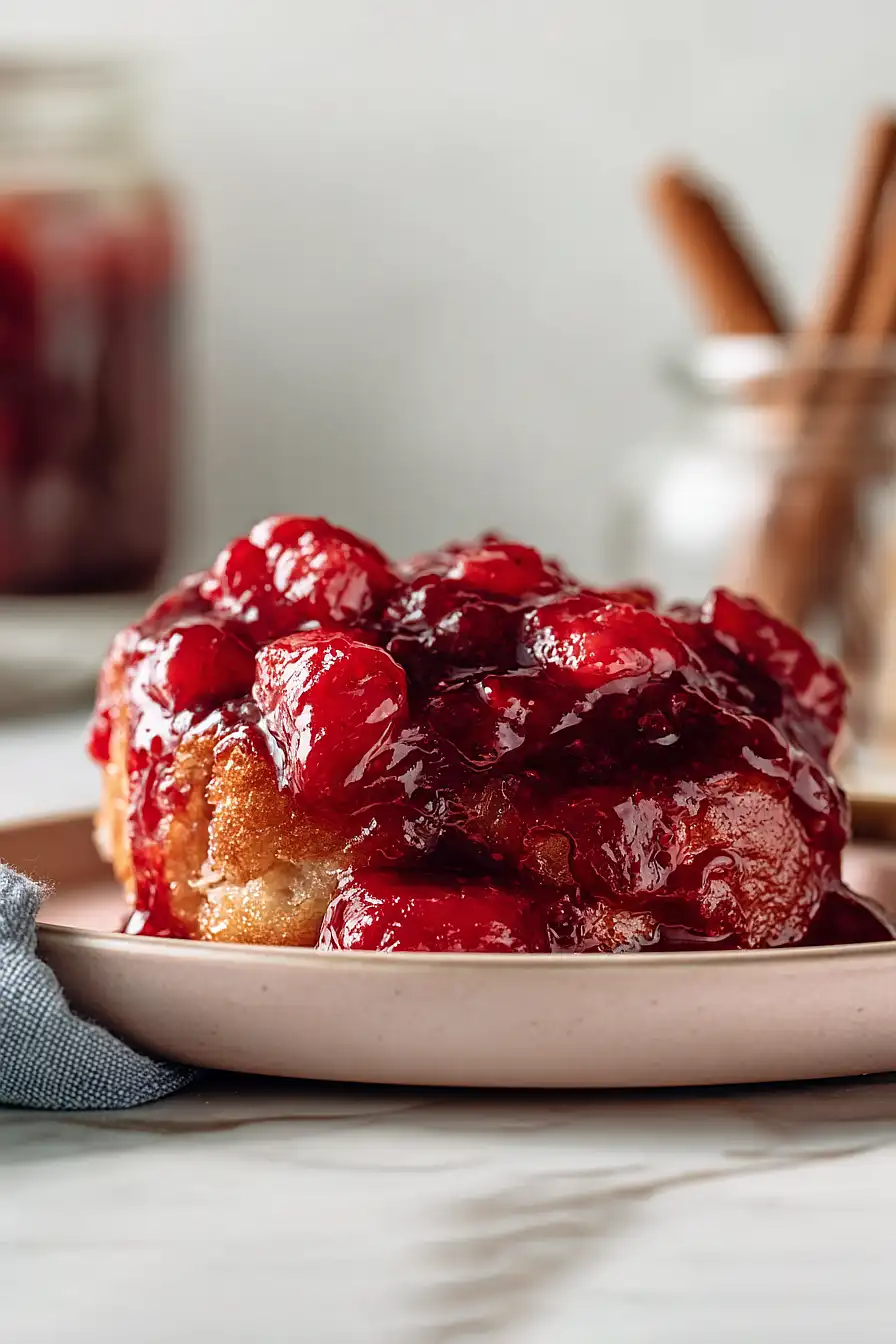
This jam is perfect slathered on warm toast or English muffins for breakfast, and it also works great on top of Greek yogurt or cottage cheese for a protein-packed snack. I love using it as a filling for thumbprint cookies or swirled into oatmeal on busy mornings. You can also spread it on crackers with cream cheese for an easy appetizer, or use it as a topping for pancakes and waffles instead of syrup. If you’re feeling fancy, try it alongside a cheese board with some sharp cheddar or brie – the sweet and tart flavors pair really well with cheese.
Storage Instructions
Store: Once your jam has cooled completely, transfer it to clean glass jars or airtight containers and keep it in the fridge. It’ll stay fresh for up to 3 weeks, which gives you plenty of time to enjoy it on toast, yogurt, or straight from the spoon!
Freeze: This jam freezes really well if you want to make a big batch. Just leave about half an inch of space at the top of your containers since it expands when frozen, and it’ll keep for up to 6 months in the freezer.
Thaw: When you’re ready to use frozen jam, just move it to the fridge the night before and let it thaw slowly. Give it a good stir once it’s thawed since the texture might separate a little bit, and it’ll be good as new.
| Preparation Time | 20-30 minutes |
| Cooking Time | 40-50 minutes |
| Total Time | 60-80 minutes |
| Level of Difficulty | Medium |
| Servings | 6 cups of jam |
Estimated Nutrition
Estimated nutrition for the whole recipe (without optional ingredients):
- Calories: 160-210
- Protein: 2-3 g
- Fat: 0-1 g
- Carbohydrates: 38-48 g
Ingredients
For the fruit base:
- 3.5 cups strawberries (hulled and sliced into 1/4-inch pieces)
- 2 cups rhubarb (trimmed and cut into 1/2-inch chunks)
- 3/4 cup lemon juice (I prefer Santa Cruz Organic for its consistent acidity)
- 2 tsp calcium water
- 1 tsp vanilla (I like Nielsen-Massey for its rich floral aroma)
- 1 tsp cinnamon
- 1/2 tsp fresh grated ginger
For the sweetener mixture:
- 1.5 cups allulose
- 2.5 tsp pectin (I use Pomona’s Universal Pectin for low-sugar recipes)
Step 1: Prepare Ingredients and Sterilize Equipment
- 3.5 cups strawberries
- 2 cups rhubarb
Hull and slice strawberries into 1/4-inch pieces, then trim rhubarb and cut into 1/2-inch chunks—keeping them uniform ensures even cooking and a consistent texture.
While preparing fruit, place your jars and lids in a boiling water bath canner and simmer the lids in a separate pan to sterilize them (this kills any bacteria and ensures proper sealing).
I find that having everything sterilized before you start cooking prevents any last-minute rushing when the jam is ready to jar.
Step 2: Build the Flavor Base
- sliced strawberries from Step 1
- rhubarb chunks from Step 1
- 3/4 cup lemon juice
- 1 tsp vanilla
- 2 tsp calcium water
- 1 tsp cinnamon
- 1/2 tsp fresh grated ginger
Add the sliced strawberries and rhubarb chunks to a large stainless steel pot or jam pan, then stir in the lemon juice, vanilla, calcium water, cinnamon, and fresh grated ginger.
The lemon juice provides acidity to balance the sweetness and aids pectin activation, while the spices and vanilla add depth and complexity to the flavor profile.
Let this mixture sit for a few minutes to allow the flavors to begin melding before heating.
Step 3: Prepare the Pectin-Allulose Mixture
- 1.5 cups allulose
- 2.5 tsp pectin
In a small bowl, thoroughly whisk together the allulose and pectin, breaking up any clumps to ensure the pectin disperses evenly throughout the sugar substitute.
This prevents the pectin from clumping when added to the hot fruit and guarantees smooth gel formation.
I always take an extra 30 seconds here to really work out the lumps—it makes a noticeable difference in the final texture.
Step 4: Cook the Fruit and Reach Setting Temperature
- fruit mixture from Step 2
- pectin-allulose mixture from Step 3
Heat the fruit mixture on medium heat, stirring occasionally and mashing as it cooks to reach your desired texture (leave it chunky or mash it smooth—your preference).
Continue heating until the mixture comes to a rolling boil that can’t be stirred down.
Once boiling, immediately add the pectin-allulose mixture from Step 3, stirring vigorously for 1-2 minutes to fully dissolve the pectin and activate the gel-setting process.
Then boil for exactly 1 minute more and remove from heat—over-cooking breaks down the pectin and prevents proper setting.
Step 5: Fill and Process the Jars
Working quickly while the jam is still hot, remove the sterilized jars from the water bath using a jar lifter and carefully fill each jar with jam, leaving exactly 1/4 inch of headspace at the top (this allows room for the lid to seal properly without jam leaking).
Wipe the rim of each jar clean with a damp cloth to remove any sticky residue, then place a hot sterilized lid on top and screw on the ring until fingertip-tight (snug but not forcefully tight).
Return the filled jars to the boiling water bath canner, ensuring they’re covered by at least 1-2 inches of water.
Step 6: Process and Cool the Sealed Jars
Bring the water bath back to a rolling boil and process the jars for 10 minutes (add 1 minute for every 1,000 feet of altitude if you’re above sea level).
After the processing time is complete, carefully remove the jars using a jar lifter and place them on a clean kitchen towel to cool undisturbed for 24 hours at room temperature.
As they cool, you’ll hear the satisfying ‘ping’ of the lids sealing—this means the jam is properly preserved.
Step 7: Check Seals and Store
After 24 hours, check each jar’s seal by pressing the center of the lid—it should be flat and not flex.
Any jars that don’t seal properly can be refrigerated and used within 3 weeks, or you can reprocess them by returning them to the boiling water bath for 10 minutes with a fresh lid.
Sealed jars can be stored in a cool, dark pantry for up to 1 year.
Low-Carb Sugar Free Strawberry Rhubarb Jam
Ingredients
For the fruit base::
- 3.5 cups strawberries (hulled and sliced into 1/4-inch pieces)
- 2 cups rhubarb (trimmed and cut into 1/2-inch chunks)
- 3/4 cup lemon juice (I prefer Santa Cruz Organic for its consistent acidity)
- 2 tsp calcium water
- 1 tsp vanilla (I like Nielsen-Massey for its rich floral aroma)
- 1 tsp cinnamon
- 1/2 tsp fresh grated ginger
For the sweetener mixture::
- 1.5 cups allulose
- 2.5 tsp pectin (I use Pomona’s Universal Pectin for low-sugar recipes)
Instructions
- Hull and slice strawberries into 1/4-inch pieces, then trim rhubarb and cut into 1/2-inch chunks—keeping them uniform ensures even cooking and a consistent texture. While preparing fruit, place your jars and lids in a boiling water bath canner and simmer the lids in a separate pan to sterilize them (this kills any bacteria and ensures proper sealing). I find that having everything sterilized before you start cooking prevents any last-minute rushing when the jam is ready to jar.
- Add the sliced strawberries and rhubarb chunks to a large stainless steel pot or jam pan, then stir in the lemon juice, vanilla, calcium water, cinnamon, and fresh grated ginger. The lemon juice provides acidity to balance the sweetness and aids pectin activation, while the spices and vanilla add depth and complexity to the flavor profile. Let this mixture sit for a few minutes to allow the flavors to begin melding before heating.
- In a small bowl, thoroughly whisk together the allulose and pectin, breaking up any clumps to ensure the pectin disperses evenly throughout the sugar substitute. This prevents the pectin from clumping when added to the hot fruit and guarantees smooth gel formation. I always take an extra 30 seconds here to really work out the lumps—it makes a noticeable difference in the final texture.
- Heat the fruit mixture on medium heat, stirring occasionally and mashing as it cooks to reach your desired texture (leave it chunky or mash it smooth—your preference). Continue heating until the mixture comes to a rolling boil that can't be stirred down. Once boiling, immediately add the pectin-allulose mixture from Step 3, stirring vigorously for 1-2 minutes to fully dissolve the pectin and activate the gel-setting process. Then boil for exactly 1 minute more and remove from heat—over-cooking breaks down the pectin and prevents proper setting.
- Working quickly while the jam is still hot, remove the sterilized jars from the water bath using a jar lifter and carefully fill each jar with jam, leaving exactly 1/4 inch of headspace at the top (this allows room for the lid to seal properly without jam leaking). Wipe the rim of each jar clean with a damp cloth to remove any sticky residue, then place a hot sterilized lid on top and screw on the ring until fingertip-tight (snug but not forcefully tight). Return the filled jars to the boiling water bath canner, ensuring they're covered by at least 1-2 inches of water.
- Bring the water bath back to a rolling boil and process the jars for 10 minutes (add 1 minute for every 1,000 feet of altitude if you're above sea level). After the processing time is complete, carefully remove the jars using a jar lifter and place them on a clean kitchen towel to cool undisturbed for 24 hours at room temperature. As they cool, you'll hear the satisfying 'ping' of the lids sealing—this means the jam is properly preserved.
- After 24 hours, check each jar's seal by pressing the center of the lid—it should be flat and not flex. Any jars that don't seal properly can be refrigerated and used within 3 weeks, or you can reprocess them by returning them to the boiling water bath for 10 minutes with a fresh lid. Sealed jars can be stored in a cool, dark pantry for up to 1 year.