If you ask me, fish lo mein is one of those dishes that just makes sense for busy weeknights.
This Asian-inspired noodle dish brings together tender fish and soft lo mein noodles in a savory sauce that’s packed with flavor. Fresh vegetables like carrots and snap peas add a nice crunch to each bite.
The fish gets a quick cook in a hot pan before being tossed with the noodles and a simple soy-based sauce. Green onions and a sprinkle of sesame seeds help pull everything together.
It’s a satisfying meal that comes together in about 20 minutes, perfect for those nights when you want something tasty without too much fuss.
Why You’ll Love This Fish Lo Mein
- Quick weeknight dinner – Ready in under 30 minutes, this dish gets a satisfying meal on the table fast when you’re short on time.
- Healthier takeout alternative – You get all the flavors of your favorite restaurant lo mein but with lean white fish and fresh vegetables, plus you control the sodium and oil.
- Flexible ingredients – Use whatever white fish you can find and swap in any vegetables you have on hand – it’s very forgiving and adaptable to what’s in your fridge.
- One-pan convenience – Everything comes together in one skillet, which means less cleanup and more time to enjoy your meal.
- Light but filling – The combination of tender fish, fresh vegetables, and noodles gives you a satisfying meal that won’t leave you feeling heavy.
What Kind of Fish Should I Use?
Any mild white fish works great for lo mein, with tilapia and cod being popular choices since they’re easy to find and budget-friendly. These fish have a gentle flavor that won’t compete with the ginger-soy sauce, plus they flake nicely when cooked. If you can’t find tilapia or cod, other white fish like mahi-mahi, halibut, or even catfish will do the trick. Just make sure your fish is fresh – it should smell like the ocean, not “fishy,” and the flesh should be firm to the touch. Frozen fish works too, just thaw it completely and pat it dry before cooking to avoid excess moisture in your noodles.
Options for Substitutions
This fish lo mein is pretty forgiving when it comes to swaps, so here’s what you can change up:
- Lo mein noodles: The recipe already mentions this, but spaghetti, linguine, or even ramen noodles (without the seasoning packet) work great. Cook them according to package directions and they’ll soak up that ginger-soy sauce just fine.
- White fish: Tilapia and cod are perfect, but you can also use mahi-mahi, halibut, or even salmon if you prefer. Just adjust cooking time slightly – thicker fish might need an extra minute or two.
- Mirin: As noted, rice vinegar works but use half the amount. You can also try white wine vinegar or even a splash of dry white wine if that’s what you have.
- Toasted sesame oil: Regular sesame oil works, but you’ll lose some of that nutty flavor. In a pinch, vegetable oil with a tiny bit of soy sauce mixed in can work too.
- Bell peppers and carrots: Feel free to swap in snap peas, broccoli florets, or mushrooms. Just keep the cooking times in mind – harder veggies need more time than softer ones.
- Fresh ginger: Ground ginger can substitute, but use about 1/3 the amount since it’s more concentrated. Start with 1 teaspoon and taste as you go.
Watch Out for These Mistakes While Cooking
The biggest mistake when making fish lo mein is overcooking the delicate white fish, which can turn it dry and flaky – cook your tilapia or cod just until it flakes easily with a fork, usually 3-4 minutes per side depending on thickness. Another common error is adding the fish too early to the noodle mixture, so instead cook it separately and gently fold it in at the very end to keep those beautiful pieces intact. Don’t forget to cook your lo mein noodles just until al dente since they’ll continue cooking when you toss them with the hot sauce and vegetables, and always have your ginger-soy sauce mixed and ready before you start cooking because this dish comes together quickly. For the best texture, make sure your cornstarch is completely dissolved in the water before adding it to prevent any lumpy sauce.
What to Serve With Fish Lo Mein?
This fish lo mein is pretty much a complete meal on its own since it’s packed with noodles, vegetables, and protein, but I love adding a few simple sides to round things out. A light cucumber salad with rice vinegar dressing is perfect for cutting through the rich soy-ginger flavors, or you could go with some steamed edamame sprinkled with sea salt. If you want something warm, try some vegetable spring rolls or pot stickers on the side – they complement the Asian flavors really well. For drinks, green tea or even a cold beer pairs nicely with this savory noodle dish.
Storage Instructions
Refrigerate: Fish lo mein keeps well in the fridge for up to 3 days in an airtight container. The noodles will absorb some of the sauce as it sits, which actually makes the flavors even better the next day. I always make extra because my family loves having leftovers for quick lunches.
Freeze: You can freeze this dish for up to 2 months, though the texture of the fish and vegetables will be a bit softer after thawing. Let it cool completely before transferring to freezer-safe containers, and leave a little room at the top for expansion.
Warm Up: Heat your leftovers in the microwave for 1-2 minutes, stirring halfway through, or warm it up in a skillet over medium heat with a splash of water. The noodles might seem a little dry at first, but they’ll loosen up as they heat through and the sauce redistributes.
| Preparation Time | 10-15 minutes |
| Cooking Time | 12-14 minutes |
| Total Time | 22-29 minutes |
| Level of Difficulty | Easy |
Estimated Nutrition
Estimated nutrition for the whole recipe (without optional ingredients):
- Calories: 850-1000
- Protein: 50-60 g
- Fat: 20-26 g
- Carbohydrates: 110-120 g
Ingredients
For the fish:
- 1 tbsp toasted sesame oil (I like Kadoya brand)
- 4 white fish fillets (such as tilapia or cod)
- 2 tbsp ginger-soy sauce
- 1 lemon, cut in wedges
For the vegetables and noodles:
- 1 bell pepper, thinly sliced
- 6 oz lo mein noodles
- 4 green onions, chopped
- 5 oz pre-shredded carrots (or julienned fresh carrots)
- 1/4 cup ginger-soy sauce
For the ginger-soy sauce:
- 2 tsp cornstarch
- 2 tsp sugar
- 7 tbsp water
- 3 tbsp mirin
- 1 tbsp fresh ginger (finely grated for best flavor)
- 4 tbsp low-sodium soy sauce (I use Kikkoman brand)
Step 1: Make the Ginger-Soy Sauce
- 4 tbsp low-sodium soy sauce
- 3 tbsp mirin (or 1 1/2 tbsp rice vinegar)
- 2 tsp granulated sugar
- 1 tbsp fresh ginger
- 2 tsp cornstarch
- 7 tbsp water (6 tbsp plus 1 tbsp divided)
In a small bowl, whisk together low-sodium soy sauce, mirin (or rice vinegar), granulated sugar, fresh ginger, cornstarch, and water until smooth.
You’ll use this sauce both for baking the fish and for tossing the noodles, so be sure it’s well blended.
I always like to taste the sauce at this point and adjust the sweetness or acidity to my liking.
Step 2: Bake the Fish
- 4 white fish fillets (such as tilapia or cod)
- 1 tbsp oil, toasted sesame
- 2 tbsp prepared ginger-soy sauce (from Step 1)
Preheat the oven to 400°F (204°C).
Lightly brush a baking dish with a bit of toasted sesame oil or spray it with nonstick cooking spray.
Arrange the fish fillets in a single layer in the prepared dish.
Pour 2 tablespoons of the prepared ginger-soy sauce (from Step 1) over the fish.
Bake for 12 to 14 minutes, or until the fish is opaque and flakes easily with a fork.
Step 3: Cook the Lo Mein Noodles
- 6 oz dried lo mein noodles (or any dried pasta such as spaghetti or linguine)
While the fish bakes, bring a pot of salted water to a boil.
Add the dried lo mein noodles (or alternative pasta) and cook according to package directions until just tender.
Drain and set aside.
I like to give the noodles a quick rinse under cold water so they don’t stick together before stir-frying.
Step 4: Stir-Fry the Vegetables and Noodles
- remaining oil, toasted sesame (from Step 2; if none left, use a drizzle more)
- 1 bell pepper, thinly sliced
- 5 oz pre-shredded carrots
- cooked lo mein noodles (from Step 3)
- 1/4 cup prepared ginger-soy sauce (from Step 1)
- 4 stalks green onions, chopped (both green and white parts)
Heat a wok or large skillet over medium heat.
Add the remaining toasted sesame oil.
Once hot, add the bell pepper and pre-shredded carrots.
Season with a pinch of salt and sauté for 2–3 minutes until just tender but still crisp.
Add the cooked noodles (from Step 3), 1/4 cup of the remaining ginger-soy sauce (from Step 1), and chopped green onions.
Toss everything together and stir-fry for another minute until the noodles are coated and heated through.
For extra fragrance, I sometimes sprinkle a little extra fresh ginger at this stage.
Step 5: Serve the Fish and Lo Mein
- lemon wedges
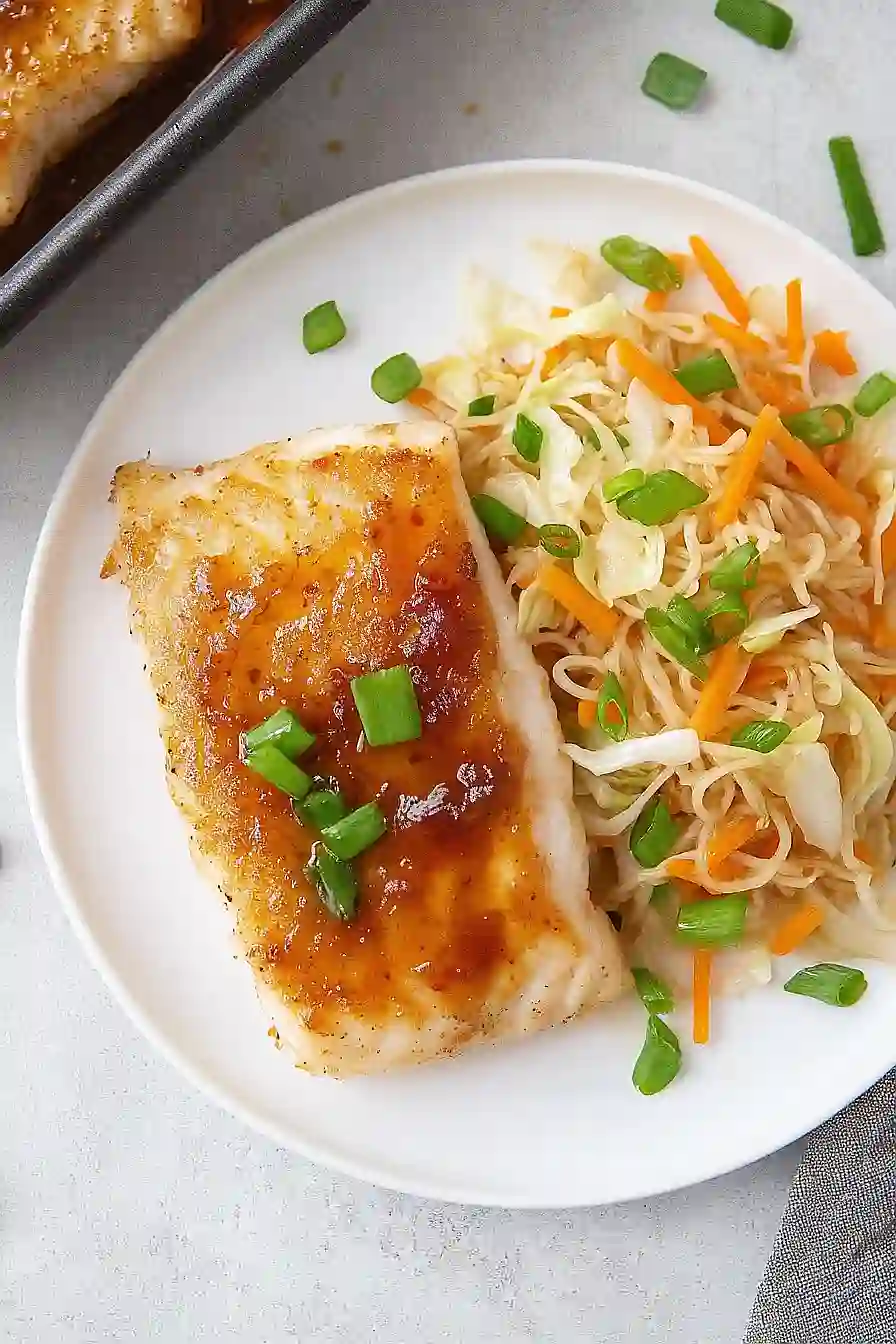
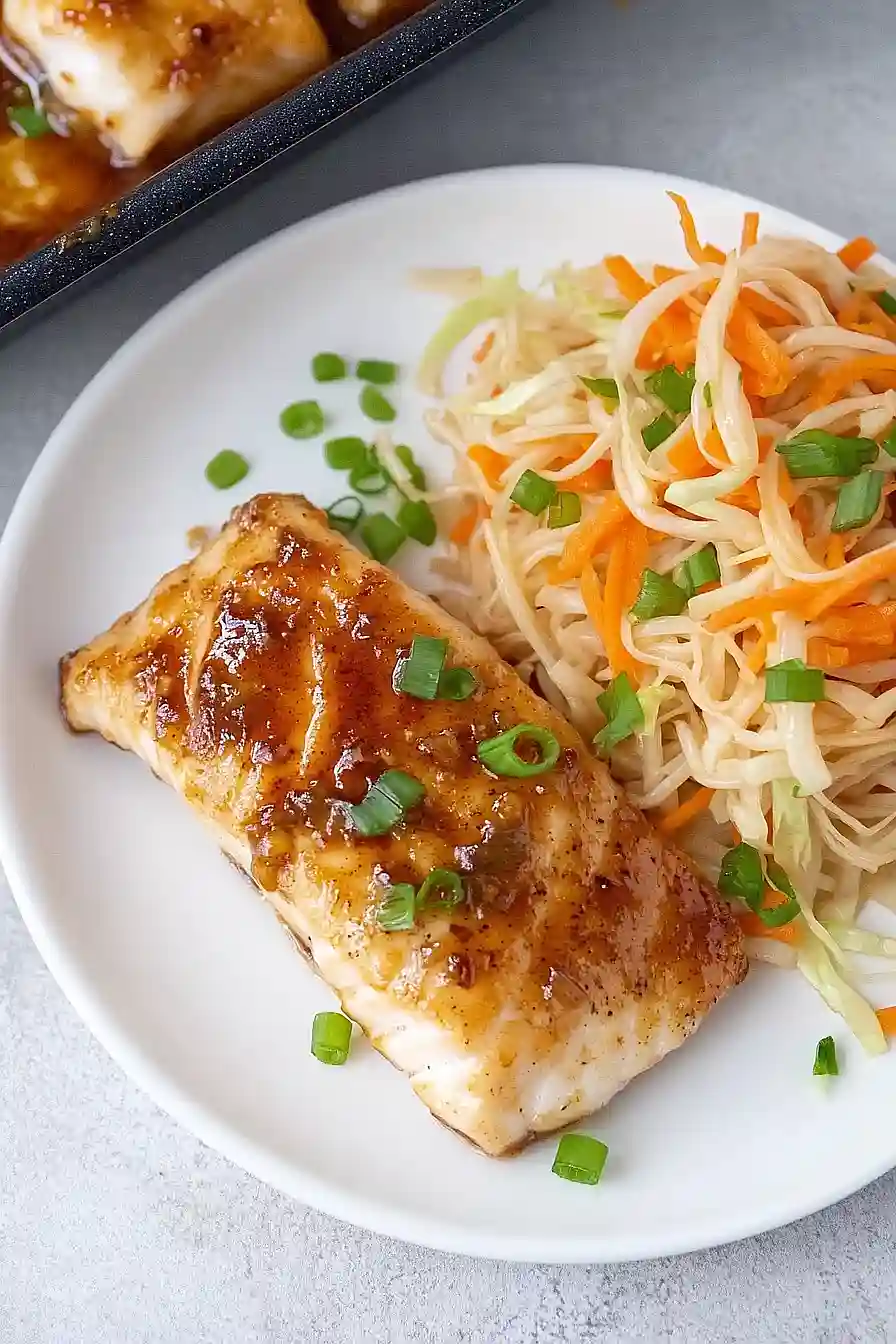
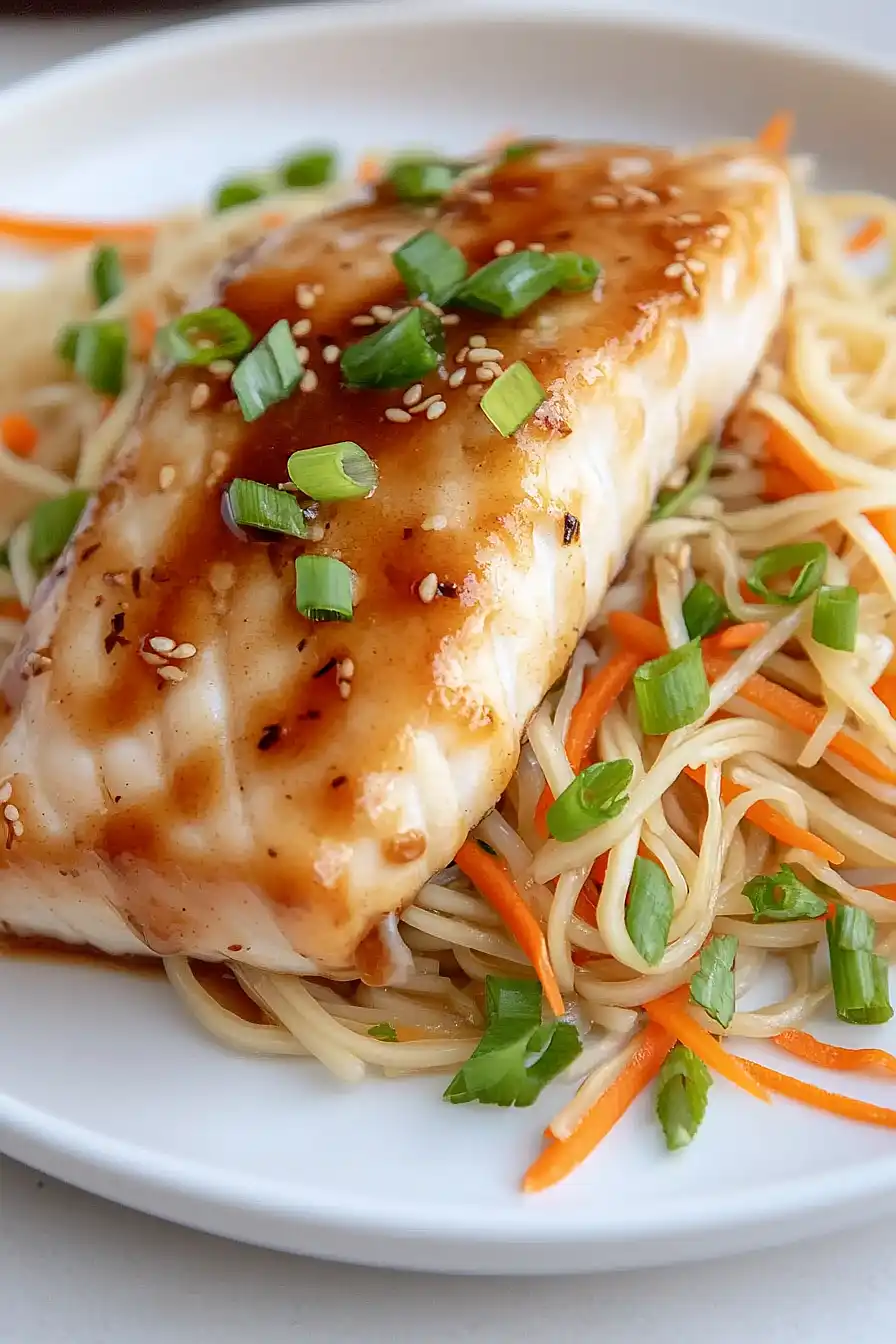
Plate the baked fish alongside a generous portion of vegetable lo mein.
Squeeze fresh lemon wedges over both the fish and the noodles for a bright, zesty finish before serving.
Enjoy!