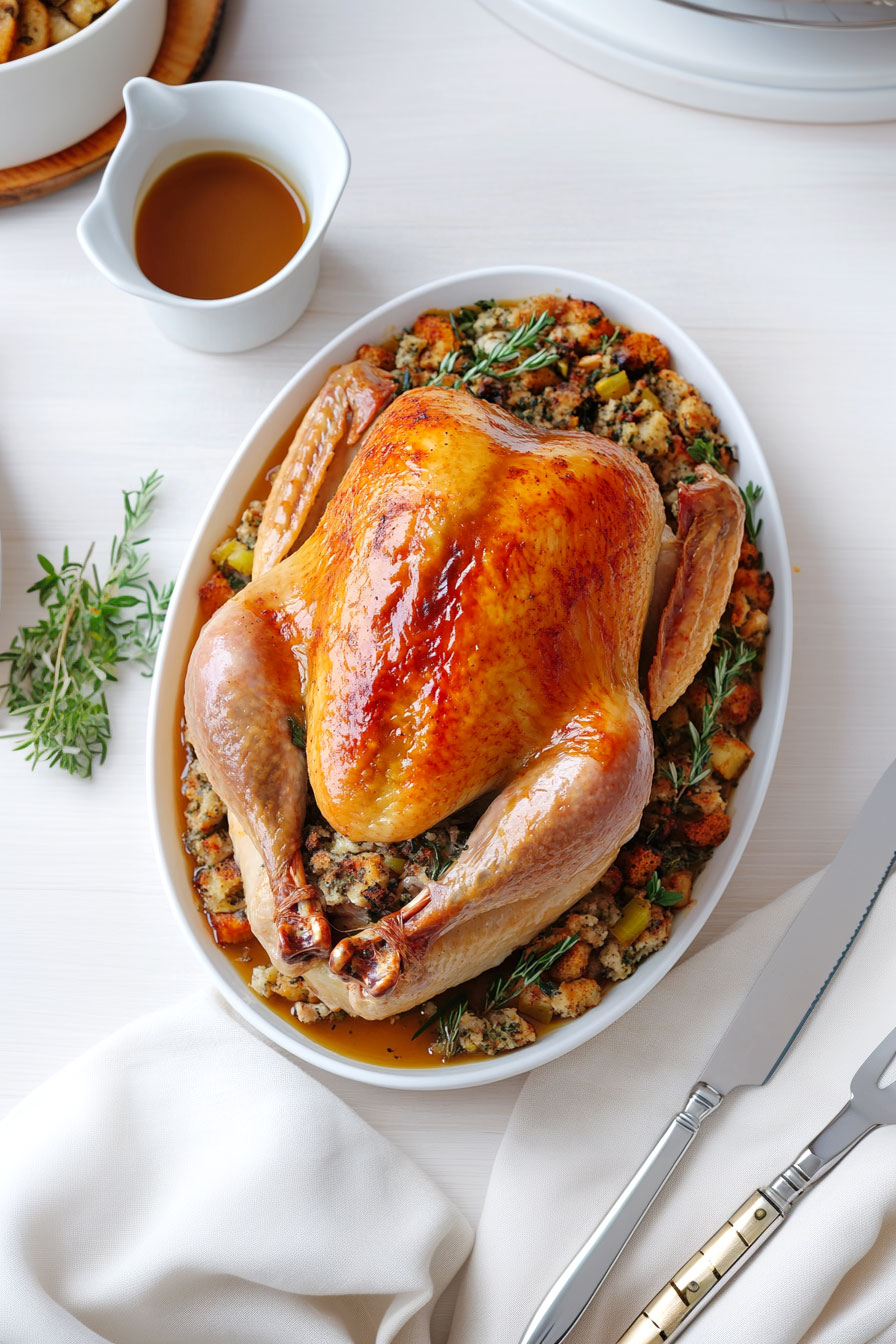
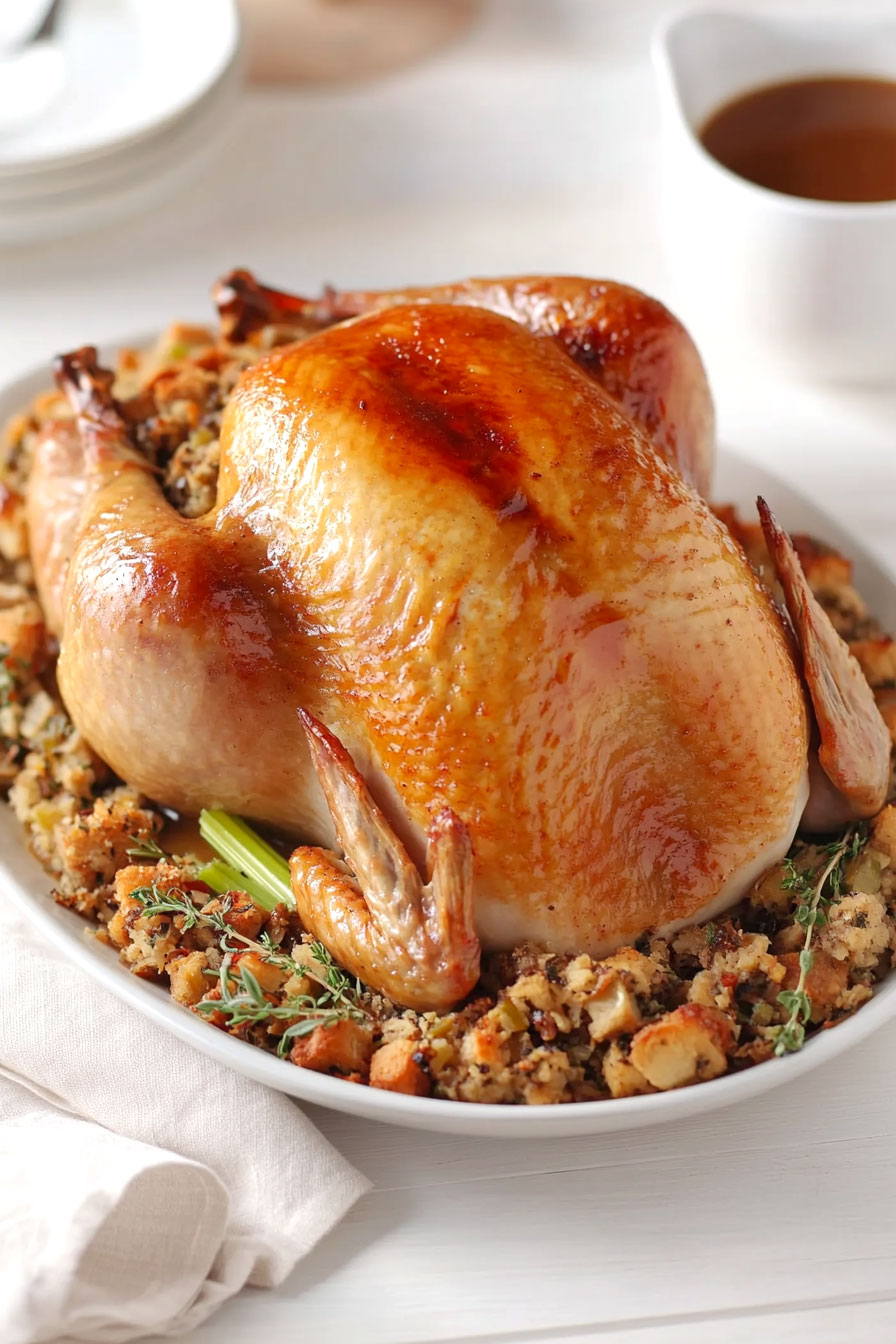
Growing up, our family’s Thanksgiving turkey always came out a bit dry, no matter how many tricks my mom tried. She’d baste it religiously every 30 minutes and cover it with foil, but somehow the breast meat still ended up needing extra gravy to be edible. Then my aunt introduced us to her cheesecloth method, and it changed our holiday meals completely. The simple act of draping butter-soaked cheesecloth over the turkey while it roasts keeps the meat so moist that we haven’t looked back since. It’s one of those cooking tricks that seems too easy to be true, but it works every single time.
Suggestions for Ingredient Substitution
For a healthier alternative, olive oil can replace the melted butter. Use about 1 cup of olive oil, which will provide heart-healthy fats while still helping to crisp the skin. The butter at room temperature can be substituted with ghee or a plant-based butter spread for those avoiding dairy.
Dry white wine can be replaced with chicken broth or apple cider for an alcohol-free option. Use the same amount of liquid, adjusting seasoning as needed. This substitution maintains moisture while adding subtle flavor.
For those seeking a gluten-free option, the Traditional Stuffing can be made with gluten-free bread or wild rice instead of regular bread. Adjust liquid ratios accordingly, as gluten-free ingredients may absorb moisture differently. These alternatives provide similar texture and flavor while accommodating dietary restrictions.
| Preparation Time | 120-150 minutes |
| Cooking Time | 240-270 minutes |
| Total Time | 360-420 minutes |
| Level of Difficulty | Medium |
Estimated Nutrition
Estimated nutrition for the whole recipe (without optional ingredients):
- Calories: 4000-4500
- Protein: 300-350 g
- Fat: 250-300 g
- Carbohydrates: 30-40 g
Ingredients
For the butter-wine basting:
- 1.5 cups melted unsalted butter
- 1 (750 ml) bottle dry white wine (like Sauvignon Blanc or Pinot Grigio)
For the turkey:
- 1 (20-21 lb) whole turkey (fresh, not frozen, for best flavor and texture)
- 2 tsp salt
- traditional stuffing
- 2 tsp black pepper (freshly ground for maximum aroma)
- 4 tbsp unsalted butter (for rubbing under the skin)
For the gravy (optional):
- 1 cup dry white or red wine
- giblet broth
Step 1: Prepare the Turkey
Begin by removing the turkey from the refrigerator and its packaging.
Allow it to rest at room temperature for 2 hours.
Pat the turkey dry with paper towels to remove any excess moisture.
Step 2: Preheat Oven and Prepare Cheesecloth
Preheat your oven by placing a rack at the lowest level and setting it to 450°F.
In a bowl, combine melted butter and white wine.
Take a large piece of cheesecloth, fold it into quarters, and cut it into a 17-inch, 4-layer square.
Immerse the cheesecloth in the butter and wine mixture and let it soak thoroughly.
Step 3: Prep and Stuff the Turkey
Place the turkey, breast side up, on a roasting rack in a heavy metal roasting pan.
If the turkey has a pop-up timer, remove it.
It’s better to use an instant-read thermometer.
Fold the wing tips underneath the turkey.
Sprinkle 1/2 teaspoon each of salt and pepper inside the turkey.
Loosely fill the large cavity and neck cavity with stuffing; do not pack it tightly.
(Extra stuffing can be cooked in a buttered baking dish for 45 minutes at 375°F.) Tie the legs together loosely with kitchen string, fold the neck flap under, and secure it with toothpicks.
Rub the turkey with softened butter and sprinkle with the remaining 1 1/2 teaspoons of salt and pepper.
Step 4: Prepare for Roasting
Lift the cheesecloth from the butter and wine mixture, squeezing it slightly so it remains very damp, and drape it evenly over the turkey breast and sides.
Place the turkey, legs first, into the preheated oven.
Roast for 30 minutes.
Step 5: Baste and Cook the Turkey
Using a pastry brush, baste the cheesecloth and exposed turkey parts with butter and wine.
Lower the oven temperature to 350°F and continue roasting for an additional 2 1/2 hours, basting every 30 minutes.
Monitor pan juices and remove any excess, saving it for gravy.
Step 6: Finish Roasting the Turkey
After the third hour of cooking, carefully remove the cheesecloth.
Turn the roasting pan so the turkey breast faces the back of the oven.
Baste with pan juices, or use the remaining butter and wine if needed.
Cook for 1 more hour, basting after 30 minutes.
Step 7: Monitor Turkey and Rest
After four hours, use an instant-read thermometer to check the turkey’s thigh temperature, which should reach 180°F, while the stuffing should be between 140°F and 160°F.
If more cooking is needed, return the turkey to the oven for an additional 20-30 minutes.
Once cooked, transfer the turkey to a serving platter and let it rest for about 30 minutes.
Step 8: Make the Gravy
As the turkey rests, pour the pan juices into a glass measuring cup and let them sit until the grease rises to the top, then skim it off.
Place the roasting pan over medium-high heat, adding 1 cup of dry red or white wine or water.
Scrape the pan with a wooden spoon until the liquid boils.
Then, add the giblet stock, stirring well, and reduce by half over 10 minutes.
Add the defatted pan juices and cook for another 10 minutes to complete the gravy.
Step 9: Strain and Serve
Strain the finished gravy into a warm gravy boat, season to taste, and serve alongside the turkey.
Enjoy your delicious and perfectly roasted turkey!