Growing up, stir-fry nights at our house meant a box from the freezer section and a bottle of sauce from the grocery store. That’s just how mom did it. When I tried making it from scratch in college, everything came out mushy and bland.
Turns out I was making the same mistake mom warned me about with so many other things – I was rushing it. A good chicken and vegetable stir-fry needs high heat and quick cooking, not a slow simmer in sauce. Once I learned that (and discovered the magic combo of ginger and garlic), my stir-fry game completely changed.
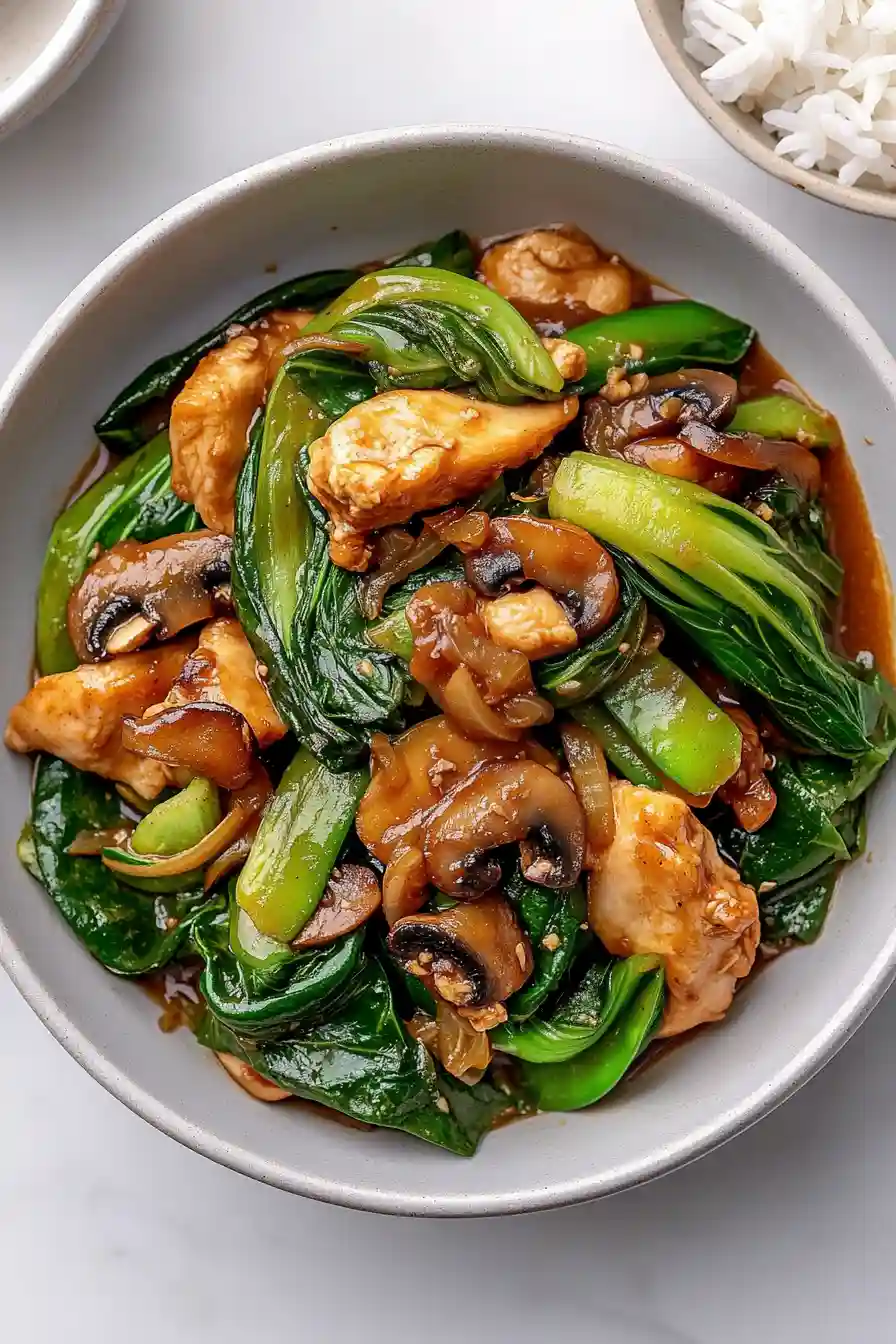
Why You’ll Love This Chicken Stir-Fry
- Quick dinner solution – Ready in just 30 minutes, this stir-fry is perfect for those busy weeknights when you need a fresh meal on the table fast.
- Loaded with vegetables – Packed with bok choy, mushrooms, and snow peas, you’ll get plenty of nutrients and fiber in every colorful serving.
- Better than takeout – Fresh ingredients and a homemade sauce make this tastier and healthier than restaurant versions, plus you’ll save money making it at home.
- Customizable recipe – You can easily swap in different vegetables based on what you have in your fridge, or adjust the sauce ingredients to match your taste preferences.
- One-pan meal – Everything cooks in a single pan, which means less cleanup and more time to enjoy your evening.
What Kind of Chicken Should I Use?
Boneless, skinless chicken breasts are the go-to choice for stir-frying, but you could easily swap in chicken thighs if you prefer darker meat. For the best results, make sure your chicken is very cold (but not frozen) before slicing – this makes it much easier to get those thin, even cuts that cook quickly and evenly. If you’re short on time, many grocery stores now offer pre-sliced chicken breast strips, though they tend to be a bit thicker than ideal for stir-frying. Just remember that no matter which cut you choose, the key is to slice the chicken against the grain and aim for pieces about 1/4 inch thick so they cook quickly while staying tender and juicy.

Options for Substitutions
This stir-fry recipe is really adaptable and you’ve got plenty of options for switching things up:
- Chicken breast: You can easily swap chicken breast with chicken thighs, which actually stay a bit juicier. Not feeling chicken? Try thinly sliced pork, beef, or even tofu (just make sure to press the tofu first to remove excess moisture).
- Mirin: If you can’t find mirin, mix 2 tablespoons rice vinegar with 1 teaspoon sugar, or use dry sherry mixed with a pinch of sugar. In a pinch, even honey mixed with a splash of rice vinegar works well.
- Vegetables: The veggie mix is totally flexible – try broccoli instead of bok choy, sugar snap peas for snow peas, or any mushroom variety you like. Just keep the total amount of veggies about the same.
- Vegetable oil: Any neutral oil works here – canola, grapeseed, or peanut oil are all good choices. Just avoid olive oil as its flavor is too strong and it has a lower smoke point.
- Cornstarch: Arrowroot powder works as a 1:1 replacement, or you can use potato starch. These help create that nice coating on the chicken.
- Soy sauce: For a gluten-free option, use tamari. Coconut aminos work too, but they’re sweeter, so you might want to use less mirin if you go this route.
Watch Out for These Mistakes While Cooking
The biggest mistake when making stir-fry is overcrowding the pan, which causes the vegetables to steam instead of getting that perfect crispy-tender texture – work in batches if needed and keep your heat high. Another common error is not having all ingredients prepped and ready before you start cooking, as stir-frying moves quickly and you won’t have time to chop vegetables once you begin. To prevent your chicken from becoming tough and dry, make sure to slice it against the grain and don’t cook it for more than 3-4 minutes in the first round – it will finish cooking when added back to the pan with the sauce. For the best results, let your wok or pan get really hot before adding any ingredients, and keep the food moving constantly to ensure even cooking and prevent burning the garlic and ginger.

What to Serve With Chicken Stir-Fry?
While this ginger-garlic chicken stir-fry already comes with rice, there are some tasty sides that can make your meal even better! A simple bowl of egg drop or hot and sour soup makes a great starter, giving you that complete Chinese restaurant experience at home. For extra crunch and fun, spring rolls or crispy wontons are perfect for serving on the side. If you want to keep things light, you could add a simple cucumber salad dressed with rice vinegar and sesame oil – it’s cooling and refreshing next to the warm stir-fry.
Storage Instructions
Keep Fresh: Let your stir-fry cool down completely, then place it in an airtight container in the fridge. It’ll stay good for up to 3-4 days. The vegetables might lose a bit of their crunch, but the flavors will actually develop nicely as they sit together.
Meal Prep: This stir-fry is perfect for meal prep! You can slice all your vegetables and chicken up to 2 days ahead and store them separately in the fridge. Just keep the prepped chicken in its own container with the marinade, and it’ll be extra flavorful when you cook it.
Warm Up: To enjoy your leftover stir-fry, heat it in a wok or large pan over medium heat for about 3-4 minutes, stirring occasionally. You can add a splash of water if it seems dry. A microwave works too – just heat in 30-second intervals, stirring between each, until it’s heated through.
| Preparation Time | 15-20 minutes |
| Cooking Time | 10-15 minutes |
| Total Time | 25-35 minutes |
| Level of Difficulty | Medium |
Estimated Nutrition
Estimated nutrition for the whole recipe (without optional ingredients):
- Calories: 800-900
- Protein: 120-130 g
- Fat: 40-50 g
- Carbohydrates: 60-70 g
Ingredients
For the marinated chicken:
- 1.5 lb boneless, skinless chicken breasts (cut into 1-inch pieces)
- 1 tbsp mirin
- 1 tbsp cornstarch (for tenderizing the chicken)
- 2 tbsp soy sauce
For the aromatics:
- 4 scallions (thinly sliced, whites and greens separated)
- 6 garlic cloves (freshly minced for best flavor)
- 1 (2 inch) ginger piece (grated, about 2 tablespoons)
For the stir-fry:
- 8 oz snow peas
- 8 oz baby bok choy (halved lengthwise)
- salt to taste
- 8 oz sliced mushrooms (such as cremini or button)
- 4 tbsp vegetable oil (or any neutral oil like canola)
- 1 tbsp mirin
- 3 tbsp soy sauce (I use Kikkoman brand)
For serving:
- cooked rice (steamed jasmine rice recommended)
Step 1: Marinate the Chicken
Begin by tossing 1½ pounds of skinless, boneless chicken breasts, sliced on a diagonal to ¼-inch thickness, with 2 tablespoons of soy sauce and 1 tablespoon of mirin in a medium bowl.
Sprinkle 1 tablespoon of cornstarch over the mixture and toss again to ensure the chicken pieces are well coated.
Set aside to marinate while you prepare the other ingredients.
Step 2: Prepare the Aromatics
In a food processor, pulse the white and pale green parts of 4 scallions, 6 garlic cloves (coarsely chopped), and one 2-inch piece of ginger (scrubbed and coarsely chopped) until everything is very finely chopped.
This aromatic blend will add depth of flavor to the dish.
Step 3: Cook the Chicken
Heat 2 tablespoons of vegetable oil in a large skillet over medium-high heat.
Arrange the marinated chicken in the skillet in an even layer and cook without moving it for about 3 minutes until it becomes golden brown underneath.
Turn the chicken pieces over and continue to cook for another 2 minutes until golden brown on the other side.
Remove the chicken from the skillet and transfer to a plate.
Step 4: Sauté the Vegetables
In the same skillet, heat the remaining 2 tablespoons of vegetable oil.
Add the scallion mixture and cook, stirring frequently, for about 30 seconds until fragrant.
Introduce 8 ounces of halved baby bok choy, 8 ounces of sliced mushrooms, and 8 ounces of trimmed snow peas.
Cook, tossing them together, for approximately 2 minutes until the vegetables are crisp-tender.
Step 5: Combine and Finish the Stir-Fry
Return the cooked chicken along with any juices back to the skillet with the vegetables.
Add the remaining 3 tablespoons of soy sauce, 1 tablespoon of mirin, and ¼ cup of water, while scraping up any browned bits stuck to the bottom of the pan.
Cook and toss everything together until the vegetables are tender and the sauce is slightly thickened, about 2 more minutes.
Turn off the heat and taste the stir-fry, seasoning with kosher salt if needed.
Step 6: Serve
Divide the chicken and vegetable stir-fry among plates, and top each serving with the dark green parts of the 4 scallions.
Serve alongside cooked rice for a complete meal.