I used to think Cornish hens were just for fancy restaurants or special occasions at my grandmother’s house. They seemed so complicated and intimidating compared to regular chicken. Plus, I figured they’d be dry and flavorless—basically just tiny, overpriced birds.
Turns out I was completely wrong. Cornish hens are actually easier to cook than a whole chicken, and they cook much faster too. The wild rice stuffing keeps them moist from the inside out, and each person gets their own little hen, which feels special without being fussy. Now they’re one of my go-to dinners when I want something that looks impressive but doesn’t stress me out in the kitchen.
Why You’ll Love This Cornish Hens with Wild Rice Stuffing
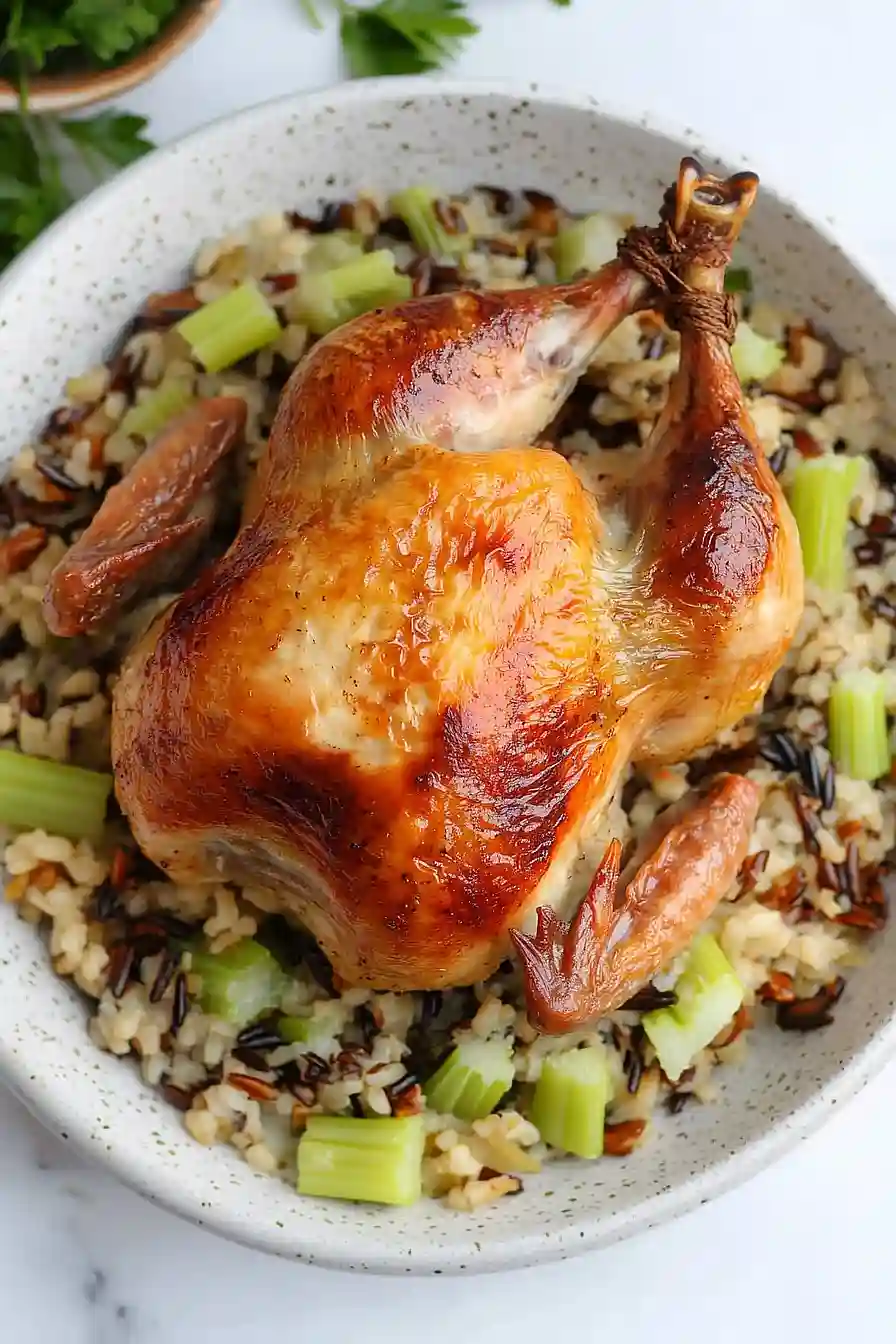
- Impressive presentation – These individual Cornish hens look fancy and special on the dinner table, making any meal feel like a celebration without requiring professional cooking skills.
- Built-in portion control – Each person gets their own perfectly sized hen, so there’s no guessing about serving sizes or fighting over the best pieces.
- Flavorful wild rice stuffing – The combination of wild rice, sausage, and vegetables creates a hearty stuffing that cooks right inside the hens, soaking up all those delicious juices.
- Sweet apricot glaze – The apricot preserves create a beautiful golden color and add a touch of sweetness that balances perfectly with the savory stuffing.
- Perfect for special occasions – This recipe is ideal for holidays, dinner parties, or any time you want to make a meal feel extra special without spending all day in the kitchen.
What Kind of Cornish Game Hens Should I Use?
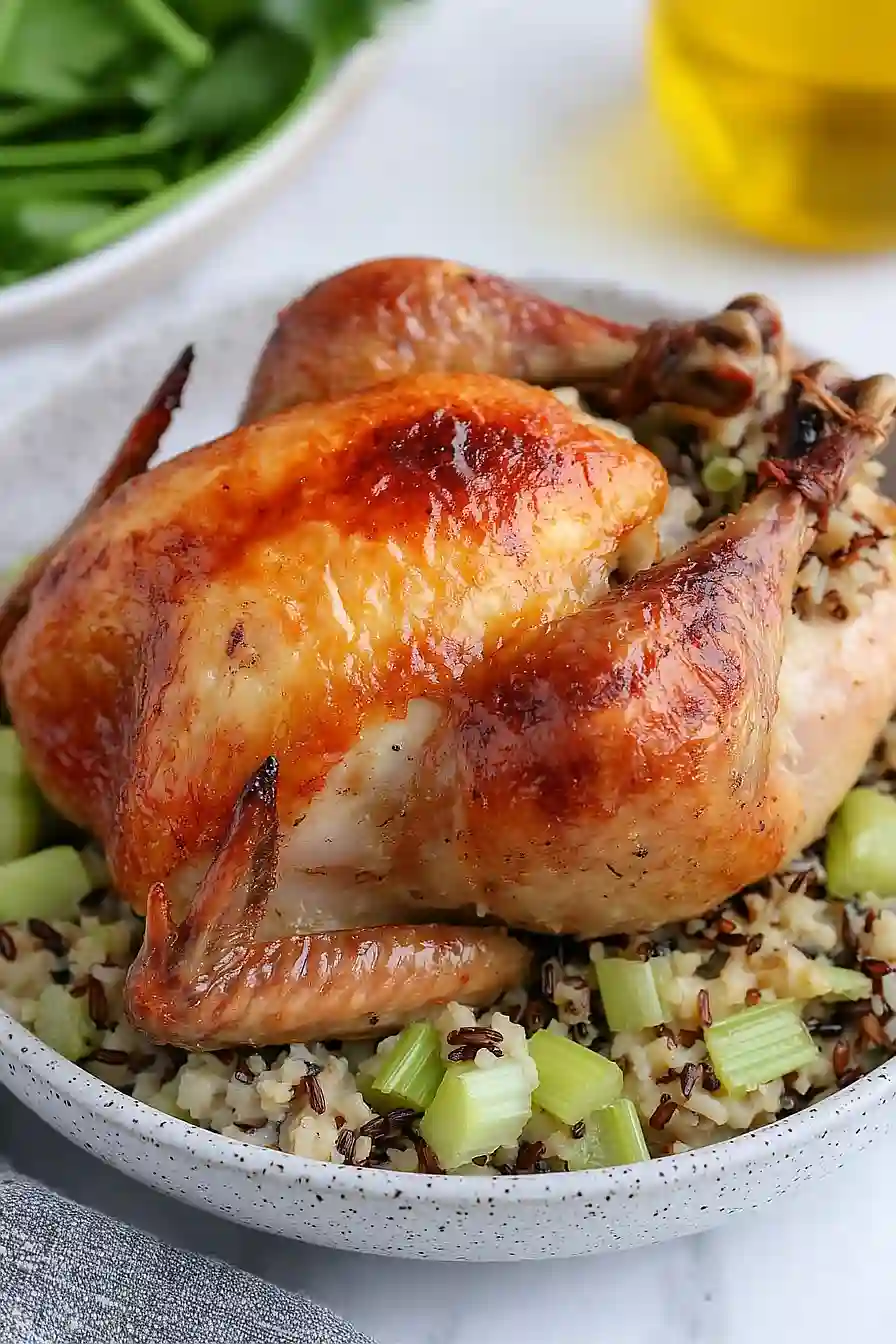
You’ll want to look for Cornish game hens that weigh between 20 to 24 ounces each, which is the perfect single-serving size. Fresh hens are ideal, but frozen ones work just as well – just make sure to thaw them completely in the refrigerator for 24-48 hours before cooking. When selecting your hens, check that the skin looks smooth and the meat feels firm to the touch. If you can only find smaller hens around 16-18 ounces, that’s fine too, but you might want to adjust your cooking time slightly since they’ll cook faster than the larger ones.
Options for Substitutions
This recipe has some room for swaps, though a few ingredients are pretty essential:
- Wild rice: Wild rice gives this stuffing its signature nutty flavor and texture, so I’d recommend sticking with it if possible. In a pinch, you could use brown rice, but expect a milder taste and softer texture.
- Cornish game hens: If you can’t find Cornish hens, you can use a whole chicken (about 3-4 pounds) and adjust cooking time accordingly. You could also use chicken thighs or drumsticks, though you’ll need to stuff the rice mixture in a separate baking dish.
- Bulk pork sausage: Italian sausage, breakfast sausage, or even ground turkey sausage work great here. For a lighter option, try ground turkey or chicken seasoned with sage and thyme.
- Apricot preserves: Orange marmalade, peach preserves, or even honey mixed with a bit of Dijon mustard make tasty glazes. You’ll get a different flavor profile but still that nice glossy finish.
- Long grain rice: Jasmine or basmati rice work perfectly here. Avoid short grain rice as it gets too sticky for stuffing.
- Chicken bouillon: Chicken stock concentrate, Better Than Bouillon, or even vegetable bouillon will do the job just fine.
Watch Out for These Mistakes While Cooking
The biggest mistake when making Cornish hens is overcooking them, which turns the delicate meat dry and tough – use a meat thermometer to check that the thickest part of the thigh reaches 165°F, and remember that these small birds cook much faster than a whole chicken.
Another common error is undercooking the wild rice in your stuffing, so make sure to give it the full cooking time it needs (usually 45-60 minutes) since it takes much longer than regular rice to become tender.
Don’t stuff the hens too tightly with the rice mixture, as this prevents even cooking and can leave you with cold spots in the center – loosely fill the cavity and tie the legs together to keep everything in place.
Finally, apply the apricot preserves glaze during the last 15-20 minutes of cooking to prevent it from burning, and let the hens rest for 10 minutes after cooking so the juices redistribute throughout the meat.
What to Serve With Cornish Hens?
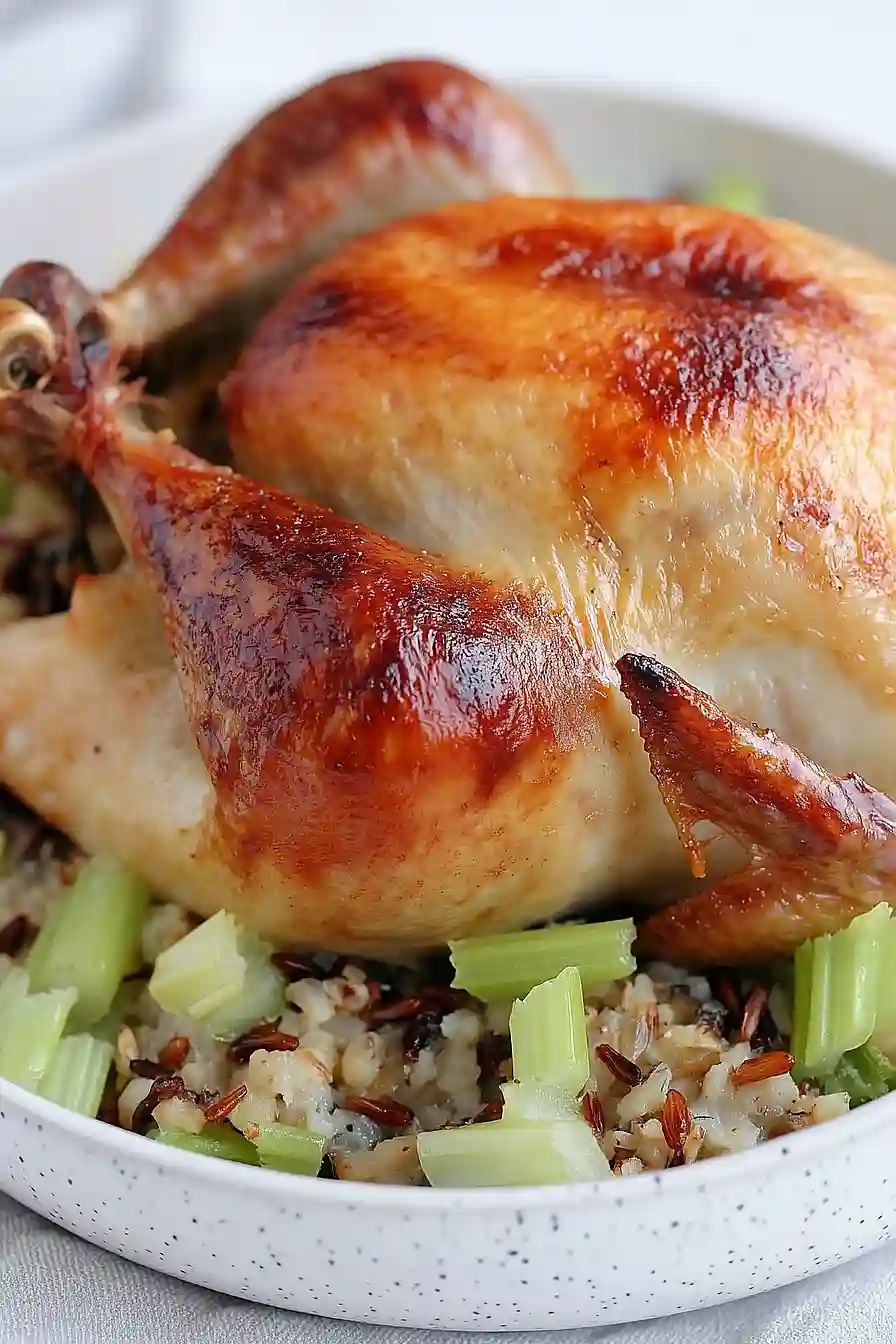
Cornish hens with wild rice stuffing make for such a fancy dinner, and I love pairing them with simple roasted vegetables like Brussels sprouts, carrots, or green beans that won’t compete with all those great flavors. The apricot glaze on these hens is slightly sweet, so a tart cranberry sauce or a fresh arugula salad with lemon vinaigrette helps balance everything out perfectly. Since the wild rice stuffing is already pretty hearty, you really don’t need much else, but some buttery dinner rolls are always a hit for soaking up any extra pan juices. A glass of white wine like Chardonnay or even a light Pinot Noir pairs beautifully with the rich sausage stuffing and sweet apricot flavors.
Storage Instructions
Refrigerate: Your Cornish hens will keep nicely in the fridge for up to 3 days when stored in airtight containers. I like to separate the meat from the stuffing into different containers since they reheat better that way. The wild rice stuffing actually tastes even better the next day after all those flavors have had time to meld together.
Freeze: These freeze really well for up to 3 months! Let everything cool completely first, then wrap individual portions in foil or store in freezer-safe containers. The stuffing freezes particularly well and makes for easy weeknight meals when you want something special without all the work.
Warm Up: To reheat, thaw overnight in the fridge if frozen, then warm in a 350°F oven for about 20-25 minutes until heated through. Cover with foil to prevent drying out, and add a splash of chicken broth to the stuffing if it seems a bit dry. The microwave works too, but the oven keeps everything from getting soggy.
| Preparation Time | 15-20 minutes |
| Cooking Time | 90-110 minutes |
| Total Time | 105-130 minutes |
| Level of Difficulty | Medium |
Estimated Nutrition
Estimated nutrition for the whole recipe (without optional ingredients):
- Calories: 7300-8100
- Protein: 400-470 g
- Fat: 240-310 g
- Carbohydrates: 760-880 g
Ingredients
For the stuffing:
- 5 cups water
- 2 tsp chicken bouillon (I use Better Than Bouillon for richer flavor)
- 3/4 cup wild rice
- 1-1/2 tsp salt
- 1 lb ground pork sausage (Jimmy Dean is a good option here)
- 1-1/2 cups diced celery
- 1-1/2 cups long grain white rice
- 3/4 cup chopped yellow onion
For the hens:
- 6 cornish hens (about 20-24 oz each)
For the apricot glaze:
- 12 oz apricot preserves
- 1/2 cup water
Step 1: Cook the Wild and White Rice
- 5 cups water
- 2 tsp chicken bouillon granules
- 1-1/2 tsp salt
- 3/4 cup uncooked wild rice
- 1-1/2 cups uncooked long grain white rice
In a large saucepan, bring 5 cups of water, chicken bouillon granules, and salt to a boil.
Add the uncooked wild rice, reduce the heat, cover, and simmer for 20 minutes.
Then, stir in the uncooked long grain white rice.
Cover again and simmer for an additional 25 to 30 minutes, or until all the rice is tender and the water has been absorbed.
Step 2: Cook the Sausage and Vegetables
- 1 lb ground pork sausage
- 1-1/2 cups diced celery
- 3/4 cup chopped yellow onion
- cooked rice mixture from Step 1
While the rice cooks, heat a large skillet over medium heat.
Add the ground pork sausage, diced celery, and chopped yellow onion.
Cook, stirring often, until the sausage is browned and no longer pink and the vegetables are tender.
Drain off any excess fat.
Stir in the cooked rice mixture from Step 1 and mix thoroughly to combine, forming the stuffing.
Step 3: Stuff and Bake the Cornish Game Hens
- 6 Cornish game hens (20–24 oz each)
- stuffing from Step 2
- leftover stuffing from Step 2
Preheat your oven to 350°F (175°C).
Stuff each Cornish game hen with about 3/4 cup of the sausage and rice stuffing from Step 2.
Place any remaining stuffing into a greased 2-quart baking dish, cover, and set it aside.
Arrange the stuffed hens breast side up on a rack in a shallow baking pan, and tie the drumsticks together.
Bake the hens uncovered for 40 minutes.
Step 4: Simmer the Apricot Glaze
- 1 jar (12 oz) apricot preserves
- 1/2 cup water
While the hens are baking, combine the apricot preserves and 1/2 cup water in a small saucepan.
Bring the mixture to a boil, stirring occasionally to create a smooth glaze.
I like to give the sauce a taste at this stage—if you want it tangier, add a dash of lemon juice if you have some on hand!
Step 5: Glaze and Finish Baking the Hens; Bake Stuffing
- apricot glaze from Step 4
- remaining stuffing from Step 3
After the hens have baked for 40 minutes, pour the hot apricot glaze from Step 4 over the hens.
Continue baking for an additional 25 to 35 minutes, basting the hens occasionally with the pan juices.
Place the covered dish of extra stuffing in the oven for the last 35 to 40 minutes of baking, so everything is ready at the same time.
The hens are done when they reach an internal temperature of 180°F, and the stuffing is heated through to 165°F.
Step 6: Rest and Serve
Remove the hens and stuffing from the oven.
Allow the hens to rest briefly before serving so the juices redistribute and stay moist.
Serve each hen with a portion of the stuffing and the delicious apricot glaze.
For the best flavor, I like to spoon a little extra glaze over each serving right before bringing it to the table.