I never thought dried basil could make a good pesto until I ran out of fresh herbs one day. Growing up, my mom always insisted on using fresh basil from her garden. When I tried using the dried stuff from my spice rack out of desperation, I was sure it would be a disaster.
But here’s the thing – dried basil pesto has its own charm. While it’s different from the traditional fresh version, it’s become my go-to when I need something quick and don’t want to make a special trip to the store. Plus, it means I can make pesto any time of year, not just during basil season.
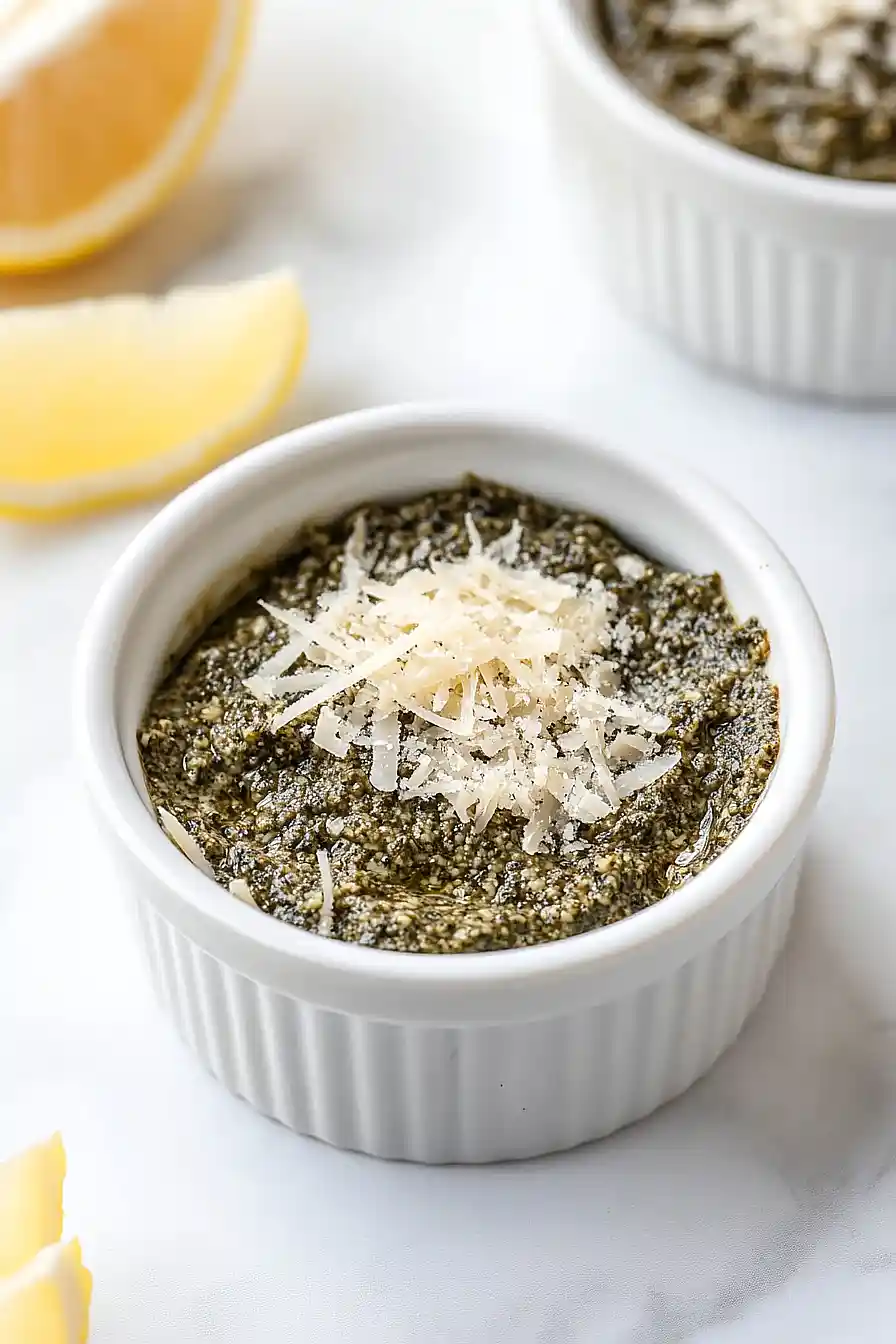
Why You’ll Love This Dried Basil Pesto
- Pantry-friendly recipe – Using dried basil instead of fresh means you can make this pesto any time of year with ingredients you likely have in your pantry.
- Quick preparation – This pesto comes together in just 10 minutes – perfect for those busy weeknights when you need a quick sauce for pasta or vegetables.
- Cost-effective – Dried basil is much more affordable than fresh basil leaves, making this a budget-friendly alternative to traditional pesto.
- Customizable recipe – You can easily swap the nuts based on what you have – cashews, pine nuts, or walnuts all work great in this versatile sauce.
What Kind of Dried Basil Should I Use?
When shopping for dried basil, look for bright green leaves that still have a strong, sweet-herbal aroma – if you can’t smell the basil through the container, it’s probably too old. Mediterranean or Italian dried basil tends to have the best flavor for pesto, though any good quality dried basil will work. Just make sure your dried basil is relatively fresh, as it typically loses its punch after about 6 months in your spice cabinet. If your dried basil has turned a dull brown color or doesn’t have much smell, it’s time to replace it with a new jar before making this pesto.
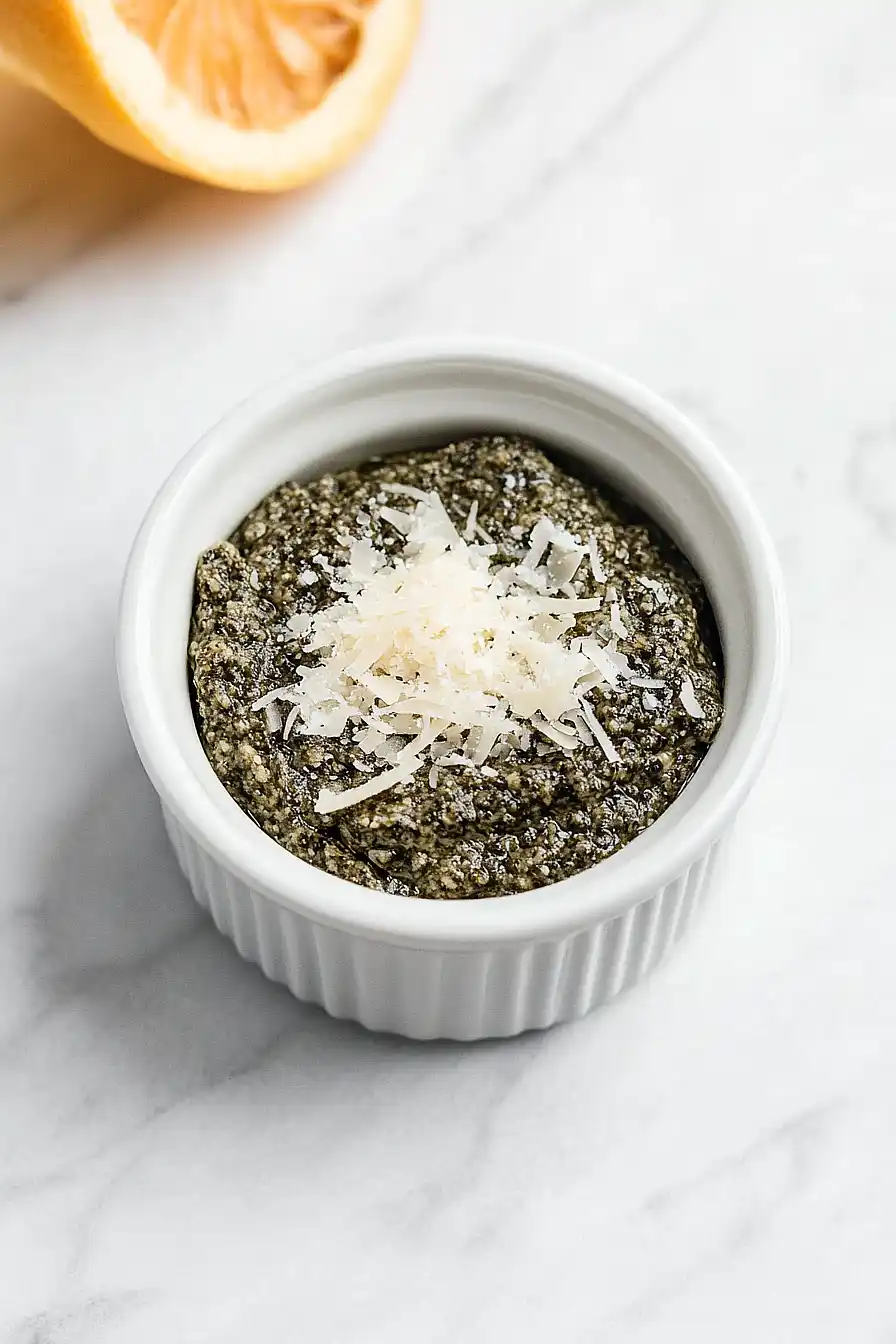
Options for Substitutions
This dried basil pesto recipe is pretty flexible and allows for several easy swaps:
- Nuts: The recipe already gives you options with cashews, pine nuts, or walnuts, but you can also try almonds or even sunflower seeds if you’re dealing with nut allergies. Just make sure to toast any nut or seed you use for the best flavor.
- Parmesan cheese: You can swap Parmesan with Pecorino Romano or Asiago cheese. For a dairy-free version, try nutritional yeast – start with 3 tablespoons and adjust to taste.
- Dried basil: While dried basil is key to this recipe, you could experiment with dried oregano or an Italian herb blend. Keep in mind this will give you a different flavor profile.
- Olive oil: While olive oil works best here, you can use avocado oil as a substitute. Avoid oils with strong flavors like coconut oil or sesame oil as they’ll overpower the herbs.
- Lemon juice: Out of fresh lemon? You can use lime juice or even white wine vinegar in the same amount.
Watch Out for These Mistakes While Making
The biggest mistake when making dried basil pesto is adding too much dried basil at once, which can make your pesto taste overly concentrated and bitter – instead, start with half the amount and adjust to taste after blending.
Another common error is not toasting the nuts before blending, but taking just 5 minutes to toast them in a dry pan until fragrant will add incredible depth of flavor to your pesto.
The texture of your pesto can quickly go from perfect to pasty if you over-process the ingredients, so pulse in short bursts and scrape down the sides of your food processor frequently – and remember to stream in the olive oil slowly while the machine is running to create a smooth emulsion.
For the best flavor development, let your finished pesto rest in the fridge for at least 30 minutes before using, allowing the dried herbs to fully rehydrate and the flavors to meld together.
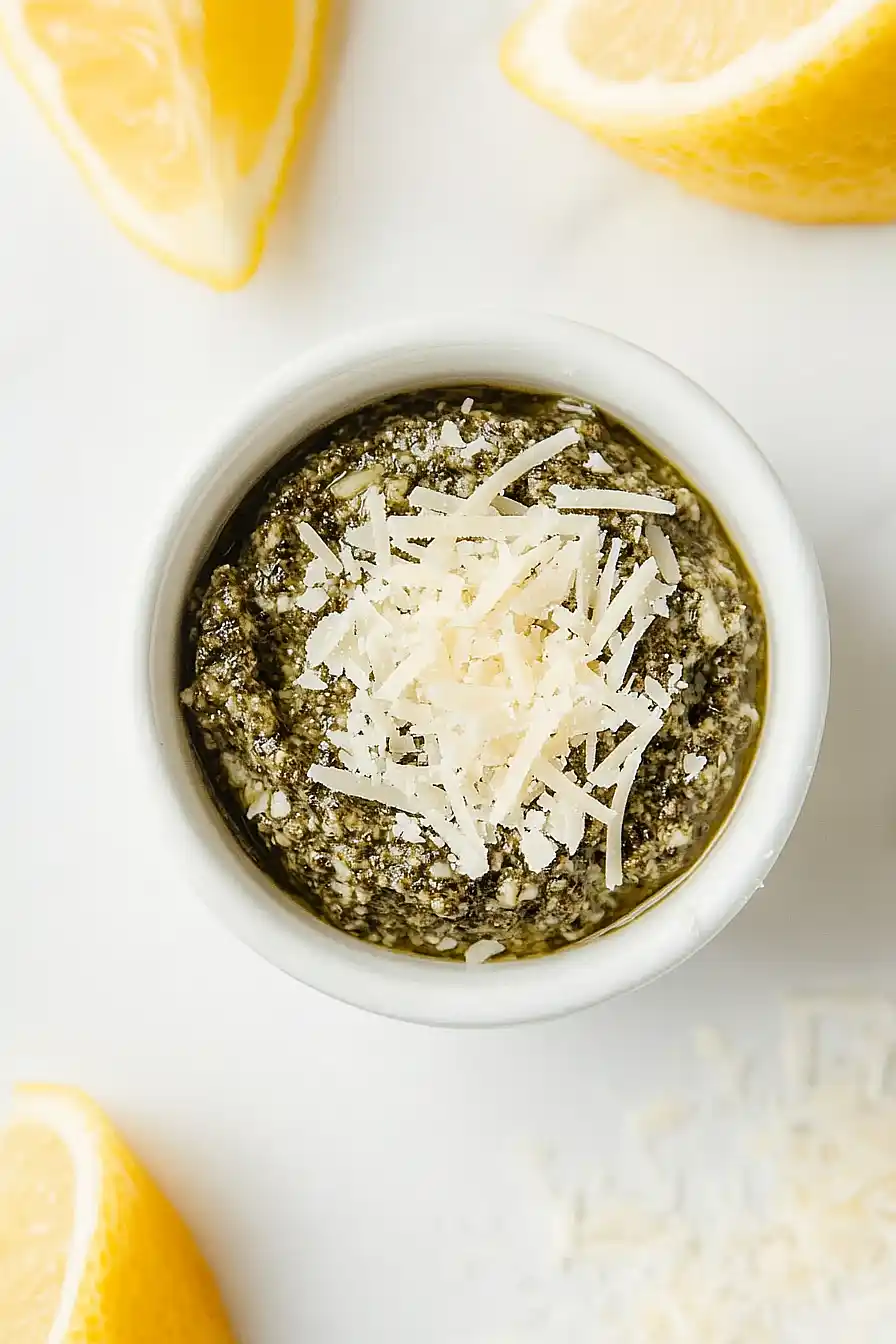
What to Serve With Dried Basil Pesto?
This homemade pesto is super flexible and goes well with so many different dishes! The most obvious choice is to toss it with hot pasta – any shape works great, but I especially like it with linguine or fusilli since the sauce really clings to all the nooks and crannies. You can also spread it on toasted baguette slices for a quick appetizer, or use it as a sauce for grilled chicken or fish. For a light lunch option, try stirring a spoonful into your favorite soup or using it as a spread in a turkey sandwich with fresh mozzarella and tomatoes. Keep in mind that a little goes a long way since the dried basil makes this pesto pretty concentrated in flavor!
Storage Instructions
Keep Fresh: This dried basil pesto stays good in an airtight container in the fridge for up to 2 weeks. Pro tip: pour a thin layer of olive oil on top before sealing the container – this helps prevent the pesto from turning brown and keeps it fresh longer.
Freeze: Want to make a bigger batch? Spoon the pesto into ice cube trays, freeze until solid, then transfer the cubes to a freezer bag. They’ll keep for up to 6 months, and you can grab just what you need when cooking. Each cube is about 2 tablespoons – perfect for single servings!
Prep Ahead: This pesto is great for meal prep since it actually tastes better after the flavors have had time to mingle. Make it a day or two before you need it, and you’ll be rewarded with even more flavorful results. Just give it a quick stir before using, as the oil might separate a bit.
| Preparation Time | 10-15 minutes |
| Cooking Time | 0 minutes |
| Total Time | 10-15 minutes |
| Level of Difficulty | Easy |
Estimated Nutrition
Estimated nutrition for the whole recipe (without optional ingredients):
- Calories: 700-800
- Protein: 10-15 g
- Fat: 70-80 g
- Carbohydrates: 10-15 g
Ingredients
For the pesto base:
- 1 medium garlic clove
- 1 tbsp lemon juice
- 1/8 tsp kosher salt
- 1/4 cup shredded parmesan (freshly grated for best flavor, I like Sartori Parmesan)
- 3 tbsp dried basil
- 1/4 cup raw cashews (or pine nuts or walnuts, I prefer cashews for creaminess)
For the pesto:
- 6 tbsp olive oil (extra virgin for robust flavor)
Step 1: Blend Dry Ingredients Together
- 1/4 cup raw plain cashews, pine nuts, or walnuts
- 1/4 cup shredded Parmesan
- 1 medium clove garlic
- 3 tbsp dried basil leaves
- 1 tbsp freshly squeezed lemon juice
- 1/8 tsp kosher salt
In a food processor, combine the raw plain cashews (or pine nuts or walnuts), shredded Parmesan, garlic, dried basil leaves, freshly squeezed lemon juice, and kosher salt.
Blend for a few seconds until the ingredients are fully combined and the mixture is slightly coarse.
I like to pulse it just until everything is evenly chopped so the flavors can develop.
Step 2: Add Olive Oil and Blend to Make Pesto
- 6 tbsp olive oil
- blended nut and herb mixture from Step 1
With the food processor running, slowly drizzle in the olive oil.
Continue blending until the mixture transforms into a thick, creamy pesto sauce.
Stop and scrape down the sides as needed to help everything incorporate.
Once done, transfer your pesto to a jar for storage—it will keep for a week in the fridge or several months in the freezer.
I like to save a little extra olive oil to drizzle over the top before closing the jar; it helps preserve the bright green color.