We’ve all been there – staring at leftover holiday ham in the fridge and wondering what to do with it. Between rushing to get the kids ready for school and trying to get myself out the door, finding creative ways to use up those leftovers can feel like just another item on an endless to-do list.
That’s why this leftover ham hash has become my go-to solution. It’s quick and satisfying, uses ingredients you probably already have in your kitchen, and turns those holiday leftovers into a completely new meal that the whole family will actually want to eat.
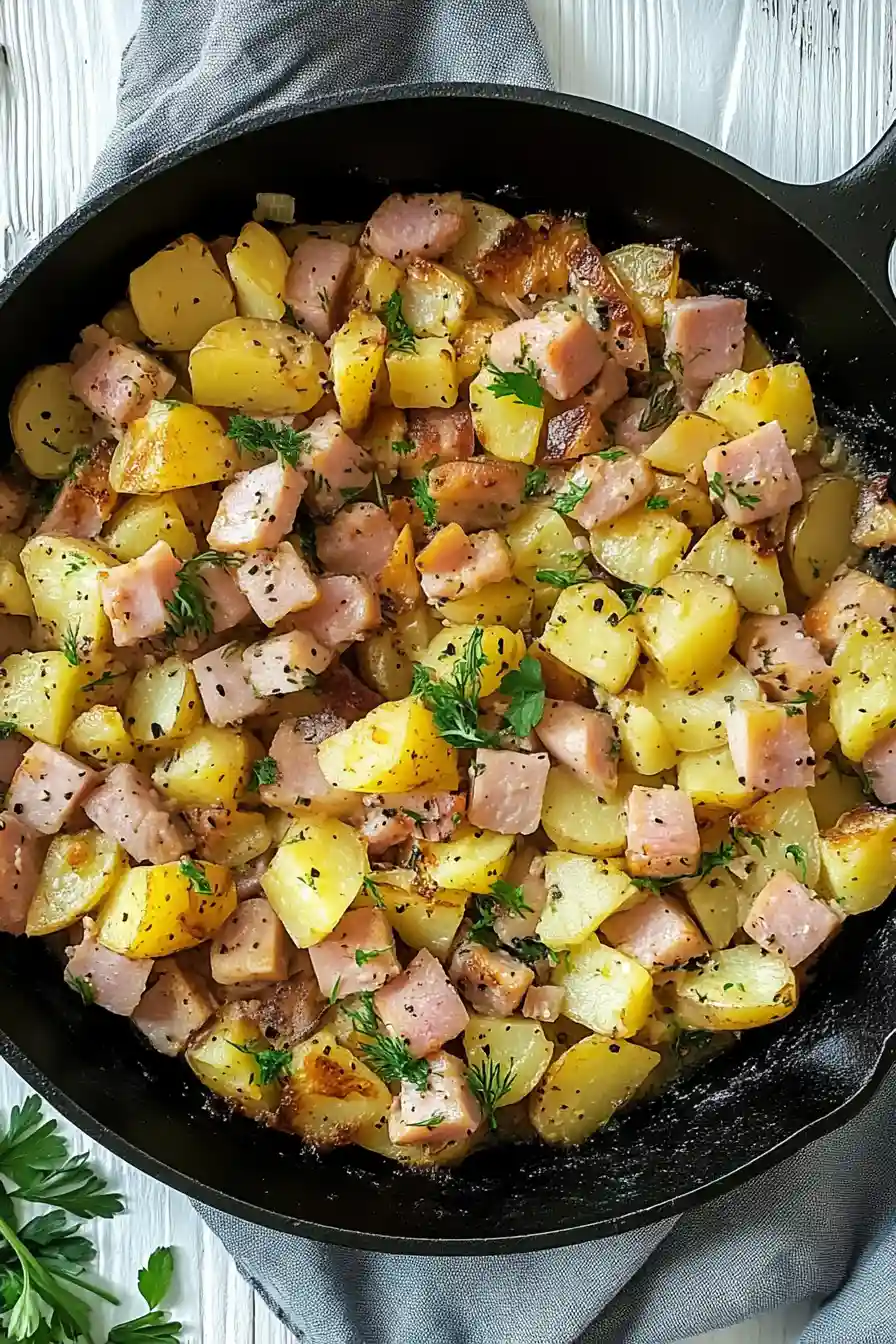
Why You’ll Love This Ham Hash
- Quick cleanup meal – This one-pan wonder means less time washing dishes and more time enjoying your meal – perfect for busy weeknights when you don’t want to deal with a sink full of pots.
- Great for leftovers – Got leftover holiday ham? This recipe turns yesterday’s dinner into today’s star meal, making it both practical and delicious.
- Fast preparation – Ready in just 25-35 minutes, this hash is perfect for those nights when you need dinner on the table quickly.
- Simple ingredients – Using basic pantry staples and leftover ham, you can whip up this satisfying meal without a special trip to the grocery store.
What Kind of Potatoes Should I Use?
Baby potatoes are perfect for hash because they have a waxy texture that helps them hold their shape when cooked instead of turning mushy. You can use red baby potatoes, yellow baby potatoes, or even fingerlings – they’ll all work great in this recipe. If you can’t find baby potatoes, you can substitute regular waxy potatoes like Yukon Golds cut into similar-sized chunks. Just make sure to avoid starchy potatoes like Russets, which tend to fall apart during cooking and won’t give you those nice, crispy edges you want in a hash.
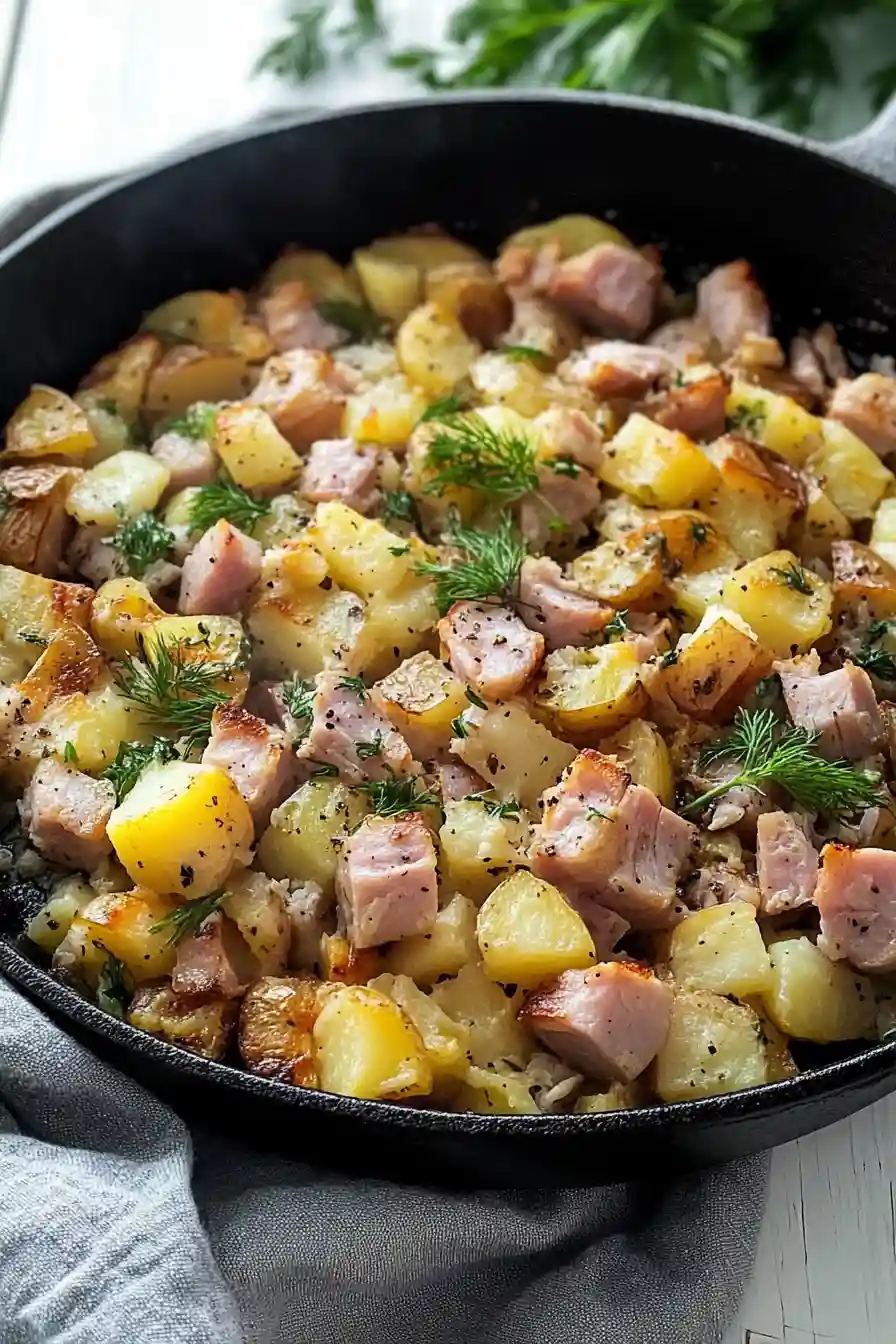
Options for Substitutions
This hash recipe is pretty forgiving and works well with several substitutions:
- Olive oil: You can easily swap olive oil with vegetable oil, canola oil, or even bacon fat for extra flavor.
- Baby potatoes: Any potato variety works here – russet, red, or Yukon gold. Just make sure to cut them into similar-sized pieces for even cooking. If using larger potatoes, dice them into roughly 1-inch cubes.
- Ham: While leftover ham is ideal, you can use any cooked ham – deli ham, Canadian bacon, or even bacon as a last resort. Just keep in mind that different types of ham will change the saltiness of the dish.
- Grainy mustard: Regular Dijon mustard works fine, or you can use yellow mustard in a pinch. If you don’t have any mustard, a splash of apple cider vinegar can add a nice tang.
- Fresh herbs: No fresh herbs? Use 1/3 teaspoon each of dried dill and parsley instead. You can also try other herbs like chives or thyme, or skip them if you don’t have any on hand.
Watch Out for These Mistakes While Cooking
The biggest challenge when making hash is achieving that perfect golden-brown crust on your potatoes – crowding the pan with too many ingredients at once will create steam instead of that desired crispy texture. For the best results, make sure your pan is hot before adding the oil, and resist the urge to stir the potatoes too frequently – letting them sit undisturbed for 3-4 minutes per side allows that beautiful crust to form. Another common mistake is starting with wet potatoes after washing them – take the time to pat them completely dry, or your hash will steam instead of crisp up. If you’re using leftover cooked potatoes, add them to the pan after the onions have softened, as they need less cooking time than raw potatoes and can quickly turn mushy if overcooked.

What to Serve With Ham Hash?
This hearty ham hash practically begs for a runny fried egg on top – the rich yolk creates an amazing sauce when it mixes with the crispy potatoes and salty ham! For breakfast or brunch, I like to add a stack of buttery toast or warm biscuits on the side to help mop up all the good stuff. If you’re serving this for dinner instead, a simple green salad dressed with lemon vinaigrette helps balance out the richness of the hash. You could also add some quick-pickled vegetables or sauerkraut on the side for a tangy contrast that cuts through the savory flavors.
Storage Instructions
Keep Fresh: Got leftovers of your leftover ham hash? Pop it in an airtight container and keep it in the fridge for up to 3 days. The flavors actually get even better as they hang out together, making this perfect for meal prep!
Prep Ahead: You can save some time by chopping your potatoes, ham, and onions the night before. Just keep them in separate containers in the fridge. The herbs are best when chopped fresh right before cooking, though!
Warm Up: To bring your hash back to life, heat it up in a skillet over medium heat for about 5-7 minutes, stirring occasionally. This helps the potatoes crisp up again. If you’re in a hurry, the microwave works too – just know the potatoes won’t be as crispy.
| Preparation Time | 10-15 minutes |
| Cooking Time | 15-20 minutes |
| Total Time | 25-35 minutes |
| Level of Difficulty | Easy |
Estimated Nutrition
Estimated nutrition for the whole recipe (without optional ingredients):
- Calories: 800-900
- Protein: 35-40 g
- Fat: 50-60 g
- Carbohydrates: 60-70 g
Ingredients
- 1 tsp grainy mustard
- 2 tbsp olive oil (I use Colavita extra virgin olive oil)
- 1/4 tsp black pepper (freshly ground for more flavor)
- 1/2 small yellow onion, chopped
- 1/2 tsp salt
- 2 cups chopped small potatoes (peeled and diced into 1/2-inch pieces for even cooking)
- 2 tbsp unsalted butter (I like Kerrygold unsalted butter for this)
- 1 cup diced ham (preferably leftover baked or country ham for best flavor)
- fresh dill and parsley (finely chopped for garnish)
Step 1: Cook the Potatoes
Heat a medium cast iron skillet over medium heat and add olive oil.
Once the oil is shimmering, add the potatoes.
Cover the skillet with a lid and cook for 5-7 minutes, mixing occasionally, until the potatoes start to turn golden and become tender.
Step 2: Add Ham, Onion, and Butter
Remove the lid from the skillet.
Add the ham, onion, and butter to the potatoes.
Mix everything together until the butter melts and coats the ingredients evenly.
Cook until the ham starts to caramelize and the onions soften, which will enhance the flavors.
Step 3: Season and Finalize the Dish
When the potatoes are fully cooked through and tender, mix in the mustard.
Cook for an additional minute or two over low heat, allowing the flavors to meld.
Taste and adjust the salt and pepper according to your preference.
Add fresh herbs if you are using them for extra flavor.
Step 4: Serve and Enjoy
Remove the skillet from the heat.
Serve the dish warm, garnished with hot sauce if desired, and pair it with your choice of eggs for a delicious meal.
Enjoy your flavorful and hearty skillet dish!