If you ask me, spaghetti squash is one of the smartest swaps you can make for noodles.
This Asian-inspired dish takes roasted squash strands and turns them into a veggie-packed chow mein that actually satisfies. Crisp cabbage and carrots get tossed with tender chicken and a ginger-spiked sauce.
The whole thing comes together with toasted sesame oil and coconut aminos for that classic takeout flavor without the heavy feeling. Fresh scallions and a touch of honey balance out the savory notes.
It’s a weeknight-friendly meal that feels a bit special, perfect when you’re craving something cozy but want to keep things on the lighter side.
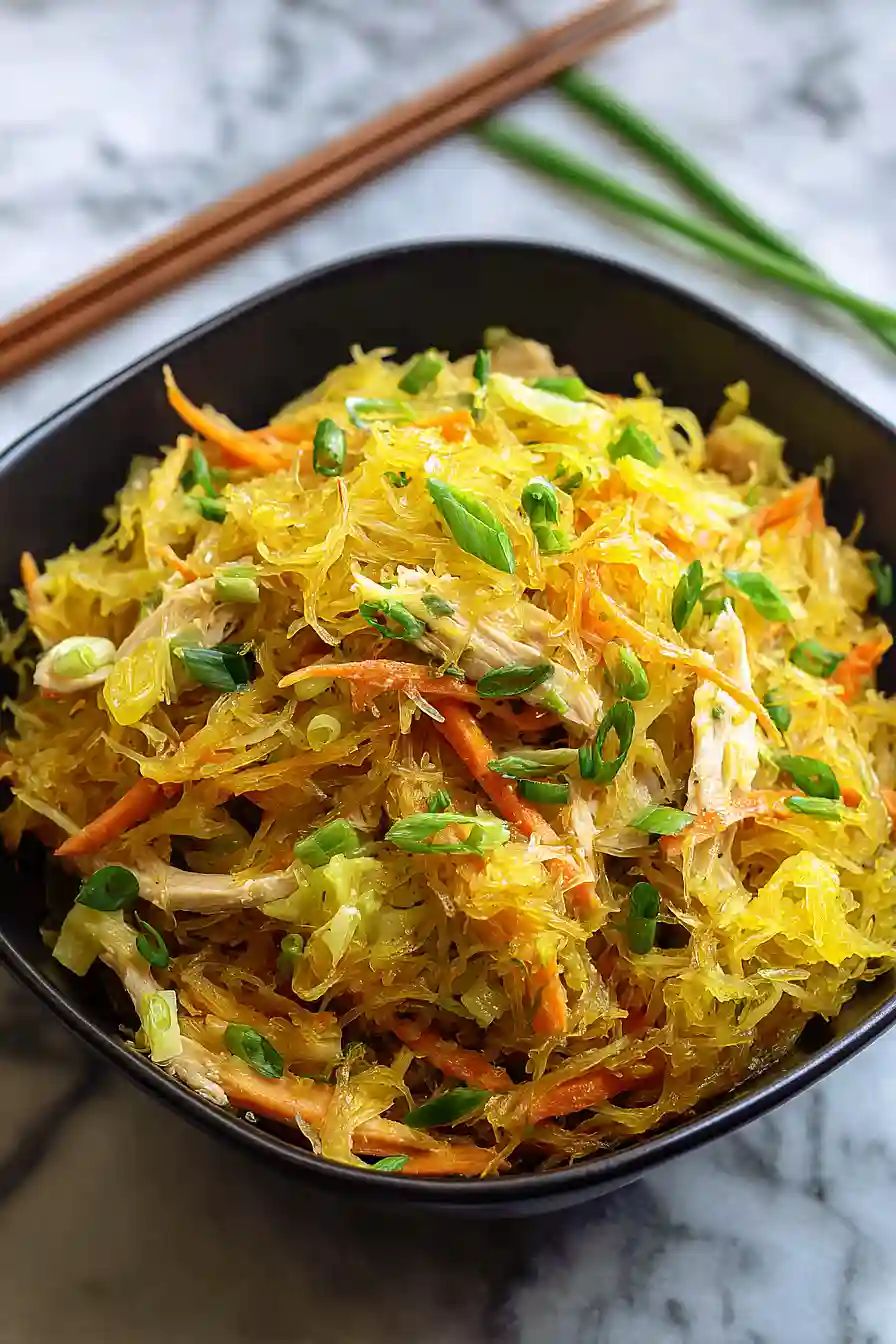
Why You’ll Love This Spaghetti Squash Chow Mein
- Low-carb and healthy – Spaghetti squash replaces traditional noodles, making this a lighter option that’s packed with vegetables instead of refined carbs.
- Whole30 and paleo-friendly – With coconut aminos and simple whole ingredients, this recipe fits perfectly into clean eating plans when you skip the honey.
- Full of flavor – The combination of sesame oil, ginger, and garlic gives you all the takeout taste you crave without the guilt.
- Great for meal prep – This chow mein reheats beautifully, so you can make a big batch on Sunday and enjoy easy lunches throughout the week.
- Uses leftover chicken – It’s a perfect way to use up rotisserie chicken or any cooked chicken you have on hand, making dinner come together even faster.
What Kind of Spaghetti Squash Should I Use?
When picking out a spaghetti squash for this chow mein, look for one that feels heavy for its size and has a hard, matte rind without any soft spots or cracks. A medium-sized squash (about 3-4 pounds) will give you plenty of “noodles” for this recipe and usually feeds 4-6 people as a side or 2-3 as a main dish. The color can range from pale yellow to deep golden, and both work just fine – the deeper color usually just means it’s a bit more mature and may have a slightly sweeter flavor. If your squash has a bit of green on it, that’s okay too, just let it sit on your counter for a few days to ripen up before cooking.
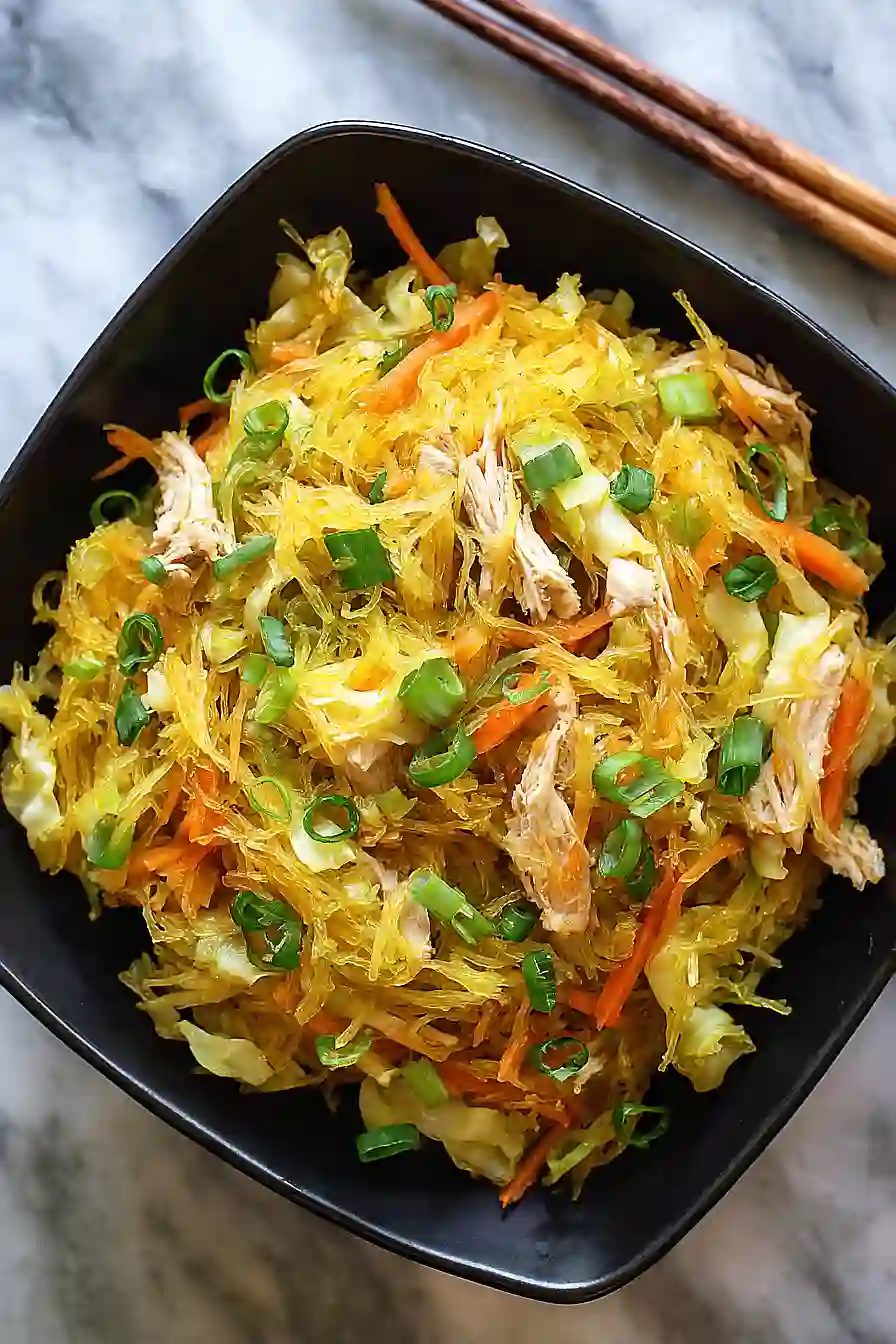
Options for Substitutions
This recipe is pretty adaptable, so here are some swaps you can make based on what you have:
- Spaghetti squash: This is the star of the dish and really shouldn’t be substituted if you want that authentic texture. However, if you’re in a pinch, spiralized zucchini or store-bought zucchini noodles can work – just note they’ll be softer and release more water, so cook them quickly and drain well.
- Coconut aminos: Regular soy sauce or tamari work perfectly here. If using soy sauce, you might want to add a tiny bit less since it can be saltier than coconut aminos.
- Napa cabbage: Regular green cabbage or coleslaw mix can step in if you can’t find napa cabbage. Just slice it thinly so it cooks evenly.
- Shredded chicken: Feel free to use rotisserie chicken, leftover turkey, shrimp, or even tofu. You could also make this vegetarian by adding more vegetables like bell peppers or mushrooms.
- Fresh ginger: In a pinch, use 1 teaspoon of ground ginger, though fresh really does give better flavor here.
- Sesame oil: While sesame oil adds that signature nutty flavor, you can use additional olive oil if needed. Just know the dish will taste a bit different without that toasted sesame note.
Watch Out for These Mistakes While Cooking
The biggest mistake when cooking spaghetti squash is overcooking it, which turns those beautiful strands into mush – aim for tender but still slightly firm, and check it a few minutes before the recommended time since squash sizes vary.
Another common error is not removing enough moisture from the cooked squash, so after scraping out the strands, press them gently with paper towels or let them sit in a colander for a few minutes to avoid a watery chow mein.
When stir-frying, add your ingredients in the right order – aromatics like garlic and ginger burn quickly, so toss them in after the onions have softened for a minute or two.
Finally, don’t add the spaghetti squash too early or cook it too long in the pan with the other ingredients, as it will release more water and lose its texture – just toss it in at the end to warm through and coat with the sauce.
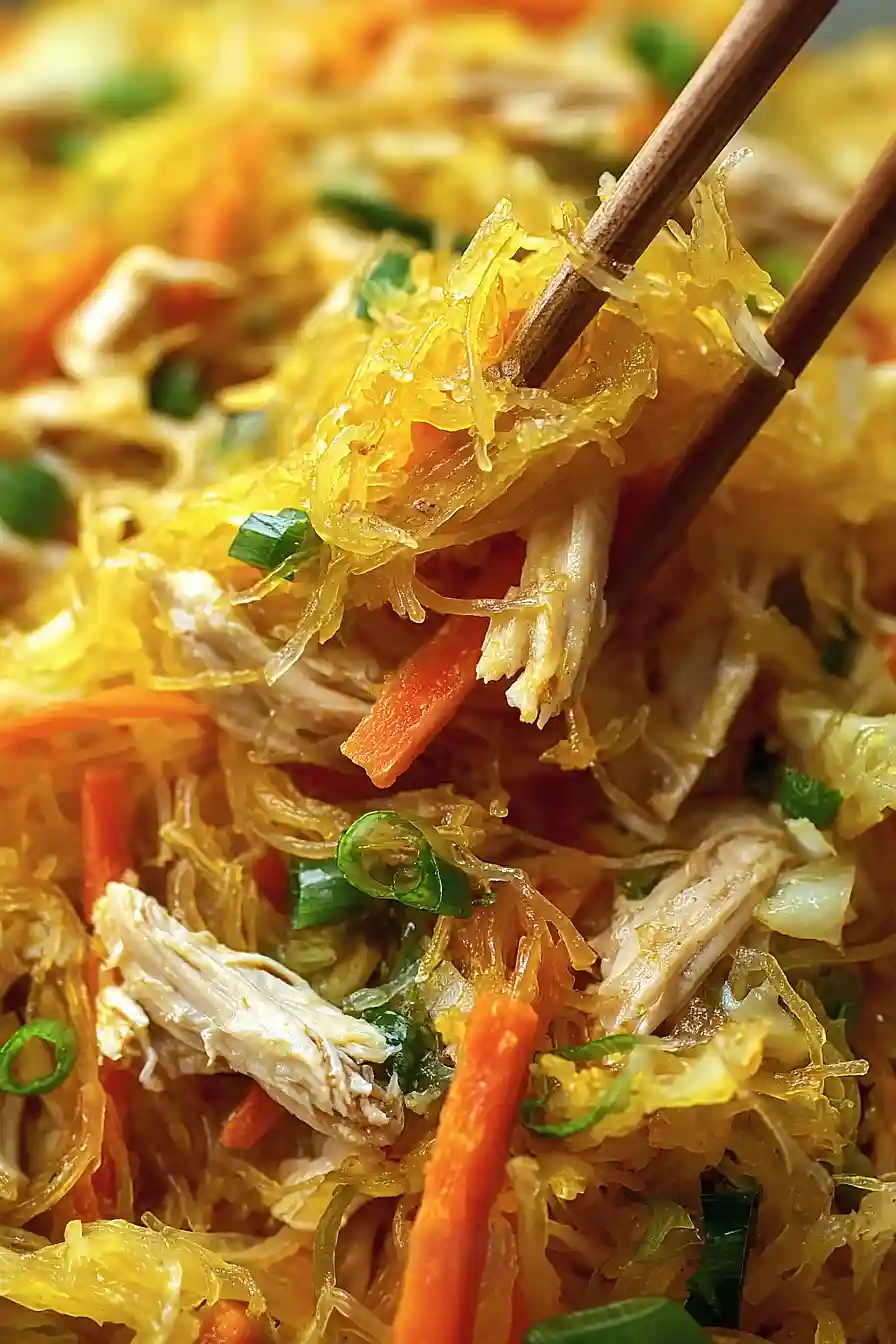
What to Serve With Spaghetti Squash Chow Mein?
This dish is pretty filling on its own since it’s packed with veggies and chicken, but I love serving it with some crispy egg rolls or spring rolls on the side for that extra crunch. A simple cucumber salad with rice vinegar and a pinch of sugar makes a refreshing contrast to the savory chow mein, especially if you’re looking for something light and cooling. If you want to make it more of a feast, add some steamed edamame sprinkled with sea salt or a side of potstickers with a soy-ginger dipping sauce. For anyone who wants a bit more protein, grilled shrimp or pan-seared tofu would be great additions to round out the meal.
Storage Instructions
Store: Keep your spaghetti squash chow mein in an airtight container in the fridge for up to 4 days. The spaghetti squash might release a bit of moisture as it sits, so you may want to drain off any excess liquid before reheating.
Freeze: This dish can be frozen for up to 2 months in a freezer-safe container. Just know that the cabbage and spaghetti squash will be a bit softer after thawing, but the flavors will still be great.
Reheat: Warm it up in a skillet over medium heat for the best texture, stirring occasionally until heated through. You can also microwave it, but I find the stovetop method keeps everything from getting too mushy and helps crisp things up a bit.
| Preparation Time | 15-20 minutes |
| Cooking Time | 30-45 minutes |
| Total Time | 45-65 minutes |
| Level of Difficulty | Medium |
Estimated Nutrition
Estimated nutrition for the whole recipe (without optional ingredients):
- Calories: 400-500
- Protein: 30-36 g
- Fat: 22-28 g
- Carbohydrates: 32-40 g
Ingredients
For the spaghetti squash:
- 1 spaghetti squash (halved lengthwise)
- 1 tsp olive oil
For the stir-fry:
- 1/3 cup scallions (sliced, whites and greens separated)
- 1 large carrot (julienned or thinly sliced)
- 1 small onion (thinly sliced)
- 1 tbsp sesame oil (I use Kadoya for authentic flavor)
- 1.5 cups shredded chicken (cooked)
- 2 garlic cloves (minced)
- 3 cups napa cabbage (chopped)
- 2 tbsp ginger (freshly grated)
For the sauce:
- 1 tsp honey
- 2 tbsp coconut aminos (or tamari for deeper flavor)
- 1 tsp apple cider vinegar (I prefer raw and unfiltered)
- 1 tbsp sesame oil
Step 1: Prepare the Spaghetti Squash and Aromatics
- 1 spaghetti squash
- 1 tsp olive oil
- 1 large carrot
- 1 small onion
- 2 garlic cloves
- 2 tbsp ginger
- 1/3 cup scallions
Preheat your oven to 400°F.
Carefully cut the spaghetti squash lengthwise and scoop out the seeds.
Drizzle the cut sides with 1 tsp olive oil.
Place the squash cut-side down on a baking sheet and roast for 30-40 minutes, or until tender.
While the squash bakes, prepare your aromatics: thinly slice the small onion, julienne or thinly slice the large carrot, mince the garlic cloves, and grate the fresh ginger.
Separate the white and green parts of the scallions.
Step 2: Sauté Vegetables and Shred Squash
- 1 tbsp sesame oil
- 1 small onion
- 1/3 cup scallions
- 2 garlic cloves
- 2 tbsp ginger
- 1 large carrot
- 3 cups napa cabbage
Once the squash is tender, remove it from the oven and set it aside to cool slightly.
Heat 1 tbsp of sesame oil in a large skillet or wok over medium-high heat.
Add the sliced onion and the white parts of the scallions, cooking for 3-4 minutes until softened.
Stir in the minced garlic, grated ginger, and julienned carrot, cooking for another 2-3 minutes until fragrant.
Then add the chopped napa cabbage and cook for 4-5 minutes until it wilts and becomes tender-crisp.
I like to cook my vegetables until they have a slight bite; it adds great texture to the dish.
Step 3: Assemble the Sauce
- 2 tbsp coconut aminos
- 1 tsp honey
- 1 tsp apple cider vinegar
- 1 tbsp sesame oil
While the vegetables are cooking, prepare the sauce in a small bowl.
Whisk together the coconut aminos (or tamari), honey, apple cider vinegar, and the remaining 1 tbsp of sesame oil.
Once combined, set the sauce aside.
I find that whisking well ensures all the flavors are evenly distributed, so take your time with this step.
Step 4: Combine and Finish the Stir-fry
- 1 spaghetti squash
- 1.5 cups shredded chicken
Once the squash is cool enough to handle, use a fork to scrape the flesh into spaghetti-like strands.
Add the shredded squash, cooked shredded chicken, and the prepared sauce to the skillet with the sautéed vegetables.
Toss well to combine all ingredients and heat through, cooking for about 2-3 minutes.
Make sure to coat all the squash strands evenly with the flavorful sauce.
Before serving, I always taste and adjust seasonings if needed; a small pinch of salt or a splash of fresh lime juice can really brighten the flavors.

Simple Spaghetti Squash Chow Mein
Ingredients
For the spaghetti squash:
- 1 spaghetti squash (halved lengthwise)
- 1 tsp olive oil
For the stir-fry:
- 1/3 cup scallions (sliced, whites and greens separated)
- 1 large carrot (julienned or thinly sliced)
- 1 small onion (thinly sliced)
- 1 tbsp sesame oil (I use Kadoya for authentic flavor)
- 1.5 cups shredded chicken (cooked)
- 2 garlic cloves (minced)
- 3 cups napa cabbage (chopped)
- 2 tbsp ginger (freshly grated)
For the sauce:
- 1 tsp honey
- 2 tbsp coconut aminos (or tamari for deeper flavor)
- 1 tsp apple cider vinegar (I prefer raw and unfiltered)
- 1 tbsp sesame oil
Instructions
- Preheat your oven to 400°F. Carefully cut the spaghetti squash lengthwise and scoop out the seeds. Drizzle the cut sides with 1 tsp olive oil. Place the squash cut-side down on a baking sheet and roast for 30-40 minutes, or until tender. While the squash bakes, prepare your aromatics: thinly slice the small onion, julienne or thinly slice the large carrot, mince the garlic cloves, and grate the fresh ginger. Separate the white and green parts of the scallions.
- Once the squash is tender, remove it from the oven and set it aside to cool slightly. Heat 1 tbsp of sesame oil in a large skillet or wok over medium-high heat. Add the sliced onion and the white parts of the scallions, cooking for 3-4 minutes until softened. Stir in the minced garlic, grated ginger, and julienned carrot, cooking for another 2-3 minutes until fragrant. Then add the chopped napa cabbage and cook for 4-5 minutes until it wilts and becomes tender-crisp. I like to cook my vegetables until they have a slight bite; it adds great texture to the dish.
- While the vegetables are cooking, prepare the sauce in a small bowl. Whisk together the coconut aminos (or tamari), honey, apple cider vinegar, and the remaining 1 tbsp of sesame oil. Once combined, set the sauce aside. I find that whisking well ensures all the flavors are evenly distributed, so take your time with this step.
- Once the squash is cool enough to handle, use a fork to scrape the flesh into spaghetti-like strands. Add the shredded squash, cooked shredded chicken, and the prepared sauce to the skillet with the sautéed vegetables. Toss well to combine all ingredients and heat through, cooking for about 2-3 minutes. Make sure to coat all the squash strands evenly with the flavorful sauce. Before serving, I always taste and adjust seasonings if needed; a small pinch of salt or a splash of fresh lime juice can really brighten the flavors.

