If you ask me, leftover prime rib is too good to go to waste.
This hearty beef stew transforms yesterday’s special occasion roast into a cozy, satisfying meal that’s full of rich flavor. Tender chunks of prime rib mix with classic stew vegetables in a savory broth that’s even better than the original dinner.
It’s simmered slowly with carrots, potatoes, and onions until everything melds together just right. A splash of red wine and fresh herbs bring out the best in that already-perfect prime rib.
It’s a no-fuss dinner that makes the most of your holiday leftovers, perfect for those chilly evenings when you want something warm and filling.
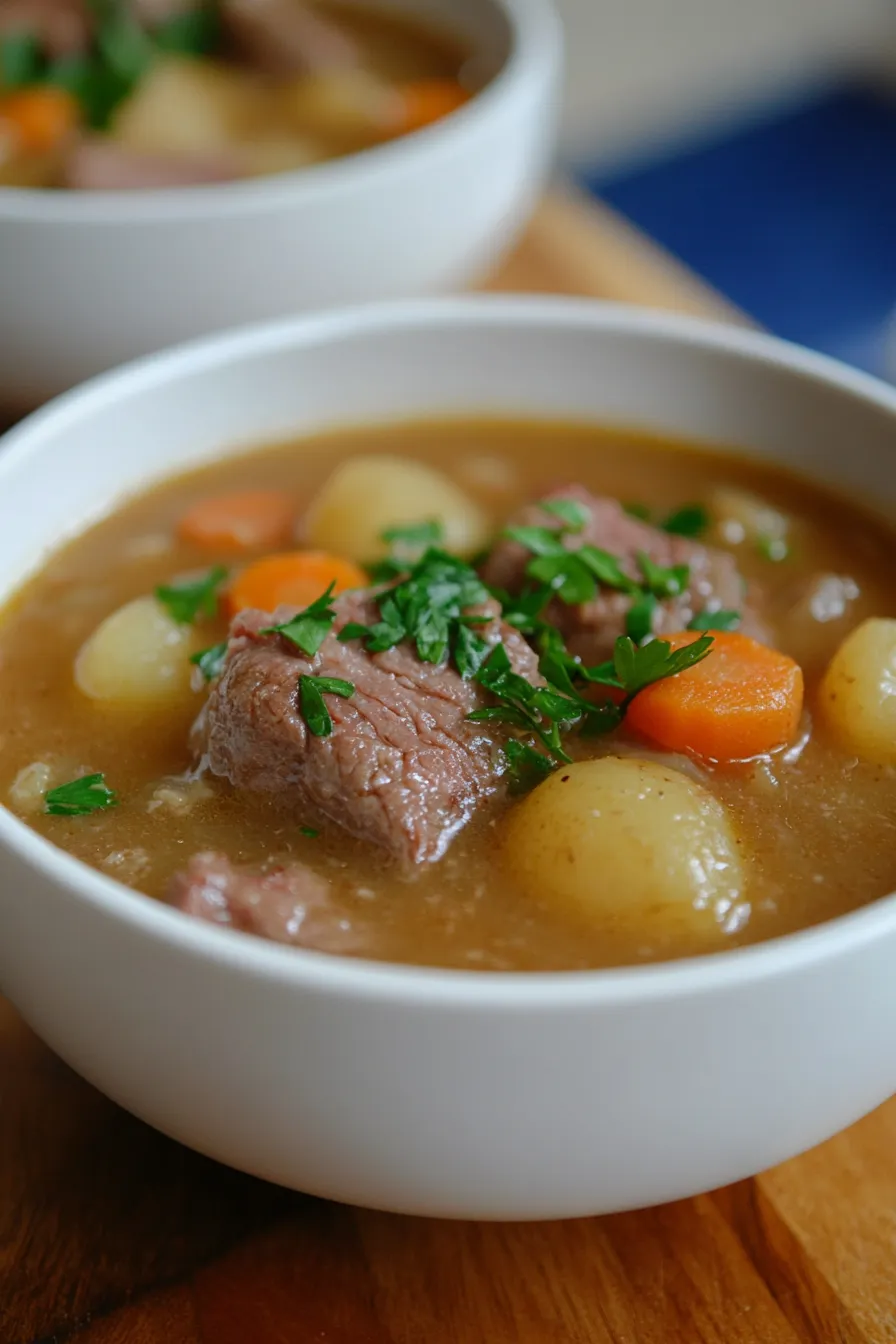
Why You’ll Love This Prime Rib Stew
- Money-saving meal – This recipe makes the most of your expensive prime rib by transforming the leftovers into a completely new and satisfying dish – no waste here!
- Rich, deep flavor – The prime rib bones and leftover au jus create an incredibly flavorful base that’s even better than using raw meat, giving you restaurant-quality taste at home.
- Simple ingredients – Besides your prime rib leftovers, you’ll only need basic vegetables and pantry staples you likely already have on hand.
- No-fuss cooking – While it takes time to develop those amazing flavors, most of it is hands-off simmering – perfect for a lazy weekend when you’re around the house.
What Kind of Prime Rib Should I Use?
Since this recipe calls for leftover prime rib, you’ll want to start with any cooked prime rib you have on hand – whether it was cooked to rare, medium, or well-done will work just fine in this stew. The most important thing is to save not just the meat, but also the bones and any fat trimmings, as these add incredible flavor to your broth. If your prime rib was originally cooked with herbs like rosemary or garlic, that’s even better, as those flavors will carry over into your stew. For the best results, try to use your leftovers within 3-4 days of cooking your original prime rib roast, and make sure to store them properly in the refrigerator until you’re ready to make the stew.

Options for Substitutions
This leftover prime rib stew is pretty flexible and works well with what you have on hand:
- Prime rib bones and meat: While this recipe is designed for leftover prime rib, you can use any leftover roast beef or even beef short ribs. The bones are important for flavor, but if you don’t have them, add 2 extra bouillon cubes to boost the beefy taste.
- Au jus: No leftover au jus? Replace it with beef broth or stock. You can also use 2-3 extra bouillon cubes dissolved in water.
- Wine: If you’re out of wine, just use extra beef broth or add 1 tablespoon of balsamic vinegar to the broth for depth of flavor.
- Potatoes: Any potato variety works here – russet, red, or Yukon gold. Just cut them into similar-sized pieces so they cook evenly.
- Thyme: Fresh rosemary or sage work well instead of thyme. If using dried herbs, use 1/3 of the amount called for fresh.
- Flour for thickening: You can swap flour with cornstarch (use half the amount) or instant potato flakes (start with 1/4 cup). Just remember to mix cornstarch with cold water before adding it to hot liquid.
Watch Out for These Mistakes While Cooking
The biggest mistake when making leftover prime rib stew is rushing the cooking process – the meat needs time to become tender again, so let it simmer for at least 2-3 hours to break down any tough bits and develop rich flavors. Adding vegetables too early is another common error that can lead to mushy results – instead, wait until the last 45 minutes of cooking to add your potatoes and carrots so they maintain their texture. When thickening your stew, avoid dumping flour directly into the pot as this will create lumps – instead, make a smooth slurry by whisking the flour with cold water before stirring it into the simmering stew. For the best flavor development, remember to scrape any browned bits from the bottom of the pot while cooking, and taste for seasoning near the end since the liquid will reduce and concentrate the saltiness.
What to Serve With Prime Rib Beef Stew?
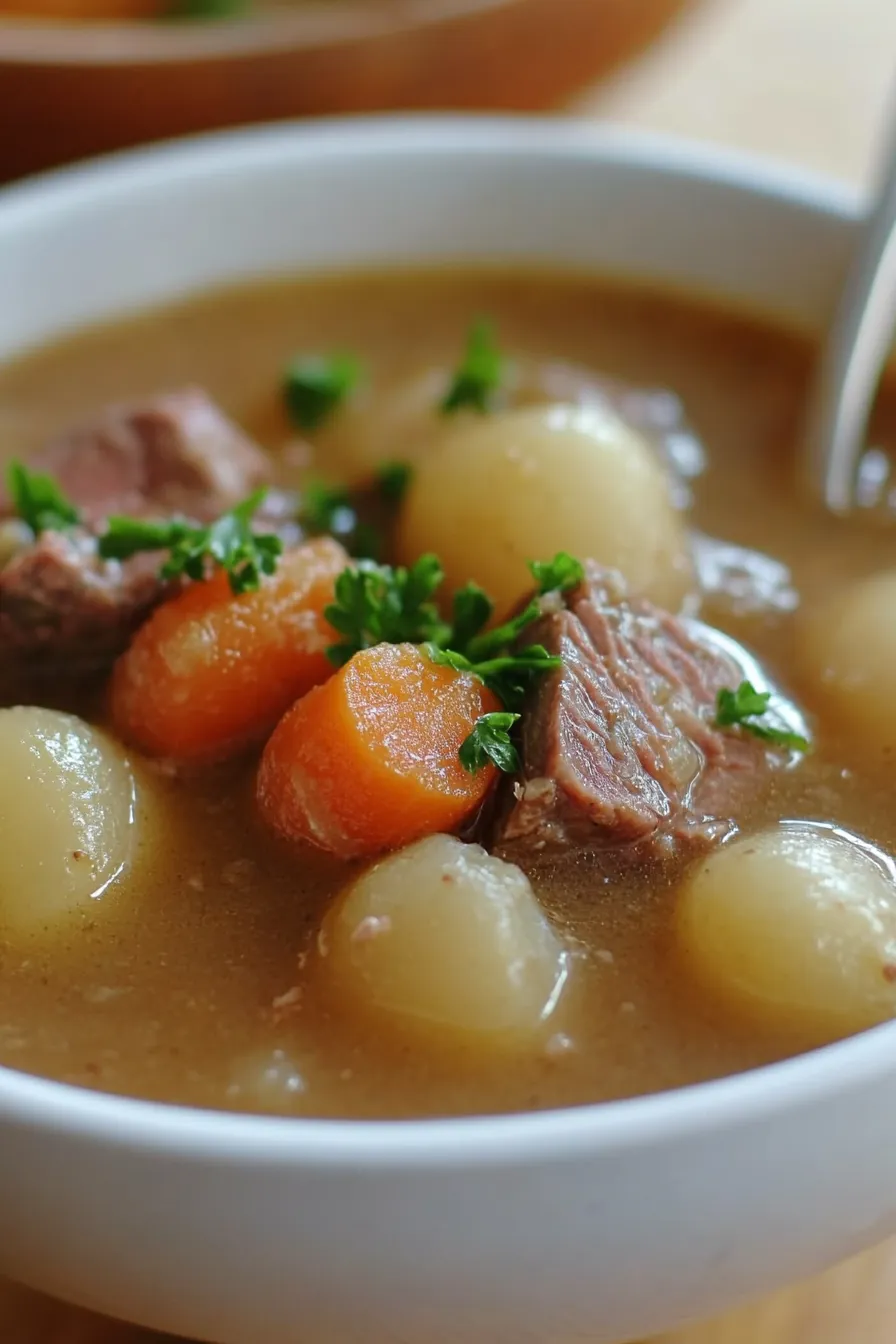
This hearty beef stew is practically a meal on its own, but a few simple sides can make it even better! A crusty loaf of French bread or warm dinner rolls are perfect for soaking up all that rich broth. If you’re looking to add some greens, try a simple mixed salad with a light vinaigrette dressing to balance out the stew’s richness. For extra comfort-food points, serve the stew over buttery mashed potatoes or with some warm cornbread on the side. Just remember to keep the sides simple since the stew is already packed with flavor!
Storage Instructions
Keep Fresh: This hearty leftover prime rib stew will stay good in the fridge for 3-4 days when kept in an airtight container. The flavors actually get even better after a day or two as everything mingles together! Just make sure to let it cool completely before putting it in the refrigerator.
Freeze: This stew is perfect for freezing! Pour it into freezer-safe containers or heavy-duty freezer bags, leaving a bit of space for expansion. It’ll keep well for up to 3 months. I like to freeze it in individual portions for easy weeknight dinners.
Warm Up: To enjoy your stew again, simply warm it up on the stovetop over medium-low heat, stirring occasionally. If it seems a bit thick after storage, you can thin it out with a splash of beef broth. For microwave reheating, use medium power and stir every minute until it’s heated through.
| Preparation Time | 20-30 minutes |
| Cooking Time | 360-600 minutes |
| Total Time | 380-630 minutes |
| Level of Difficulty | Medium |
Estimated Nutrition
Estimated nutrition for the whole recipe (without optional ingredients):
- Calories: 600-800
- Protein: 40-50 g
- Fat: 25-35 g
- Carbohydrates: 70-80 g
Ingredients
- 2-3 leftover rib bones from prime rib
- Any leftover meat pieces or fat trimmings from prime rib
- 1/2 to 2 cups of extra au jus
- 1/2 to 1 cup leftover wine (red or white)
- 7-8 cups of water
- 2 beef bouillon cubes
- 1 onion
- 4 medium potatoes
- 4 carrots
- 3-6 thyme sprigs
- Salt, as needed
- Pepper, as needed
- 1/2 cup all-purpose flour
- 1 cup of water
Step 1: Prepare the Ribs and Meat Scraps
Begin by saving the ribs from a leftover standing rib roast.
Cut between the ribs to separate them into individual pieces.
This will help them fit more easily in the pot and release more flavor during cooking.
Gather any leftover meat scraps or fat trimmings to add along with the ribs.
Step 2: Assemble Ingredients in the Crockpot
Place the separated ribs and any meat scraps or fat trimmings into the bottom of a large crockpot or slow cooker.
Add any leftover au jus and wine for extra flavor.
Step 3: Prepare and Add Vegetables
Peel the potatoes and carrots, and cut them along with the onions into chunks.
Add these vegetables to the crockpot.
Pour in the water, add bouillon cubes, and include thyme for seasoning.
Sprinkle the vegetables with about 1/4 teaspoon of black pepper and 1/2 teaspoon of salt.
Cover the crockpot and set it to cook on low for 8-10 hours or high for 6 hours, allowing the flavors to meld together.
Step 4: Remove Bones and Trimmings
After cooking, carefully remove the meat trimmings and rib bones from the stew and set them aside to cool.
Also, remove any thyme twigs that were added for flavoring.
This step helps to make the stew easier to serve and enjoy.
Step 5: Thicken the Stew
Create a slurry by mixing 1/2 cup of flour with 1 cup of water until it’s smooth.
Stir this slurry into the stew to thicken it.
Re-cover the crockpot and continue cooking on high for an additional 20-30 minutes.
This will allow the stew to thicken nicely.
Step 6: Serve and Enjoy
Once the slurry has thickened the stew to your desired consistency, it’s ready to serve.
Enjoy the rich, hearty stew as a delicious way to use up leftover rib roast!